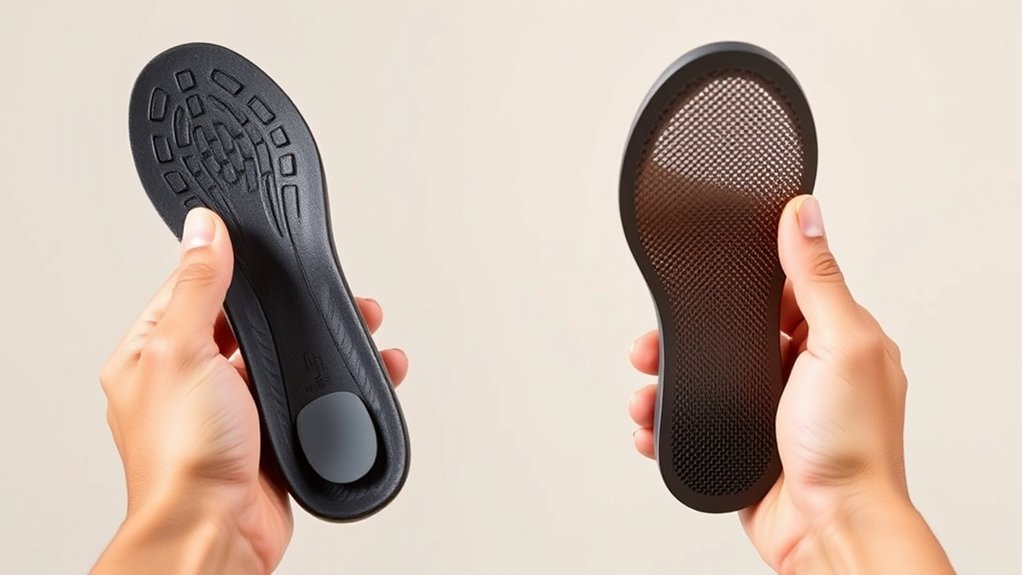
How To Choose The Right Shoe Insoles – Buying Guide
To choose the right shoe insoles, first identify your arch type: low, neutral, or high. Then match it with insoles that offer firm support, balanced cushioning, or shock absorption accordingly. It really helps to know what kind of support your feet need.
Think about your activity level too. Pick materials like EVA for durability or gel if you want targeted comfort. Finding the right material can make a big difference in how your feet feel.
Make sure your insoles fit properly and are placed well inside your shoes. This helps avoid pressure points that can cause discomfort. Also, remember to replace worn insoles regularly to keep support up and prevent injuries.
Keep exploring to find the perfect balance of comfort, durability, and foot health that works just for you.
Key Takeaways
- Identify your arch type (low, neutral, high) to select insoles that provide appropriate support and comfort.
- Choose insoles based on activity type and foot mechanics, such as athletic, comfort, or specialized insoles.
- Select materials like memory foam, gel, or EVA for the right balance of cushioning, durability, and shock absorption.
- Ensure proper insole fit by trimming if needed, placing them correctly, and testing comfort through standing and walking.
- Replace insoles every 6 to 12 months or when cushioning and support noticeably decline to maintain foot health.
Identify Your Arch Type To Choose The Right Insoles
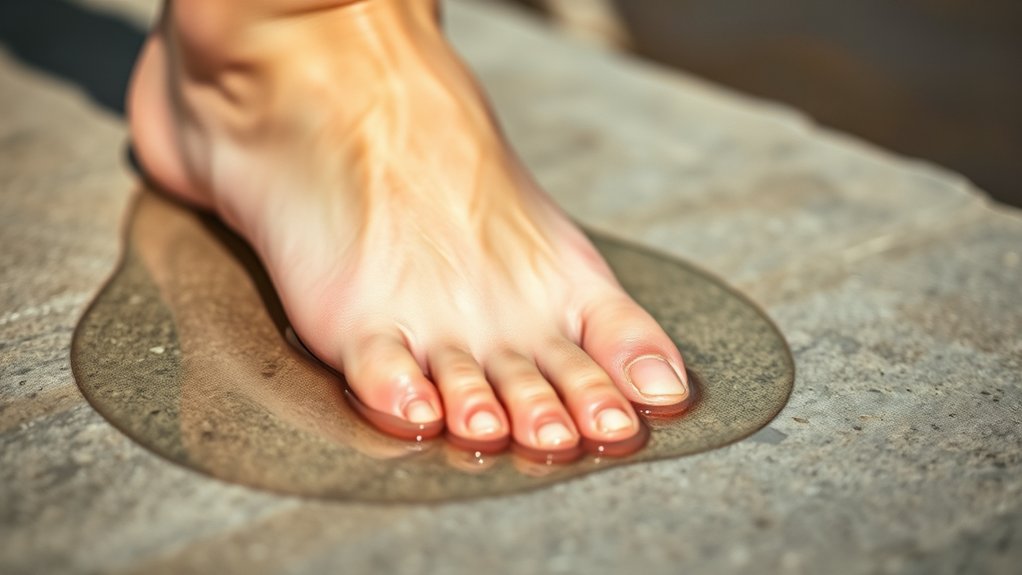
Before selecting insoles, you need to identify your arch type: low, neutral, or high. This helps guarantee proper support and comfort. You can use the wet foot test or examine your footprint to figure out your arch accurately.
Low arches require firm, supportive insoles to prevent over-pronation.
On the other hand, high arches benefit from cushioned insoles that absorb shock and evenly distribute pressure.
Neutral arches need balanced support to maintain natural alignment.
Staying updated with fashion trends doesn’t mean you have to compromise foot health.
Choose insoles that blend seamlessly with your preferred shoe styles.
Plus, proper shoe cleaning extends the life of your insoles and footwear, keeping their structure and effectiveness intact.
Understanding your arch type is the technical foundation for selecting insoles that deliver ideal comfort and durability.
Types Of Insoles For Different Feet And Activities
You want to pick insoles that match your foot type and the activities you do for the best comfort and performance. There are different kinds like support insoles, cushioned ones, orthotic types, and even those made for specific activities—they all help with various foot mechanics and how much impact your feet take.
Knowing how arch support fits into these different insoles is key. It helps keep your feet properly aligned and can prevent injuries down the line.
Insole Types Overview
Although selecting the right insole depends on your specific foot structure and activity level, understanding the primary types can really help guide your choice. Insoles balance looks with function, and some even offer custom molding for precise support.
Here are the main categories:
- Support Insoles – These are made from rigid or semi-rigid materials. They provide structural stability and are perfect if you need orthotic-level correction.
- Comfort Insoles – Made from foam or gel, they focus on cushioning and shock absorption. They’re great for enhancing everyday comfort.
- General-Purpose Insoles – These flat cushions offer basic comfort without targeted arch support or stabilization.
Knowing these types helps you narrow down your options before matching insoles to your activity or foot condition. It makes choosing just a bit easier!
Matching Insoles To Activity
When selecting insoles, matching them to your specific activity guarantees ideal performance and foot health.
For high-impact sports like running or basketball, choose athletic insoles with enhanced shock absorption and stability to protect joints and improve energy return.
If you cycle, opt for low-profile insoles with reinforced support to maintain a snug fit and efficient power transfer without compromising shoe styling.
Winter sports demand heat-moldable insoles that deliver customized warmth and support in cold conditions.
Jobs requiring prolonged standing or walking benefit from cushioned, shock-absorbing insoles that reduce fatigue.
While fashion trends influence shoe styling, don’t sacrifice function. Select insoles that align with your activity’s biomechanical needs to guarantee maximum comfort and durability.
Matching insoles to activity optimizes foot mechanics and enhances overall performance.
It really makes a difference in how your feet feel and perform throughout the day.
Arch Support Considerations
Because your feet come in different arch types, like low, neutral, and high, choosing insoles tailored to your specific arch is super important for proper support and injury prevention. Arch customization makes sure your insoles provide ideal alignment and comfort. This helps reduce strain and even boosts your performance.
Here are some guidelines to think about:
- Low arches need firm, supportive insoles with extra arch stabilization. This helps prevent over-pronation and keeps your foot structure strong.
- Neutral arches do well with flexible insoles that offer balanced support without stopping your foot’s natural movement.
- High arches benefit from cushioned insoles that absorb shock, which can cut down on supination and forefoot pain.
Also, don’t forget to pick insoles made from durable materials. You want something that keeps its support over time. That way, your arch customization stays consistent, and your insoles last through all your daily activities.
Taking this careful approach really helps keep your feet healthy and lowers the chance of injury.
Full-Length, ¾-Length, And Half Insoles Explained
If you want thorough support, full-length insoles cover your entire shoe interior from heel to toe. They replace existing insoles and often need trimming for a perfect fit.
¾-length insoles extend from the heel to just behind the toes. They’re ideal for shoes with non-removable insoles or limited space.
Both options offer plenty of cushioning but differ in how they look and how customizable they are. Full-length insoles give a seamless interior look, while ¾-length insoles allow for partial customization without fully replacing the original insole.
Half insoles cover only the forefoot and provide targeted support. They fit on top of existing insoles, making them great for addressing specific pressure points.
Knowing these differences helps you pick insoles that balance support, fit, and style based on your shoe’s design.
How To Fix Shoe Fit Problems With The Right Insoles
You can fix heel slippage by choosing insoles that stabilize the heel and match your shoe’s volume precisely. It’s all about finding the right fit that keeps your foot secure without feeling too tight.
Adjusting arch support with the right insole helps redistribute pressure, which not only improves the fit but also boosts your overall comfort. When your arches are supported properly, your feet feel better throughout the day.
Also, picking full-length or thin insoles depending on your foot type makes a big difference. The right thickness ensures ideal contact inside the shoe and helps prevent any unnecessary discomfort.
It’s a simple change that can make your shoes feel like they were made just for you.
Heel Slippage Solutions
How can you effectively eliminate heel slippage and achieve a secure fit with your shoes? Focus on heel stabilization by selecting the right insoles designed for slippage prevention. Here’s how to tackle it:
Use insoles with a firm heel cup to cradle your heel, stabilizing it and minimizing movement inside the shoe.
Opt for high-volume insoles to fill excess space in loose-fitting shoes, preventing heel lift and slippage.
Adding heel grips or padding beneath the insoles can also enhance heel lock and reduce unwanted heel motion during activity.
Additionally, make sure insoles are trimmed precisely to your shoe size.
Choose those with a textured, non-slip bottom surface.
These technical adjustments work together to secure your heel, improving both comfort and performance.
Arch Support Adjustments
Addressing heel slippage sets a solid foundation, but achieving an ideal shoe fit often hinges on proper arch support.
Arch customization through insoles tailored to your foot’s arch type, whether low, neutral, or high, ensures balanced pressure distribution and prevents discomfort.
You’ll want to select insoles offering precise support adjustment. Firmer materials suit over-pronation or flat feet, while softer padding benefits high arches.
Look for adjustable arch height or customizable inserts that allow fine-tuning to your unique foot contours.
This effectively reduces toe crowding and enhances stability. Incorporating the right arch support insoles not only fixes fit problems but also prolongs shoe lifespan by maintaining structural integrity.
Best Insole Materials For Comfort And Support
When selecting insoles for ideal comfort and support, understanding the properties of different materials is essential. Your choice impacts insole durability and overall foot health. Here’s a precise comparison to guide you:
- Memory Foam: Offers superior cushioning by conforming to your foot’s shape, delivering personalized comfort. However, it has moderate durability.
- Gel: Provides targeted shock absorption in high-impact zones like the heel and forefoot. It balances comfort with durability, making it ideal for intense activity.
- EVA (Ethylene Vinyl Acetate): Lightweight and flexible, EVA insoles excel in shock absorption and durability. They are suitable for both athletic and casual footwear.
Comparing these materials lets you select insoles that match your comfort needs and activity level while ensuring long-lasting support. Choosing the right material enhances foot stability and reduces fatigue effectively.
When To Replace Insoles For Best Support
Selecting the right insole material is only part of maintaining ideal foot support. Knowing when to replace your insoles is just as important.
Insole durability varies by material, which affects how often you should replace them.
Replace insoles every 6 to 12 months or sooner if you notice visible wear, flattening arches, tears, or diminished cushioning.
Softer insoles wear out faster and need more frequent replacement to keep providing consistent shock absorption and comfort.
Regular inspection helps maintain foot health and prevents discomfort.
It’s a small habit that makes a big difference in how your feet feel day to day.
How To Place And Test Insoles For Comfort At Home
Although choosing the right insole material is crucial, properly placing and testing your insoles at home guarantees you get the full benefits of support and comfort. Start by removing the original insole and inserting the new one, making sure it fits without bunching or pressure points.
Properly placing and testing your insoles ensures maximum support and comfort after choosing the right material.
Then, stand on the insole outside the shoe to confirm heel stability and arch support.
Finally, test the insole inside your shoe by walking or standing for several minutes, adjusting its position as needed.
- Confirm the insole fills the shoe evenly to prevent discomfort.
- Make sure the heel cup securely supports your heel for stability.
- Assess comfort during movement to ensure proper alignment.
Regularly cleaning your insoles helps prevent odor buildup. This keeps things hygienic and extends the lifespan of your insoles.
Frequently Asked Questions
Can Insoles Help Improve Posture and Reduce Back Pain?
Yes, insoles with proper arch support and heel cushioning can improve your posture by aligning your spine correctly and reducing strain. They help distribute weight evenly, which often reduces back pain effectively when used consistently.
Using them regularly can really make a difference. It’s all about giving your feet the support they need so your whole body feels better. Plus, they’re a simple change that doesn’t require a big effort.
Are There Insoles Designed Specifically for Diabetic Foot Care?
You might picture regular insoles, but specialized insoles for diabetic foot care feature cushioning, pressure redistribution, and moisture-wicking materials.
These technical designs protect sensitive skin, reduce ulcers, and improve overall foot health precisely for diabetes-related needs. They’re made to handle the unique challenges that come with diabetic feet.
How Do Insoles Affect Shoe Durability Over Time?
Insoles can enhance shoe material by reducing internal wear, which helps boost shoe durability. They act like a cushion that absorbs some of the impact your feet make when you walk or run. This means the shoe itself doesn’t take as much damage over time.
However, not all insoles are created equal. Poor-quality insoles might actually degrade the shoe structure faster because they don’t provide proper support or cushioning. So, it’s really important to choose high-quality insoles.
Picking good insoles not only improves the insoles’ own longevity but also helps preserve your shoe’s integrity over time. In the end, a little investment in quality insoles can go a long way for your shoes.
Can Insoles Be Used in Both Casual and Formal Shoes?
You can use insoles in both casual and formal shoes by selecting appropriate insole materials that align with fashion trends and shoe design. This way, you get comfort and discreet support without compromising style or fit.
It’s all about choosing the right kind that works well with your footwear. That way, you stay comfortable no matter what shoes you’re wearing. Easy, right?
Are Custom Orthotics Better Than Over-The-Counter Insoles?
Imagine walking on clouds. Custom orthotics offer superior materials tailored precisely to your feet, enhancing both support and the longevity of your insoles. They really make a difference compared to generic options.
That’s because they address your specific biomechanics, which means better comfort and durability. Plus, they help prevent injuries over time. So, if you’re looking for something that truly fits your needs, custom orthotics are the way to go.
Conclusion
Choosing the right insoles is like finding the perfect puzzle piece for your feet. When they fit just right, comfort and support fall into place effortlessly.
Know your arch type and select materials suited for your activity. Also, make sure to address fit issues precisely.
Remember to replace insoles regularly and test them at home for the best results. With these steps, you’ll guarantee every step you take is backed by expert support and tailored comfort.