What Makes A Shoe Non Slip – Key Features Explained
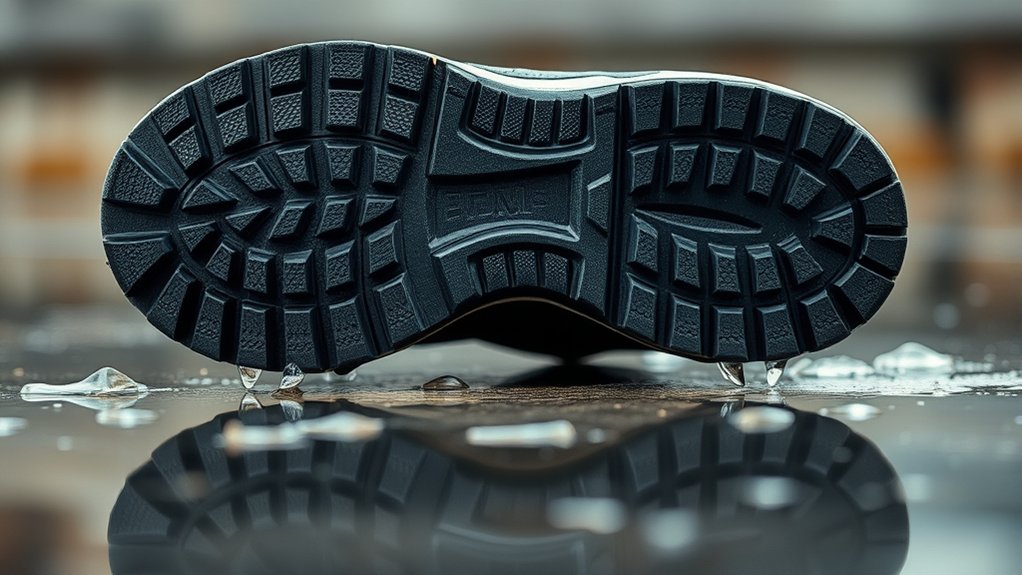
You need shoes with specialized rubber outsoles that stay flexible and resist wear. These outsoles work best when combined with precise tread patterns featuring deep, multi-directional grooves and well-spaced lugs to channel away liquids and debris.
Rounded tread edges help eject moisture quickly, while a proper fit guarantees stable contact and traction. All these features work together to reduce slip risks on wet or oily surfaces.
Keep exploring to understand how design, materials, and maintenance can further boost slip resistance. It’s pretty interesting once you dig into the details!
Key Takeaways
- Non-slip shoes feature specialized rubber outsoles with deep, multi-directional treads that channel liquids away to prevent slipping.
- Proper tread spacing and rounded edges quickly shed water, oil, and debris, reducing hydroplaning and maintaining traction.
- Flexible rubber compounds deform under pressure to increase ground contact and improve grip on wet or oily surfaces.
- Secure, well-fitted shoes ensure consistent sole contact and stability, minimizing slip hazards during movement.
- Certified slip-resistant footwear undergoes testing for tread design, material quality, and durability to ensure reliable safety performance.
What Makes a Shoe Truly Non-Slip? (Overview)
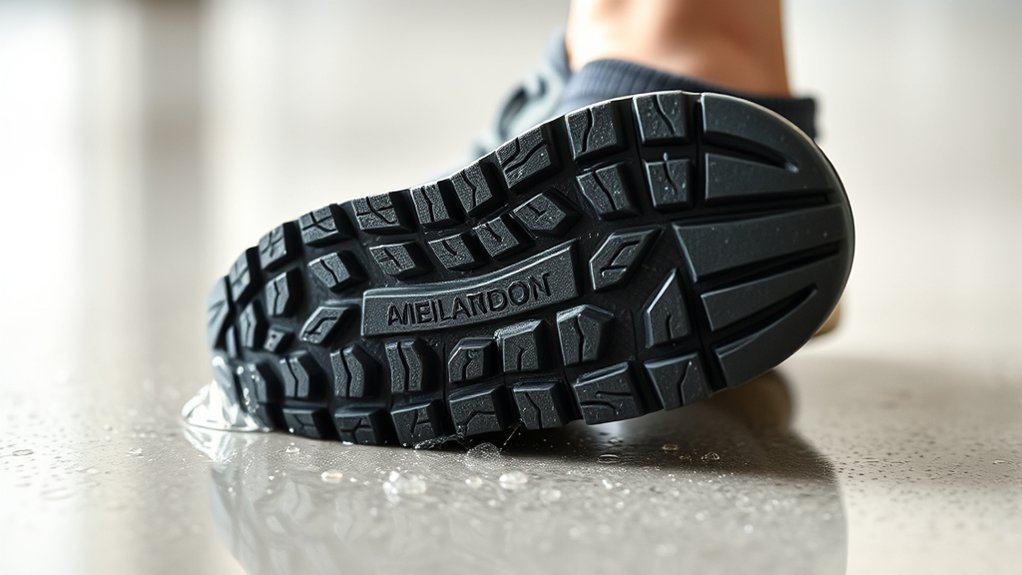
What exactly makes a shoe truly non-slip? It all starts with a specialized rubber outsole featuring deep, multi-directional tread patterns that channel liquids away and boost surface contact. You’ll notice micro-channels and siped patterns actively eject water, oil, and contaminants, maintaining traction where it counts.
The outsole’s softer, flexible material enhances grip on wet or oily floors. This combines safety with comfort enhancements that prevent foot fatigue during long wear.
While fashion trends often push sleek designs, truly non-slip shoes balance style with technical tread engineering. Proper tread spacing avoids debris buildup, ensuring consistent slip resistance.
Look for certification standards like ASTM F1677 or EN 13287, which verify that these shoes meet rigorous performance criteria. That way, you get both dependable safety and everyday comfort.
Why Non-Slip Outsole Patterns Are Key to Grip
How do non-slip outsole patterns considerably enhance your shoe’s grip? These patterns are engineered to maximize contact and friction, which is super important for safety and performance. They combine advanced design with material durability to withstand wear without compromising grip.
Non-slip outsole patterns boost grip by maximizing contact and friction for safety and lasting performance.
Plus, they keep up with fashion trends that value both form and function. So, you’re not just getting a practical shoe, but one that looks good too.
Key features include:
- Grooves and channels that displace water and oil, preventing slippery buildup.
- Deep, multi-directional treads that increase surface contact and friction.
- Micro-channels and siped patterns that eject contaminants for consistent traction.
- Geometric designs like herringbone or hexagons that mimic natural textures to boost stability.
Pretty cool how these details make such a difference, right?
How Non-Slip Materials Improve Safety and Traction
Because your safety depends on reliable grip, non-slip shoes use specialized rubber compounds engineered to maintain flexibility and traction across diverse surfaces. These materials deform under pressure, increasing ground contact and friction to prevent slipping, even on wet or oily floors. They’re designed for durability, resisting polishing and wear to ensure long-term performance.
Micro-channels embedded in the rubber help displace contaminants, which further enhances safety by reducing friction loss. And it’s not just about function anymore. Manufacturers now offer a variety of color options that align with current fashion trends, so you don’t have to sacrifice style for safety.
When you choose shoes with these advanced non-slip materials, you gain confidence in your footing—whether at work or on the move—without compromising on appearance or comfort. It’s all about keeping you steady and looking good at the same time.
How Outsole Surface Area and Lug Spacing Reduce Slips
You’ll notice that when the lugs on the outsole are properly spaced, they channel away water and debris. This makes slipping much less likely.
Plus, increasing the surface area of the outsole improves traction and helps spread out pressure evenly, which boosts your balance as you move.
On top of that, built-in arch support teams up with these features to stabilize your foot and keep it firmly connected to the ground.
Lug Spacing Benefits
When lug spacing is properly designed, it allows water and oil to escape from the outsole more efficiently, reducing the risk of slips caused by hydroplaning. Proper lug spacing in outsole design plays a critical role in maintaining traction under slippery conditions. You benefit from a sole that channels liquids away, preventing buildup and ensuring consistent grip.
Here’s how lug spacing benefits you:
- Larger gaps let water and oil flow out quickly, decreasing hydroplaning risks.
- Increased outsole surface area improves ground contact for better grip on wet surfaces.
- Proper spacing prevents mud and debris accumulation, sustaining traction.
- Balanced lug spacing optimizes slip resistance without sacrificing stability or comfort.
With thoughtful lug spacing, your shoes deliver reliable, slip-resistant performance every step. It’s all about keeping you steady and confident wherever you go.
Enhanced Balance Features
Although many factors influence slip resistance, the design of outsole surface area and lug spacing plays a crucial role in enhancing your balance. Increasing the surface area between lugs improves traction by maximizing ground contact, reducing slip risk.
Wider lug spacing allows liquids and debris to escape, preventing buildup that compromises grip.
Larger lugs distribute your weight more evenly, stabilizing you on wet or oily surfaces. This optimized lug spacing also enables the outsole to deform under pressure, improving grip during rapid movements and directional changes.
When combined with heel cushioning that absorbs impact and ankle support that stabilizes your foot, these outsole features work together to minimize slips and maintain your balance effectively in challenging conditions.
Arch Support Role
Enhancing your balance through outsole surface area and lug spacing directly supports the role of arch support in slip prevention. When the outsole maximizes ground contact, it stabilizes your foot’s arch, reducing fatigue and increasing control.
Proper heel cushioning complements this by absorbing shocks, allowing for steadier footing on slick surfaces.
Consider these key factors:
- Increased outsole surface area boosts grip by maximizing contact with the ground.
- Larger lug spacing channels water and oil away quickly, preventing slippery layers.
- A wider outsole base stabilizes your arch, reducing imbalance on wet or oily floors.
- Ideal lug patterns shed debris efficiently, maintaining consistent traction.
Together, these features enhance arch support and heel cushioning, giving you confident, slip-resistant footing in challenging environments. It’s all about keeping you steady and secure no matter where you walk.
How Non-Slip Shoe Design Boosts Stability on Slippery Floors
You’ll notice that specialized tread patterns with grooves and channels play a big role in keeping you stable by actively pushing liquids away and improving traction.
The rubber compounds in the outsole are made to flex and deform under pressure, which helps increase your grip on slippery surfaces.
When you put these features together, they really optimize your footing—especially when you need to move quickly or change direction suddenly.
Tread Patterns And Traction
When you walk on slippery floors, the tread patterns on your non-slip shoes play an essential role in keeping you steady. Their design directly affects how durable the tread is and how well the traction technology works. This ensures you get a consistent grip even in tough conditions.
Here’s how these patterns boost your safety:
- Deep grooves and channels help push water and oil away, so your shoes stay in contact with the floor.
- Micro-channels and siped patterns add extra edges, which increase friction with the surface.
- Multi-directional lugs give traction from different angles, making you more stable when you move.
- Rounded tread edges shed liquids quickly, stopping buildup that could cause slips.
This smart mix raises the coefficient of friction, which means you get reliable slip resistance on wet and oily floors.
Plus, it helps the tread last longer so your shoes perform well over time.
Outsole Material And Grip
While tread patterns channel liquids and increase traction, the outsole material itself plays a big role in keeping grip on slippery floors. Non-slip shoes use softer, high-traction rubber compounds designed to stay flexible and maximize friction on wet or oily surfaces. Rounded outsole edges help eject liquids, preventing dangerous buildup.
Deep, multi-directional tread combined with sustainable materials ensures durability without compromising environmental responsibility. You get stability and confidence in every step, no matter the conditions.
| Feature | Benefit | Emotion Evoked |
|---|---|---|
| High-traction rubber | Enhanced slip resistance | Safety and trust |
| Rounded edges | Liquid ejection | Relief and security |
| Sustainable materials | Eco-friendly durability | Pride and care |
This approach balances fashion trends with material sustainability while keeping you grounded.
Why Wearing the Right Fit Cuts Your Slip Risk
Because improperly fitted shoes can compromise your stability, wearing the right fit is vital to reducing your slip risk. While fashion trends and aesthetic appeal might tempt you to choose style over function, the shoe’s fit plays a critical role in preventing slips. A proper fit ensures secure footing and maximum traction by maximizing ground contact and control.
Wearing properly fitted shoes is essential for stability, traction, and reducing the risk of slips.
Here’s why the right fit matters:
- Prevents instability from loose footwear that can cause slips.
- Avoids restricted movement and discomfort from overly tight shoes.
- Enhances traction by maintaining consistent sole-to-ground contact.
- Customizable features like laces or straps secure your foot during quick pivots.
Choosing shoes that fit well balances your need for style and safety. It’s a simple way to reduce slip hazards effectively.
How to Test If Your Shoes Are Truly Non-Slip
To accurately determine if your shoes are truly non-slip, you’ll need to test their grip on various surfaces like wet, polished, or smooth floors. Start by examining the outsole’s tread pattern. Make sure it channels liquids to prevent slipping.
Try applying gentle pressure on these surfaces and compare the traction against standard non-slip shoes. Check if the sole material is flexible, soft, and made from durable, high-quality rubber or synthetic compounds.
Material durability directly impacts performance over time.
Also, look for certification labels such as ASTM F1677, which confirm slip-resistant testing. While fashion trends influence shoe aesthetics, prioritize technical features that ensure safety.
How to Maintain and Choose the Right Non-Slip Shoes for Your Workplace
Maintaining your non-slip shoes starts with regular inspection and cleaning of the outsole to remove debris that can reduce tread effectiveness. It’s a simple step but makes a big difference in how well your shoes grip the floor.
Regularly cleaning your non-slip shoe outsoles keeps tread effective and ensures better floor grip.
To choose the right pair for your workplace, consider these steps:
- Opt for shoes with certified slip-resistant soles, like ASTM F1677. This certification ensures reliable traction on wet or oily floors.
- Replace shoes promptly when tread depth diminishes. Worn soles can seriously compromise your safety.
- Make sure the shoes fit properly. Shoes that are too tight or too loose won’t give you the stability or grip you need.
- Pick footwear designed specifically for your work environment. Think about the surface type, any contaminants you might encounter, and the safety regulations you need to follow.
While fashion trends and cultural influences might affect your style choices, it’s best to prioritize technical features. That way, you keep slip resistance without giving up comfort or compliance.
Frequently Asked Questions
Can Non-Slip Shoes Help Prevent Ankle Injuries?
Yes, non-slip shoes provide ankle support and enhance footwear stability. They help you maintain balance on slippery surfaces.
These shoes reduce ankle injury risks by stabilizing your joint during quick movements. They also prevent unwanted rolling or twisting. This makes them a smart choice if you want to keep your ankles safe.
Are Non-Slip Shoes Suitable for Outdoor Sports?
You won’t find non-slip shoes suitable for outdoor sports because their shoe material and traction patterns are optimized for flat, wet floors. They lack the deep grip and flexibility needed on uneven, dynamic outdoor terrains.
Basically, these shoes are designed for places like kitchens or hospitals, not trails or fields. So, if you’re planning on hitting the outdoors, you might want to look for something with better support and traction.
How Long Do Non-Slip Shoes Typically Last?
You’ll find non-slip shoes typically last 6 to 12 months, depending on shoe material and tread pattern wear. Harsh conditions speed up wear, so regularly inspect and replace them once the tread’s smooth or compromised.
It’s a good idea to check your shoes often. When the grip starts to fade or the soles look worn down, it’s time to get a new pair. Staying on top of this keeps you safe and comfortable on your feet.
Do Non-Slip Shoes Work on Icy Surfaces?
You might think non-slip shoes work on ice, but they often don’t. Without specialized sole materials or ice traction features like micro-spikes, your grip will fail. This increases slip risks on icy surfaces despite their non-slip label.
Can Insoles Improve the Slip Resistance of Shoes?
Yes, insoles can improve slip resistance by enhancing shoe cushioning and arch support. This helps stabilize your foot and reduces movement inside the shoe. When your foot stays more secure, you maintain better contact with the sole.
That better contact ultimately boosts traction on slippery surfaces. So, adding the right insoles can make a noticeable difference in how well your shoes grip the ground. It’s a simple way to help prevent slips and falls.
Conclusion
If you don’t choose truly non-slip shoes, you might as well be walking on ice blindfolded! Those precise outsole patterns, specialized materials, and perfect fit aren’t just details; they’re lifesavers.
Without them, every step risks a slip, slide, or worse. So, trust your safety to shoes engineered for grip, stability, and durability.
Test, maintain, and select wisely. You’re not just buying shoes, you’re investing in your every secure step.