What Does M Mean In Shoe Size – Width And Fit Guide
“M” in shoe size means medium width, which is the standard fit designed to comfortably accommodate most foot shapes without squeezing or leaving extra space. For men, this width is typically labeled as D, while women’s medium width is B.
Knowing this helps you pick shoes that balance comfort and support, reducing foot problems. If you want to guarantee the perfect fit for your feet and avoid common issues, there’s more to explore about shoe widths and how they affect your comfort.
Key Takeaways
- “M” stands for “Medium” width, indicating a standard shoe width designed to fit most average foot shapes comfortably.
- It provides balanced support without squeezing or excess space, promoting foot health and comfort.
- Men’s medium width is labeled as “D,” while women’s medium width is labeled as “B,” reflecting anatomical differences.
- Proper measurement of foot width and comparing it to width charts ensures selecting the correct “M” fit.
- Shoe material affects fit comfort; flexible materials accommodate medium widths better than stiff materials requiring wider sizes.
What Does “M” Mean in Shoe Width?
What does the “M” in shoe width really mean? The “M” stands for “Medium,” indicating a standard shoe width designed to fit most foot shapes comfortably.
The “M” in shoe width means Medium, a standard fit for most foot shapes.
When selecting shoes, it’s vital to take into account the shoe material, as some materials stretch more than others and can affect the fit around your foot arch.
A medium width ensures balanced support without squeezing or leaving excess space, which helps maintain foot health.
This width typically accommodates average foot arches, preventing discomfort or strain.
By choosing an “M” width, you’re opting for a fit that balances comfort and stability, reducing the risk of foot problems caused by improper width.
Always check the width designation to match your foot’s natural shape for ideal support and fit.
How Men’s and Women’s Shoe Widths Differ
Although shoe width labels might seem consistent, men’s and women’s sizing systems differ markedly. Understanding these differences is vital for ideal shoe comfort and accommodating your unique foot shape.
Women’s medium width is labeled B, while men’s medium is D. This reflects narrower female feet. Narrow widths vary too: AA for women, B for men. Interestingly, men’s narrow is still wider than women’s standard.
Wide options also differ. Women’s wide starts at E, while men’s wide goes from E to 4E. This caters to broader male foot shapes. These distinctions guarantee shoes fit according to anatomical differences.
That means better shoe comfort and fewer fit issues. Knowing these differences helps you select shoes that truly match your foot shape and provide lasting comfort.
How to Measure Your Foot Width for a Perfect Fit
Understanding the differences in men’s and women’s shoe widths helps you appreciate why measuring your foot accurately matters. To get a perfect fit, use reliable foot measurement techniques.
Start by placing your foot flat on a piece of paper and mark the widest points across the ball of your foot.
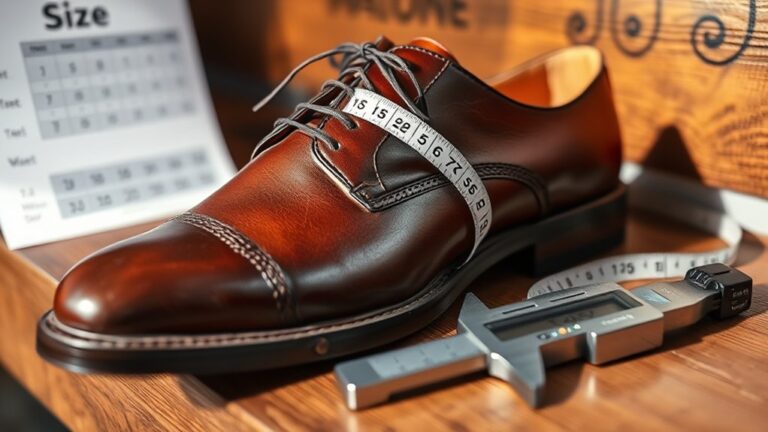
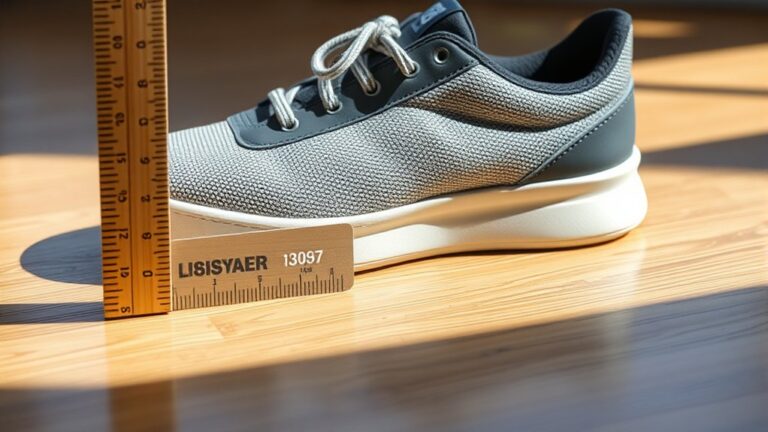
Then, use a ruler or measuring tape, common shoe fitting accessories, to measure the distance between these marks. Measure both feet separately since one foot may be wider. Always use the larger measurement.
Make sure you stand upright during the process to account for natural foot expansion under your weight.
Once measured, compare your foot width to a shoe width chart to identify your ideal width size, such as B, AA, or E. This way, you’ll ensure a comfortable and precise fit.
Signs You Need the Correct Shoe Width
You’ll notice signs like tightness, redness, or blisters along the sides of your feet when the shoe width isn’t right. If your toes feel cramped or even start overlapping, that’s another clue.
Heel slippage can also mean your shoes don’t fit properly.
Recognizing Width Discomfort
When your shoe width doesn’t match your foot, you’ll notice specific signs that signal discomfort. The shoe material and your foot arch play vital roles in how the width feels throughout the day.
Here are key indicators to watch for:
- Tightness causing red marks or blisters on the sides of your toes or heels means the shoe is too narrow.
- Cramped or overlapping toes suggest insufficient width, restricting your foot’s natural shape.
- Slipping heels or visible gaps along the sides indicate the shoe is too wide, leading to poor support.
- Persistent pain or numbness in the ball of your foot often results from a mismatch in shoe width.
Recognizing these signs early helps you choose the correct width for maximum comfort and foot health. It’s worth paying attention to how your shoes feel throughout the day.
That way, you can avoid problems before they start.
Identifying Fit Issues
How can you tell if your shoes don’t fit properly in width? Pay attention to heel slippage, tightness, or cramping in your toes during wear. Red marks or blisters on the sides of your feet often indicate shoes that are too narrow or too wide.
If you feel numbness or tingling in your toes, your shoes may be too tight across the width. Constant discomfort or pressure on the sides, especially after walking, signals improper width fit.
Gaps or excessive space at the sides cause instability and poor support.
What B, M, and Other Width Letters Mean for Your Shoe Fit
Although shoe size numbers indicate length, the width letters like B, M, and D determine how well the shoe fits across the foot. Understanding these shoe width variations is vital for custom shoe fitting. It helps ensure comfort and prevents fit issues.
Shoe width letters like B, M, and D are key to achieving a comfortable, custom fit across your foot.
- M stands for “Medium,” the standard width suitable for most feet.
- B usually indicates a narrow width, common in women’s shoes.
- D signifies a wider fit, often used for men’s shoes.
- Other letters like AA or N mean narrow, while E, EE, or 4E represent wide or extra-wide widths.
Since labels vary by brand, always check brand-specific charts to find the right width for your foot. It’s a good idea to do this because sizing can be a bit different depending on where you shop.
How to Use Shoe Width Charts to Find Your Size
Since shoe width plays a crucial role in comfort and fit, using shoe width charts accurately can help you select the right size. Start by measuring your foot’s width at the widest point, then compare this measurement to the chart’s letter codes like B, M, and EE, which correspond to specific width ranges.
Remember, shoe material affects fit. Flexible fabrics may accommodate slightly narrower widths, while rigid materials require precise sizing.
Also, consider fashion trends; some styles may prioritize appearance over width variability, making the chart even more indispensable.
Because brand width standards vary, always check the specific brand’s chart before purchasing. Using these charts ensures your shoes offer proper support and comfort, preventing discomfort and foot issues caused by incorrect width selection.
Why Wearing the Right Shoe Width Feels Better and Keeps Your Feet Healthy
Understanding your correct shoe width, such as M (medium), goes beyond just finding a comfortable fit. It directly impacts your foot’s health. Shoe manufacturing now focuses on precise width measurements to optimize fit using advanced footwear materials that accommodate various foot shapes.
When you wear the right shoe width, you reduce pressure points. This helps prevent discomfort and common foot issues like bunions and blisters.
Proper width supports correct foot alignment. That eases strain on tendons and joints and helps with better posture.
Minimizing internal shoe movement prevents slipping and nerve irritation. This also enhances stability.
Comfort improves during extended wear, which reduces foot fatigue and promotes overall foot energy.
Choosing shoes with the right width ensures your feet stay healthy and comfortable. It maximizes the benefits of quality footwear materials and precise shoe manufacturing techniques.
Tips for Choosing the Right Shoe Width When Shopping
When you shop for shoes, measuring your foot width accurately and consulting brand-specific size charts will help you select the best fit. Keep in mind that brand differences can affect how widths run, so don’t rely solely on one brand’s sizing.
Try on multiple widths, especially if you have wider or narrower feet, to identify the most comfortable option.
Experiment with different widths to find the most comfortable fit for your unique foot shape.
Pay attention to the shoe material, as flexible fabrics may accommodate width better than stiff leathers.
Look for width labels like B(M) for women or D(M) for men to guide your choice, but be ready to adjust based on fit.
Finally, assess comfort carefully. Avoid tightness or slipping, and choose wider or narrower widths as needed to protect your foot health.
Frequently Asked Questions
Can Shoe Width Affect Running Performance?
Yes, shoe width directly impacts your running efficiency and shoe comfort. Wearing shoes with the right width supports natural foot movement and reduces injury risk.
It also helps you maintain ideal performance and endurance during your runs. So, choosing the right width isn’t just about comfort—it’s about running better overall.
Are Shoe Widths Standardized Globally?
You might think shoe widths are universal, but they’re not. Due to shoe width history and regional sizing differences, standards vary globally. Always check specific brand charts to guarantee the best fit when buying shoes internationally.
It’s a bit tricky because what’s considered a “medium” width in one country might be different somewhere else. So, don’t just assume your usual size will fit perfectly every time. Taking a moment to compare sizes can save you a lot of hassle later on.
How Do Brands Vary in Shoe Width Sizing?
Brands vary in shoe width sizing because each one uses different sizing standards and unique ways to measure width. You’ll notice that width labels aren’t always consistent across brands, and many use their own special codes.
Does Foot Width Change With Age?
Wondering if your foot shape changes as you age? Yes, age-related changes like ligament weakening and arch flattening can widen your feet.
Can Orthotics Influence Shoe Width Needs?
Yes, orthotics can influence your shoe width needs. For orthotic compatibility, you’ll often require shoe width adjustments.
You might opt for wider sizes like E or EE to guarantee comfort and proper support when wearing custom inserts. It’s all about making sure your feet feel good and are well supported throughout the day.
Conclusion
Mastering your shoe fit means more than measuring length. You also have to mind the width marked by “M.” Men’s and women’s widths vary, so measuring and choosing carefully are musts.
Misfit widths might mess with your mobility and cause discomfort. By matching your foot’s width with the right letter—B, M, or others—you maximize comfort and keep your feet healthy.
So, measure meticulously, match mindfully, and move merrily in shoes made for you. It’s all about finding that perfect fit!