What Size Shoe Does A 9 Month Old Wear – Sizing Guide
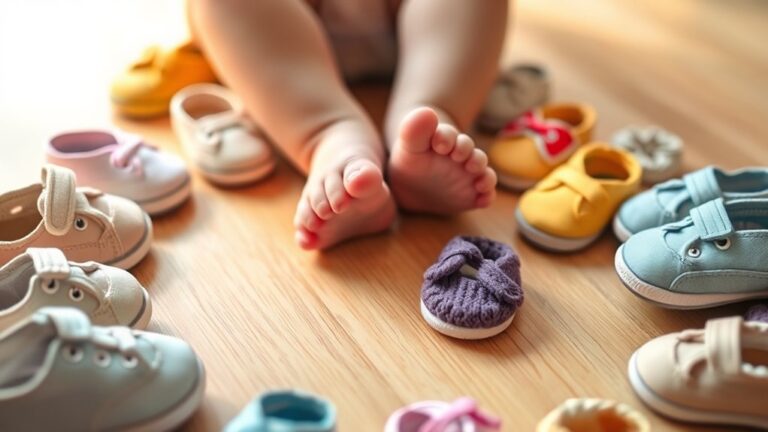
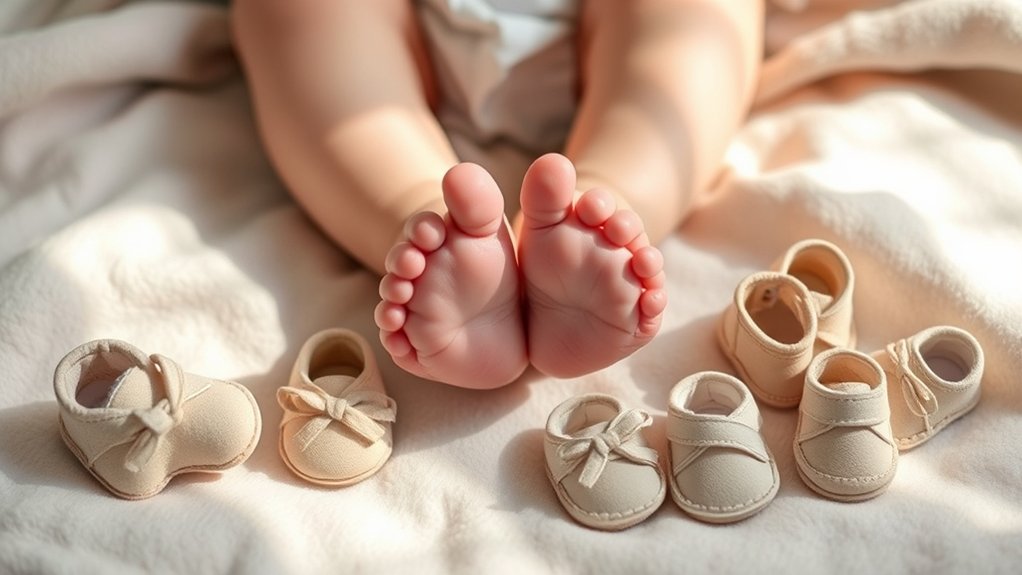
At 9 months, your baby typically wears shoe sizes 2 to 4, with foot lengths around 3.5 to 4 inches. You should measure both feet, choosing the larger size, and add about half an inch for comfort and growth. Proper fit is essential to support healthy development and avoid discomfort.
Check fit every few months, making sure there’s enough toe room and no signs of tightness. Keep exploring to find the best shoes and fitting tips for your little one’s growing feet. It’s all about keeping those tiny feet comfy and happy as they grow!
Key Takeaways
- Infant shoe sizes for 9-month-olds typically range from size 2 to 4, corresponding to foot lengths of about 3.5 to 4 inches.
- Allow approximately 0.5 inches (1.3 cm) of extra space for comfort and foot growth when selecting shoes.
- Measure both feet regularly using a wall and paper method, choosing the larger foot size for shoe fitting.
- Soft, breathable materials and flexible soles support healthy foot development and provide comfort for 9-month-olds.
- Adjustable shoes with Velcro or laces accommodate rapid growth and ensure a secure, comfortable fit.
What Shoe Size Does a 9-Month-Old Baby Usually Wear?
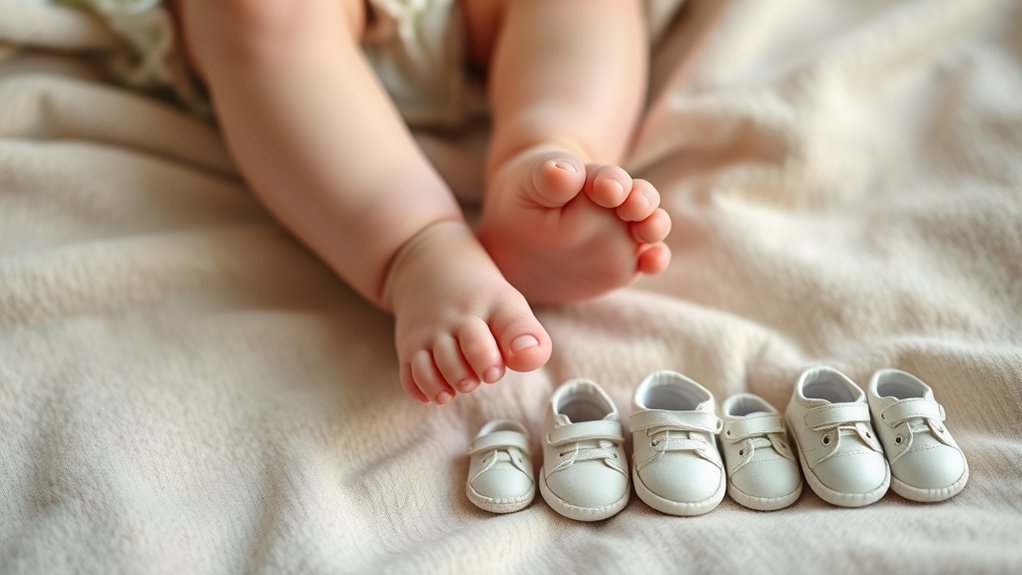
Although every baby grows at their own pace, a 9-month-old typically wears infant shoe sizes between 2 and 4.
At this age, their foot length usually ranges from about 3.5 to 4 inches. So, you’ll want to make certain shoes have around 0.5 inches of extra space for comfort and growth.
When choosing between socks versus shoes, remember that while socks offer warmth and flexibility, shoes provide needed protection and support.
This is especially true when your baby starts crawling or standing.
Look for baby shoe materials that are soft, breathable, and flexible to accommodate delicate feet without restricting movement.
Regularly measuring your baby’s feet helps you pick the right size and materials.
This careful choice supports comfort as they explore the world on their tiny feet.
Just keep an eye on those little feet, and you’ll be all set!
Why Proper Shoe Fit Supports Healthy Baby Foot Development
You want to make sure your baby’s shoes fit just right because that really helps support healthy foot growth and development. When shoes fit well, they let your little one’s toes move freely. That’s important because it helps keep their feet properly aligned, which can prevent discomfort and even deformities.
It’s a good idea to check their shoe size regularly. By doing this, you’re giving your baby the best foundation for balance and confident walking. After all, happy feet make happy steps!
Importance Of Proper Fit
How can you guarantee your baby’s feet develop healthily during those essential early months? Choosing shoes that fit properly is key. Proper fit ensures your baby’s toes have enough space to move freely, supporting healthy muscle development and reducing risks like bunions or ingrown toenails later.
It also enhances balance and stability, helping your little one gain confidence as they start walking. While fashion trends might tempt you, prioritize comfort and fit over style.
Pay close attention to material considerations. Soft, breathable fabrics allow flexibility and prevent irritation.
Regularly measuring your baby’s feet and adjusting shoe size prevents discomfort and foot issues caused by shoes that are too tight or too loose. By focusing on proper fit, you support your baby’s natural growth and encourage joyful, pain-free mobility.
Impact On Foot Growth
Why does proper shoe fit play such an essential role in your baby’s foot development? Properly fitted shoes, made with breathable footwear materials, allow your baby’s toes to move freely and prevent constriction.
Shoe design features like flexible soles and roomy toe boxes promote natural muscle and bone growth, which is critical during this rapid development phase. Ill-fitting shoes can hinder growth, causing discomfort, red marks, and even deformities over time.
Ensuring adequate space supports healthy circulation and encourages correct gait development, giving your little one stability as they start walking. Choosing shoes with these thoughtful design elements reduces the risk of future foot problems.
How to Measure Your 9-Month-Old’s Foot at Home
Since your baby’s feet grow quickly, measuring them accurately at home is essential to guarantee a comfortable shoe fit.
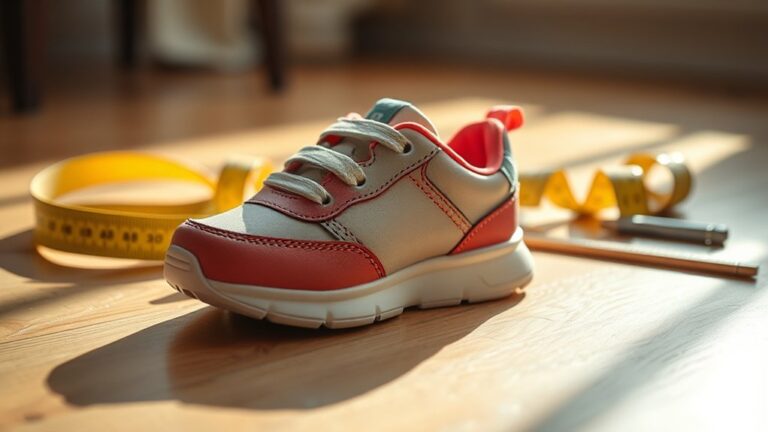
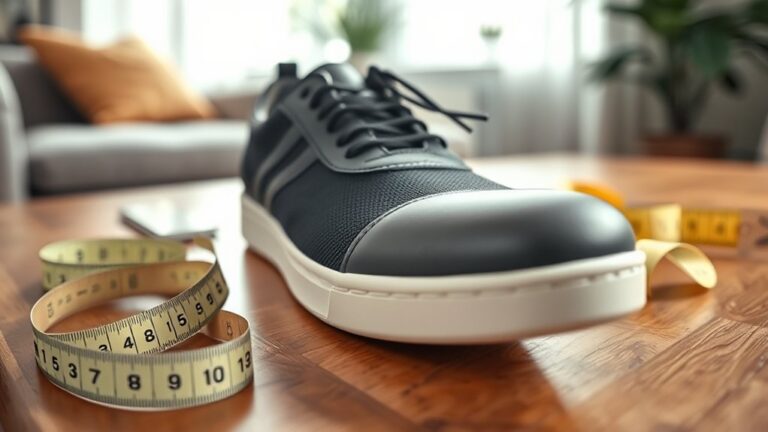
Start by placing your 9-month-old’s foot flat on a blank sheet of paper with the heel against a wall. Mark the tip of the longest toe and the back of the heel using a pencil.
Measure the distance between these marks in centimeters with a ruler. Repeat for both feet and use the larger measurement to choose shoes.
Keep in mind that shoe brand preferences and footwear materials affect sizing, so always check size charts carefully.
By measuring every few months, you’ll make sure the shoes fit well and support healthy foot development without causing discomfort.
This simple method helps you pick the best footwear for your growing baby.
How to Tell if Your Baby’s Shoes Fit Poorly
Although finding the right shoe size for your baby is important, you also need to recognize signs that their shoes fit poorly. Even if the shoe’s style matches current fashion trends or features soft shoe materials, a bad fit can cause discomfort.
Choosing the right baby shoe size is crucial—style and softness don’t replace a proper fit for comfort.
Here’s how to tell:
- Check the space at the tip. If it’s less than half an inch, the shoe is too small, which may cause red marks or blisters.
- Notice if your baby drags toes or trips frequently. Shoes that are too loose or tight affect walking stability.
- Feel inside the shoe. Your baby’s toes should move freely without feeling cramped or squeezed.
Paying attention to these signs helps your baby stay comfortable and safe as they explore. It’s worth keeping an eye on their shoes regularly!
When and How Often to Check Your Baby’s Shoe Size
You should measure your baby’s feet every 2 to 3 months during their first year because they grow so quickly.
It’s a good idea to keep an eye out for signs like red marks, tightness, or if your little one seems to have trouble walking.
When you notice those things, it’s definitely time to check their shoe size again.
Doing these regular checks helps make sure their shoes fit just right and support healthy foot development.
Frequency Of Size Checks
How often should you check your baby’s shoe size? During their first year, babies grow quickly, so it’s important to measure their feet regularly to make sure their shoes fit comfortably.
Here are some parenting tips to help you keep up with it: measure every 1 to 2 months because babies can grow 2 to 3 shoe sizes a year.
Always measure when your baby is standing, ideally in the late afternoon when their feet are a little swollen for accuracy.
You can use a reliable method like tracing their foot or a measuring device. Checking size often helps prevent discomfort that might mess with your baby’s sleep or cause foot problems.
If you stay consistent, you’ll keep your little one comfy and happy as they grow.
Signs To Reassess
Since babies’ feet grow quickly during their first year, it’s important to watch for clear signs that signal when it’s time to reassess their shoe size. Check if shoes feel tight, cause red marks, or if your baby’s toes press against the shoe edges. These signs mean the shoe material no longer accommodates your baby’s growing foot arch comfortably.
Also, remeasure if you notice your baby tripping or dragging toes while trying to walk. Use a foot measuring tool or trace their foot every 2 to 3 months to track size changes accurately.
Properly fitting shoes support healthy foot arch development and prevent discomfort. Staying attentive helps make certain your baby’s shoes provide the right fit and protection as their feet grow rapidly during this essential stage.
Best Shoe Styles for Baby’s First Steps
When your baby starts taking those exciting first steps, choosing the right shoe style becomes essential for their safety and foot development. You want shoes that combine fashion trends with practical features, so consider these top options:
Soft-soled shoes and first kicks offer flexibility and comfort, allowing natural foot movement. Shoes made from breathable, non-slip materials with thick, waterproof soles support stability and protect tiny feet.
Adjustable shoes with a secure fit prevent tripping and slipping, which is ideal for active early walkers.
Comparing brands helps you find styles that balance durability and style. Light-up slippers and aqua shoes can add fun while providing grip indoors and outdoors.
Just make sure to prioritize shoes that promote healthy growth by allowing proper toe space. That way, your baby’s first steps are both safe and stylish.
How Much Toe Room Should Baby Shoes Have?
Although choosing the right shoe style is important, you also need to guarantee your baby’s shoes have the proper amount of toe room. Aim for about 1 cm (half an inch) of extra space at the toe to allow for natural growth and movement. This space prevents discomfort and reduces the risk of foot deformities.
Remember, too little toe room squeezes the foot, while too much causes instability and tripping. Selecting shoes with soft, breathable shoe material and good sole flexibility supports healthy foot development by letting your baby’s toes move freely and naturally.
Regularly measuring your baby’s feet ensures the toe room stays just right as they grow, helping their feet stay comfortable and strong during this essential first year. It’s a simple step that makes a big difference!
How Adjustable Shoes Help Your Baby’s Growing Feet
Ensuring the right amount of toe room is just one part of keeping your baby’s feet comfortable as they grow. Adjustable shoes, with Velcro straps or laces, offer a customizable fit that adapts to your baby’s rapid foot growth. This helps prevent discomfort and supports stability during those early steps.
Plus, many adjustable shoes follow current fashion trends, so your little one looks stylish while staying comfortable.
Here’s how adjustable shoes benefit your baby:
- They reduce pressure on developing feet, promoting material safety and comfort.
- Their adjustable design extends shoe lifespan by accommodating growing feet.
- They enable quick, secure fitting, making it easier for you to support your baby’s confidence and independence.
Choosing adjustable shoes blends safety, comfort, and style perfectly. It’s a simple choice that makes a big difference for your baby’s growing feet.
How to Use Baby Shoe Size Charts and Convert Measurements
To find the perfect shoe size for your 9-month-old, you’ll need to measure their foot accurately and use a reliable size chart. Place their heel against a wall, mark the tip of the longest toe, and measure the length. Add about 0.5 cm for comfort and growth.
Then, consult the size chart to convert this measurement into US, UK, or EU sizes. Remember, baby shoe sizes change quickly, so re-measure frequently. When choosing shoes, consider both fashion trends and shoe materials to guarantee comfort and style.
Here’s a simple conversion example:
| Foot Length (cm) | US Size | EU Size |
|---|---|---|
| 11.5 | 3 | 18 |
| 12.0 | 4 | 19 |
| 12.5 | 4.5 | 20 |
This helps you pick the best fit every time.
Frequently Asked Questions
Can 9-Month-Old Babies Wear Hand-Me-Down Shoes Safely?
You can use hand-me-down shoes safely if you check baby shoe styles for flexibility, breathability, and proper fit.
Make sure to measure your baby’s feet regularly. This helps ensure the shoes still fit well and allow enough room for healthy foot growth.
Just keep an eye on those factors, and hand-me-down shoes can work just fine!
Are There Specific Shoe Materials Best for Babies at This Age?
You’ll find that 80% of baby shoe materials should be soft and breathable. Choose leather or cotton for ideal footwear choices. They support healthy foot growth, prevent irritation, and guarantee comfort.
This way, your baby can explore confidently without any discomfort. Soft, breathable materials really make a difference for those tiny feet. It’s all about keeping them happy and healthy as they grow.
How Do Seasonal Changes Affect Baby Shoe Size or Fit?
Seasonal changes affect your baby’s shoe fit by causing feet to swell or shrink. Adjust shoe size with seasonal clothing to guarantee climate comfort. This helps prevent tightness in summer and snugness in winter for happy, healthy feet.
It’s pretty important to keep an eye on how your baby’s feet change with the seasons. That way, you can make sure their shoes always feel just right. After all, comfy shoes mean happy little steps!
Should Socks Be Considered When Choosing Shoe Size for Babies?
Yes, you should consider sock thickness when choosing baby shoes. Thicker socks affect shoe fit, so measuring feet with typical socks on guarantees comfort and proper support. This helps prevent shoes from feeling too tight or restrictive.
It’s all about making sure your little one’s feet have enough room to move and grow. Plus, comfy shoes mean happier babies! So, don’t forget those socks when you’re picking out shoes.
Can Improper Shoe Size Cause Long-Term Foot Problems in Babies?
Yes, improper shoe size can harm your baby’s foot development. Prioritizing shoe safety guarantees natural growth, prevents deformities, and supports healthy motor skills. Always choose well-fitting shoes that allow comfort and proper foot alignment.
It’s really important to pay attention to how shoes fit early on. Babies’ feet grow fast, and tight or loose shoes can cause issues down the road. So, taking the time to pick the right size makes a big difference.
Conclusion
Choosing the right shoe size for your 9-month-old might feel like solving a mystery bigger than the universe, but it’s worth every step. Proper fit supports healthy foot development and keeps your baby comfortable as they explore.
Measure regularly, allow enough toe room, and pick adjustable styles to keep up with their growing feet. Remember, a well-fitted shoe is the first step toward a lifetime of happy, confident walking. You’ve got this!