Is Your Ring Size The Same As Your Shoe Size – Truth Explained
Your ring size is not the same as your shoe size because they measure completely different parts of your body. One is about finger circumference, and the other is about foot length and width. There’s no scientific link between the two, and body proportions vary too much for any reliable comparison.
Factors like height and weight affect shoe size but don’t have much to do with finger size. So guessing your ring size from your shoe size just won’t work.
Understanding these differences helps guarantee a proper fit. And trust me, there’s more to discover about getting your ring size right.
Key Takeaways
- Ring size measures finger circumference, while shoe size reflects foot length and width, making them unrelated measurements.
- No scientific or biological correlation exists between finger size and shoe size due to independent body part development.
- Body proportions vary widely, so small feet do not imply small fingers, and vice versa.
- Relying on shoe size to estimate ring size is inaccurate and commonly leads to wrong sizing assumptions.
- Accurate ring sizing requires direct finger measurement using a flexible tape or ring sizer for the best fit.
What’s the Difference Between Ring Size and Shoe Size?
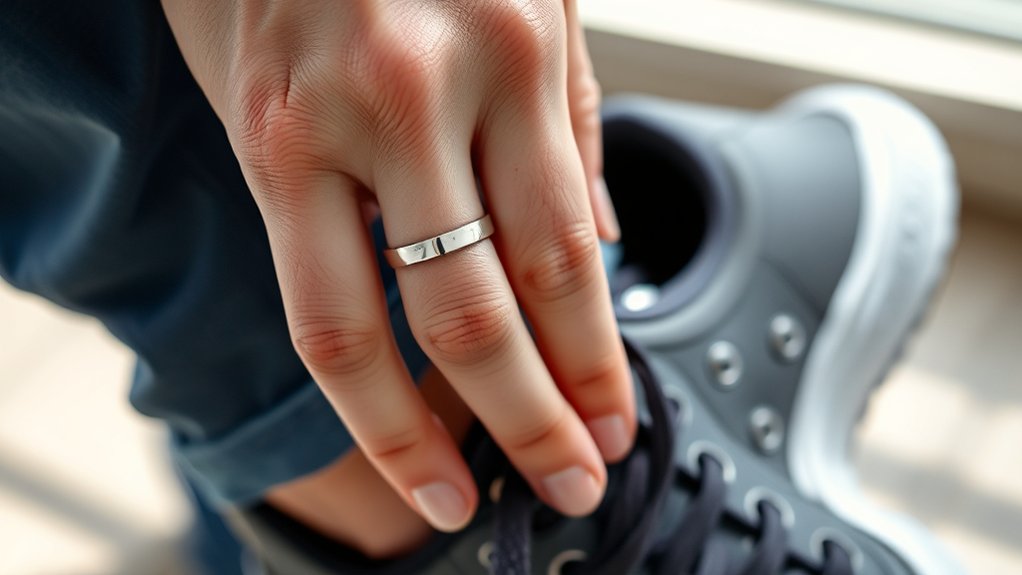
Although both ring size and shoe size involve measurements, they assess completely different parts of your body using distinct systems. Your ring size measures the circumference or diameter of your finger, typically in millimeters or standardized charts. It reflects finger anatomy, including knuckle size and taper.
In contrast, shoe size gauges the length and width of your foot in inches or centimeters, influenced by foot shape, height, and weight. These differences mean there’s no reliable correlation between your shoe size and ring size.
When selecting jewelry materials or keeping up with fashion trends, understanding your exact ring size is essential for comfort and fit. Unlike shoe sizing, ring sizing demands precision tailored to your finger’s unique dimensions.
This ensures your jewelry looks and feels perfect.
Why Do People Think Ring Size Matches Shoe Size?
You might think your ring size matches your shoe size because it seems like your body proportions should be consistent. A lot of people assume that if you have slim fingers, you must have slim feet too. That’s a pretty common belief!
But actually, these measurements have nothing to do with each other. They follow completely different sizing systems, even though some cultural myths might make you think otherwise.
Body Proportion Assumptions
Since many people assume that body parts scale proportionally, they often believe that a person’s ring size should match their shoe size. However, genetic variations and evolutionary factors lead to significant differences in how body parts develop. Your fingers and feet don’t necessarily grow in tandem or maintain similar proportions.
While it might seem intuitive that slim fingers correspond with slim feet, this isn’t supported by biological evidence. The sizing systems for rings and shoes measure completely different dimensions, circumference versus length, which makes direct comparisons tricky.
Because of these factors, your ring size and shoe size are independent of each other. They reflect the complex variability in human body proportions shaped by diverse genetic and evolutionary influences rather than any straightforward correlation.
Common Misconceptions
Misunderstandings about body proportions often lead people to assume that ring size should match shoe size. You might think slim fingers mean slim feet, but this misconception overlooks the fact that ring and shoe sizes use entirely different measurement systems. There’s no scientific basis linking them, and anecdotal evidence shows wide variability.
Small feet don’t guarantee small fingers, and vice versa. This myth persists despite expert advice and clear evidence to the contrary.
Plus, when selecting rings, factors like material durability and design aesthetics matter more than shoe size assumptions.
Rings must fit comfortably and withstand wear, which shoe size tells you nothing about. Understanding these distinctions prevents confusion and helps you choose the right ring size based on actual measurements, not unfounded beliefs.
Common Myths About Ring Size and Shoe Size Explained
You might think your shoe size can predict your ring size, but that’s actually a common misconception. There’s really no scientific proof that the two are connected. Your fingers and feet just vary independently.
So if you try to guess your ring size based on your shoe size, you’ll probably end up with the wrong measurement.
The best way to get the perfect fit? Always measure your ring size directly. Don’t rely on shoe size or any other guesswork—just go for a proper ring sizing to be sure.
Debunking Size Correlation
Although it might seem intuitive to link your shoe size with your ring size, the two are actually unrelated measurements of different body parts using separate sizing systems.
Shoe sizes are based on foot length, measured in inches or centimeters. On the other hand, ring sizes depend on the finger’s circumference or diameter in millimeters.
Despite popular belief, there’s no scientific correlation between the two. Fashion trends and cultural influences sometimes encourage assumptions about body proportions, but those assumptions don’t hold up.
Many people have small feet with large fingers or the opposite, proving these sizes don’t predict one another.
So, relying on shoe size to estimate ring size can lead to ill-fitting jewelry. It’s really important to measure your ring size properly instead of trusting misconceptions or casual guesses.
That way, you’ll get the perfect fit every time.
Common Sizing Misconceptions
When people try to guess ring sizes based on shoe sizes, they often fall prey to several widespread myths that distort how body measurements actually relate. Here are common misconceptions you should avoid:
- Assuming proportionality: Fashion trends don’t dictate that finger and foot sizes scale together. Body parts vary independently, so it’s risky to assume they match up.
- Ignoring measurement methods: Shoe sizes measure foot length, while ring sizes measure finger circumference. These are different units, so there’s no direct link between the two.
- Overlooking material differences: Rings and shoes use distinct sizing standards influenced by materials. This affects fit and comfort in unique ways, making comparisons tricky.
- Relying on formulas: Using shoe size to estimate ring size often leads to errors. Only precise measurement can guarantee a perfect fit.
Understanding these facts helps you avoid sizing mistakes. It also makes sure your accessories fit comfortably and accurately.
Real Stories That Bust the Ring and Shoe Size Myth
Since many assume a direct connection between shoe size and ring size, hearing real stories that contradict this belief can be eye-opening. Historical myths and cultural beliefs have long suggested a link between the two, but personal anecdotes reveal otherwise.
Individuals with shoe sizes as large as 9, 10, or even 11 often wear ring sizes as small as 4.25 to 6.
These examples clearly show no consistent correlation. Even tall women with bigger feet frequently have small ring sizes, disproving any straightforward relationship between foot and finger dimensions.
These real-life accounts demonstrate that body proportions vary independently, busting the myth that shoe and ring sizes align.
Understanding this helps you avoid relying on outdated assumptions when determining ring size. It’s always better to measure directly or ask for the size rather than guessing based on shoe size.
After all, your fingers and feet don’t necessarily follow the same sizing rules!
How Finger Shape, Knuckles, and Temperature Affect Ring Fit
Real-life stories debunking the shoe and ring size myth highlight how individual body characteristics vary widely. Your finger shape, knuckle size, and temperature all influence how a ring fits. Consider these key factors:
- Finger shape varies; wider or tapered fingers need different ring sizes for comfort.
- Knuckles are often larger than the finger base, so rings must slide over knuckles without being loose below.
- Temperature affects finger size—heat causes swelling, making your fingers larger temporarily.
- Cold contracts finger tissues, shrinking finger size and potentially loosening the ring.
Understanding these factors guarantees you choose the right ring size that fits comfortably throughout the day. It also helps you account for natural fluctuations in finger shape and knuckle size.
Why Doesn’t Shoe Size Predict Your Ring Size?
Although you might assume there’s a link between shoe size and ring size, they measure fundamentally different things: foot dimensions versus finger circumference. Shoe size gauges foot length and width, while ring size depends solely on your finger’s circumference. There’s no scientific correlation, as body proportions vary widely.
Someone with small feet may have large fingers, and vice versa. Factors influencing shoe size, like height and weight, don’t affect finger size, making any perceived connection purely coincidental.
Plus, fashion trends and cultural differences shape how people wear rings and shoes, which breaks any assumptions that one size predicts the other.
To guarantee a perfect fit, you need to measure your finger directly rather than guessing based on shoe size or other unrelated body measurements. It’s really the only way to be sure.
How to Accurately Measure Your Ring Size at Home
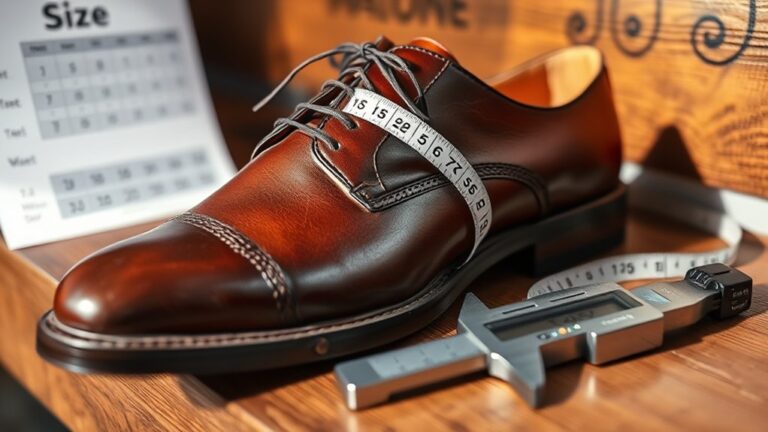
When you want an accurate ring size, you should measure your finger directly at home using simple tools like a flexible measuring tape or a piece of string.
Historical fashion and cultural differences show ring sizes vary widely, making precise measurement essential.
Follow these steps:
- Wrap the flexible tape or string around the widest part of your finger.
- Measure the length with a ruler, making sure your finger is at a normal temperature to avoid swelling effects.
- Do this measurement at the end of the day when your finger is largest.
- Repeat multiple times, then compare the average circumference to a reliable ring size chart.
This method helps you account for natural finger size changes.
Plus, it respects both historical and cultural sizing variations accurately.
How to Pick the Right Ring Size Without Guessing
Since guessing your ring size can lead to discomfort or the need for resizing, it’s essential to measure your finger accurately. Use a flexible measuring tape or a ring sizer to get precise circumference or diameter, ideally at the end of the day when swelling is minimal.
Avoid measuring when your fingers are cold or hot, as this affects accuracy.
It’s a good idea to consult a printable ring size chart or visit a jeweler, especially when selecting rings made from delicate jewelry materials that may not resize easily.
If your measurement falls between sizes, choose the larger one for comfort and ease of removal.
Remember, ring size varies widely, unlike fashion trends, so don’t ever base your ring size on shoe size or finger appearance.
Accurate sizing guarantees a perfect fit every time.
Frequently Asked Questions
Can My Ring Size Change Over Time?
Yes, your ring size can change over time due to factors affecting ring size stability. To maintain measurement accuracy, you should regularly check your size, especially during weight changes, pregnancy, or seasonal temperature shifts.
It’s pretty common for your fingers to swell or shrink a bit depending on these things. So, don’t be surprised if your ring fits differently after a while. Just keep an eye on it, and you’ll be good!
Do Different Countries Use the Same Ring Size Standards?
When it comes to international sizing, don’t put all your eggs in one basket. Different countries use unique ring size standards.
There are measurement differences in diameters, circumferences, or letters. So, always check specific conversion charts before buying.
How Do Weight Fluctuations Affect Ring Size?
Weight fluctuations directly affect your ring size by causing finger swelling or shrinking. When you gain weight, your fingers may swell, making rings feel tighter. On the other hand, losing weight can loosen them.
Sometimes, these changes can even lead to permanent shifts in your ring size over time. So, it’s pretty common for your rings to fit differently as your weight goes up or down. Just something to keep in mind if your rings start feeling a bit off!
Are There Special Tools for Measuring Ring Size Professionally?
Yes, you’ll use specialized measuring tools like ring sizers, mandrels, and digital calipers for a professional fitting. These tools guarantee accuracy, letting you confidently find the perfect ring size without guesswork or discomfort.
They make the whole process way easier and more precise. So, no more stressing about whether a ring will fit right or not!
Can Finger Swelling Impact Ring Comfort During Exercise?
Yes, finger swelling can impact exercise comfort by making your rings feel tight or uncomfortable. Increased blood flow and fluid retention during exercise cause swelling. So, it’s best to remove rings to avoid discomfort and potential damage.
Wearing rings while your fingers are swollen can really mess with your workout. It might feel annoying or even painful. Taking them off beforehand is usually the easiest way to stay comfortable.
Conclusion
So, unless you’re planning to wear a sneaker on your finger or a ring on your foot, don’t trust the shoe size equals ring size fairy tale. Your fingers have their own quirky shape, temperature mood swings, and knuckle drama that shoes simply can’t predict.
Measure your ring size properly. Skip the guessing game. Because let’s face it, you want a ring that fits like a glove, not a shoehorned surprise.