What Is My Shoe Size – Easy Ways To Find Out
To find your shoe size easily, measure both feet’s length and width at the end of the day when swelling peaks. Stand on paper, trace your foot with knees bent, and mark the heel and longest toe for length. Then, measure the widest part for width.
Use the larger foot’s measurement and consult Nike’s size charts to convert to US, EU, or UK sizes. Wearing the socks you plan to wear with the shoes guarantees accuracy.
You’ll also want to learn how to select wide fits and confirm proper sizing for comfort and support. It really makes a difference when you get the right fit!
Key Takeaways
- Measure your feet at the end of the day when swelling is greatest for the most accurate size.
- Stand on paper with socks on, trace your foot, and measure length and width precisely using a ruler.
- Measure both feet separately and use the larger measurement to determine your shoe size.
- Use official size charts and conversion tables to find your size across US, UK, EU, and other standards.
- Consider foot width and select wide or extra-wide shoes if your foot width exceeds 3.2 inches for better comfort.
How To Measure Your Foot Length And Width Accurately
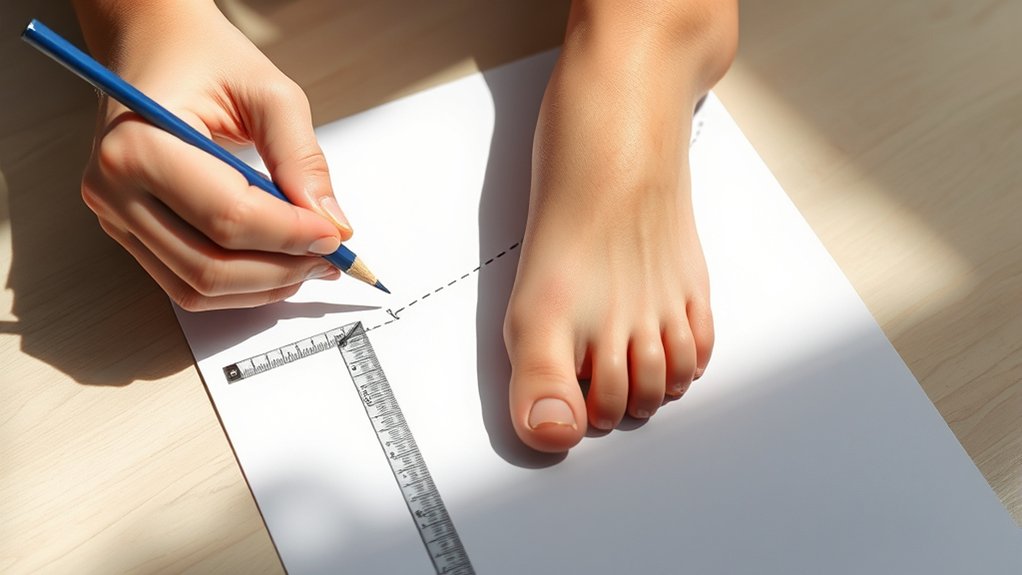
When measuring your foot length and width accurately, it’s best to do so at the end of the day. That’s because your feet tend to swell and reach their largest size by then.
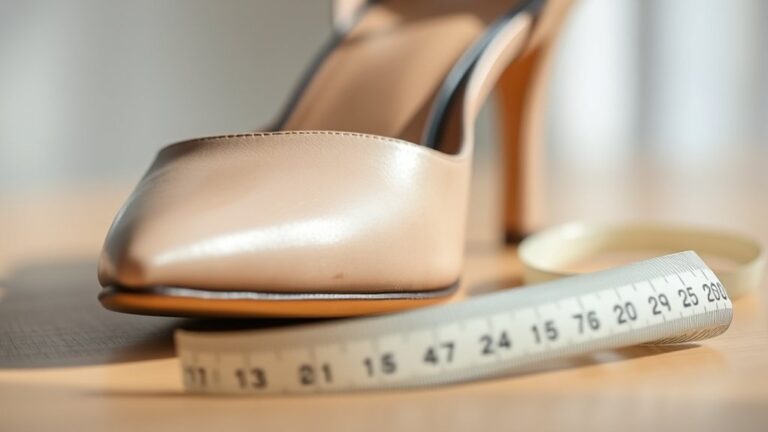
Stand on a hard floor with one foot on a piece of paper, knees slightly bent. Trace your foot’s outline with a pen, marking the tip of the longest toe and the heel.
Use a ruler to measure the distance between these points for precise foot length.
For width, measure across the widest part of your foot, usually the ball area.
Accurate measurements help you select footwear that fits well and complements the shoe material’s flexibility and durability. This ensures comfort and performance.
This technical approach guarantees a proper fit aligned with your foot’s true dimensions. It really pays off to take the time and get your measurements right.
Why Measuring Both Feet Matters For Finding Your Shoe Size
Why should you measure both feet before determining your shoe size? Feet rarely exhibit perfect symmetry. One foot often differs in length or width from the other.
Measuring both feet guarantees you capture these variations. This is vital for accurate shoe fitting. Since feet can differ by up to half a shoe size or more, relying on a single measurement risks selecting shoes that are too tight or loose on one foot.
By using the larger foot’s measurement, you prevent discomfort, pressure points, and potential foot issues caused by inadequate space. Ignoring asymmetry can lead to poor shoe fitting.
Using Your Measurements To Pick The Right Nike Shoe Size
To pick the right Nike shoe size, start by measuring your foot length at the end of the day. Feet tend to swell with activity, so this gives you the most accurate size. Measure both feet while wearing the socks you plan to use. Then take the larger measurement to guarantee a comfortable fit.
Use Nike’s official size charts to convert your foot length in inches or centimeters to the right US, European, or UK size.
Keep in mind that shoe material affects fit. Some materials stretch while others stay rigid.
Picking the correct size helps prevent foot pain caused by tightness or improper support. By using precise measurements and checking Nike’s specific charts, you make sure the shoe fits your foot’s dimensions. This also reduces discomfort when you wear them.
Men’s Vs. Women’s Nike Shoe Sizes: What You Need To Know
Although Nike offers shoes for both men and women, their sizing systems differ by approximately 1.5 sizes, with women’s sizes generally smaller than men’s. You should always convert sizes accurately. Just subtract 1.5 from men’s sizes to find women’s equivalents.
This distinction accounts for differences in foot shape and width, ensuring an *ideal* fit across various shoe materials. Also, note that color options might vary between men’s and women’s lines. So, always check product specifics before you buy.
| Men’s Size | Women’s Size Equivalent |
|---|---|
| 6.5 | 8 |
| 8 | 9.5 |
| 10 | 11.5 |
When To Choose Wide Or Extra-Wide Nike Shoes
If your foot width exceeds the standard measurement, specifically over 3.2 inches across the ball of the foot, you should consider wide or extra-wide Nike shoes. Accurate width measurement helps you figure out whether models like Nike Pegasus or Nike Monarch in wider fits suit you better.
These versions accommodate broader foot shapes, reducing tightness, pinching, or redness caused by standard widths.
Designed for wider feet, these styles minimize discomfort like tightness and redness from regular-width shoes.
When selecting, keep in mind that Nike offers various shoe color options and different shoe materials. Mesh uppers enhance breathability, while leather provides more support.
Choosing the correct width guarantees maximum comfort, proper foot support, and helps prevent discomfort during activity.
Always compare your measurement with Nike’s width charts to confirm the ideal wide or extra-wide fit for your specific foot shape and needs. That way, you can make sure your shoes feel just right every time.
How To Tell If Your Nike Shoes Fit Properly
To make sure your Nike shoes fit just right, begin by checking that there’s about a thumb’s width of space between your longest toe and the front of the shoe. You don’t want it too tight or too loose.
Next, pay attention to your heel. It should feel snug and stay in place without slipping as you walk. Be sure to tie the laces securely to keep everything locked in.
Finally, take a look at the arch of the shoe. It should line up with your foot’s arch comfortably—no pressure or discomfort. If it feels off, the fit mightn’t be quite right.
Checking Toe Box Space
When you check the toe box space in your Nike shoes, aim for about a thumb’s width, roughly 0.5 inches, between your longest toe and the front of the shoe. This gap guarantees your toes have enough room to move naturally without feeling cramped.
The shoe material affects flexibility. Softer, stretchable uppers can accommodate slight variations in foot arch and toe spread. You should be able to wiggle your toes comfortably, which means the toe box isn’t too tight.
If the shoe feels restrictive across the top of your toes or causes discomfort during walking, the toe box is too small. On the other hand, if there’s too much space causing your toes to slide around, that suggests an oversized toe box.
Always test fit by mimicking your typical activity to make sure the toe box supports natural foot movement. This way, you’ll know your shoes fit just right.
Heel Stability Indicators
Although many people focus on toe box fit, you should also make sure your Nike shoes provide proper heel stability for peak performance. Heel slippage over half an inch is a sign of a poor fit, which can lead to heel irritation. Your heel should feel snug and aligned to prevent too much internal movement.
Keep an eye out for redness or blisters—they usually mean your heel fit isn’t quite right.
Use this table to check heel stability indicators:
| Indicator | What It Means |
|---|---|
| Heel Slippage | Should be minimal (< 0.5 inch) |
| Heel Irritation | Redness/blisters suggest looseness |
| Heel Alignment | Heel stays aligned with foot |
Checking these signs helps make sure your Nike shoes give you the heel stability you need. This is key for comfort and avoiding injuries.
Assessing Arch Support
Ensuring your Nike shoes provide proper heel stability sets a strong foundation. But you also need to assess arch support to achieve the ideal fit and function. Proper arch support aligns with the natural curve of your foot, enhancing shoe comfort and preventing pressure points.
When trying on Nike shoes, stand and feel the arch area. It should be firm yet comfortable, not collapsed or overly flattened. Make sure your foot’s arch centers over the shoe’s support region to guarantee the best fit.
Key points to check include the firmness and contour of the arch support matching your foot’s arch. Also, watch for any pain or fatigue in the arch after walking. And see if the shoe provides stability that prevents heel slippage during movement.
Proper arch support helps maintain foot alignment. This reduces the risks of overpronation or supination. So, paying attention to arch support really makes a difference in comfort and foot health.
Measuring And Sizing Nike Shoes For Kids
To measure your child’s foot accurately, start by tracing their foot outline on a piece of paper. It’s best to do this at the end of the day when their feet are a bit swollen from activity. Make sure they’re wearing socks during the tracing too.
Once you have the outline, use Nike’s kids size guide to turn those measurements into the right shoe size. It’s pretty straightforward and helps you pick the perfect fit.
Finally, double-check the fit by making sure there’s about a thumb’s width of space at the toe. The shoe should also feel comfortable and support the width of their foot nicely.
This way, you know their shoes will feel great all day long.
Accurate Foot Measurement
When measuring your child’s feet for Nike shoes, you should do so at the end of the day. That’s when foot swelling is at its peak, giving you the most accurate size. Proper foot measurement makes sure the shoe material fits comfortably. This helps reduce pressure points and even minimizes foot odor caused by friction.
Here’s how you can get precise sizing: Have your child stand flat on a piece of paper. Then, trace their foot and mark both the heel and the longest toe. Use a ruler or tape to measure the heel-to-toe length for each foot separately.
Always select the larger measurement. This way, you can accommodate growth and ensure comfort. Accurate measurement prevents an improper fit and protects your child’s foot health. Plus, it helps get the most out of the shoe’s performance.
Nike Kids Size Guide
Although foot size can fluctuate throughout the day, measuring your child’s feet at the end of the day provides the most accurate basis for selecting Nike Kids shoes.
Use a ruler or tape measure to trace each foot on paper, marking the toe tip and heel to determine length precisely.
Always measure both feet and size the shoe based on the larger measurement.
Consult Nike’s Kids size chart to convert foot length into the correct shoe size.
When choosing, consider that the shoe material should offer flexibility and support while accommodating growth.
Also, Nike Kids shoes come in various color options, letting your child express their style without compromising fit.
Make certain there’s about a thumb’s width of space in the toe box for comfort and movement.
It really makes a difference in how comfortable the shoes feel!
Signs Of Proper Fit
Accurately measuring your child’s feet is only the first step in confirming Nike shoes fit properly. You need to verify key fit indicators to guarantee comfort and performance. Also, consider factors like shoe color preferences and material durability, which might influence your selection.
Look for these signs of proper fit:
- A fingertip’s space between the longest toe and shoe front, preventing cramping during growth.
- A heel that remains securely in place without slipping, ensuring stability while walking or running.
- Toe box comfort with no pinching or tightness, even after extended wear, and no redness or blisters indicating improper width.
Regularly checking these fit markers ensures that Nike shoes accommodate your child’s growing feet effectively. This helps maintain durability without sacrificing comfort.
Common Mistakes To Avoid When Measuring Your Feet
Since foot size can vary throughout the day and between each foot, you should measure both feet at the end of the day to capture the most accurate dimensions. Avoid measuring only length; consider width too so you can accommodate your foot shape and how flexible the shoe material is.
Wearing the socks you plan to use with your shoes is essential. This is especially important when thinking about current footwear fashion trends that might affect how the shoes fit. Don’t just rely on shoe size numbers — always cross-reference size charts for the best accuracy.
| Common Mistake | Impact | Solution |
|---|---|---|
| Measuring only one foot | Poor fit for the other foot | Measure both feet |
| Measuring in the morning | Underestimates foot size | Measure at day’s end |
| Ignoring foot width | Discomfort, tight or loose fit | Include width measurement |
| Wrong socks worn | Inaccurate sizing | Use intended socks during measurement |
How To Convert Your Foot Measurements Across Size Systems
When you measure your foot length in inches or centimeters, you’ll need to convert that measurement into the sizing system of your target shoe region, such as US, UK, European, or Canadian sizes. Accurate conversion is really important in footwear fashion to make sure your chosen shoe fits comfortably and performs well.
Measuring foot length accurately and converting it to regional sizes ensures the perfect shoe fit and comfort.
Here’s what you can do: consult specific size charts for the brand or style you want. Keep in mind, European sizes often run larger than US or UK sizes.
Next, use online conversion tables to translate your foot length into regional sizes. Also, remember that Nike has a 1.5 size difference between men’s and women’s shoes.
Finally, measure your foot precisely before using these charts to avoid any sizing errors. It’s a simple step that makes a big difference!
Frequently Asked Questions
How Often Should I Measure My Feet for Accurate Sizing?
You should measure your feet every 2 to 3 months to track changes in shoe width and arch height.
If you’re growing quickly or switching shoe styles, measure more often to guarantee a precise fit and comfort.
It really helps to keep your shoes feeling just right!
Can Foot Size Change With Age or Weight Fluctuations?
Yes, your shoe width and arch height can shift with age and weight changes. Ligament weakening lowers arch height, while weight fluctuations alter foot width.
This means you might need to reassess your shoe size regularly to ensure the best fit and support. It’s a good idea to keep an eye on these changes so your feet stay comfortable.
Are There Specific Times of Day Best for Measuring Feet?
You should measure your feet late afternoon or evening, when swelling peaks. This timing ensures accurate sizing for footwear fashion and ideal shoe maintenance.
It accounts for daily foot expansion, which helps prevent discomfort and premature wear in your shoes. So, measuring at this time means your shoes will fit better throughout the day.
Taking this simple step can really make a difference in how comfortable your shoes feel. Give it a try next time you shop for footwear!
How Do Insoles or Orthotics Affect Shoe Sizing?
Insole thickness increases internal shoe volume, so you’ll often need a larger size. Orthotic fit changes how your foot sits inside the shoe, which can mean going up a half size to keep things comfortable and aligned.
It’s a good idea to measure your foot while wearing orthotics. This helps you get a precise fit and avoid any surprises when you try on shoes.
What Materials in Shoes Impact the Fit and Comfort?
Shoe material considerably impacts fit and comfort enhancement. Leather molds to your foot, synthetic materials offer less flexibility, and mesh provides breathability.
The midsole’s EVA or foam cushioning also plays a key role in overall comfort and support. These materials work together to make sure your shoes feel good throughout the day. It’s all about finding the right balance for your needs.
Conclusion
Finding your perfect shoe size is like tuning a fine instrument. Precision really matters. Just like a violinist measures every string’s tension for flawless sound, measuring both feet accurately guarantees your Nike shoes fit comfortably.
Remember, 68% of people wear the wrong size because they don’t consider width or foot variations. By following these simple steps, you’ll avoid common pitfalls. You’ll step confidently into shoes that support your stride every time.