What Does 9H Mean In Shoe Size – Size Meaning Explained
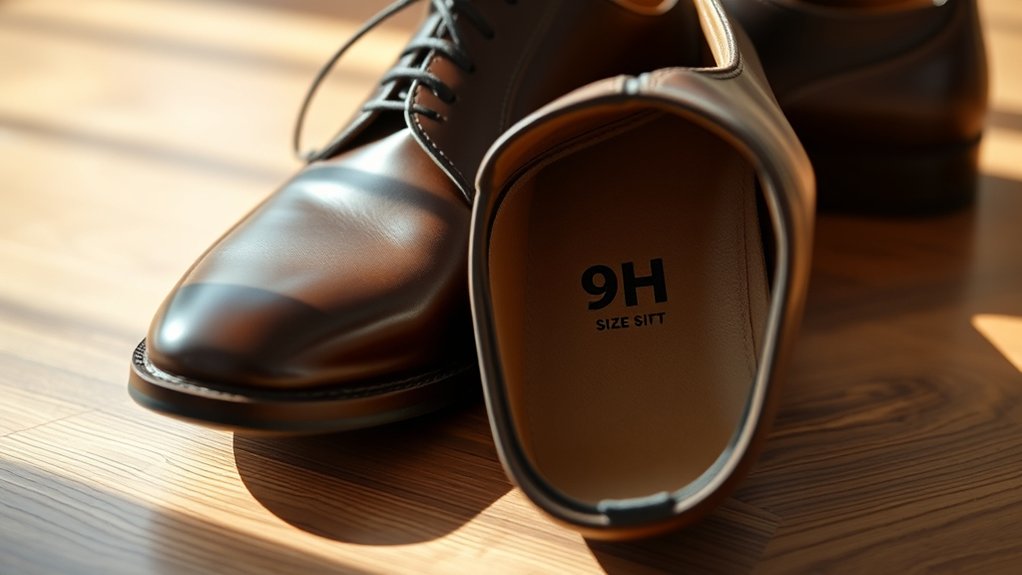
When you see 9H in shoe sizing, the “9” refers to the shoe’s length, matching your foot size for an accurate fit. The “H” indicates an extra-wide width, designed for broader or higher-volume feet. This provides more space across the forefoot and midfoot.
It helps prevent discomfort and supports foot health, especially if you have wider feet. Materials and brand standards can affect fit, so understanding these details guarantees better comfort. Explore further to learn tips for measuring and choosing your perfect 9H fit.
Key Takeaways
- 9H indicates a shoe size with length “9” and an extra-wide width “H” for broader or higher-volume feet.
- The number “9” reflects the shoe’s internal length, matching standardized foot length measurements.
- Width “H” offers additional space across the forefoot and midfoot for improved comfort and foot health.
- Material flexibility affects fit; wider widths like “H” fit better with stretchable fabrics than rigid uppers.
- Proper measurement and brand comparison are essential, as 9H width can vary across manufacturers.
What Does 9H Mean in Shoe Sizing?

What exactly does 9H signify in shoe sizing? The number 9 refers to the length of the shoe, while the letter H indicates the width.
In many sizing systems, H denotes an extra-wide fit, accommodating broader feet.
Understanding this combination is crucial because it directly impacts comfort and shoe durability. Wearing the correct width prevents undue stress on seams and materials, which helps extend the lifespan of your footwear.
Plus, fashion trends are increasingly emphasizing both style and fit. That makes precise sizing like 9H necessary for maximum performance and appearance.
What Does the Number 9 Mean in Shoe Size?
The number 9 in shoe sizing specifies the length of the shoe, measured according to standardized foot length charts. When you see a size 9, it indicates the shoe’s internal length is designed to fit a foot that matches that specific measurement. This sizing guarantees consistency across different brands and styles, despite variations in shoe material, which can affect fit and flexibility.
For example, leather shoes might stretch slightly, whereas synthetic materials hold their shape more rigidly. Understanding the number 9 helps you select shoes that accommodate your foot length accurately, improving comfort and performance.
Additionally, fashion trends often influence the availability and design of size 9 shoes, making it easier for you to find styles that align with current aesthetics while maintaining proper fit.
What Does the Letter H Mean in 9H Shoe Width?
You might be wondering what the letter “H” means in a 9H shoe width. Well, it actually refers to a specific width measurement.
Basically, the “H” helps you find shoes that fit wider feet comfortably. So, when you see a width like “9H,” it’s all about making sure the shoe matches the shape of your foot.
Knowing how these width letters work, like “H,” can really help you pick the right shoes for proper support and comfort.
Understanding Shoe Width Letters
Although shoe size typically focuses on length, width letters like “H” play an essential role in ensuring a proper fit. These width indicators, ranging from narrow to extra wide, help you select shoes that accommodate your foot’s breadth. This enhances both comfort and performance.
The letter “H” specifically denotes a wider fit than standard. It’s vital when balancing comfort versus style. While shoe color options impact aesthetic appeal, width letters directly influence how the shoe supports and fits your foot. This helps prevent discomfort or injury.
Understanding these letters allows you to choose footwear that aligns with your foot anatomy, no matter your design preferences. Always consider both length and width when purchasing shoes.
This way, you achieve an ideal fit, comfort, and functionality tailored to your needs.
H Width Characteristics
When selecting a 9H shoe width, you’ll find that the letter H indicates a shoe designed to accommodate wider feet than the standard medium width. This width classification guarantees that the shoe’s internal dimensions provide additional space across the forefoot and midfoot areas.
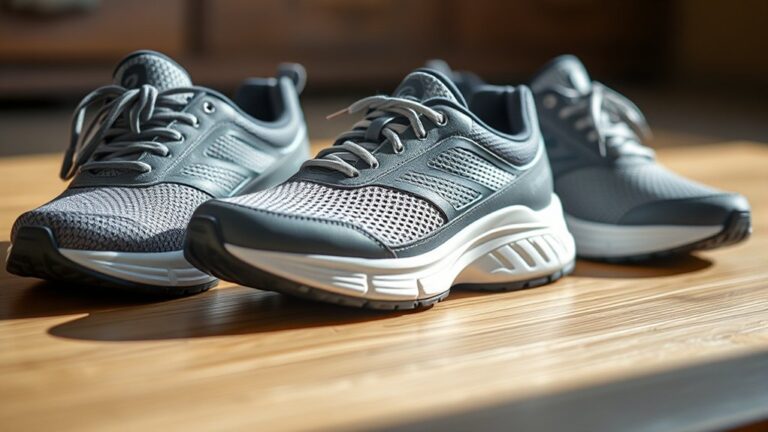
The shoe material plays a vital role in maintaining comfort and structural integrity within this wider configuration. Materials with flexible properties, such as mesh or certain leathers, adapt better to foot shape, enhancing shoe comfort. Conversely, rigid materials require precise width measurements to avoid pressure points.
Narrow, Medium, and Wide Shoe Widths Explained
You need to understand how narrow, medium, and wide shoe widths differ to find the best fit. Basically, shoe width standards use specific measurements to categorize these widths, so there’s some consistency across brands.
When you know these standards, it’s easier to pick shoes that match your foot’s dimensions accurately.
Understanding Shoe Widths
How do you determine the right shoe width for your feet? First, consider your foot arch and overall foot shape, as these affect how the shoe fits across the width.
Narrow widths suit low-volume feet with a slim arch, while wide widths accommodate higher volume and broader arches.
Medium widths fit average foot shapes. Shoe material also impacts comfort and fit.
Flexible materials like mesh adapt better to foot contours, whereas rigid materials require precise width matching to avoid pressure points.
Ensuring the shoe width complements your foot arch prevents discomfort and improves stability.
When selecting shoes, focus on how the width interacts with both your foot structure and shoe material to achieve ideal comfort and support throughout wear.
This technical approach helps you avoid common sizing errors effectively.
Width Measurement Standards
Although shoe length is often the primary focus, width measurement standards play an equally crucial role in guaranteeing proper fit. In shoe manufacturing, widths are categorized primarily as narrow, medium, and wide, aligning with established sizing standards.
These widths correspond to specific circumference measurements across the ball of your foot, ensuring comfort and support. Medium width, often labeled as “D” for men and “B” for women, serves as the baseline.
Narrow widths, such as “B” for men and “A” for women, cater to slimmer feet. Wide widths like “E” or “EE” accommodate broader feet. Understanding these distinctions helps you select shoes that align with your foot’s dimensions, preventing discomfort and improving overall wearability.
And when you stick to these standards, you get consistency across brands and styles, which makes shopping a whole lot easier.
How to Measure Your Foot for the Right Shoe Width
When determining the correct shoe width, measuring your foot accurately is essential to guarantee comfort and proper fit. Begin by placing your foot on a flat surface with your weight evenly distributed. Use a ruler or measuring tape to record the length from heel to toe and the width at the widest part of your foot.
Pay close attention to your foot arch, as a higher arch may mean you need different shoe material flexibility or support. Make sure to measure both feet, since sizes can vary slightly. It’s pretty common for one foot to be a bit bigger than the other.
Also, think about the shoe material’s stretch or rigidity because that affects how the shoe accommodates your foot width. Taking accurate measurements really helps you pick shoes that match your foot’s dimensions.
This way, you get the ideal fit and avoid discomfort caused by the wrong width.
Why 9H Width Fits Differently Compared to Other Size 9 Widths
Because shoe widths are standardized differently across brands and models, a 9H width won’t necessarily fit the same as other size 9 widths. The designation “9H” indicates a specific width that can vary due to shoe width variations and manufacturing standards.
You’ll notice footwear fit differences because some brands use distinct measuring systems, which affect the actual width dimensions. Plus, materials and shoe construction influence how the 9H width feels on your foot. Internal padding and design elements can also change the perceived width, even if the size label looks identical.
Regional sizing standards like US, UK, and EU impact how widths correlate to foot measurements too. So, understanding these factors helps you see why a 9H shoe might fit differently than other size 9 widths, even if the length stays the same.
Tips for Choosing the Right 9H Shoe When Shopping Online
Since 9H widths can vary substantially across brands and styles, you need to carefully evaluate sizing charts and product specifications before purchasing online. Start by comparing the exact foot measurements against the brand’s 9H width standards to guarantee an accurate fit.
Pay close attention to the shoe material, as flexible fabrics like mesh or knit adapt better to wider feet than rigid leather or synthetic uppers.
Additionally, review comfort features such as padded insoles, adjustable closures, and breathable linings, which enhance fit and reduce pressure points.
Check customer reviews for insights on true-to-size accuracy and comfort.
Finally, consider return policies to allow exchanges if the 9H width doesn’t meet your expectations.
This methodical approach helps you select the right 9H shoe confidently and comfortably online.
Frequently Asked Questions
Are 9H Shoes Suitable for Athletes or Sports Activities?
You’ll find 9H shoes suitable for athletes if their shoe material offers breathability and support.
Check color options too, since vibrant hues can enhance visibility during sports activities. This way, you get both function and style that meet your performance needs.
How Do 9H Widths Vary Across Different Shoe Brands?
You might expect uniformity, but 9H widths vary considerably across brands due to shoe material differences and width consistency standards. Always measure carefully, as some use rigid leather, others flexible mesh, affecting fit and comfort precisely.
It’s kind of surprising how much the same width can feel different depending on the brand. So, don’t just assume your usual size will fit perfectly everywhere. Checking each brand’s fit can save you a lot of hassle and keep your feet happy.
Can 9H Shoe Sizes Accommodate Orthotic Insoles?
Yes, 9H shoe sizes often accommodate orthotic insoles because they have a wider fit. This extra space makes it easier to add custom insoles without feeling cramped.
You can also boost shoe customization by choosing styles that are designed to support orthotics comfortably. That way, you keep up with fashion trends while taking care of your foot health. It’s all about finding the right balance between style and comfort.
Is 9H Width Available in Children’s Shoe Sizes?
About 15% of children’s feet require width flexibility, so yes, 9H width is available in children’s sizing. This guarantees proper fit and comfort, accommodating broader feet with technical precision during growth stages.
It’s pretty important to get the right fit for growing feet, and having options like 9H width really helps. Kids with wider feet can move comfortably without feeling squeezed or restricted. So, if you’re shopping for children’s shoes, keep an eye out for these wider sizes!
Do 9H Shoes Affect Foot Health or Posture?
Yes, 9H shoes can improve foot comfort and posture by offering better arch support and accommodating wider feet. Wearing them reduces pressure points, which helps prevent misalignment. This promotes healthier foot biomechanics during movement.
Conclusion
Now that you know 9H signifies a size 9 shoe with an H width, you can confidently choose the correct fit. Remember, the number reflects length, while H indicates a wider width. This helps you avoid discomfort.
Measuring your foot precisely guarantees a perfect pairing and prevents painful pressure points. When shopping online, scrutinize size charts and reviews to secure shoes that support your stride. Smart sizing saves sore steps and ensures superior shoe satisfaction.