What Is A Cold Shoe Mount – Functions And Uses Explained
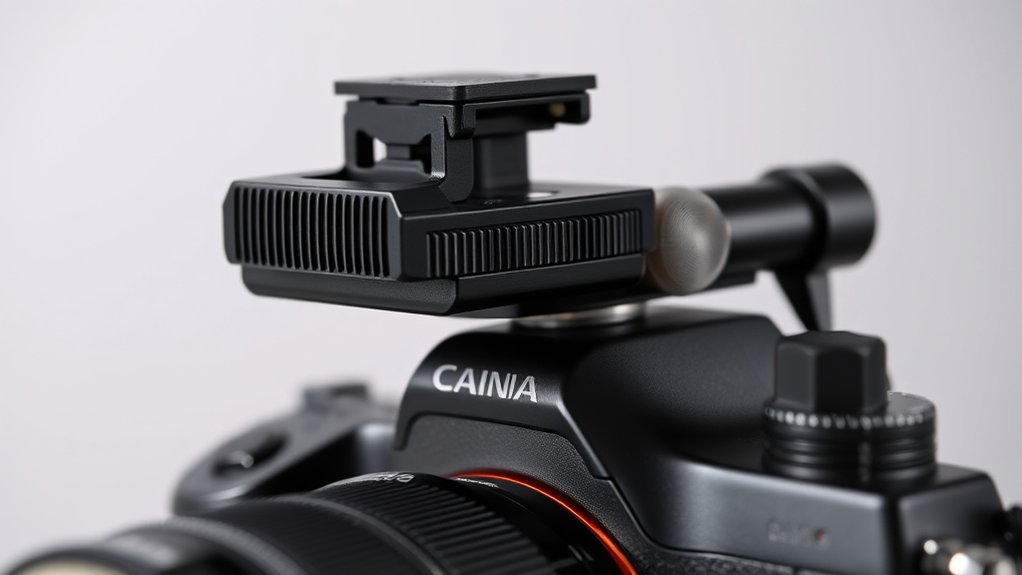
A cold shoe mount lets you securely attach non-electronic accessories, like microphones, LED lights, and monitors, to your camera or rig without power or data transfer. It’s just a physical bracket and doesn’t have electrical contacts, so it won’t sync devices like a hot shoe does.
You’ll find cold shoes useful both on and off your camera. They offer flexible placement and compatibility across brands.
Explore how different types, features, and mounts can optimize your setup and workflow. It’s all about making your gear work better for you.
Key Takeaways
- A cold shoe mount is a non-electrical bracket for attaching accessories like microphones and lights to cameras or rigs.
- It lacks electrical contacts, providing only a physical mounting point without power or data transmission.
- Cold shoe mounts are compatible with various accessories and offer universal use across different camera brands.
- They can be used both on-camera and off-camera, with types including standard, L-shaped, extension, and double mounts.
- Durable materials, locking mechanisms, and adjustable arms enhance stability and flexible accessory placement during shoots.
Understanding Cold Shoe Mounts
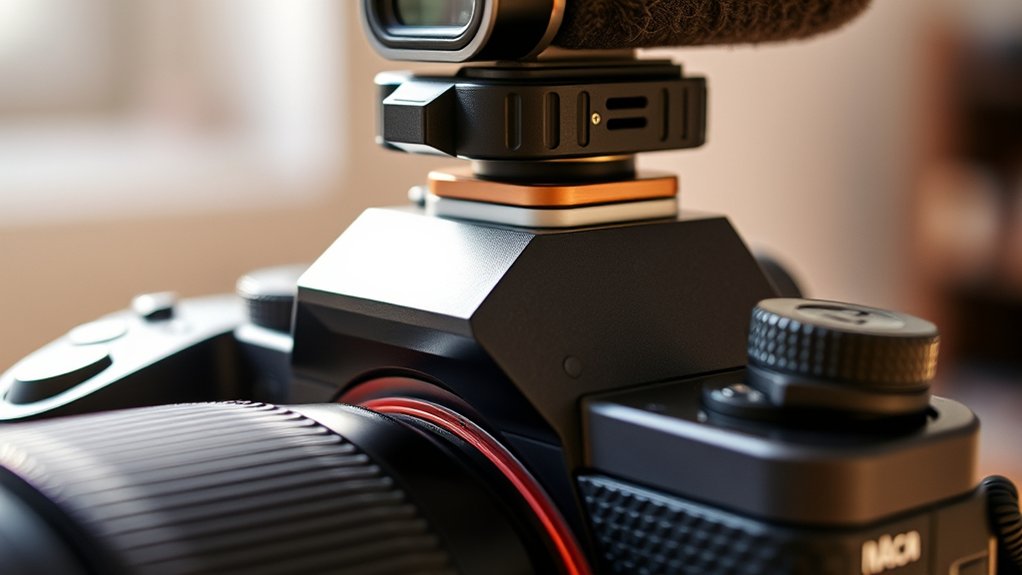
What exactly is a cold shoe mount, and why is it essential for your camera setup? A cold shoe mount is a bracket designed for creative mounting of non-electronic accessories on your camera or support rig. Unlike hot shoes, cold shoes lack electrical contacts, so they don’t transmit power or data. This absence of wiring makes them ideal for attaching items like microphones, lights, or monitors without risking interference.
Many cold shoe mounts feature weatherproof designs, ensuring reliable performance in varied environmental conditions. You can install them atop hot shoes or on other support systems, often utilizing adjustable or extension arms to position accessories precisely where you need them.
This flexibility enhances your setup’s versatility without complicating the electronics, making cold shoe mounts a fundamental component for efficient accessory integration.
Common Accessories for Cold Shoe Mounts
Cold shoe mounts provide a versatile platform for attaching a variety of accessories that enhance your camera’s functionality without requiring electrical connections. You’ll find accessory compatibility with external microphones, LED lights, monitors, and action cameras. All of these can be securely mounted thanks to integrated locking mechanisms or threaded holes.
This mounting versatility also extends to off-camera flashes and softboxes. They can be attached via adjustable brackets or extension arms, which lets you position your lighting exactly how you want it.
Additionally, cold shoe mounts often work with wireless triggers or remote control systems. This setup enables synchronized flash and lighting without any direct electrical contact.
Using Cold Shoe Mounts On and Off Camera
Although many photographers primarily associate shoe mounts with on-camera use, they offer equally valuable functionality when positioned off-camera. When mounted on your camera’s hot shoe, cold shoe mounts let you securely attach accessories like microphones or LED lights. This enhances your setup without relying on electrical connections.
This way, you preserve wireless connectivity and extend battery life by reducing power draw. Off-camera, you can attach cold shoe mounts to tripods, rigs, or boom arms using compatible adapters. This allows precise accessory placement at ideal angles.
The mounting process involves sliding the accessory into the cold shoe slot and tightening locking mechanisms to guarantee stability during dynamic shoots. This versatility helps you organize your gear efficiently while minimizing interference.
Plus, it maintains consistent wireless performance throughout your workflow.
Types of Cold Shoe Mounts
You can enhance your accessory setup further by selecting from various types of shoe mounts tailored to different functions and configurations. Standard cold shoe mounts offer a simple bracket with a threaded bottom, ensuring secure mount stability and broad accessory compatibility.
Enhance your setup with diverse shoe mounts designed for stability and wide accessory compatibility.
For setups requiring communication, cold shoe mounts with electrical contacts provide wiring for data transfer but don’t support device triggering.
If you need flexible positioning, L-shaped mounts offer right-angle brackets, while extension mounts feature adjustable brackets allowing repositioning to various camera sides without compromising stability.
Double cold shoe mounts let you attach two accessories simultaneously, enhancing versatility for dual setups.
Choosing the appropriate mount type is essential to maintain accessory compatibility and mount stability. This way, your gear functions at its best during shoots.
Why Cold Shoe Mounts Matter for Video and Audio
You’ll find cold shoe mounts are super helpful for boosting your audio quality. They let you securely position external microphones closer to your subject, which helps cut down on background noise.
Plus, they’re great for adding flexible lighting options. You can easily attach different light sources without dealing with extra wires, keeping your setup neat and tidy.
All in all, this combo makes a big difference for both sound and visuals—something that’s really important for professional video production.
Enhancing Audio Quality
When capturing video, positioning your external microphone using a cold shoe mount drastically improves audio quality by minimizing electrical interference and reducing handling noise. The cold shoe guarantees effective audio isolation by physically separating the microphone from the camera body. This limits vibrations and mechanical noise transmission.
Precise microphone positioning is vital. Mounting the mic on a cold shoe lets you place it ideally, either closer to the subject or slightly off-camera, which enhances sound clarity and focus. This setup allows quick adjustments in dynamic shooting conditions, helping you maintain consistent audio fidelity.
Flexible Lighting Options
Although built-in camera mounts offer limited positioning options, cold shoe mounts provide unmatched flexibility for arranging lighting and audio accessories. You gain creative mounting capabilities, enabling precise placement of mini LED lights and external microphones for superior illumination and sound capture. This accessory versatility lets you adjust angles and distances dynamically, which is essential for professional-quality video and audio in diverse shooting scenarios.
| Accessory Type | Placement Advantage | Benefit |
|---|---|---|
| Mini LED Light | Adjustable angles | Ideal lighting control |
| External Mic | Flexible distance | Enhanced audio clarity |
| Multi-Accessory | Multiple mount points | Quick, versatile setup |
| Cold Shoe Ext. | Extend mount options | Increased accessory compatibility |
| On-location Use | Rapid repositioning | Efficient shooting adaptability |
Cold shoe mounts matter because they let you tailor lighting and sound setups precisely to your environment. It’s all about making your gear work the way you want it to, no matter where you’re shooting.
Cold Shoe Mount vs Hot Shoe Mount: What You Need to Know
You should know that a hot shoe mount comes with electrical contacts, allowing direct communication and power delivery between your camera and accessories.
On the other hand, a cold shoe mount is just for physical attachment—it doesn’t have any electrical connectivity.
With hot shoes, you can trigger flashes and other electronic devices right from your camera, which is pretty convenient.
But if you’re using a cold shoe, you’ll need external cables or wireless triggers to control those accessories.
Also, keep in mind that hot shoes have voltage limits and specific pin configurations, which can affect whether certain devices are compatible.
Cold shoes, however, offer more versatile mounting options without any electrical risks.
Key Functional Differences
Since cold shoe mounts lack electrical contacts, they serve purely as physical attachment points.
Whereas hot shoe mounts incorporate electrical connections that enable communication and control between the camera and accessories.
This fundamental difference means hot shoes support wireless connectivity and electronic control, allowing devices like flashes and microphones to trigger and synchronize directly with the camera.
In contrast, cold shoes require manual operation or external cables for triggering, lacking any built-in signaling capability.
You’ll find hot shoe mounts essential for advanced electronics demanding seamless integration, while cold shoes suit simpler, non-electronic attachments.
Understanding these key functional differences helps you choose the appropriate mount based on whether you need sophisticated device communication or basic physical mounting.
It really comes down to what kind of gear you’re planning to use and how much control you want over it.
Power And Communication
The absence of electrical contacts in cold shoe mounts means they can’t transmit power or control signals between your camera and accessories. Unlike hot shoe mounts, which have electrical contacts for direct signal transmission and wireless power delivery, cold shoes only provide a physical mounting point.
If you want to enable communication or power transfer with devices attached via a cold shoe, you’ll need external cables or wireless triggers.
Hot shoes support synchronized operation of flashes and microphones through integrated electronic control, allowing seamless wireless or wired interaction.
Since cold shoes lack this capability, they’re limited to holding accessories without facilitating any electrical interface.
Understanding this difference helps you pick the right mount type based on whether your setup needs integrated power and signal transmission or just a physical attachment.
Device Compatibility Insights
Although cold shoe mounts lack electrical contacts, they offer broad compatibility with a variety of non-electronic accessories across multiple camera brands and models. This absence of an electrical interface allows seamless device integration with different mounts, grips, microphones, and lights, no matter the manufacturer.
On the other hand, hot shoe mounts include proprietary or standardized electrical contacts that limit accessory options. They require matching connector types and voltage specifications to work properly.
For example, Sony’s Multi Interface and Canon’s Mini Advanced Shoe standards restrict hot shoe compatibility to specific brand accessories. This makes it harder to use third-party devices.
Choosing the Right Cold Shoe Mount: Size, Compatibility, and Features
When selecting a cold shoe mount, you’ll want to make certain its size precisely matches your camera’s hot shoe or mounting platform to guarantee a secure fit. Confirming this prevents wobbling and guarantees ideal mount stability during use.
Beyond size, verify compatibility with your accessories, such as microphones or lights, to avoid attachment issues. Focus on mounts constructed from robust materials like metal alloys or reinforced plastics. These materials provide durability and support heavier gear without deformation.
Ensure your mount matches your accessories and choose durable materials for reliable, long-lasting support.
Consider models featuring adjustable or flexible designs like extendable arms or L-shapes to accommodate diverse setups. Additional elements, such as threaded holes or locking mechanisms, further enhance mount stability and versatility. These features help prevent unwanted movement or detachment.
Prioritizing these factors will ensure your cold shoe mount performs reliably under various shooting conditions. It’s worth taking the time to find the right one that fits your needs perfectly.
Best Cold Shoe Mounts to Consider
If you need versatile mounting options that adapt to various shooting setups, consider cold shoe mounts designed with flexibility and durability in mind. The SYNCO SM5 Cold Shoe Extension offers excellent mounting stability at $25.90, providing extra space for accessories.
SmallRig’s 2-pack cold shoe mounts are great if you want to attach multiple devices or larger monitors at the same time. They make sure you get reliable support when it counts.
For precise accessory placement away from the camera, the Frio Grasp Mini Cold Shoe Clamps deliver secure positioning that helps improve framing and accessibility.
Most quality mounts use lightweight aluminum or high-strength plastic. This balances durability with ease of use.
Plus, many feature adjustable or articulated arms, so you can fine-tune the placement of microphones, lights, or monitors in dynamic shooting environments with superior stability.
Frequently Asked Questions
Can Cold Shoe Mounts Be Used Underwater With Waterproof Accessories?
You can’t rely on standard cold shoe mounts for underwater compatibility with waterproof accessories since they lack sealed connections.
Instead, use purpose-built mounts or adapters designed specifically to maintain waterproof integrity and protect your gear underwater.
These are made to keep everything secure and dry, so your equipment stays safe while you capture those underwater moments.
How Do Cold Shoe Mounts Affect Camera Balance and Handling?
You’ll notice camera stability shifts when cold shoe mounts carry heavy or off-center accessories, which can really affect handling.
Making sure your accessories are compatible and placing them in a balanced way helps prevent wobbling.
This keeps you in control and makes your shooting experience much smoother and more precise.
Are Cold Shoe Mounts Compatible With Drone Camera Setups?
Yes, cold shoe mounts offer drone compatibility for lightweight, waterproof accessories like microphones or small lights.
However, you’ll need adapters on some drones, and you can’t use them for powered or remote-triggered devices.
Can Cold Shoe Mounts Support Heavy Accessories Without Damage?
Heavy weight on cold shoe mounts is like overloading a fragile bridge; you shouldn’t push beyond specified limits. Ignoring safety concerns risks bending or breaking, so use reinforced mounts or multiple shoes to guarantee secure, stable support.
Think of it this way: if you’re carrying a heavy load, you want the strongest gear possible. So, don’t just slap on any accessory and hope for the best. Take the time to check what your cold shoe can actually handle.
What Maintenance Is Required to Keep Cold Shoe Mounts Secure?
You’ll guarantee mount stability by regularly tightening screws, cleaning surfaces to remove debris, and inspecting locking mechanisms.
Prevent corrosion by avoiding moisture exposure and promptly replacing worn parts. This way, you’ll maintain a secure, reliable cold shoe mount connection. It’s all about staying on top of these small tasks to keep everything working smoothly.
Conclusion
Now that you understand cold shoe mounts, you can enhance your setup by securely attaching accessories like microphones or LED lights. Imagine a vlogger filming a sunset. Using a cold shoe mount, they quickly add a directional mic for clear audio without bulky rigs.
This simple, versatile mount boosts gear functionality on or off-camera. It’s essential for precise, professional video and audio production. Just make sure to choose the right size and compatibility to get the most out of your equipment.