What Is The Best Walking Shoe For Women – Top Rated Options
You’ll want walking shoes that balance cushioning, support, and fit to keep your feet comfortable and injury-free. Top-rated options like Brooks Ghost 18 and Hoka Clifton 10 offer plush cushioning with stability. Meanwhile, New Balance Fresh Foam X 1080v14 delivers maximum support and arch comfort.
Lightweight, breathable models like On Cloud 6 guarantee all-day freshness. Proper fit and adjustable features help accommodate swelling and foot shape. It’s all about finding what works best for you.
Explore how these qualities meet different walking needs for ideal performance. That way, you can enjoy every step without worry.
Key Takeaways
- Choose walking shoes with balanced cushioning, support, and a breathable mesh upper for comfort and foot health during extended wear.
- Opt for shoes with a properly fitting toe box and adjustable arch support to accommodate foot swelling and ensure personalized fit.
- Prioritize lightweight shoes under 9.2 ounces with durable outsoles and reliable traction for stability on various walking surfaces.
- Consider top-rated models like Brooks Ghost 18, Hoka Clifton 10, and New Balance Fresh Foam X 1080v14 for excellent cushioning and support.
- Use removable insoles or orthotic inserts to customize fit and enhance comfort, especially for long-distance or daily walking needs.
What Makes a Great Walking Shoe for Women?
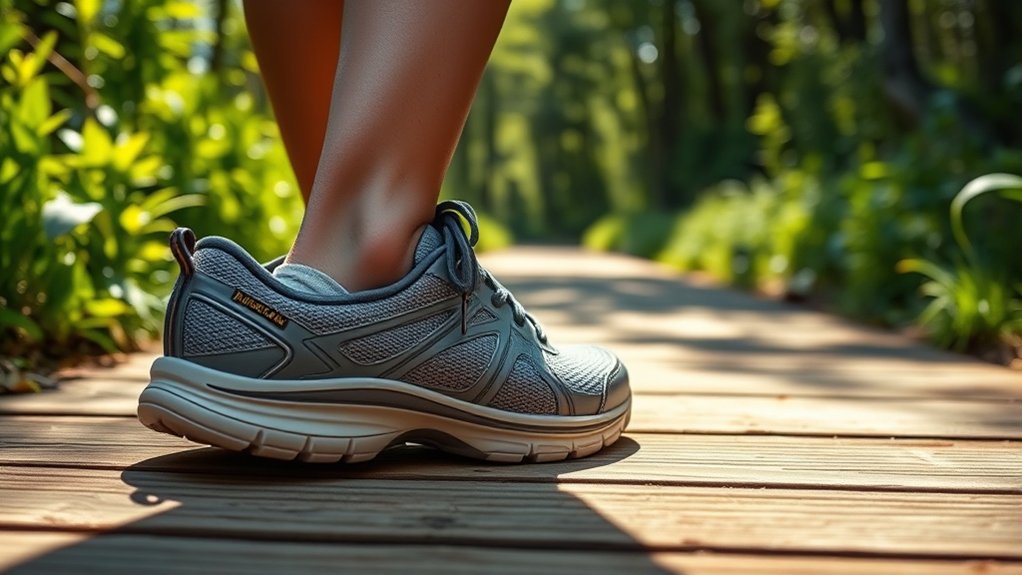
When choosing a walking shoe for women, you need one that balances cushioning, support, and stability to minimize foot fatigue and reduce injury risk.
Look for a shoe with a properly fitting toe box that allows your toes to move comfortably and accommodates foot swelling during long walks.
Breathable uppers made of mesh or knit materials keep your feet cool and dry.
A durable outsole with reliable traction ensures safety across various surfaces.
A snug heel fit and a perfect heel-to-toe drop (4-8mm) promote a natural gait and prevent blisters or slipping.
Pay attention to shoe color options if aesthetics matter to you, but never compromise function.
Choose brands with a strong reputation for quality and performance to guarantee durability and effectiveness in your walking shoes.
It’s worth investing in a pair that supports your feet well.
Best Walking Shoes for Long Distance and Daily Use
If you plan to cover long distances or wear walking shoes daily, selecting models that prioritize support, cushioning, and durability is essential. The Brooks Ghost 18 excels with its support and breathability, making it ideal for prolonged use.
Choose walking shoes with excellent support, cushioning, and durability for comfort during long or daily wear.
Hoka Clifton 10 offers plush cushioning and stability for all-day comfort.
New Balance Fresh Foam X 1080v14 provides maximum cushioning and a contoured midsole to keep your foot in a natural position.
For varied terrains, the Sorel Kinetic Impact II delivers traction and stability you can rely on.
If you have plantar fasciitis, consider the Birkenstock Arizona Soft Footbed, which offers excellent arch support and soft insoles.
These shoes also align with current fashion trends, offering multiple color options that blend performance with style.
Lightweight and Breathable Walking Shoes for Comfort
Although comfort during long walks depends on multiple factors, choosing lightweight and breathable walking shoes considerably reduces fatigue and overheating. Shoes weighing under 9.2 ounces with mesh uppers enhance airflow, keeping your feet cool and dry.
This technology aligns well with current fashion trends, offering diverse color options without sacrificing performance. Models like On Cloud 6 and Xero Shoes Prio exemplify this design philosophy, promoting natural foot movement through minimal cushioning and flexible soles.
| Feature | Benefit | Example Model |
|---|---|---|
| Lightweight (<9.2 oz) | Reduces fatigue | On Cloud 6 |
| Breathable Mesh | Prevents moisture buildup | Xero Shoes Prio |
| Minimal Cushioning | Enhances natural movement | Both models |
| Diverse Color Options | Matches fashion trends | On Cloud 6, Xero Prio |
Best Cushioned Walking Shoes for Support and Stability
Because prolonged walking demands both support and comfort, selecting shoes with superior cushioning can considerably enhance stability and reduce fatigue. The Hoka Clifton 10, with its cushioning technology and a heel height of 38mm, offers plush support that maintains stability over extended periods.
Choosing shoes with superior cushioning, like the Hoka Clifton 10, boosts stability and reduces fatigue during long walks.
Similarly, the Brooks Glycerin Max 2 uses nitrogen-infused DNA Loft foam to provide maximal cushioning, ensuring a soft, cradling fit that minimizes impact stress.
When choosing shoes, prioritize those with wide bases and stable midsoles to promote balance.
Additionally, models like the Sorel Kinetic Impact II feature underfoot cushioning combined with excellent traction, making them suitable for varied terrains.
Proper heel height and advanced cushioning technology work together to absorb shock efficiently, helping you maintain support and reduce fatigue during long walks.
Best Walking Shoes for Flat Feet and Arch Support
While cushioning and stability benefit many walkers, those with flat feet require specialized support to address unique biomechanical needs. You’ll want shoes offering enhanced arch support, a firm midsole, and orthotic compatibility to prevent overpronation and increase comfort.
Models like the New Balance 1080v15 and Brooks Glycerin Max 2 provide maximal cushioning and supportive insoles. Meanwhile, the Hoka Clifton 10 allows custom orthotic inserts, which helps improve arch support.
| Shoe Model | Arch Support | Orthotic Compatibility |
|---|---|---|
| New Balance 1080v15 | Enhanced | Yes |
| Brooks Glycerin Max 2 | Maximal | Limited |
| Hoka Clifton 10 | Moderate | Fully Compatible |
| Wide Toebox Designs | Improved Pressure Distribution | Varies |
Be sure to select shoes with a snug heel fit and a supportive base. This helps reduce foot fatigue and lowers the risk of injuries.
Slip-On Walking Shoes for Ease and Performance
Slip-on walking shoes offer quick and easy on-and-off convenience, making them an excellent choice for travelers, commuters, and casual walkers. These shoes often feature wider openings and sockliners, enhancing ease of use without compromising support.
Slip-on walking shoes provide effortless on-and-off wear, ideal for travelers, commuters, and casual walkers.
The On Cloud 6 exemplifies this with its lightweight cushioning and Speedboard technology, delivering propulsive performance.
When selecting slip-ons, consider material durability for long-lasting wear. Also, look for soft, breathable uppers that help manage moisture.
Fit suitability is key, especially if you have medium-width feet. And don’t forget to check if the style aligns with current fashion trends for versatile looks.
While slip-ons lack traditional laces, their streamlined design prioritizes hassle-free wear. Just keep in mind that narrower midfoot profiles mightn’t work well for wider feet.
Finding the Perfect Fit: Shoe Size Tips for Women Walkers
You’ll want to measure your feet in the late afternoon since that’s when swelling tends to be at its highest. This way, you get a more accurate idea of your true foot size.
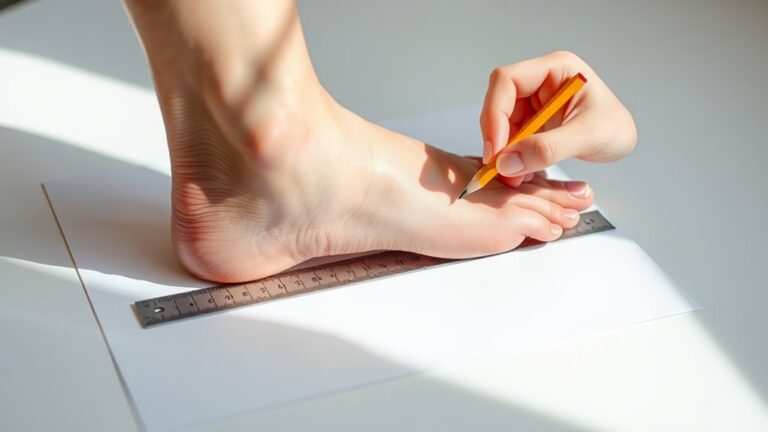
Grab a Brannock device or even just a ruler to measure both the length and width of your feet.
Keep in mind, your feet naturally expand throughout the day, so it’s important to account for that when choosing shoes.
Accurate Foot Measurement
Because foot size can fluctuate throughout the day, measuring your feet in the late afternoon or after prolonged activity guarantees a more precise fit.
Accurate foot measurement is crucial when selecting walking shoes, as shoe material and heel height influence fit and comfort. Use a Brannock device or ruler to measure both length and width of each foot, as size may vary.
Leave approximately half an inch of space in the toe box to allow for natural toe movement during walking. Always wear the socks you intend to use with the shoes when trying them on.
Measure feet at the end of the day for maximum accuracy. Account for variations between feet by measuring both.
Ensure adequate toe box space for comfort. Test shoes with appropriate socks and walk to assess fit.
This precision helps prevent discomfort and enhances walking efficiency. It really makes a difference when you’re out and about!
Accommodating Foot Swelling
When selecting walking shoes, accommodating foot swelling is essential for maintaining comfort throughout the day. You should allow a half to full thumb’s width of space in the toe box, especially in the afternoon when feet naturally expand.
Opt for shoes with soft, breathable materials that stretch slightly to prevent pressure points. Consider footwear with adjustable arch support and moderate heel height to keep your foot stable without restricting circulation.
Using removable insoles or orthotic inserts helps customize the fit and create extra room for swelling during long walks.
It’s a good idea to measure your foot size and width regularly after walking or standing to make sure your shoes fit just right.
Choosing wider widths or sizing up by half a size can also help prevent discomfort caused by foot expansion. It’s all about keeping your feet comfortable no matter how much they swell during the day.
Frequently Asked Questions
How Do Walking Shoes Differ From Running Shoes for Women?
You’ll notice walking shoes prioritize stability and comfort with flatter soles and lower heel drops. This is different from running shoes, which focus more on shock absorption.
Fashion trends and brand comparisons really highlight these design differences. It makes choosing the right women’s footwear so much easier when you know what to look for.
Can Walking Shoes Help Prevent Injuries During Exercise?
You can reduce injury risk by up to 50% with proper walking shoes. Injury prevention improves when you combine gait analysis with shoes offering support, cushioning, and stability. This effectively protects joints and corrects abnormal foot motion during exercise.
What Materials Are Best for Waterproof Walking Shoes?
You should choose waterproof materials like Gore-Tex or eVent membranes for walking shoes, as they combine water resistance with breathable fabrics.
Full-grain leather with seam-sealed construction also guarantees durability and effective moisture protection. These materials keep your feet dry without making them feel stuffy.
How Often Should Walking Shoes Be Replaced for Optimal Support?
You should replace walking shoes every 300 to 500 miles to maintain ideal shoe cushioning and arch support.
It’s a good idea to regularly check for reduced comfort or signs of wear. Worn shoes can compromise support and increase your risk of injury during walks.
Are There Walking Shoes Designed Specifically for Wide Feet?
You deserve walking shoes designed with generous comfort in mind. Many brands offer wide feet options featuring fashionable color choices and current fashion trends. This ensures you get a precise fit without sacrificing style or support during your walks.
Finding shoes that fit well can make all the difference, especially if you have wide feet. So why settle for less when you can have shoes that feel great and look great too?
Conclusion
Choosing the right walking shoe is like finding the perfect key. It *unlocks* your stride’s full potential. With the ideal balance of support, cushioning, and fit, your feet become steady pillars, carrying you confidently through every step.
Whether you’re tackling long distances or daily strolls, the right shoe *guarantees* comfort and stability. Prioritize your needs, and you’ll walk stronger, farther, and freer. Every path can turn into progress when you have the right shoes on.