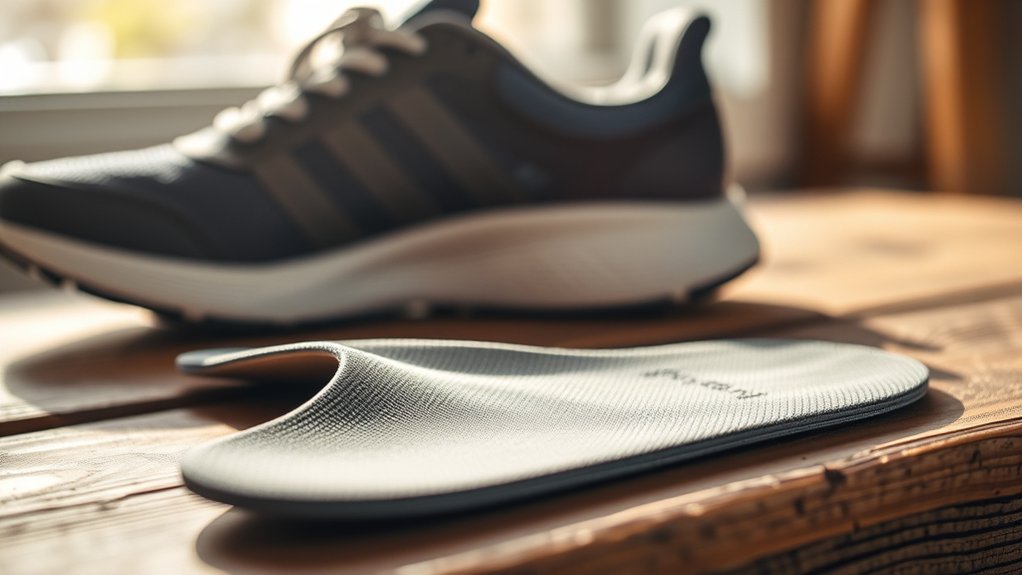
What Is The Insole Of A Shoe – Purpose And Benefits Explained
The insole of a shoe provides essential support, cushioning, and alignment to improve your foot health and comfort. It helps absorb impact, reduce pressure points, and maintain proper foot biomechanics. This way, it prevents pain and fatigue.
Insoles also enhance shoe durability by minimizing internal wear. Choosing the right arch support and replacing worn insoles guarantees continued comfort and injury prevention.
Understanding how insoles function and are cared for will help you maximize their benefits effectively. So, taking a little time to learn about them can really pay off in the long run.
Key Takeaways
- Insoles provide cushioning and support to improve foot comfort and reduce pressure inside shoes.
- They enhance foot alignment, helping to alleviate pain and prevent foot strain.
- Insoles absorb shock, minimizing impact on joints and extending shoe lifespan.
- Arch support insoles distribute pressure evenly, preventing issues like plantar fasciitis and overpronation.
- Regular replacement and proper care maintain insole effectiveness and promote overall foot health.
What Are Shoe Insoles and Their Function?
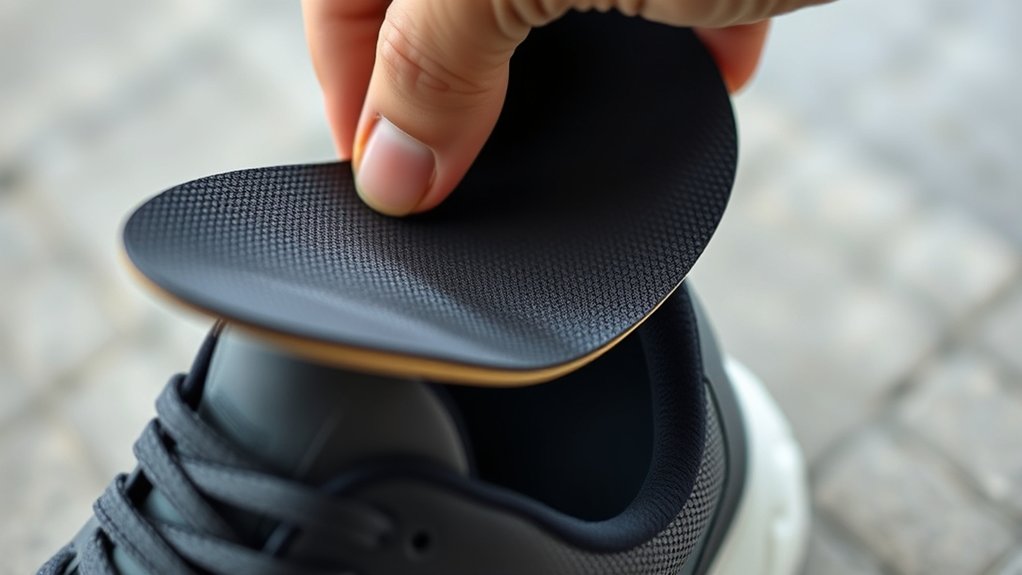
Although often overlooked, shoe insoles play a crucial role in providing support, cushioning, and comfort inside your footwear. These removable or built-in layers improve foot alignment, reduce pressure points, and alleviate pain.
Shoe insoles are essential for support, cushioning, and pain relief inside your footwear.
When selecting insoles, understanding shoe material choices is essential. Foam insoles offer lightweight cushioning, gel provides superior shock absorption, cork delivers firm support, and leather enhances durability and breathability.
You can choose from standard over-the-counter options or opt for insole customization tailored to your specific foot anatomy and needs.
Custom insoles address unique biomechanical issues, improving comfort and reducing fatigue during prolonged wear.
Additionally, insoles help extend the lifespan of shoes by absorbing impact and minimizing internal wear. This ensures your footwear remains functional and comfortable over time.
Why Arch Support in Shoe Insoles Matters for Your Feet
When you wear insoles with proper arch support, you help maintain the natural shape of your foot and reduce strain on the plantar fascia. This support alleviates pain linked to flat feet, high arches, and plantar fasciitis by improving foot alignment.
Proper arch support also distributes pressure evenly, minimizing hotspots and discomfort.
Plus, enhanced stability from quality insoles prevents overpronation or supination, which benefits your ankles, knees, and lower back.
While fashion trends may emphasize style, choosing insoles made with durable materials ensures long-lasting support and function.
How Insoles Keep Your Feet Comfortable and Energized
Because your feet endure constant pressure and movement throughout the day, insoles play an essential role in maintaining comfort and energy levels. Insoles provide cushioning and arch support that absorb shock and reduce foot fatigue during prolonged standing or walking.
Insoles cushion and support your feet, absorbing shock to reduce fatigue during long hours on your feet.
They enhance stability and promote proper alignment, preventing strain on muscles and joints, which keeps your feet energized.
Specialized insoles improve circulation by reducing pressure points and encouraging better blood flow. By supporting your foot’s natural biomechanics, insoles help prevent pain and discomfort that can cause tiredness.
Whether you follow current fashion trends or need insoles for athletic activities, integrating quality insoles into your footwear optimizes comfort and reduces fatigue.
In the end, good insoles sustain your energy throughout daily activities. So, they’re definitely worth considering if you want your feet to feel better and last longer during your day.
Types of Insoles and How to Choose the Best One
Selecting the right insole requires understanding the various types available and matching them to your specific foot structure and activity needs. Insoles come in full-length, 3/4 length, arch support, gel, foam, leather, and cork varieties, each serving distinct functions.
For example, gel insoles offer shock absorption, while cork insoles provide moldability and moisture-wicking properties. Consider your foot arch—high, flat, or neutral—and activity level, such as daily wear or sports, when choosing.
Custom orthotics deliver personalized support for specific conditions, but over-the-counter options suit general comfort.
Additionally, keep an eye on fashion trends that integrate eco-friendly materials, enhancing sustainability without compromising performance. Selecting materials aligned with your needs improves durability, comfort, and foot alignment, ensuring ideal insole effectiveness.
How Shoe Insoles Relieve Common Foot Pain
You’ll find that shoe insoles provide targeted pressure relief by cushioning key areas like the heel and ball of the foot.
Plus, enhanced arch support helps distribute weight more evenly, which reduces strain on your foot’s structures.
When you combine these features, they work together to effectively ease common sources of foot pain.
Targeted Pressure Relief
How do shoe insoles provide targeted pressure relief to ease common foot pain? They offer a custom fit that cushions specific foot areas, such as the heel or ball, effectively reducing localized pain.
By distributing your weight evenly, these insoles lessen excessive pressure on vulnerable zones like the metatarsal heads and plantar fascia.
Orthotic designs often include specialized elements like metatarsal pads or heel cups, which alleviate strain and protect sensitive tissues.
The material durability ensures consistent shock absorption and impact redistribution, maintaining support during walking, running, or prolonged standing.
This targeted pressure relief is particularly advantageous for conditions like plantar fasciitis, metatarsalgia, and heel spurs, preventing further injury while enhancing comfort.
Enhanced Arch Support
Why does enhanced arch support matter when it comes to relieving common foot pain? Insoles with enhanced arch support help distribute pressure evenly across your foot. This reduces strain on the plantar fascia and eases arch pain.
Proper arch support improves foot alignment, which decreases overpronation or supination, both common causes of discomfort. Elevated or custom-molded arch support insoles provide targeted cushioning. This helps relieve stress on the heel, arch, and ball of your foot during daily activities.
Research shows that insoles made with supportive arch features can significantly reduce symptoms of plantar fasciitis and related pain. Plus, enhanced arch support stabilizes your foot, preventing excessive movement that can lead to fatigue and injury.
Choosing insoles with advanced arch support means you don’t have to sacrifice comfort for style. You can keep your feet healthy while enjoying modern footwear fashion. It’s a win-win!
When to Replace Your Shoe Insoles and Why It Matters
You should replace your shoe insoles every 6 to 12 months, or whenever you start noticing signs of wear like compressed padding and less shock absorption. It mightn’t seem like a big deal, but worn-out insoles can actually make your feet and legs feel more tired.
Over time, they can even contribute to problems like plantar fasciitis. So, keeping your insoles fresh is really important—it helps make sure your feet get the support and cushioning they need to stay healthy overall.
Signs Of Insole Wear
When should you consider replacing your shoe insoles? Key signs include visible wear, thinning, or holes, which reduce shock absorption and cushioning.
If insoles feel compressed or no longer fit snugly, causing slipping inside your shoe, replacement is necessary to maintain proper foot alignment.
Notice increased fatigue or discomfort during activities? That often indicates degraded insoles losing support.
This applies regardless of fashion trends; even stylish shoes need functional insoles.
For insoles for athletes, timely replacement is critical, as worn insoles compromise performance and increase injury risk.
Addressing wear promptly prevents foot pain and extends your shoes’ lifespan.
Monitoring these signs guarantees your footwear continues to provide the necessary support and comfort.
Impact On Foot Health
Recognizing signs of insole wear is just the first step toward maintaining foot health. Timely replacement, typically every 6 to 12 months, guarantees continued support and cushioning. This is vital for preventing pain and injury.
Worn insoles lose shock absorption, which increases joint stress and discomfort. Here’s what to watch for: compressed or flattened cushioning, visible wear or damage, increased foot fatigue during activities, and changes in comfort or alignment.
Replacing insoles promptly supports proper foot alignment. This reduces risks of plantar fasciitis and overuse injuries.
Plus, customizing your insoles can boost comfort and biomechanical function while complementing your footwear fashion choices.
How to Care for Your Insoles to Make Them Last
Although insoles undergo constant pressure and moisture exposure, proper care can substantially extend their lifespan. You should remove insoles after each use to air them out, reducing bacterial and odor buildup.
Clean them regularly using mild soap and water, as harsh chemicals can degrade insole materials like gel or foam. Replace insoles every 6 to 12 months or when signs of wear appear to maintain ideal support.
| Care Step | Description |
|---|---|
| Air Out | Remove insoles after use to dry completely |
| Cleaning Techniques | Use mild soap and water; avoid harsh chemicals |
| Replacement Schedule | Replace every 6-12 months or if compressed |
Following these simple steps helps preserve your insoles’ function and keeps your feet healthy. It’s worth the effort to make your insoles last longer!
Frequently Asked Questions
Can Insoles Affect Shoe Size or Fit?
Yes, insoles like custom orthotics or shoe cushioning can affect shoe size and fit by adding thickness. Sometimes, you might need a larger size for comfort.
It’s important to adjust your shoes to avoid pressure points and keep a proper fit. That way, your feet feel supported without any discomfort.
Are Insoles Suitable for All Types of Shoes?
Insoles suit most shoes but vary by style and fashion trends. You’ll need slim or specialized insoles for delicate designs. Prioritize insoles durability to guarantee lasting comfort and support across different shoe types effectively.
Choosing the right insole can really make a difference in how your shoes feel. Sometimes, a bulky insole just won’t fit into a sleek shoe, so going for a slim option is the way to go. It’s all about matching the insole to the shoe’s design and your comfort needs.
How Do Insoles Impact Athletic Performance?
Insoles considerably impact athletic performance by enhancing cushioning and providing targeted arch support. You’ll experience reduced joint stress, improved stability, and optimized foot alignment.
All these benefits work together to boost agility, endurance, and help prevent injuries during high-impact activities. It’s pretty amazing how something as simple as insoles can make such a big difference in how you perform.
Can Children Benefit From Using Insoles?
You’ll find that 15% of children with foot pain improve using insoles. Orthotic comfort provides pediatric support by correcting alignment, reducing fatigue, and enhancing gait. This helps ensure healthier foot development and prevents long-term complications effectively.
It’s pretty amazing how something as simple as insoles can make a difference. When kids wear them, they often feel less tired and move more comfortably. So, if your child complains about foot pain, insoles might be worth considering.
Are There Eco-Friendly or Sustainable Insole Options?
Yes, you can find eco-friendly insoles made from biodegradable materials like cork and natural latex. Many also contain recycled content such as EVA foam, which helps reduce environmental impact.
At the same time, they maintain comfort and durability effectively. So, you don’t have to compromise on quality while choosing sustainable options. It’s a win-win!
Conclusion
Think of your shoe insoles as the unsung heroes cushioning every step you take. They’re not just padding, they’re precision tools supporting arches, absorbing shock, and reducing pain.
By choosing the right insoles and caring for them properly, you guarantee your feet stay comfortable and energized, like well-tuned instruments playing in harmony. Replace them when worn to maintain this balance, because healthy insoles mean healthier, happier feet ready to carry you forward.