What Is 12C Shoe Size – Size Guide Explained
A 12C shoe size refers to a US children’s size meant for kids aged 5 to 6 with foot lengths around 17.5 to 18 cm (6.9–7.1 inches). The “C” here denotes the size category, not width, marking a stage between toddler and youth sizes.
Ensuring proper fit means measuring your child’s foot accurately and allowing growth space. Understanding this size helps you choose footwear that supports healthy foot development and comfort as they grow.
There are more details available on sizing and fit considerations to help you make the best choice for your child’s shoes.
Key Takeaways
- 12C is a US kids’ shoe size for foot lengths around 17.5–18 cm, typically fitting children aged 5 to 6 years.
- The “C” in 12C represents a children’s size category, not shoe width, covering sizes from 0C to 13C based on foot length.
- Proper fit in 12C shoes supports healthy foot development and prevents discomfort or foot problems in growing children.
- Measure foot length with weight on the foot and choose size 12C if the foot measures approximately 17.5–18 cm.
- Allow 1 to 1.5 cm extra space for growth and select shoes with adjustable fastenings and flexible soles for comfort.
What Does 12C Mean in Kids Shoe Sizes?
When you see a shoe labeled 12C, it refers to a children’s size designed for feet measuring about 17.5 to 18 centimeters in length. This size falls within the US children’s shoe sizing system, targeting older toddlers and young children around 5 to 6 years old.
The “C” denotes the Child size category rather than indicating shoe width.
Size 12C represents a foot length of approximately 6.9 to 7.1 inches, bridging the progression from toddler to youth sizes before moving to 13C. Understanding these measurements guarantees sizing consistency when selecting shoes.
While the “C” doesn’t specify shoe width, you should still consider shoe width separately to achieve a perfect fit.
This label focuses primarily on foot length and child-specific sizing standards. So, even though “C” is about the size category, make sure to check the width too. That way, the shoes will fit comfortably and properly.
Why the “C” Width Matters for Your Child’s Shoes
You should know that the “C” in 12C isn’t about width—it actually refers to a child size classification. It’s all about the length of the foot, designed specifically for growing kids.
This means the size helps make sure the shoe fits their feet just right.
Getting the right “C” size is important because it supports your child’s foot development and keeps up with their activity needs.
Meaning Of “C
Although many assume the “C” in children’s shoe sizes refers to width, it actually denotes a size category based on foot length ranges. In shoe manufacturing, the “C” size classification specifically indicates a child’s shoe size from 0C to 13C in US sizing. These sizes are designed to match precise foot length measurements rather than width.
Understanding this distinction is *vital* for supporting proper foot development, as it *guarantees* you select shoes that accommodate your child’s growing feet accurately. Using “C” sizes helps align shoe fit with a child’s age and foot length. This prevents issues caused by improper sizing.
As your child grows, their shoe size will *shift* from “C” to “Y” (Youth) sizes. This change reflects the natural progression in foot length and overall development.
Child Size Classification
Why does the “C” designation in children’s shoe sizes matter beyond just length? The “C” in 12C indicates a child size category for ages 5-6, representing foot lengths around 17.5–18 cm. It’s not a width label but helps you identify shoes tailored to your child’s developmental stage.
This classification guarantees the shoe material and construction accommodate the typical activity level of children in this age group. Design trends in children’s footwear increasingly incorporate flexible, breathable materials suited for growing feet, making size accuracy essential.
Since 12C is the largest child size before youth sizing starts, understanding this classification helps you select shoes that align with your child’s foot length and growth patterns. That way, the shoe’s design and material support healthy foot development.
Importance Of Proper Fit
How does the “C” size designation impact your child’s shoe fit and foot health? The “C” in 12C denotes a child’s size category, not the width. So, making sure you measure your child’s foot accurately is really important for the right fit.
Picking the correct size helps accommodate growth and makes sure the shoe provides enough support during active play. Shoes that don’t fit well, whether they’re too tight or too loose, can cause blisters, deformities, and even affect how your child walks.
The right fit also depends on the shoe style and the materials used. These factors influence flexibility and breathability, which are key for comfort and healthy foot development.
When you choose shoes based on precise sizing, you reduce the risk of foot problems and help promote healthy development. Always double-check sizing with the “C” classification to give your child the best support and comfort.
How to Measure Your Child’s Foot for 12C Shoes
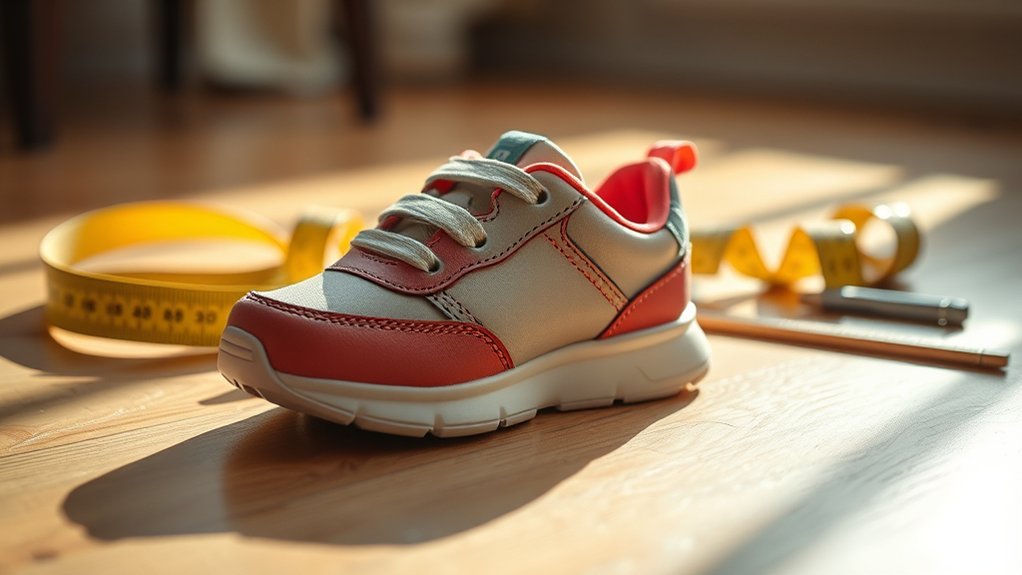
To get an accurate measurement for 12C shoes, start by measuring your child’s foot length precisely. You can use a ruler or flexible tape for this. Make sure your child is standing with their full weight on their feet—that way, you get the most realistic measurement.
Another helpful tip is to trace their foot on a piece of paper. Then, you can compare that tracing to a printed measurement guide. This step helps ensure you’re capturing the correct size.
Don’t forget to measure both feet! Since one foot is often a bit longer than the other, use the longer length to pick out the right shoe size. That way, your child’s shoes will fit comfortably and support their feet properly.
Accurate Foot Measurement Techniques
Although measuring your child’s foot may seem straightforward, achieving an accurate length requires specific techniques. To guarantee proper fit and accommodate the foot arch, have your child stand with full weight on both feet. This captures the true foot shape and supports shoe durability.
Next, trace the foot outline on paper, mark the heel and longest toe, then measure the length in centimeters with a ruler aligned straight.
Make sure to measure both feet and use the longer length to select the 12C shoe size. This helps ensure comfort and support.
| Step | Detail |
|---|---|
| Positioning | Child stands with full weight applied |
| Measurement Method | Trace foot and measure heel to longest toe |
| Recording | Use longer foot length in centimeters |
Using Printed Measurement Guide
When you place your child’s foot on the printed measurement guide, make sure their heel rests firmly against the wall or edge of the guide. This helps secure an accurate length.
Have your child stand upright with their full weight on their feet to get a precise foot size.
Next, mark the longest toe and heel points on the guide. Use a ruler or measuring tape to measure the distance from heel to longest toe in centimeters. Be sure to record this measurement as part of your shoe measurement process.
Don’t forget to repeat the procedure for both feet because one foot might be slightly larger. Always note the longer measurement.
This method gives you an exact foot size, which is essential for picking the right 12C shoe size. It helps prevent discomfort and makes sure growing feet get a proper fit.
How 12C Fits Compared to Other Kids Shoe Sizes
Since 12C shoes accommodate foot lengths of approximately 17.5 to 18 cm, they fit children who’ve outgrown smaller sizes like 6C or 9C but aren’t quite ready for youth sizes starting at 13C.
12C shoes fit kids growing out of smaller sizes but not yet ready for youth sizes starting at 13C.
When you compare 12C to other kids’ sizes, keep a few things in mind for accurate shoe size conversion and foot width considerations.
12C is larger and wider than 10C and 11C, which supports increased foot growth. It bridges the gap between toddler sizes and youth sizes, making it ideal for transitional foot development.
Foot widths in 12C shoes tend to be broader to comfortably accommodate growing feet.
Understanding this size helps you make precise choices when converting from smaller kids’ sizes or moving toward youth sizes. This technical insight guarantees you select the right fit without guesswork.
Who Wears 12C Kids Shoes? Age and Foot Length Guide
If your child’s foot measures between 17.5 and 18 centimeters, size 12C shoes will likely offer the best fit. Typically worn by children aged 5 to 6 years, this size corresponds to foot lengths of approximately 6.9 to 7.1 inches.
Toddlers and young children in early primary school commonly wear 12C shoes as they actively grow and develop walking skills.
When selecting 12C shoes, consider shoe material carefully, as it affects durability and comfort, which are essential for active kids.
Fashion trends also play a role, influencing design choices that appeal to children and parents alike.
Understanding who wears 12C shoes helps you make informed decisions about sizing. This ensures an ideal fit and support for your child’s growing feet during this important developmental stage.
Tips for Choosing Comfortable 12C Shoes That Grow
Because children’s feet grow rapidly, choosing 12C shoes that accommodate this growth is essential for comfort and foot health. You need to select shoes with the right material that offers flexibility and durability. This helps support the developing foot arch properly.
Choosing flexible, durable 12C shoes supports growing feet and helps develop healthy arches comfortably.
Getting an accurate measurement of the foot length—from heel to longest toe—is super important. It ensures the shoe fits well without restricting growth.
Here are some tips to keep in mind when picking 12C shoes that grow with your child:
- Allow 1 to 1.5 cm of extra length beyond the foot measurement for some growth space.
- Go for adjustable fastenings like Velcro or laces so you can customize the fit as their feet expand.
- Choose flexible soles and cushioned insoles to keep things comfy and support the foot arch.
- Make sure to re-measure your child’s feet every 2 to 3 months to check that the shoes still fit well.
When to Move Up From 12C to Youth or Bigger Sizes
Although 12C shoes fit many children comfortably during early growth stages, you’ll need to move up to youth or bigger sizes once their foot length approaches 18 cm. This changeover typically happens between sizes 13C and 1Y, marking the end of the child shoe size range.
You should regularly measure your child’s foot to make sure shoe durability isn’t compromised by tight fits. A tight shoe can affect both comfort and foot development, so it’s important to keep an eye on sizing.
Moving up to youth sizes also gives you access to styles that better match your child’s evolving fashion sense. Youth shoes often have more contemporary designs that kids love.
Ignoring this shift can lead to discomfort and shorten the shoe’s lifespan. So, moving up to larger sizes on time ensures a proper fit, good support, and keeps up with your child’s growing needs and style preferences.
Your Top Questions About 12C Shoes Answered
Wondering how to guarantee the best fit and performance from your child’s 12C shoes? Accurate foot measurement is key since 12C corresponds to a foot length of about 17.5–18 cm. This size is ideal for active 5–6-year-olds.
Ensuring the best fit for 12C shoes starts with measuring your child’s foot precisely at 17.5–18 cm.
Keep in mind, 12C defines length, not width. So, you’ll want to consider width separately to make sure they’re comfortable.
To optimize footwear durability and assure proper functionality, focus on choosing shoe material that balances breathability and sturdiness. Also, confirm the foot length matches the 12C sizing precisely.
Checking the shoe construction for reinforced areas prone to wear is a smart move.
Don’t forget to keep an eye on your child’s activity level. That way, you’ll know when it’s time to move up to larger sizes.
This approach guarantees your child’s 12C shoes deliver both comfort and long-lasting performance.
Frequently Asked Questions
Are 12C Shoes Compatible With Custom Orthotics?
Yes, 12C shoes can work with custom orthotics if you guarantee proper orthotic fitting. Check measurements carefully, and opt for models with removable insoles.
This helps maintain shoe comfort and support without compromising fit or function. Just make sure your orthotics fit well inside the shoe. That way, you get the best of both worlds!
How Do 12C Shoe Prices Compare to Other Sizes?
You’ll find 12C shoe prices align closely with other toddler sizes like 11C and 13C, reflecting shoe fashion trends. Costs vary slightly due to material needs and fashion innovations impacting shoe fashion and overall pricing.
It’s pretty normal to see small price differences because of the materials used or new styles coming out. Overall, 12C prices stay in the same ballpark as nearby sizes, so you won’t notice huge jumps or drops.
Can 12C Shoes Be Used for Sports Activities?
Of course, you can use 12C shoes for sports if you trust fashion trends and celebrity endorsements over proper support. Technically, they’re not designed for athletic performance, so you might be risking injury.
They lack reinforced soles and stability features that are essential for sports activities. So, if you want to stay safe and comfortable, it’s better to choose shoes made specifically for sports.
What Materials Are Best for Durable 12C Shoes?
You should choose shoe material like full-grain leather or TPU for durability factors, reinforced with rubber soles and stitching. These materials resist wear, provide grip, and maintain structure, ensuring your 12C shoes last through active use.
They’re great options because they handle rough conditions well. Plus, rubber soles give you extra traction, so you don’t slip around. Stitching keeps everything firmly together, adding to the shoe’s lifespan.
Are 12C Shoes Available in Wide Widths?
You won’t often find 12C shoes in wide widths due to historical sizing trends, but some brands adapt to fashion trends by offering select wide options.
Always check specific retailers for availability to guarantee proper fit.
It’s a good idea to try them on or read reviews to see how they fit if you need a wider shoe.
Conclusion
Now that you know 12C refers to a child’s shoe size with a specific width, you can choose shoes that truly fit and support growing feet. Don’t fall for the myth that size alone guarantees comfort. Width plays an essential role.
By accurately measuring your child’s foot length and width, you guarantee the right fit. This helps prevent discomfort and promotes healthy development.
Remember, proper sizing isn’t just about length. The “C” width matters just as much.