How To Clean Shoe Insoles – Cleaning Tips And Maintenance Guide
To clean your shoe insoles safely at home, start by removing them and brushing off any debris. Then, hand wash them with warm water and mild soap. You can also use baking soda or vinegar for natural odor removal.
Make sure to air dry them thoroughly away from heat or sunlight. Regular cleaning helps prevent odor and bacteria, plus it extends their lifespan. You’ll want to dry insoles completely before putting them back in your shoes.
It’s a good idea to rotate pairs of insoles for longer use. If you want to keep your feet comfortable and supported, there’s more helpful info ahead.
Key Takeaways
- Remove insoles and brush off loose dirt before washing with warm water and mild soap using a soft cloth or sponge.
- Rinse thoroughly to remove soap residue and air dry insoles in a ventilated area away from direct heat or sunlight.
- Use natural deodorizing agents like baking soda and white vinegar to eliminate odors and disinfect insoles effectively.
- Flip insoles periodically while drying and avoid heat sources like hairdryers to prevent material damage and warping.
- Replace insoles every 6 to 12 months or when support diminishes, odors persist, or visible wear appears for optimal foot health.
How To Hand Wash Insoles Safely At Home
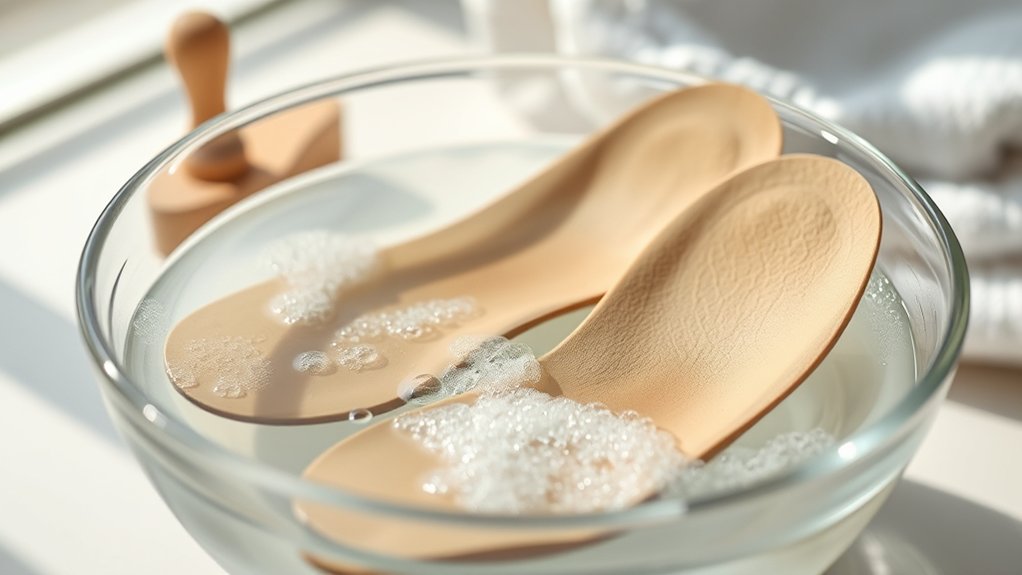
Before you start hand washing your insoles, take them out of your shoes and gently brush off any loose dirt or debris with a soft cloth or brush. This helps stop the dirt from getting pushed deeper during cleaning.
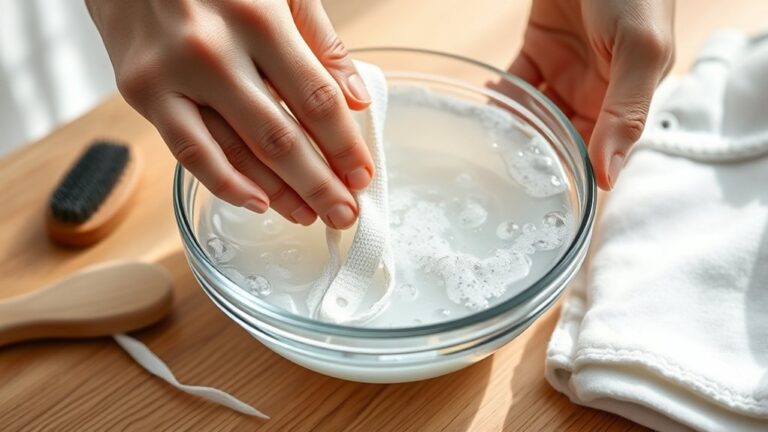
Next, mix warm water with a little mild soap or gentle detergent. Grab a soft cloth or sponge and carefully scrub both sides of the insoles, paying extra attention to any stains or smelly spots. This way, you’ll get rid of stains and odors without hurting the material.
Use warm water and mild soap with a soft cloth to gently clean stains and odors from insoles.
After scrubbing, rinse the insoles well with clean, warm water to wash away any soap residue that might cause irritation or smell.
Finally, let them air dry completely in a well-ventilated spot, away from direct heat or sunlight. This keeps their shape and helps them last longer.
Best Natural Ingredients For Cleaning And Odor Removal
You can use baking soda to naturally deodorize your insoles. Just sprinkle it on and let it absorb moisture and odors overnight. It’s super easy and works really well.
Then there’s white distilled vinegar, which is great because it acts as a powerful disinfectant. It cuts through bacteria and stubborn smells with ease, making your insoles feel fresh again.
If you combine these two ingredients, you get a simple and effective way to keep your insoles clean and smelling great. It’s a natural solution that’s both safe and affordable.
Baking Soda Benefits
Although many cleaning agents promise fresh insoles, baking soda stands out as one of the best natural ingredients for odor removal and cleaning. It effectively tackles odor elimination by absorbing moisture and bacteria that cause unpleasant smells.
Using baking soda regularly keeps your insoles fresh without harsh chemicals. Here’s why it works so well:
- Absorbs moisture, preventing bacterial growth and odor.
- Acts as a gentle abrasive to lift dirt and stains without damage.
- Its alkaline nature breaks down acidic compounds responsible for persistent odors.
- Safe, affordable, and ideal for overnight use to refresh strong odors.
Vinegar Cleaning Uses
When you want a natural and effective way to disinfect your shoe insoles, vinegar offers powerful cleaning benefits without harsh chemicals. White distilled vinegar acts as a potent natural disinfectant, eliminating bacteria and fungi that cause odor.
To use it safely, mix equal parts vinegar and water, then spray onto insoles to achieve odor neutralization and prevent microbial growth.
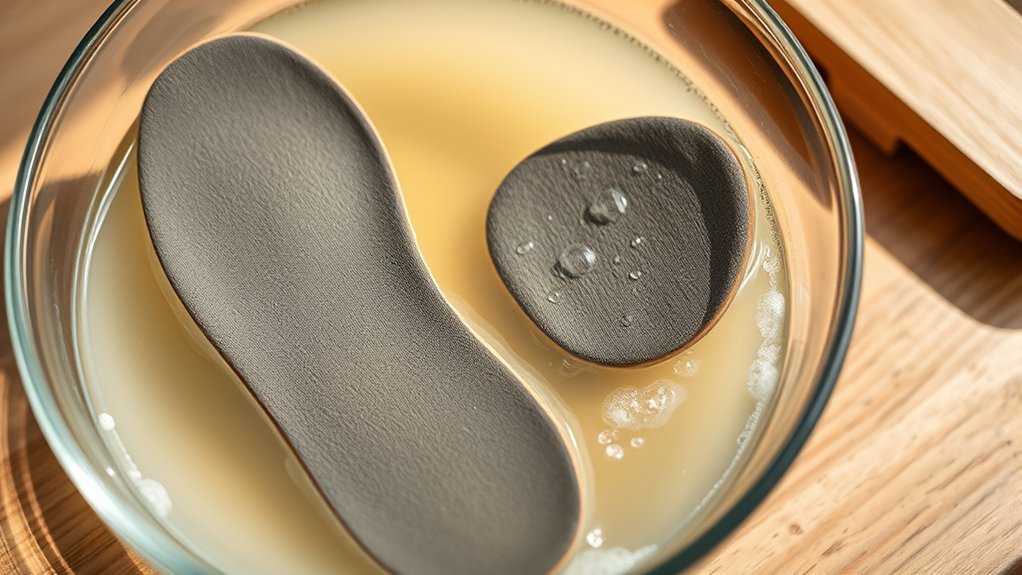
For deeper cleaning, soak insoles in the vinegar solution for several hours to break down sweat and grime thoroughly.
Vinegar safety is straightforward. Just make certain you air dry insoles completely afterward to avoid any lingering vinegar smell and guarantee full evaporation.
This method provides a chemical-free, practical solution that keeps your insoles fresh, clean, and odor-free. It’s an easy way to maintain your shoes without using harsh products.
Give it a try and enjoy the freshness!
How To Dry And Air Out Insoles Without Damage
You’ll want to air dry your insoles in a well-ventilated space, but make sure it’s away from direct sunlight to protect the materials.
Just take them out of your shoes and let them dry completely. It helps to flip them every now and then so the moisture evaporates evenly.
Try to avoid using heat sources like hairdryers or radiators because high temperatures can actually warp or damage your insoles.
Proper Air Drying
Since proper drying is essential to maintaining your insoles’ shape and hygiene, you should always remove them from your shoes right after cleaning. This helps moisture evaporate faster and keeps bacteria from building up inside your shoes.
To make sure they dry well and don’t get damaged, follow these simple tips:
- Place insoles on a clean, dry surface with the top side facing up. This way, air flows evenly over them.
- Choose a well-ventilated spot that’s out of direct sunlight. That helps avoid warping or cracking.
- Avoid using heat sources like hair dryers or heaters because they can ruin the material.
- Make sure your insoles are completely dry before putting them back in your shoes to stop mold and odors from forming.
Avoid Heat Damage
Although drying insoles quickly might seem convenient, exposing them to heat sources like hairdryers, heaters, or direct sunlight can cause adhesives to weaken and materials such as foam or leather to warp or crack.
To avoid heat damage, press insoles gently with a towel to remove moisture, then air dry them in a well-ventilated, shaded area. Using a fan or indirect airflow speeds drying without risk. Always make certain insoles are completely dry before reinserting to prevent mold.
| Drying Method | Risk Level | Best Practice |
|---|---|---|
| Direct Heat (Hairdryer, Heater) | High | Avoid completely |
| Air Dry (Room Temperature) | Low | Ideal; natural airflow |
| Fan-Assisted Air Dry | Moderate | Safe if no heat is applied |
Tips To Extend The Life Of Your Insoles Between Cleanings
When you remove your insoles after each use and let them air dry completely, you considerably reduce moisture buildup that leads to cracking and material breakdown. Proper moisture control preserves insole cushioning and prevents bacterial growth.
Removing insoles after use and air drying prevents moisture buildup, cracking, and bacterial growth for lasting comfort.
To extend your insoles’ life between cleanings, try these tips:
- Alternate between pairs of insoles to allow full drying time and reduce continuous wear.
- Choose breathable insoles made from open-cell foam to enhance airflow and keep them dry.
- Apply odor-resistant treatments like PURE™ silver ion coatings to slow odor development and reduce cleaning frequency.
- Store insoles in a well-ventilated area, avoiding enclosed spaces that trap moisture and promote deterioration.
Following these steps helps maintain comfort and support while minimizing the need for frequent, intensive cleaning.
Give it a try—you’ll notice the difference!
When And How To Replace Your Insoles For Optimal Comfort
Knowing exactly when to replace your insoles guarantees you maintain ideal comfort and foot health. Insole longevity typically ranges from 6 to 12 months, but replacement timing depends on wear signs like loss of support, visible cracks, compression, or persistent odors.
Regularly inspect your insoles for deformation or discomfort. Once they no longer fit well or feel supportive, it’s time to swap them out.
Using high-quality insoles, such as Tread Labs with lifetime arch support guarantees, can extend how long they last.
But don’t delay replacement if you notice any damage. Promptly replacing worn or damaged insoles preserves proper foot alignment and prevents pain.
This ensures your shoes continue to provide *best* comfort every step of the way.
Why Cleaning Insoles Matters For Foot Health
Why should you make cleaning your shoe insoles a regular habit? Keeping them clean is essential for maintaining foot health and comfort. Dirty insoles trap sweat and dirt, which promotes bacterial growth. This can lead to foot odor and infections.
Here’s why you shouldn’t skip this step:
- Prevent foot odor by eliminating bacteria that cause unpleasant smells
- Reduce the risk of fungal infections and skin irritations
- Avoid blisters caused by dirt and moisture buildup
- Extend the lifespan of your insoles, making sure they keep providing support and cushioning
Cleaning your insoles regularly really makes a difference. It keeps your feet feeling fresh and helps you avoid annoying problems down the road.
Why Tread Labs Insoles Stand Out
Keeping your insoles clean is just one part of maintaining foot health, but choosing the right insoles can make an even bigger difference. Tread Labs insoles stand out because their insole ergonomics focus on maintaining proper foot alignment, which reduces strain and enhances comfort.
Their durable two-part system features guaranteed arch supports that won’t flatten or degrade over time, backed by a Million Mile Guarantee. You’ll appreciate the replaceable top covers designed to last about a year, making maintenance simple and cost-effective.
Using high-quality, supportive materials, these insoles promote lasting foot health while extending the product’s lifespan.
Frequently Asked Questions
Can Insoles Be Cleaned in a Washing Machine Safely?
You can machine wash some insoles, but only if the manufacturer approves it. Otherwise, safety concerns like damage or warping arise.
Use a gentle cycle, cold water, and a laundry bag to protect them properly. It’s best to double-check the care instructions before tossing them in the machine. That way, you avoid ruining your insoles by accident.
Are All Insoles Waterproof or Water-Resistant?
Not all insoles are waterproof or water-resistant; you’ve got to read between the lines. Their moisture resistance depends on material differences.
Some use porous fabrics, while others feature synthetic or rubber coatings to repel water effectively. So, it really comes down to what they’re made of and how they’re designed.
How Often Should Insoles Be Cleaned During Intense Workouts?
You should clean insoles at least 3-4 times weekly during intense workouts to maintain their durability and keep odors at bay. Regular cleaning helps prevent bacteria buildup, which can cause unpleasant smells and discomfort.
Keeping your insoles fresh means your feet stay supported and comfortable throughout your workout. It’s a simple step that can make a big difference in how your shoes feel and smell over time. So, make cleaning your insoles part of your routine—it really pays off!
Can Cleaning Insoles Remove Fungal Infections Completely?
You might think cleaning insoles guarantees fungal eradication, but it rarely does. While thorough cleaning helps prevent infections, stubborn spores often stick around.
It’s best to combine cleaning with antifungal treatments. Also, make sure to replace your insoles regularly for the best results.
Are Scented Insoles Better for Odor Control Than Sprays?
Scented insoles help mask odors, but for effective odor control, you’ll find sprays with antimicrobial properties work better by targeting bacteria directly.
Combine both with regular cleaning for lasting freshness and odor-free shoes. It’s all about keeping things clean and using the right products together. That way, your shoes stay fresh longer and smell better too.
Conclusion
When you think about it, keeping your insoles clean isn’t just about odor or appearance. It’s also about your foot health, comfort, and even extending the life of your shoes.
The simple steps you take to hand wash and properly dry your insoles help prevent foot issues and save you money. Using natural cleaners and knowing when to replace your insoles makes a big difference.
You’re making sure every step feels fresh and supported, just like Tread Labs intended. It’s really that easy!