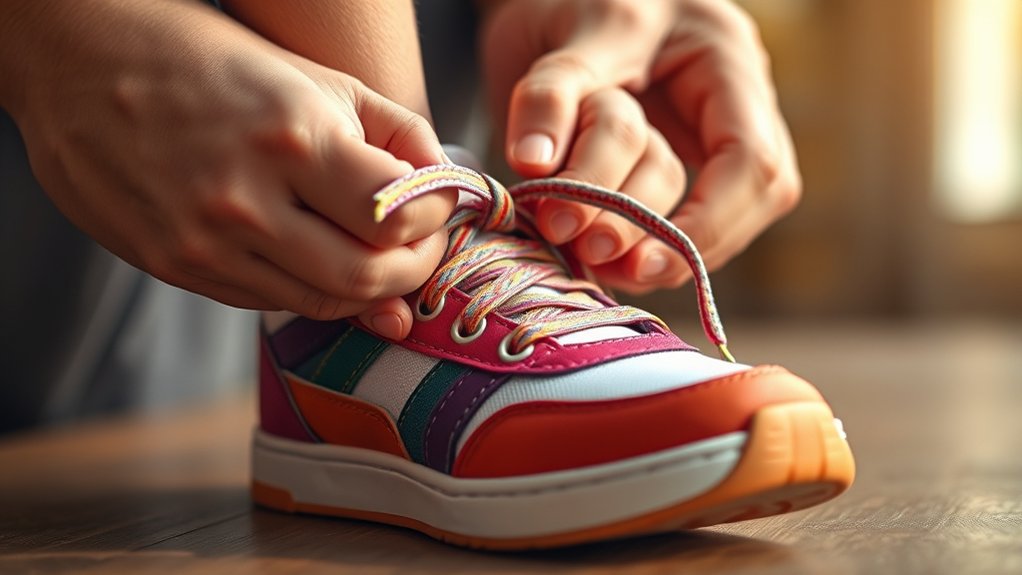
How To Tie A Shoe For Kids – Easy Teaching Methods
To teach kids to tie shoes easily, start by using colorful laces to show left from right. Break the process into simple steps like making loops with both hands and pulling them through to form a bow. Try beginner-friendly methods like Bunny Ears or the Knot and a Half for faster learning.
Use fun practice routines and visual aids to boost confidence. With gentle encouragement and clear steps, kids will quickly get the hang of it. There’s plenty more helpful tips ahead to make tying shoes even easier.
Key Takeaways
- Use beginner-friendly methods like Bunny Ears or the Knot and a Half to simplify shoe tying for kids.
- Incorporate color-coded laces and visual aids to enhance understanding and engagement.
- Break down the process into clear, manageable steps with hands-on practice to build confidence.
- Encourage bilateral hand use and slow, steady movements to develop fine motor skills.
- Make learning fun with games, crafts, and positive reinforcement to motivate persistence.
How To Tie Shoes For Kids: A Simple Step-by-Step Guide
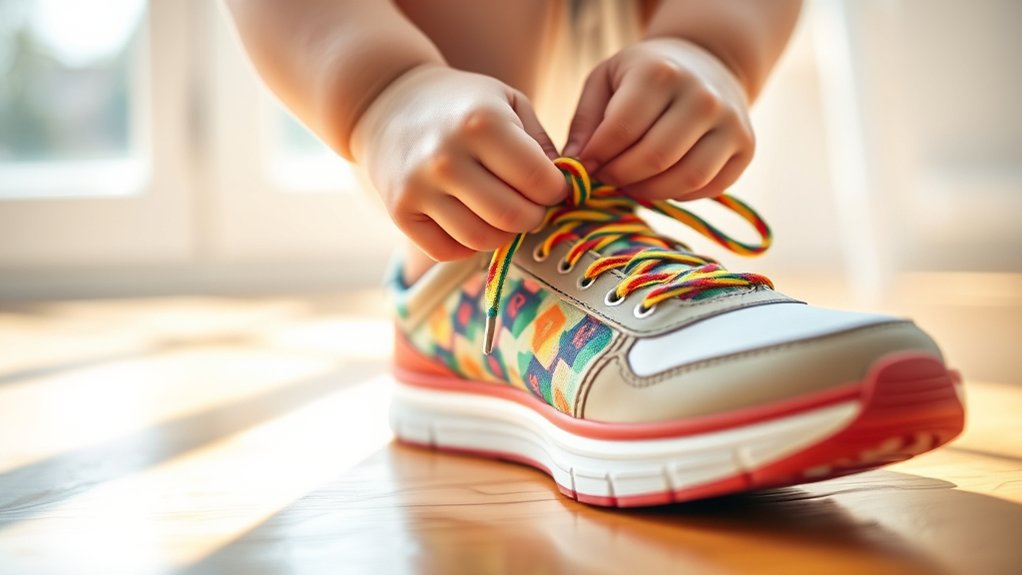
Although tying shoes can seem tricky at first, you can help kids learn it easily by breaking it down into simple steps. Start with a standard knot using two laces, ideally in different colors to support color recognition. This makes it easier for kids to follow which lace goes where.
Breaking shoe tying into simple steps and using different colored laces helps kids learn easily and clearly.
Next, create loops around each hand in opposite directions, encouraging them to use both hands to build hand strength. Then, pinch the loops and pull them through to form the bow.
Practice these steps repeatedly to build confidence and speed.
Use visual demonstrations and be patient, praising their progress. Adding fun gestures or dances when they succeed makes learning enjoyable and motivates them to keep trying. You’ll see their skills improve quickly with this approach!
Best Shoe Tying Methods For Beginners
You’ll find that simple tying techniques like the Bunny Ears or Backwards Knot make learning easier and more fun. These methods are great because they break things down into clear, manageable steps.
Start with beginner-friendly techniques that keep everything straightforward.
With just a bit of practice and the right tools, you’ll be tying shoes confidently before you know it.
Simple Tying Techniques
When teaching kids how to tie their shoes, starting with simple techniques makes the process less frustrating for both of you. Begin by showing them the Bunny Ears method, where you create two loops, like bunny ears, that are easy to hold and cross. This technique works well with different lace patterns and shoe sizes, helping kids get comfortable with their shoes.
Another great option is the Knot and a Half, which keeps the knot secure but easy to untie when needed. You can also try the Backwards Knot, a simpler twist on the traditional tie. These simple tying techniques build confidence step-by-step, making shoe tying less tricky for beginners.
Keep practicing, and soon your child will tie shoes with ease and pride!
Beginner-Friendly Methods
Since learning to tie shoes can feel tricky at first, starting with beginner-friendly methods makes it easier and more fun for kids. You can begin with the Bunny Ears method, which uses simple lace patterns to create two loops that are easy to handle.
Another great option is the Knot and a Half technique, perfect for keeping knots tight yet easy to untie.
If your child finds traditional tying confusing, try the Backwards Knot method, a simplified approach suited for different shoe types.
For kids enthusiastic to tie quickly, the 1 Second Knot offers a fast, efficient way after some practice.
Using colorful laces can make these methods more engaging and help your child understand the steps clearly.
These beginner techniques build confidence and set a strong foundation. They’re a great way to help your child feel proud of their new skill and keep them motivated to learn more.
Practice Tips and Tools
Although learning shoe tying can seem challenging, using the right practice tips and tools makes it fun and effective for beginners. Start with step-by-step videos and simple methods like Bunny Ears. Practice on a flat surface, using colorful or elastic laces to keep kids engaged.
Try to incorporate fun routines like sticker charts to motivate consistent practice. Remember, parental support boosts confidence and skill mastery. These tools also teach shoe maintenance, helping kids care for their shoes while following fashion trends.
| Tip | Tool | Benefit |
|---|---|---|
| Watch videos | Step-by-step clips | Visual learning |
| Simple methods | Bunny Ears laces | Easy to remember |
| Fun routines | Sticker charts | Encourages practice |
| Age-appropriate laces | Colorful/elastic | Engages interest |
| Support | Parental guidance | Builds confidence |
Quick And Easy Shoe Tying Techniques To Save Time
If you want to help your child learn shoe tying quickly, this easy technique takes less than a minute to master with just a few simple finger moves.
Start by creating a basic knot using the shoe lace patterns your child can easily follow.
Next, loop the laces around opposite fingers, then pull them through to form a durable knot.
This step-by-step method not only speeds up the tying process but also guarantees knot durability, so shoes stay secure throughout the day.
Encourage your child to practice these moves repeatedly to build confidence and independence.
This quick and easy technique reduces frustration and saves time, especially during busy mornings.
It makes shoe tying a fun and manageable skill for kids to learn fast.
Essential Skills Kids Need To Tie Their Shoes
To help your child tie their shoes, start by building strong fine motor skills, like finger control, so they can handle the laces more easily. You’ll also want to support their visual perception—this helps them recognize the right shoe and coordinate their hands better.
Try practicing with both hands working together, too. This kind of bilateral coordination makes forming loops and knots a lot easier for them.
Fine Motor Skills
Since tying shoes involves small, precise movements, developing fine motor skills is key for kids. You can help by focusing on sensory integration and fine motor development through fun activities. Encourage your child to squeeze stress balls or thread beads to build hand strength and finger dexterity.
These exercises improve the pincer grasp and finger separation needed to handle laces well. Also, practice bilateral coordination by having your child use both hands together. This helps when crossing laces and making loops.
Visual Perception Abilities
Building fine motor skills lays a strong foundation, but your child also needs sharp visual perception abilities to master shoe tying.
Encourage your child to use color recognition to spot the left and right shoelaces, which helps with correct crossing.
Next, practice shape differentiation by identifying loops and knots as different shapes. This skill helps your child judge where to place each loop and how tight the knot should be.
Guide them to watch closely how the laces move, improving their visual motor integration.
Help your child remember the sequence of steps by asking them to visualize and describe each move.
These visual skills work together to make tying shoes easier and more accurate, setting your child up for success every time they lace up.
Bilateral Coordination
How do kids use both hands together to tie their shoes? They rely on bilateral coordination, which means using both hands at the same time with good hand dominance and hand-eye coordination. This skill helps them hold the shoe steady with one hand while the other works the laces.
To build this ability, try these steps:
- Encourage crossing the midline by having your child reach across their body.
- Practice fine motor tasks like stringing beads or using lacing cards.
- Guide them to grasp and create loops with both hands.
- Help them pull laces through loops smoothly in sequence.
With strong bilateral coordination, your child can tie shoes confidently and complete each step with ease. Keep practicing, and they’ll improve quickly!
Using Visual Aids And Practice Routines To Boost Learning
When you use visual aids alongside regular practice routines, kids grasp shoe-tying much faster. Start by showing step-by-step videos or visual cue diagrams that clearly explain each part of the knot. Use color-coded laces to help children see which lace goes where. This makes the process less confusing.
Set up short, daily practice sessions to build muscle memory and confidence. During these sessions, encourage kids to follow printable guides or lacing cards for extra practice. Visual aids give immediate feedback, so kids can spot and fix mistakes right away.
Making Shoe Tying Fun With Crafts And Engaging Activities
Although learning to tie shoes can seem tricky, you can make it fun by adding crafts and engaging activities. Start by choosing colorful laces or shoes with fun designs to grab your child’s attention.
Then, try these ideas: create themed crafts like holiday decorations for the laces to make practice festive. Use lacing cards or plates as DIY games to boost coordination and fine motor skills. You can also encourage your child to decorate their shoes with beads or stickers for personalization.
Another fun idea is to make keychains or other lacing crafts to turn shoe tying into a creative activity. These steps help kids enjoy learning while building important skills. That way, shoe tying becomes a fun and rewarding experience.
Tips For Parents And Educators To Help Kids Tie Shoes
Making shoe tying enjoyable with crafts and games sets a great foundation for learning. To help kids, use visual aids like step-by-step videos and diagrams that clearly show different shoe styles and lacing patterns.
Start with simple techniques, such as the bunny ears method, especially for younger kids.
Practice regularly, offering plenty of patience and encouragement to build their confidence. Incorporate fun activities and celebrate small successes to keep them motivated.
Tailor your approach based on the child’s age and skill level.
Also, provide accessible resources like printable guides or online tutorials so kids can practice independently at home or school.
Common Challenges And How To Overcome Them
Even if tying shoes seems tricky at first, you can help kids overcome common challenges with patience and clear steps. Many struggle with lace tension or knot stability, but you can guide them through it. Here’s how:
Encourage slow, steady movements to build finger strength and coordination. Show them how to maintain lace tension by gently pulling the laces before making the knot. Using visual aids can help kids recognize loops and follow the correct sequence.
Practice regularly with simple, clear instructions to build confidence and reduce frustration. Keep it fun and celebrate small wins along the way. That way, kids stay motivated and feel proud of their progress!
Why Learning To Tie Shoes Helps Kids Gain Independence
Helping kids overcome the challenges of tying their shoes sets the stage for them to gain independence. When you teach kids this skill, they learn to manage their footwear without needing help, which boosts their confidence and sense of achievement.
Different shoe materials, like smooth leather or soft fabric, can affect how easily they tie, so choosing the right shoes can support their learning. Remember, cultural influences also shape how kids approach shoe tying, so be patient and adapt your methods.
As they master tying, kids become more responsible for their belongings and ready for school routines. This independence reduces the need for adult support, letting them focus on other activities and grow self-sufficient step by step.
Frequently Asked Questions
What Types of Shoelaces Are Easiest for Kids to Use?
You’ll find elastic shoelace styles easiest because they stretch and don’t need knot tying.
Choose soft lace materials that are thick and flat, so you can grip them better and practice tying with confidence.
When Is the Best Age to Start Teaching Shoe Tying?
You don’t have to wait forever. Start teaching shoe tying around ages 4 to 5 when early motor skills and developmental milestones kick in.
Take it step-by-step, making it fun and encouraging their growing independence every day!
Can Alternative Shoes Without Laces Help Before Learning to Tie?
Yes, alternative footwear like slip-ons or Velcro shoes helps build confidence safely before tying. You’ll reduce frustration and focus on motor skills while keeping safety considerations in mind. This approach makes learning shoe tying easier step-by-step.
It’s all about making the process smoother and less stressful. Kids can get comfortable moving around without worrying about laces coming undone. Then, when they’re ready, tying shoes becomes a more natural next step.
How Can I Prevent Shoelace Tripping Hazards?
Don’t let loose laces trip you up! Choose durable laces and shoe colors that match for easy spotting. Double knot your laces to keep them tight.
Tuck the ends in so they don’t flap around or get caught on anything. Check your laces often to make sure they stay secure and safe all day long. It’s a simple way to avoid trips and falls!
Are There Rewards or Incentives Effective for Shoe-Tying Practice?
Yes, you can use reward motivation and incentive strategies like stickers or extra playtime. Celebrate each step, use a reward chart, and praise often to keep kids excited and motivated to practice shoe tying regularly.
It really helps to make the process fun and positive. When kids see their progress, they’re more likely to keep trying. Plus, little rewards can make a big difference in staying motivated!
Conclusion
Imagine your child proudly bending down, fingers fumbling but determined, as they tie their very first perfect bow. With each loop and pull, they’re not just learning a skill, they’re gaining confidence and independence.
By using easy steps, fun activities, and your patient guidance, you’re turning a tricky task into a joyful triumph. Keep practicing together, and soon, shoe tying will feel as natural as a smile. It’ll brighten their day and yours too.