What Is An Approach Shoe – Features And Uses Explained
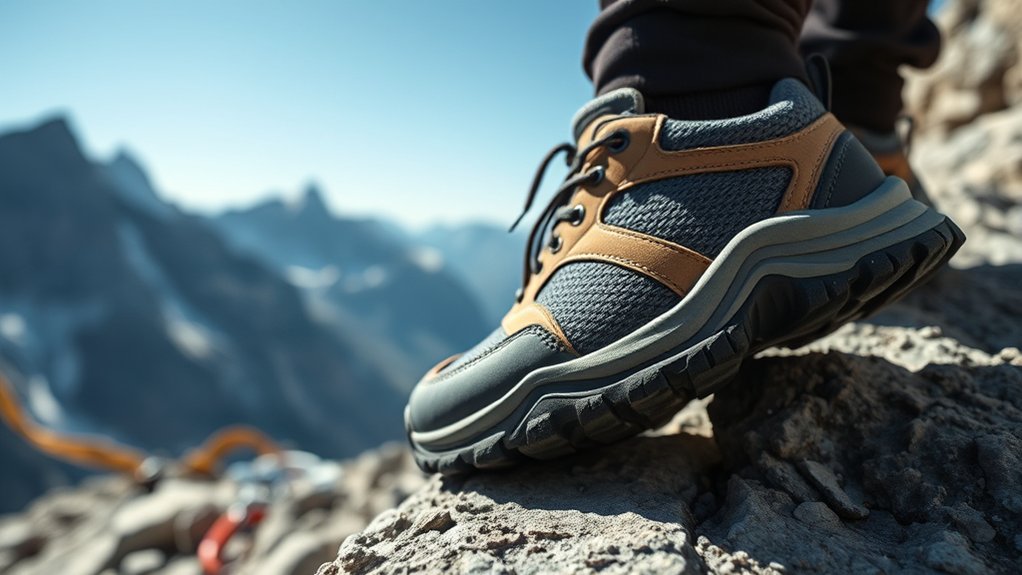
An approach shoe blends hiking support with climbing grip, making it perfect for technical terrains like rocky scrambles or short climbs. You’ll get sticky rubber soles for traction, reinforced toes for protection, and stiff midsoles for stability.
They’re lighter and more precise than hiking boots but offer more comfort than climbing shoes. Made from durable leather or synthetic materials, they suit varied environments.
If you want to understand fit, materials, and when to use them, keep exploring these essentials.
Key Takeaways
- Approach shoes combine hiking comfort with climbing grip, designed for technical terrains like rock scrambles and short climbs.
- They feature sticky rubber outsoles, reinforced toe protection, and stiff midsoles for stability and precise footing.
- Made from durable leather or synthetic uppers, they offer water resistance, breathability, and adjustable fit for varied environments.
- Approach shoes fit snugly, balancing sensitivity and comfort, with sizing often a half-size smaller than regular footwear.
- Proper maintenance, including cleaning and waterproofing, extends their durability and performance on rugged terrain.
What Is an Approach Shoe and Who Needs One
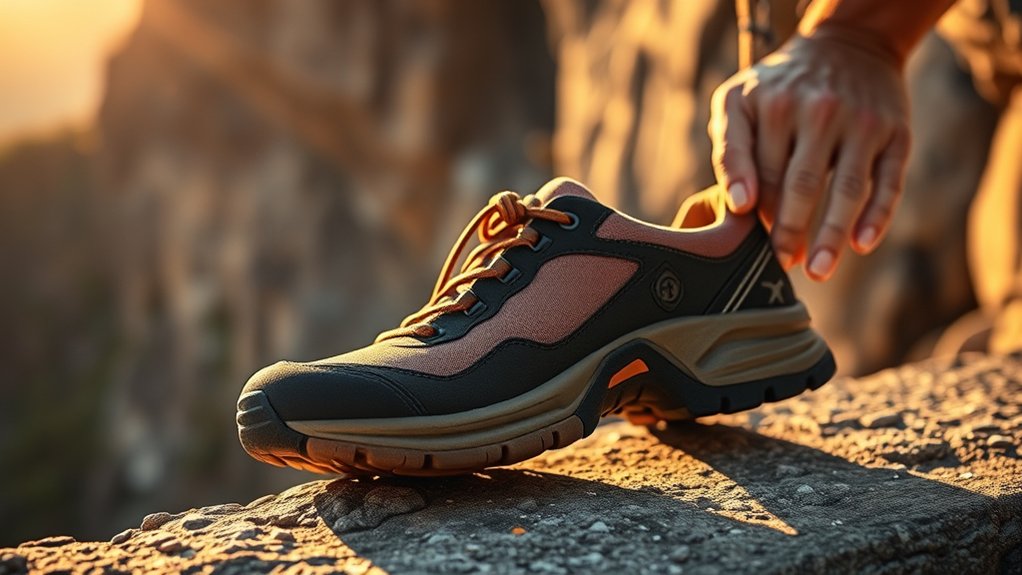
What exactly is an approach shoe, and why might you need one? An approach shoe is specialized footwear designed to help you tackle technical terrains like rock, scree, and talus while heading to climbing routes. It combines hiking shoe support with climbing shoe grip, making it ideal for scrambling and short climbs.
If you spend time traversing mixed terrain, an approach shoe offers the sticky soles and comfort you need for stability and extended walking. When choosing one, consider color options that suit your style and visibility needs. Brand comparisons matter too. Some brands focus on durability, while others prioritize lightweight designs or aggressive grip.
How Approach Shoes Differ From Hiking and Climbing Shoes
Although approach shoes share features with both hiking and climbing shoes, they strike a unique balance tailored for technical terrain. You’ll notice they combine sticky rubber outsoles and protective toe rands from climbing shoes with the supportive midsoles found in hiking shoes. This makes them ideal for scrambling and short climbs but less suited for long-distance hikes.
Approach shoes blend climbing grip with hiking support, perfect for technical terrain and short climbs.
When exploring fashion trends and brand comparisons, approach shoes often showcase a sleeker, low-profile design. This contrasts with the bulkier hiking boots and aggressively shaped climbing shoes.
They offer a snug, precise fit for sensitivity, unlike roomier hiking shoes. Plus, they’ve a supportive midsole for mixed terrain comfort and a less aggressive shape than climbing shoes for versatility. You’ll also find reinforced abrasion resistance for technical approaches.
Understanding these differences helps you pick the right shoe for your outdoor needs.
Key Features That Define Approach Shoes
When you choose approach shoes, you’re investing in features designed to excel on rocky, technical terrain. These shoes typically have sticky rubber outsoles, often from Vibram, that provide superior grip.
Reinforced toe rands protect your feet during scrambles, while stiff midsoles offer the stability needed for precise edging.
Durable uppers, made from leather or synthetic fabrics, resist abrasion and harsh conditions. Many models include water resistance, cushioned insoles, and adjustable lacing for a personalized fit.
When comparing brands, you’ll find variations in color options and specific design tweaks that suit different preferences and environments.
Whether you prioritize durability or comfort, understanding these key features helps you pick approach shoes that meet your technical and aesthetic needs effectively. It’s all about finding the right balance for your adventures.
Why Sticky Rubber Outsoles Matter for Approach Shoes
Since you rely on approach shoes to navigate rocky, uneven terrain safely, sticky rubber outsoles play a vital role in providing the grip and traction you need. Their rubber traction helps you maintain stability, especially when edging or standing on small holds.
These outsoles excel at surface conformity, molding to irregular rock shapes for better balance and control.
Plus, sticky rubber endures abrasion, keeping your shoes reliable over time. Whether conditions are dry or wet, the tacky outsole ensures you won’t slip.
Key benefits of sticky rubber outsoles include:
- Enhanced grip on rough, uneven surfaces
- Improved precision when placing your feet
- Better surface conformity for stable footing
- Durable material that resists wear and maintains traction
This makes sticky rubber outsoles indispensable for effective, confident approach climbing.
Why Toe Protection and Midsole Stiffness Matter in Approach Shoes
Because your approach shoes face constant contact with rocks and rough terrain, toe protection is essential to shield your feet from impacts and abrasion. Reinforced toe caps and rands provide toe protection benefits by preventing damage and discomfort during technical approaches and scrambles.
Equally important is midsole stiffness impact, which delivers stability and precise edging support. A stiff midsole reduces foot fatigue on uneven surfaces and helps you maintain control on small footholds or cracks, lowering the risk of slips or ankle twists.
However, too much stiffness can sacrifice comfort, so finding a balance is vital depending on the terrain and activity duration.
Together, proper toe protection and midsole stiffness enable your approach shoes to perform safely and efficiently in rugged conditions and light climbing scenarios.
Choosing Upper Materials for Your Environment
You’ll want to pick upper materials that match the climate you’ll encounter. For hot, dry conditions, breathable synthetic fabrics work great.
On the other hand, if you’re heading into wet or alpine environments, waterproof leather offers durability and moisture protection.
Thinking about these options helps you find the right balance between flexibility, breathability, and durability for your specific adventures.
Breathable Synthetic Uppers
When you tackle hot-weather approaches, breathable synthetic uppers like nylon or mesh keep your feet cooler by allowing better airflow. These breathable fabrics combine synthetic durability with lightweight comfort, making them ideal for extended hikes. They dry faster than leather, which helps manage moisture and reduce discomfort.
Plus, their flexibility adapts well to technical terrain, giving you a secure fit and natural foot movement.
Key benefits include:
- Enhanced airflow for cooler feet in warm conditions
- Lightweight construction to reduce fatigue
- Quick-drying properties for moisture management
- Flexible uppers for better fit and comfort
Choosing breathable synthetic uppers ensures your approach shoes perform well, especially when heat and moisture are concerns. It’s a smart choice if you want to stay comfortable and focused on the trail.
Waterproof Leather Options
While breathable synthetic uppers excel in warm, dry conditions, waterproof leather options offer superior protection in wet and snowy environments. Waterproof leather, especially full-grain treated with durable water repellent (DWR), effectively resists water ingress, keeping your feet dry on alpine or rainy approaches.
However, leather can absorb moisture if untreated, so you’ll need to regularly reapply waterproofing treatments to maintain its effectiveness. Many waterproof leather approach shoes integrate breathable membranes like GORE-TEX, which prevent water penetration while allowing moisture vapor to escape.
This combination enhances comfort without compromising dryness. Choosing waterproof leather uppers is a practical decision when you face consistently wet or snowy terrain where reliable water resistance is essential.
These uppers balance durability, protection, and breathability, making them ideal for demanding mountain environments.
Climate-Specific Material Choices
How do you choose the right upper material for your approach shoes based on the environment? Climate adaptation is key to selecting uppers that balance breathability, water resistance, and material durability. Your choice impacts comfort and performance during your approach.
Think about the climate you’ll be in and what your feet will need. For hot, dry climates, breathable mesh or synthetic uppers work great because they enhance ventilation and help reduce sweat.
If you’re heading into wet or snowy conditions, waterproof membranes like GORE-TEX are your best bet. They keep your feet dry and block moisture effectively.
In alpine environments, leather uppers offer durability and reliable water resistance. They stand up well to rough conditions and provide solid protection.
For humid or rainy areas, lightweight, quick-drying synthetic materials are ideal. They manage moisture well so your feet stay comfortable no matter what.
Finding the Right Fit and Comfort
When it comes to sizing your approach shoes, you’ll want to be a bit strategic. Many people find that going a half size smaller than their regular shoes gives them a snug, supportive fit. It really helps keep your foot secure.
Also, keep an eye out for comfort features like adjustable lacing. That way, you can tweak the fit as needed.
A roomy toe box is another plus because your feet might swell during those long approaches. All these little details make a big difference in maintaining control and avoiding discomfort when you’re tackling technical terrain.
Sizing Tips
Where should you focus when sizing approach shoes to guarantee both fit and comfort? Start by trying on multiple brand comparisons, since sizing can vary widely. Don’t overlook color options that might indicate different models or fits within the same brand.
Make certain the shoe fits snugly around your heel and midfoot to prevent slipping during technical moves. Leave about a thumb’s width of space in the toe box to accommodate swelling and precise edging.
Keep these tips in mind:
- Try shoes on both feet and walk around to test fit
- Consider sizing up half a size for thicker socks or longer approaches
- Confirm arch support aligns with your foot’s natural arch
- Prioritize a secure heel and midfoot fit over tightness elsewhere
Following these steps helps you find a fit that balances performance and comfort. It’s all about making sure your shoes feel right so you can focus on your climb.
Comfort Features
Although approach shoes need to fit snugly for stability, they shouldn’t cause discomfort during long wear. Look for cushioned insoles and padded collars that enhance comfort during extended hikes and scrambling.
You’ll want a proper size, often a half-size larger than your regular shoe, to give your toes room without losing control.
Adjustable lacing systems are key. They help eliminate heel slippage and guarantee a precise fit.
Breathable materials and padded tongues reduce hot spots and chafing, making long days easier on your feet.
When choosing shoes, consider brand comparisons to find comfort features that suit your needs.
While fashion trends influence designs, prioritize fit and comfort over style to get the most from your approach shoes.
When and Where to Use Approach Shoes for Best Results
Because approach shoes combine hiking comfort with climbing precision, they’re perfect for tackling technical terrain like rock scrambles, ridges, and uneven paths leading to climbing routes. You’ll find them ideal when you need solid grip and stability on short to moderate distances, especially where precise footing matters.
While approach shoes aren’t suited for long trail running or heavy-duty hiking, they excel in environments blending hiking and light climbing, such as alpine climbs or via ferrata routes. They also suit urban hiking when you want durable, comfortable footwear with enhanced traction.
Use approach shoes for:
- Steering rocky approaches to climbing spots
- Short technical hikes on rugged terrain
- Urban hiking requiring extra grip and support
- Light alpine climbs and via ferrata trails
Choose waterproof models in wet or snowy conditions for best results.
Tips for Maintaining and Extending the Life of Approach Shoes
To keep your approach shoes performing at their best, you’ll need to clean and store them properly after each use. Use cleaning tips like a soft brush and mild soap to remove dirt and debris, focusing on the soles.
Always store your shoes in a cool, dry place away from direct sunlight to prevent rubber and material damage.
Store shoes in a cool, dry spot away from sunlight to protect materials and extend their life.
Try to rotate between multiple pairs so each can dry fully and reduce wear. This simple habit can really extend their lifespan. Plus, it gives your shoes a break between adventures.
Regularly inspect soles and uppers for worn treads or delaminating materials. When you notice any issues, resole or replace them as needed.
For leather uppers, don’t forget to apply suitable treatments and waterproofing products to keep them flexible and water-resistant.
Following these cleaning tips and storage solutions will help protect your investment. That way, your approach shoes will always be ready for your next adventure.
Frequently Asked Questions
Can Approach Shoes Be Used for Trail Running?
You can use approach shoes for trail running, especially on technical terrain. Their stiffer midsoles prioritize shoe durability over comfort, though.
For long runs, dedicated trail running shoes offer better cushioning and flexibility. So, if you’re planning to hit the trails for a while, those might be a better bet.
Are Approach Shoes Waterproof or Water-Resistant?
Approach shoes often have water-resistant features, but not all use waterproof materials. You’ll find some designed for breathability, while others keep your feet dry in wet conditions.
It really depends on what you need. Choose based on your expected exposure to moisture. That way, you get the best fit for your adventures.
How Do Approach Shoes Perform in Snowy Conditions?
Imagine hiking snowy trails with sticky rubber soles. Approach shoes deliver excellent snow traction and insulation performance. They keep your feet warm and stable.
This means you can tackle icy paths confidently without slipping or losing heat. They’re designed to help you stay comfortable and surefooted, even when the ground is slick. So, if you’re heading out into snowy conditions, approach shoes are definitely worth considering.
Can Approach Shoes Be Resoled or Repaired?
You can get shoe repair and sole replacement for many approach shoes, especially those with leather uppers and Vibram soles.
It’s a good idea to check your sole’s condition regularly. That way, you’ll know when it’s time to resole and keep your shoes performing well.
Taking care of your approach shoes like this can really extend their life and make sure they stay comfortable on your adventures.
What Socks Work Best With Approach Shoes?
Picture your feet snug in approach shoes. Optimal sock types like moisture-wicking synthetics or merino wool guarantee perfect sock compatibility.
Choose thin to medium thickness for control. Avoid bulky socks that disrupt fit and grip during technical terrain. It’s all about keeping things comfortable and secure.
Conclusion
Choosing the right approach shoe sharpens your climbing and hiking skills markedly. With sticky soles, sturdy stiffness, and secure support, you’ll confidently conquer challenging courses. Remember, maintaining your shoes maximizes mileage and performance.
Whether trekking tough terrains or tackling technical trails, these specialized shoes provide perfect protection and precision. So, step smartly, stay safe, and savor every step with shoes designed to deliver durability, comfort, and control where it counts most.