What Are Toddler Shoe Sizes – Size Chart And Guide
Toddler shoe sizes typically range from 1 to 10, matching your child’s age and rapid foot growth. Measure their feet in the late afternoon with them standing, then choose shoes with about a pinky finger’s width of extra space for comfort and room to grow.
Check sizes every 2-3 months to avoid tight shoes and support healthy feet. If you want tips on measuring accurately and finding the right fit, there’s plenty more to discover.
Key Takeaways
- Toddler shoe sizes typically range from 1 to 10, with sizes 1-3 for infants and 4-10 for toddlers, matching age in months.
- Measure feet in the late afternoon with the child standing, tracing both feet and choosing the larger size for accurate fit.
- Shoes should have about a pinky finger’s width of extra space at the toes for comfort and growth room.
- Re-measure feet every 2-3 months or when shoes feel tight, worn, or cause discomfort to ensure proper fit.
- Use size guides, professional fittings, and adjustable shoe features like straps or laces to maintain healthy foot development.
Toddler Shoe Sizes: What They Mean and How They Work
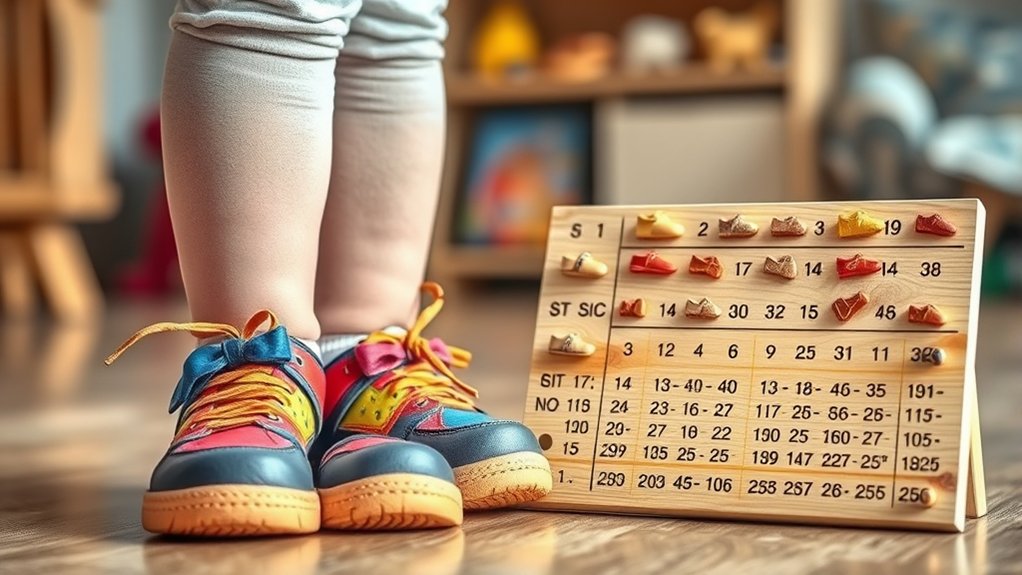
Although toddler shoe sizes might seem confusing at first, understanding what the numbers mean can make choosing the right pair much easier. Toddler shoe sizes range from 1 to 10, with sizes 1-3 designed for infants and 4-10 for toddlers. These sizes often correspond to age in months, helping you match footwear fashion with your child’s growth stage.
Toddler shoe sizes 1-3 fit infants, while 4-10 are for toddlers, matching their growth stages.
When picking toddler shoe styles, verify there’s about a pinky-width space at the toes and a snug fit around the heel.
Keep in mind, toddlers grow fast. Expect shoe sizes to increase by half a size every 2-4 months.
Measuring feet in the late afternoon gives you the most accurate size. This makes it easier to find comfortable, stylish shoes that support healthy foot development.
Using Toddler Shoe Measurements to Find the Right Size
How can you guarantee your toddler’s shoes fit perfectly every time? Start by using accurate measurements to find the right size, ensuring comfort and proper foot development.
When choosing shoes, consider the shoe material and the toe box. Both impact fit and flexibility.
Keep these tips in mind:
- Measure feet in the late afternoon when they’re naturally largest.
- Use a printable size guide at 100% scale and confirm it with a credit card.
- Measure both feet and select the larger size to accommodate differences.
- Re-measure every 2-3 months to keep up with rapid growth.
It’s pretty simple once you get the hang of it. Just a little extra care goes a long way in keeping those little feet happy and healthy!
How to Measure Toddler Shoe Sizes Accurately at Home
When you measure your toddler’s feet at home, accuracy is key to ensuring a comfortable fit that supports healthy growth. For the best results, measure in the late afternoon when feet tend to swell. Have your child stand with full weight on a flat surface, pressing the foot firmly against a wall.
Use a printable size guide at 100% scale, verified with a credit card, to avoid errors. Trace the foot’s outline on paper, then measure from heel to big toe with a ruler. Record both feet’s lengths and select the larger size to allow room for growth.
These parenting tips will help you navigate shoe fashion confidently, ensuring your toddler’s shoes fit well and keep them comfortable during every step. It’s easier than you might think once you get the hang of it!
When and How Often Should You Measure Toddler Feet for New Shoes?
You should measure your toddler’s feet every 2 to 3 months. Their feet grow quickly and can stretch a half size in that time.
It’s a good idea to check in the late afternoon or evening because feet tend to be largest then.
Also, keep an eye out for signs like tight shoes or discomfort — those might mean you need to measure sooner.
Ideal Measurement Frequency
Since toddlers’ feet grow quickly, measuring them every two months guarantees their shoes fit comfortably and support healthy development. Regular checks help you select shoes made from breathable shoe material, which is vital for comfort and foot health.
Plus, staying updated on your child’s foot size ensures their footwear keeps pace with fashion trends without sacrificing fit.
For best accuracy:
- Measure feet in the late afternoon or evening when they’re largest.
- Use a printable size guide or foot tracing for precise sizing.
- Monitor growth to avoid shoes that are too tight and cause discomfort.
- Adjust shoe purchases to support healthy foot development and accommodate growth spurts.
Signs To Measure Early
Regularly assessing your toddler’s feet every two months helps keep up with their rapid growth. But sometimes you’ll need to check more often. If you notice signs like discomfort, tightness, or worn-out shoe materials, it’s time to measure early.
Also, stay mindful of fashion trends that may influence shoe fit or style changes requiring a new size.
| Sign to Measure Early | Reason/Action |
|---|---|
| Shoes feel tight | Indicates feet have grown beyond current size |
| Visible wear on shoes | Materials breaking down, affecting support |
| Toddler complains | Discomfort or cramping signals poor fit |
| Outgrown style | Fashion trends prompting a new shoe choice |
| Foot tracing exceeds size | Foot length surpasses last measurement |
Measuring late afternoon ensures accuracy. It helps you pick shoes that promote healthy foot development.
Best Measurement Timing
Although toddlers’ feet can grow rapidly and unpredictably, measuring them every two to three months helps you stay on top of their changing size.
The best time to measure is late afternoon when feet swell slightly, which ensures more accurate sizing. Use a printed size guide or foot tracing to capture both length and width precisely.
Regular checks help prevent discomfort from poorly fitting shoes. This is especially important since shoe material and decoration can affect flexibility and fit. So, it’s worth paying attention to those details when picking out shoes.
Keep these tips in mind:
- Measure feet late in the day for accuracy
- Check every 2-3 months due to fast growth
- Replace shoes showing wear or poor support
- Consider shoe material and decoration for comfort
What to Do If Your Toddler’s Feet Are Between Sizes
When your toddler’s feet fall between two sizes, choosing the larger size is usually the best option to guarantee comfort and room for growth. Bigger shoes prevent cramping and blisters, especially if the foot measures close to the next size. Make sure there’s about a pinky finger’s width of space in the toe box.
Also, consider the shoe material and footwear fashion. Soft, flexible materials adapt better to growing feet and styles suitable for toddlers. Always try shoes on later in the day when feet are largest.
| Tip | Why It Matters |
|---|---|
| Choose Larger Size | Comfort and growth room |
| Measure Feet Every 2 Months | Keeps sizing accurate |
| Pinky Finger Space | Prevents tightness |
| Afternoon Fitting | Accounts for foot swelling |
| Flexible Materials | Adapts to foot shape |
Tips for Choosing the Right Fit and Comfort for Toddler Shoes
When you measure your toddler’s feet, try to do it in the late afternoon. That’s when their feet are at their largest, so you’ll get the most accurate size. Using a foot measuring guide can really help make sure you’re on point with the measurements.
You’ll want to pick shoes that have about a pinky finger’s width of space at the toes. This little bit of extra room makes sure the shoes are comfortable and gives their feet room to grow.
If your toddler’s feet fall between sizes, go for the larger size. Then, you can use adjustable straps or laces to make sure the shoes fit snugly and comfortably.
This way, your little one stays happy and comfy all day long!
Measuring Toddler Feet
Because toddlers’ feet can swell throughout the day, you’ll get the most accurate measurement by checking their feet in the evening. This helps assure shoes fit comfortably despite natural changes in foot size.
When measuring, consider both length and width to avoid discomfort caused by tight shoes, regardless of fashion trends or popular shoe materials.
To measure toddler feet accurately:
Have your toddler stand with full weight on their feet to mimic natural foot spread. Trace their feet or use a printable size guide for precise length and width. Leave about a thumb’s width of extra space at the toes for growth and comfort.
Measure every 2-3 months to keep up with rapid growth and maintain proper fit.
This approach guarantees comfort and supports healthy foot development. It’s really all about making sure your little one’s shoes fit just right, so their feet stay happy and healthy as they grow.
Selecting Larger Sizes
Regularly measuring your toddler’s feet helps you recognize when it’s time to pick a larger shoe size. When in doubt, always opt for the bigger size to allow room for growth and comfort. Choosing shoes one size larger prevents tightness and supports healthy foot development.
Look for popular brands that use flexible, breathable shoe material to keep your toddler comfortable. Shoes with adjustable features like Velcro straps or elastic laces offer a better fit even if the size is slightly bigger.
Avoid shoes that feel too tight or cause discomfort, regardless of the size label.
Prioritize fit over numbers to guarantee your toddler’s shoes support their active lifestyle while accommodating their growing feet with care and precision. It’s all about making sure they stay comfy and happy as they explore and play.
Adjusting Fit Techniques
Though finding the perfect size is essential, adjusting fit techniques guarantees your toddler’s shoes provide lasting comfort and support. You’ll want to take into account more than just length. Shoe material and foot arch support matter for healthy development.
Keep these tips in mind:
- Measure feet late afternoon when swelling peaks to avoid tight fits.
- Leave about a pinky finger’s width at the toe for growth and comfort.
- Try shoes on with socks or insoles your toddler usually wears for accuracy.
- Choose shoes with adjustable closures like Velcro to accommodate foot width and arch shape.
Regularly checking fit every 2-3 months ensures the shoe grows with your toddler. This helps prevent discomfort and promotes proper foot health.
Where to Buy Toddler Shoes and Use Size Guides
When you’re ready to buy toddler shoes, choosing the right place and using accurate size guides can make all the difference. Stores like Target, Walmart, and specialty retailers such as Stride Rite offer a wide selection that balances fashion trends with durable, comfortable shoe material.
Before shopping, use size guides, whether printable charts or tracing your child’s foot, to guarantee a proper fit. Shopping in the late afternoon helps because your toddler’s feet tend to swell slightly, giving you a more accurate size.
If you shop in-store, ask for professional fitting assistance or use a Brannock Device for precision.
Many online retailers also provide detailed fit guides tailored to toddler shoes, helping you find the perfect size without the guesswork.
Frequently Asked Questions
Can Toddler Shoe Sizes Vary Between Different Brands?
Yes, toddler shoe sizes can vary between brands because shoe manufacturing involves different sizing standards. You should measure your child’s feet and check each brand’s size chart to guarantee the best fit despite these variations.
It’s pretty normal to see differences from one brand to another. So, don’t just rely on the size number alone. Always double-check to make sure the shoes will fit comfortably.
Are Toddler Shoe Sizes the Same for Boys and Girls?
Think of toddler shoe sizes like a universal language. There are no gender differences here. You’ll find boys and girls share the same sizes.
Only shoe color preferences and styles paint the picture differently. So, focus on fit, not labels. It’s all about what feels right for little feet.
How Do Toddler Shoe Sizes Compare to Infant Shoe Sizes?
You’ll notice toddler shoe sizes start where infant sizes end, around size 4, reflecting foot growth patterns. Shoe manufacturing adjusts for this shift, offering more structured support for toddlers learning to walk, unlike softer infant shoes.
It’s pretty interesting how the design changes to keep up with your little one’s development. Toddlers need shoes that help them balance and explore, so the shoes get sturdier. Infant shoes, by comparison, are softer and more flexible since babies aren’t walking much yet.
Can Toddlers Wear Hand-Me-Down Shoes From Older Siblings?
You can let toddlers wear hand-me-down shoes if they fit well, but prioritize proper shoe fitting to support healthy foot development. Always check for wear and measure feet regularly to guarantee comfort and safety.
It’s really important to make sure the shoes aren’t too tight or too loose. Toddlers’ feet grow fast, so keeping an eye on the fit helps avoid any discomfort or foot problems. Just take your time to check the shoes before letting them wear hand-me-downs.
What Materials Are Best for Toddler Shoe Durability and Comfort?
Think of toddler shoes as a fortress. Leather and suede shield with breathable material choices, while rubber soles guarantee shoe sole durability. TPU strengthens high-wear spots, and cushioned insoles cradle comfort.
This combo keeps your toddler ready to explore confidently. It’s all about balancing toughness with softness so those little feet stay comfy and protected all day long.
Conclusion
Understanding toddler shoe sizes helps you choose the right fit. Measuring feet guarantees accuracy, and checking sizes often keeps comfort consistent.
When feet fall between sizes, knowing how to adjust prevents discomfort. Picking shoes with proper support promotes healthy growth.
Whether you shop online or in store, using size guides simplifies the process. By following these steps, you protect your toddler’s feet, boost their confidence, and support their every step with care.