How To Measure Shoe Size And Width – Complete Sizing Guide
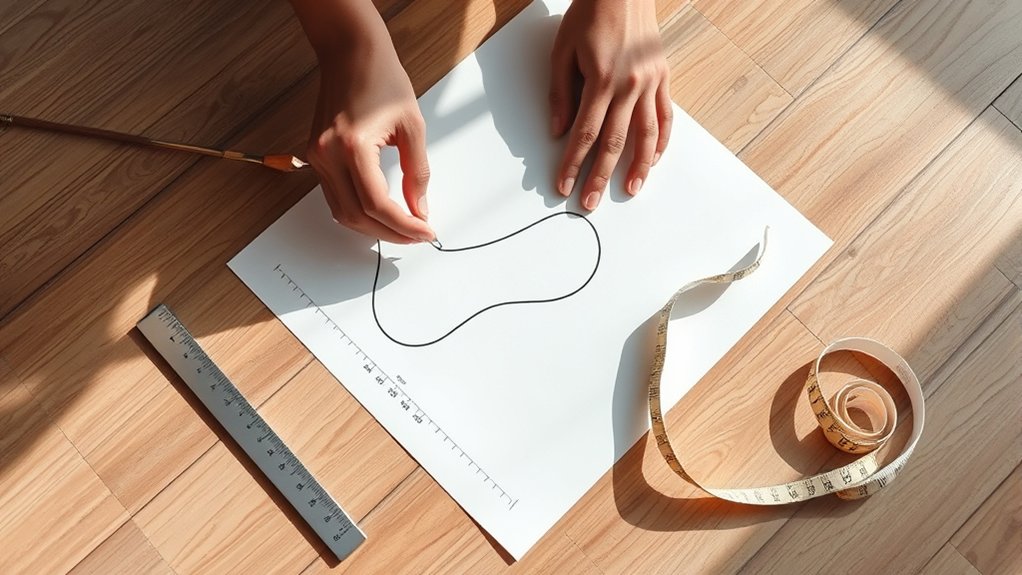
To measure your shoe size and width accurately, stand with your full weight on a flat surface. Then, trace your foot on paper, keeping the pen perpendicular. Mark the longest heel-to-toe length and the widest points of your foot.
Make sure to measure both feet and use the larger dimensions. Compare your length and width against standard sizing charts, and keep in mind the different width categories like B or E.
Don’t forget to consider shoe depth and the type of activity you’ll be doing for a comfortable fit. Keep exploring these steps to get precise sizing and find the ideal shoes for you.
Key Takeaways
- Trace both feet on paper with full weight, marking longest length and widest width for accurate measurement.
- Measure foot length from heel to longest toe and width at the widest part, using the larger foot’s measurements.
- Compare measurements to standard sizing charts, considering width categories like B, D, or E for proper shoe fit.
- Try shoes in the afternoon with intended socks, ensuring enough toe space, snug heel fit, and no pinching.
- Account for shoe depth, material flexibility, and comfort features like cushioning and adjustable straps for optimal fit.
How To Trace Your Foot For Accurate Measurements
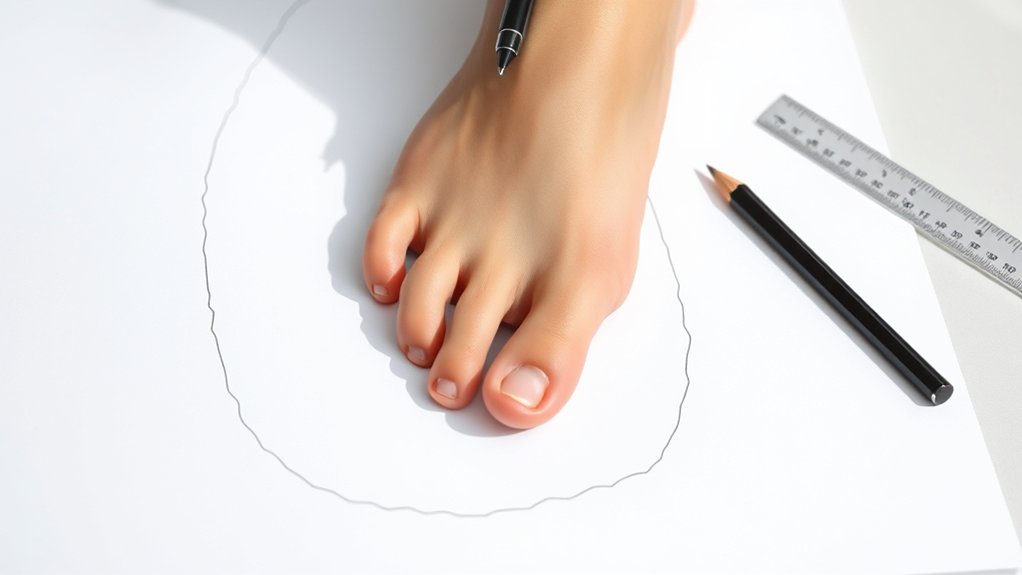
When measuring your foot for shoe size, start by placing it flat on a piece of paper with your weight evenly distributed. This guarantees your foot is at its natural size and shape.
For precise foot tracing, hold a pen perpendicular to the paper and carefully outline your entire foot, including the heel and toes, without pulling the pen away.
Accurate outlining is vital. So, maintain steady pressure to capture the true dimensions.
Mark the longest point from heel to the tip of the longest toe and the widest part of the ball of your foot.
Don’t forget to repeat this process for the other foot, as sizes may differ.
Use the larger of the two tracings for the most accurate shoe sizing.
This way, you’ll ensure a proper fit based on precise foot tracing.
How To Measure Foot Length And Width From Your Tracing
After you’ve traced your foot with clear marks at the heel, longest toe, and widest point, use a ruler or measuring tape to determine the exact foot length and width.
Measure the foot length along the centerline from the heel mark to the longest toe mark. Make sure you’re standing with your full weight on the foot during tracing to guarantee accuracy.
Next, find the widest part of your foot, usually just behind the toes, and measure straight across to capture the foot width. These precise measurements help accommodate your foot arch and ensure the shoe material stretches or supports appropriately.
Be sure to record these dimensions in inches or millimeters. This is essential for selecting shoes that fit comfortably, especially when considering variations in arch height and shoe material flexibility.
Getting accurate length and width measurements from your tracing forms the foundation for a suitable shoe fit.
How To Find Your Shoe Width Using Width Charts
To accurately determine your shoe width, start by measuring the widest part of your foot, usually located just behind the toes, while standing and bearing your full weight. Trace your foot on paper, mark the widest points, and use a flexible measuring tape or ruler to measure the distance in inches or millimeters.
Make sure to measure both feet, then pick the larger width.
Measure both feet and choose the wider measurement for the best shoe fit.
Next, compare your measurement to a shoe width chart to find your corresponding width category, like B, D, or EE. Keep in mind that the flexibility of the shoe material affects the fit. Less flexible materials need a more precise width match to keep the shoe looking good and feeling comfortable.
Using width charts helps you choose shoes that fit your foot’s dimensions well. This way, you can maintain both function and style without any hassle.
Understanding Shoe Depth And When To Choose Extra Depth
How do you determine if your shoes provide enough interior space for comfort and support? Shoe depth is vital here, measured around your foot’s instep girth. Using a flexible tape measure, record this measurement accurately to compare with shoe manufacturer specs.
Extra depth shoes offer roughly 1/4 inch more interior space than standard models, accommodating foot volume and orthotics. Double depth variants provide about 1/2 inch more room, ideal if you use braces or AFOs.
Proper shoe depth prevents pressure points and enhances comfort, especially if you have wider feet or foot conditions.
Keep in mind that shoe material affects flexibility and fit, while footwear fashion often limits available depth options. Choosing the right depth guarantees your shoes support both function and style effectively.
It’s all about finding that perfect balance for your feet!
Use Your Measurements To Find The Perfect Shoe Size
When you’ve accurately measured your foot length and width, you can use these dimensions to determine the ideal shoe size and width category. Cross-reference your measurements with sizing charts or input them into a shoe size calculator to get precise recommendations.
Keep in mind that brand variations and heel height affect fit, so always verify specific charts.
Also, consider arch support needs and whether you require additional toe room or wider widths for comfort.
- Use length and width data as your baseline.
- Consult multiple sizing charts for accuracy.
- Account for heel height when evaluating fit.
- Prioritize arch support based on foot anatomy.
- Choose width options reflecting your comfort preference.
This method guarantees your shoes provide the best fit and functional support.
What’s Different About Men’s And Women’s Shoe Widths?
You’ll notice that men’s shoe widths use letters like D, E, and EE.
On the other hand, women’s widths usually range from B to D.
The standard medium width is D for men but B for women, which reflects the typical differences in foot breadth.
Knowing these letter codes can really help you match the width to your own foot measurements for a better fit.
Width Letter Differences
Although men’s and women’s shoe widths use similar letter designations, these letters represent different actual foot measurements across genders. When you compare width letters, you’ll find that men’s D width isn’t equal in measurement to women’s D width, reflecting gender specific sizing standards. This distinction is critical when using width conversion charts to guarantee accurate fitting.
Men’s widths often use D (medium), E (wide), EE (extra wide). Women’s use B (medium), D (wide), E (extra wide). The same letter corresponds to wider foot measurements in men’s shoes than women’s.
Women’s shoes maintain narrower widths due to different foot shapes. Width categories are standardized but vary in actual dimensions between genders.
Size And Width Correlation
Understanding the distinctions in width letters between men’s and women’s shoes sets the stage for recognizing how size and width correlate differently across genders. Women’s medium width is typically a B, while men’s medium corresponds to a D, reflecting narrower widths for women.
Men’s shoes feature wider toe boxes and broader soles, influenced by shoe material and structural design tailored for comfort and durability.
When converting sizes, you must consider these width variations to assure a proper fit, especially as women’s widths range from A to EEE, and men’s from D to EEE.
In footwear fashion, this differentiation accommodates anatomical and aesthetic needs, emphasizing that identical size numbers don’t translate to identical widths across genders.
Accurate measurement is essential for comfort and style.
Tips For Choosing The Right Shoe Size And Width For Comfort
You’ll want to start by accurately measuring your foot width to make sure the shoe fits your natural shape without any tight spots.
It’s also important to think about what you’ll be using the shoes for because different activities need different types of support and fit.
Don’t forget to look for comfort features like enough space in the toe box, a secure fit around the heel, and breathable materials to keep your feet feeling good all day long.
Assess Foot Width
When evaluating foot width, start by measuring the widest part of your foot, usually just behind the toes, using a flexible tape or ruler. Accurate measurement guarantees the shoe accommodates your foot comfortably, balancing footwear aesthetics with functional fit.
To assess width effectively, stand on a flat surface and trace your foot outline on paper to identify the widest area. Then, measure the distance across this widest point in inches or millimeters. It’s a simple way to get a clear idea of your foot’s true size.
Next, consult width charts to match your measurement with standard widths like B, D, or E. Also, think about the shoe material you choose—go for something with enough flexibility and room in the toe box. This helps ensure your foot won’t feel cramped.
Finally, confirm the shoe’s ball width accommodates your foot without compressing it. That way, you’ll enjoy ideal comfort and durability.
This precise approach helps you select shoes that fit well while preserving both style and functionality. It’s all about finding that perfect balance for your feet.
Consider Shoe Purpose
Although selecting the correct shoe size and width hinges on accurate measurements, considering the shoe’s intended purpose is equally critical for ideal comfort.
When choosing shoes, factor in the activity: athletic shoes require a secure fit without constriction, allowing about a thumb’s width of space at the toe to accommodate movement and prevent blisters.
Casual shoes can fit more loosely but must still support your foot properly. Always test shoes with the socks or orthotics you plan to wear.
The shoe material affects flexibility and breathability, influencing comfort based on use.
Also, while fashion trends might tempt you to prioritize style, make sure the shoe size and width you pick match your functional needs. That way, you keep your feet healthy and comfortable during wear.
Prioritize Comfort Features
Selecting the right shoe size and width goes beyond measurements and intended use. Focusing on specific comfort features guarantees a better fit and prolonged wearability. It really makes a difference to your daily comfort.
Prioritize shoe durability and material flexibility to keep your feet comfortable throughout the day. Proper cushioning and arch support help reduce strain. Plus, flexible soles let your feet move naturally.
The correct width is key to preventing pinching and rubbing, especially in the toe box, where about a thumb’s width of space is ideal. Adjustable straps or laces let you customize the fit, which is great if your feet swell or you use orthotic devices.
Choose breathable, stretchable materials like mesh or soft leather. These keep your feet comfortable, even during long wear.
- Adequate cushioning and arch support
- Flexible sole design for natural motion
- Correct width with roomy toe box
- Adjustable closures for customized fit
- Breathable, stretchable materials for comfort
Check If Your Shoes Fit After Measuring
Before finalizing your purchase, make sure your foot measurements match the shoe’s size and width on the sizing chart. Getting this right means your shoes will fit your foot shape perfectly, which is key for comfort and function.
Ensure your foot measurements align with the shoe size and width for the perfect fit and comfort.
Try on shoes in the afternoon when your feet are more swollen. This helps you get a realistic idea of how they’ll feel throughout the day. Walk around to check there’s enough space for your toes, no pinching, and no heel slipping.
Keep in mind the shoe material affects how flexible and stretchy the shoe is. Make sure it works with your foot’s shape without losing support.
A snug fit around the midfoot and heel is important, but it shouldn’t feel tight or restrictive.
Use your measured foot length and width to double-check the shoe’s dimensions. Remember that sizing can vary between brands, so adjust accordingly.
Taking these steps ensures your shoes will fit just right, blending style and comfort perfectly.
Frequently Asked Questions
How Often Should I Re-Measure My Shoe Size?
You should re-measure your shoe size every six months, especially if you notice your feet swelling or your shoes stretching. It’s a good idea to keep an eye on these changes regularly.
Doing these checks helps ensure your shoes fit just right. That way, you avoid discomfort and your feet get the support they need.
Can Foot Size Change With Age?
Your foot growth can shift like a river’s course over time. Age-related changes, including ligament loosening and fat pad thinning, often cause your foot size and width to increase.
This means you might need to get your feet measured regularly to make sure your shoes fit just right. It’s pretty common, so don’t be surprised if your shoe size changes as you get older.
Are Shoe Sizes Consistent Across Different Brands?
You shouldn’t expect brand consistency in shoe sizes because sizing variations occur due to different manufacturing standards. Always measure your foot and check each brand’s specific size chart to guarantee an accurate fit before purchasing.
It’s really important to remember that one brand’s size 8 might feel different from another’s. So, don’t just rely on the number alone. Taking a moment to compare sizes can save you a lot of hassle later on.
How Do Insoles Affect Shoe Fit and Size?
Insoles can reduce your shoe’s effective space by up to 5 millimeters. Insole cushioning and the material they’re made from directly influence the fit. This can change how comfortable your shoes feel and how much support they provide.
What Materials Offer the Most Flexible Shoe Width?
You’ll find flexible materials like mesh, knit fabric, and soft leather offer the most adaptable shoe width. These materials stretch and conform to your foot shape, ensuring a comfortable fit without compromising support or durability.
They’re great because they move with you, giving you that snug feel without feeling too tight. Plus, they tend to breathe well, keeping your feet cool throughout the day.
Conclusion
Now that you’ve mastered measuring your foot length, width, and depth, you hold the key to perfect shoe fit. Don’t let ill-fitting shoes be the thorn in your side. Use your precise measurements and width charts to find comfort tailored just for you.
Remember, men’s and women’s sizing varies, so always double-check. With these exact steps, you’re equipped to step confidently into shoes that truly fit your unique feet.