What Size Shoe Am I – Easy Ways To Find Out
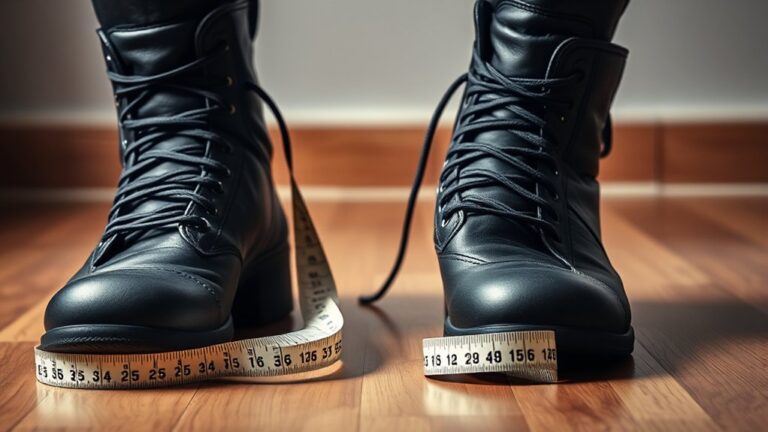
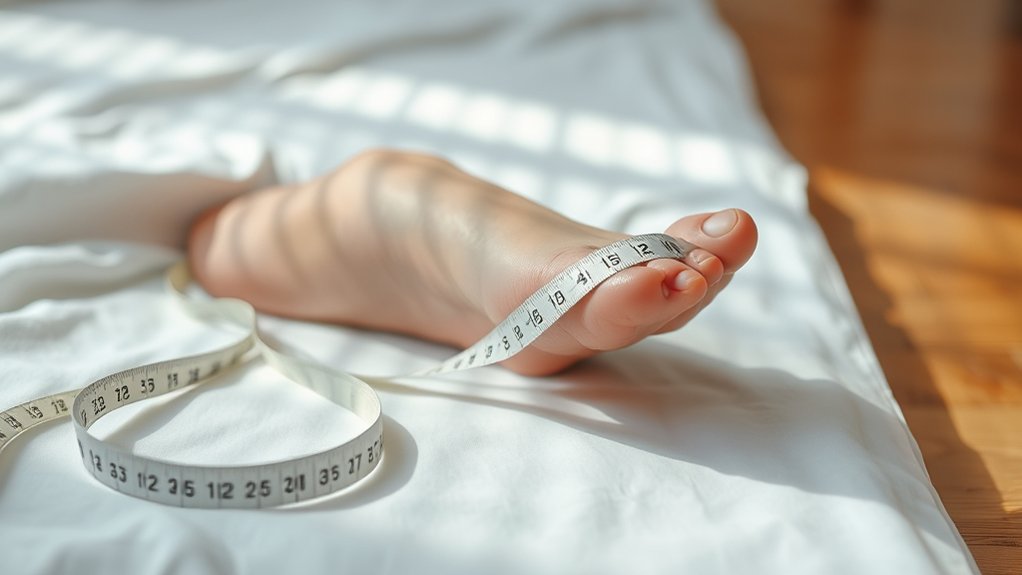
To find your shoe size easily, measure your feet at the end of the day while wearing the socks you’ll use with the shoes. Stand on a hard surface, trace your foot, and measure from your heel to your longest toe.
Use the larger foot measurement to check official size charts. Don’t forget to consider width and gender differences when picking your size.
Remember, feet can change size over time, so it’s a good idea to re-measure regularly. If you want tips on dealing with different foot sizes or understanding conversions, keep exploring for more details.
Key Takeaways
- Measure your foot length at the end of the day while wearing usual socks for accurate sizing.
- Trace your foot on paper, mark longest toe and heel, then measure the distance for size reference.
- Compare your measurements to official shoe size charts considering men’s, women’s, and regional size differences.
- Check for proper width and arch support to ensure comfort and avoid common fit issues like pinching or heel slippage.
- Regularly re-measure your feet as size can change, and prioritize fit over style to maintain foot health.
How to Measure Your Foot for the Most Accurate Shoe Size
When you measure your foot at the end of the day, you can account for natural swelling and get a more accurate shoe size.
For precise foot measurement, wear the socks you plan to use with your shoes to include their thickness in your calculation.
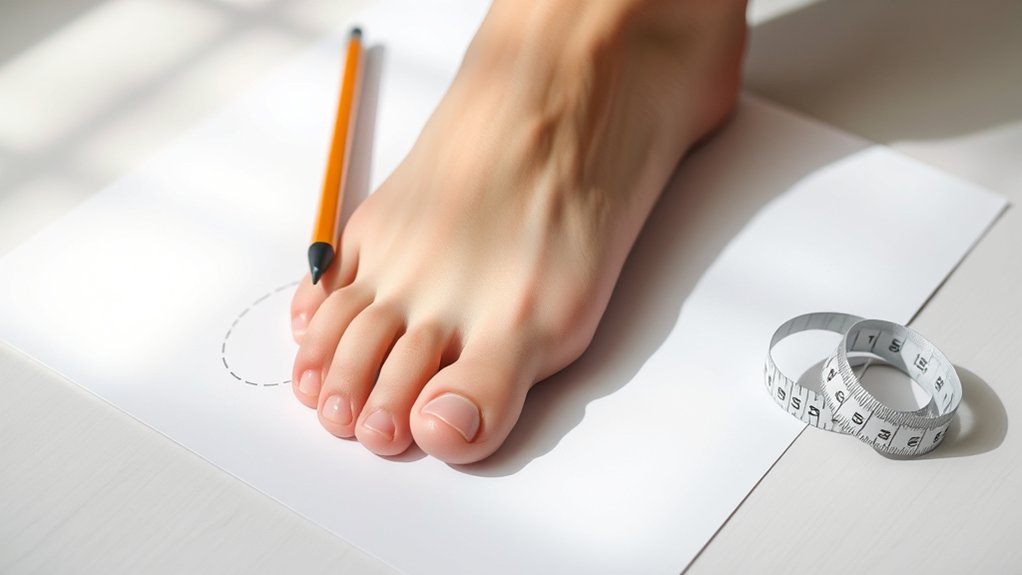
Tape a piece of paper to a hard floor, stand on it with your heel against the wall, and keep your knees slightly bent for a natural stance.
Trace around your foot, mark the longest toe and heel, then measure the distance between these points with a ruler.
Repeat the process for your other foot and use the larger measurement to guarantee ideal shoe fitting.
This method provides a reliable foundation for selecting the correct shoe size.
It’s a simple way to make sure your shoes fit comfortably right from the start.
Give it a try, and you’ll avoid the hassle of returns or uncomfortable shoes later on.
Why Do Men’s and Women’s Shoe Sizes Differ?
Although men’s and women’s shoe sizes may seem interchangeable at first glance, they actually follow different sizing systems based on distinct foot measurements. Women generally have narrower, smaller feet, prompting manufacturers to create separate size charts to guarantee proper fit.
Typically, a woman’s shoe size is about 1.5 sizes smaller than a man’s for the same foot length.
This differentiation stems from historical standards and anatomical differences. You’ll also notice that fashion trends influence shoe design, often affecting fit and durability.
Women’s shoes may prioritize style, sometimes impacting shoe durability differently than men’s footwear, which often focuses more on robustness.
Understanding these variations helps you select shoes that fit well, aligning comfort with current fashion trends. It also assures the shoe’s durability matches your needs.
Fun and Easy Ways to Guess Your Shoe Size Without a Ruler
You can easily guess your shoe size during casual activities by asking friends or noticing common size trends. It’s a fun way to get a rough idea without pulling out a ruler.
Why not try engaging in some fun riddles or simple math games to estimate your size? These little games make the process feel more like play than a chore.
Casual Shoe Size Guessing
If you don’t have a ruler handy, you can still estimate your shoe size using casual, creative methods. While shoe size myths often mislead, you can rely on simple comparisons and observations instead of specialized foot measurement tools.
For example, ask a friend about their shoe size during a chat or use the forearm trick. Just compare your forearm length to your foot for a fun estimate. Height and common size trends also guide you toward an educated guess.
| Method | How to Use | Notes |
|---|---|---|
| Ask a Friend | Casual conversation | Quick, rough estimate |
| Forearm Trick | Compare forearm to foot length | Fun and informal |
| Height Approximation | Taller = Larger feet (approx.) | General trend, not exact |
| Common Sizes Guess | EU 39 women, EU 43 men | Useful baseline |
Riddle-Based Size Estimation
When seeking a fun and easy way to guess your shoe size without a ruler, the riddle-based method offers an engaging alternative. This approach taps into shoe size history by cleverly using a formula linked to your EU shoe size. It’s perfect when you want to estimate size without measuring foot shape directly.
Multiply your EU size by 5, add 50, multiply by 20, add 1024, then subtract your birth year. The first two digits of the result reveal your EU shoe size.
This method is great because it makes size guessing playful and surprising. It avoids awkward measuring moments and connects you with shoe size history.
Plus, it works anywhere, anytime, and respects the uniqueness of your foot shape.
Using Nike Size Charts to Find Your Shoe Size
To find your Nike shoe size, begin by measuring your foot length accurately. It’s best to do this at the end of the day when your feet are at their fullest.
Nike has separate size charts for men and women, so make sure you’re looking at the right one to get the best fit.
If you find that you need a bit more room, don’t worry! Nike offers wide fit options that provide extra comfort without sacrificing support. Just check those out to make sure your shoes feel just right.
Measuring Foot Length
How do you guarantee your Nike shoes fit perfectly? Start by measuring your foot length accurately. This is a crucial step in footwear fashion and shoe manufacturing.
Follow these precise steps to ensure a flawless fit: measure your foot at day’s end when swelling peaks for real-world accuracy. Wear the socks you intend to use with your shoes to match the fit.
Tape a paper to a hard floor and trace your foot’s outline carefully. Mark the longest toe’s tip and heel, then measure the distance with a ruler.
Use Nike’s size charts to convert your measurement into the correct shoe size.
This method ensures your Nike shoes align perfectly with your foot’s true dimensions. That way, you get the perfect blend of comfort and style every time.
Men’s And Women’s Sizes
Although Nike offers a broad range of sizes for both men and women, finding your exact fit depends on using their detailed size charts. Nike provides measurements in U.S., European, and UK sizes to help you accurately determine your shoe size.
Women’s sizes generally range from 4.5 to 10.5 US, while men’s span from 5.5 to 12.5 US.
To guarantee ideal shoe comfort, measure your foot length carefully and compare it against Nike’s official charts. Keep in mind that sizing can vary slightly by model.
Proper fit supports your foot arch effectively, preventing discomfort during wear.
Wide Fit Options
When you have wider feet, selecting the right Nike shoe size means paying close attention to width options in their size charts. Nike offers wide and extra-wide shoe width choices, like the Pegasus and Monarch models, designed to accommodate broader foot shapes comfortably.
To find your perfect fit, measure your foot width accurately and compare it with Nike’s specific width measurements in inches.
Standard sizes often feel too narrow, so choosing the “Wide” or “Extra Wide” options ensures better comfort and performance. This way, you avoid discomfort and pressure points, which can really ruin your day.
You’ll also enjoy improved stability and support, which makes a big difference if you’re on your feet a lot. Plus, these options help prevent foot fatigue during long wear.
It’s all about finding that tailored fit for your unique foot shape. When you do, you’ll enhance overall shoe performance and satisfaction.
Signs You Might Be Wearing the Wrong Shoe Size
If your shoes cause pinching in the toes or blisters on the heels, they’re likely the wrong size. Tight toe boxes often result from poorly fitting shoes, no matter what material they’re made from.
Heel slippage or discomfort around the ankles usually means the shoes are either too loose or don’t have enough support.
Notice if your toes press against the sides or your arch feels off-center. These are clear signs your shoe size isn’t right.
If you find yourself constantly adjusting your shoes or feeling discomfort, it means you’re not getting the right fit.
While fashion trends might push for slimmer designs, don’t sacrifice comfort for style. It’s way more important to prioritize a proper fit.
That way, you avoid long-term foot problems and make sure your shoes provide the support and comfort your feet need every day.
How to Handle Different Sized Feet
Recognizing signs of improper shoe fit is just the beginning; many people also face the challenge of having feet that differ in size. To handle this, measure both feet and base your shoe size on the larger foot.
Pay attention to shoe width and foot arch support, as these affect comfort considerably.
When shopping, consider these tips: choose wide or extra-wide shoes if one foot is broader. Try on shoes with varying widths to find the best fit. Use a shoe last to test comfort for each foot.
Also, check if brands offer different width options online. Re-measure your feet regularly since size can change over time.
This approach guarantees both feet receive proper support and comfort, helping you avoid pain and discomfort.
What to Know About Wide Feet and Shoe Sizes
Although many shoe buyers focus primarily on length, understanding the importance of width is vital for those with wide feet. If you have a broader foot, sizing up by half a size or choosing shoes labeled “wide” or “extra-wide” ensures a comfortable fit without compromising your shoe arch support.
Focusing on shoe width is essential for wide feet to ensure comfort without sacrificing arch support.
Standard widths often cause discomfort, blisters, and pinching in the toe box and heel. Accurately measuring your foot’s width is essential since length alone doesn’t address breadth.
Prioritize brands like Nike, which offer wide-specific models such as Pegasus and Monarch, designed for wider feet. Also, consider insoles comfort to maintain proper arch alignment and reduce pressure points.
Selecting shoes with appropriate width improves overall fit, performance, and foot health. So, don’t just focus on length—making sure your shoes fit well across the width can make a big difference in comfort and how your feet feel all day long.
Tips for Finding the Right Shoe Size for Kids
When you measure your child’s feet at the end of the day, you capture their largest size, which helps ensure a more accurate shoe fit. Kids’ feet tend to swell throughout the day, so measuring at this time really makes a difference.
Also, pay close attention to the shoe material and how it supports the foot arch. Both of these factors impact comfort and fit.
Keep these tips in mind:
- Use a printable size chart to trace and measure length and width precisely.
- Allow a fingertip’s space between toes and the shoe front for growth and comfort.
- Choose shoes with adjustable closures like velcro or laces for a snug fit.
- Look for signs of discomfort or fidgeting that might mean the shoe doesn’t fit properly.
- Opt for breathable, flexible shoe material that supports the foot arch properly.
How to Convert Shoe Sizes Between US, UK, and Europe
After confirming your child’s shoe fits well and accommodates growth, understanding how shoe sizes correspond across different regions can help you pick the right pair, especially when shopping internationally. The shoe sizing history reveals that US, UK, and European sizes use different measurement systems, so careful conversions are necessary.
Knowing how shoe sizes vary internationally helps ensure the perfect fit when shopping across regions.
For example, a men’s US size 9 typically matches a UK size 8 and a European size 42, which corresponds to about 26.5 cm. Women’s US sizes run approximately 1.5 sizes smaller than men’s, which affects conversions accordingly.
European sizes rely on length in centimeters, supporting accuracy.
However, international sizing standards vary slightly between brands, so it’s always a good idea to consult specific size charts. Using official guides ensures you select the correct size across regions without any inconvenience.
Frequently Asked Questions
How Often Should I Recheck My Shoe Size as My Feet Change?
You should recheck your shoe size through foot measurement every 6 to 12 months.
Make sure to follow shoe fitting tips, especially after weight changes, pregnancy, or injury. This helps guarantee comfort and prevents foot problems.
Wearing properly fitting shoes really makes a difference! So, don’t skip those regular checks.
Can Shoe Size Affect My Overall Foot Health Long-Term?
Yes, shoe size directly affects your foot health long-term. Wearing the right size guarantees foot aesthetics and supports biomechanics, preventing deformities.
Balancing shoe fashion with proper fit ensures comfort and reduces risks of chronic foot issues. So, it really pays off to choose shoes that fit well rather than just look good.
Are There Specific Shoe Sizes for Different Sports or Activities?
Yes, you’ll find sport specific sizing varies to provide an activity based fit, ensuring ideal performance and comfort. Different sports demand unique shoe shapes, widths, and support levels tailored to your foot’s movements and protection needs.
It really comes down to how your feet move during the activity. Shoes designed for running, for example, will differ a lot from those made for basketball or hiking. Each sport has its own set of requirements to help keep you comfortable and safe.
How Do Insoles or Orthotics Impact Shoe Size Selection?
Insole cushioning and orthotic fitting often require you to choose shoes one size larger. This guarantees comfort and proper support. Thicker insoles or custom orthotics increase the shoe’s internal volume and alter foot contact.
Do Temperature and Swelling Influence Daily Shoe Size Needs?
You wouldn’t expect your feet to mimic balloons, yet temperature and swelling do affect shoe size daily. Shoe material and foot width matter, so measure later when feet expand to avoid uncomfortable tightness or pinching.
It’s pretty normal for your feet to change a bit throughout the day. So, checking your shoe size in the morning might not give you the full picture. Try measuring in the evening when your feet are at their biggest.
Conclusion
Finding your correct shoe size is essential for comfort and foot health. Remember, measure twice, buy once. Whether you use a ruler, size charts, or simple guessing tricks, accuracy saves you from discomfort and injury.
It’s also important to understand the differences in men’s, women’s, and international sizes. That way, you can be sure you’re picking the perfect fit. Don’t forget to consider foot width or uneven sizes too.
With these tips, you’ll confidently find shoes that fit well and support your every step. Taking the time now means your feet will thank you later!