How To Get Rid Of Shoe Odor – Effective Solutions
To get rid of shoe odor effectively, start by controlling moisture. You should dry your shoes thoroughly and use moisture-wicking socks daily. Maintaining strict foot hygiene is key, so make sure to wash and dry your feet well, especially between your toes.
Cleaning your shoes regularly helps too. Take out the insoles and treat sweat-prone areas with mild soap, then let them air dry properly. Using natural deodorizing agents like baking soda or vinegar can also neutralize bacteria.
Don’t forget to replace your insoles every few months, as this helps prevent odor buildup. Try these steps and you’ll notice your shoes stay fresh for longer.
Key Takeaways
- Maintain daily foot hygiene by washing and thoroughly drying feet, especially between toes, to reduce bacteria causing shoe odor.
- Regularly clean shoes with mild soap, remove insoles, and air dry in well-ventilated areas to prevent moisture buildup.
- Use natural deodorizers like baking soda, white vinegar, activated charcoal, or essential oils inside shoes to neutralize odors and absorb moisture.
- Wear moisture-wicking socks and rotate footwear to allow shoes ample drying time, minimizing bacterial growth.
- Replace insoles every 3 to 6 months or when odor and wear signs appear to maintain shoe freshness.
What Causes Shoe Odor and How to Prevent It
Why does shoe odor develop so persistently? It’s mainly because foot bacteria love the moist, warm environment inside your shoes. Sweat has acids and proteins that these bacteria break down, which produces those unpleasant smells.
When moisture control fails, like wearing the same shoes every day without letting them dry properly, bacteria multiply fast. Synthetic fabrics and non-porous insoles trap moisture, making it even easier for bacteria and fungi to grow.
Poor foot hygiene, like not washing or drying your feet well, makes things worse. To prevent shoe odor, focus on cutting down moisture and limiting bacteria by keeping good hygiene and picking breathable materials.
Knowing these things helps you fight odor before it becomes a big problem. It’s all about staying ahead of the issue!
How to Clean and Dry Shoes to Remove Shoe Odor
Controlling moisture and bacteria inside your shoes means cleaning them regularly and thoroughly. First, take out the insoles and laces so you can reach every spot easily. Use cleaning tools that match your shoe material — soft brushes work great for delicate fabrics, while firmer brushes suit sturdier surfaces.
Mix warm water with mild soap or a special shoe cleaner, then scrub both the inside and outside of your shoes. Pay extra attention to areas where you tend to sweat the most. After scrubbing, rinse your shoes well with clean water to wash away all the soap and bacteria.
Pat your shoes dry with a clean towel, but don’t put them in direct sunlight because that can damage the material. Instead, let them air dry in a spot with good airflow.
To help shoes dry faster and cut down on odor, pop in moisture-absorbing stuff like silica gel packs or crumpled newspaper while they dry.
This way, you keep your shoes in good shape and kick odor-causing bacteria to the curb.
Using Baking Soda, Vinegar, and Natural Remedies to Deodorize Shoes
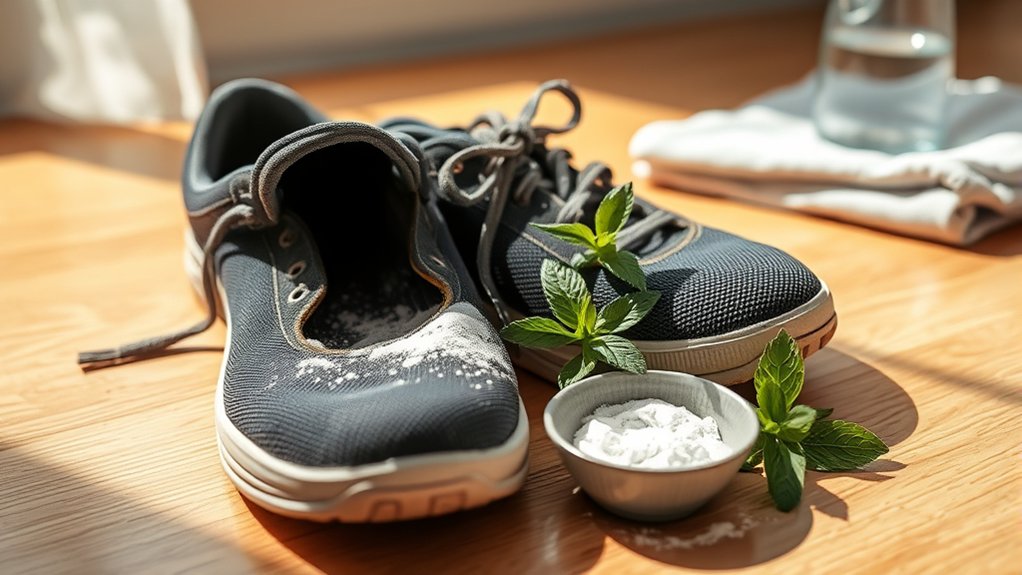
If your shoes are smelling a bit funky, a simple trick is to sprinkle some baking soda inside them before you go to bed. The baking soda works overnight to soak up moisture and the acids made by bacteria that cause those odors.
Another handy tip is to use a mix of white vinegar and water. You can even add a few drops of essential oils like tea tree or eucalyptus if you want. This solution helps to zap the bacteria responsible for the smell.
When you combine these natural remedies with good airflow—like letting your shoes breathe after wearing them—you get an easy, budget-friendly way to keep your shoes smelling fresh without using harsh chemicals.
Baking Soda Benefits
Although shoe odor can be stubborn, baking soda effectively neutralizes it by absorbing moisture and acids produced by bacteria and sweat. Its alkaline nature breaks down odor-causing compounds, ensuring long-lasting freshness regardless of shoe material.
To get the best results, sprinkle a generous amount of baking soda inside your shoes and leave it overnight for deep penetration. Make sure to reactivate or replace the baking soda regularly to prevent buildup.
You can use it on various shoe materials without worrying about damage. Plus, if you want, you can combine it with other natural remedies (but not vinegar) for even better deodorizing.
This method targets the root cause of odors, moisture, and bacterial acids. It’s a simple yet effective way to keep your footwear fresh.
Because baking soda absorbs moisture so well, it’s an essential hack for maintaining fresh shoes efficiently.
Vinegar And Oils
Building on the moisture-absorbing properties of baking soda, combining it with white vinegar and natural oils enhances shoe deodorization by targeting bacteria and neutralizing odors more thoroughly.
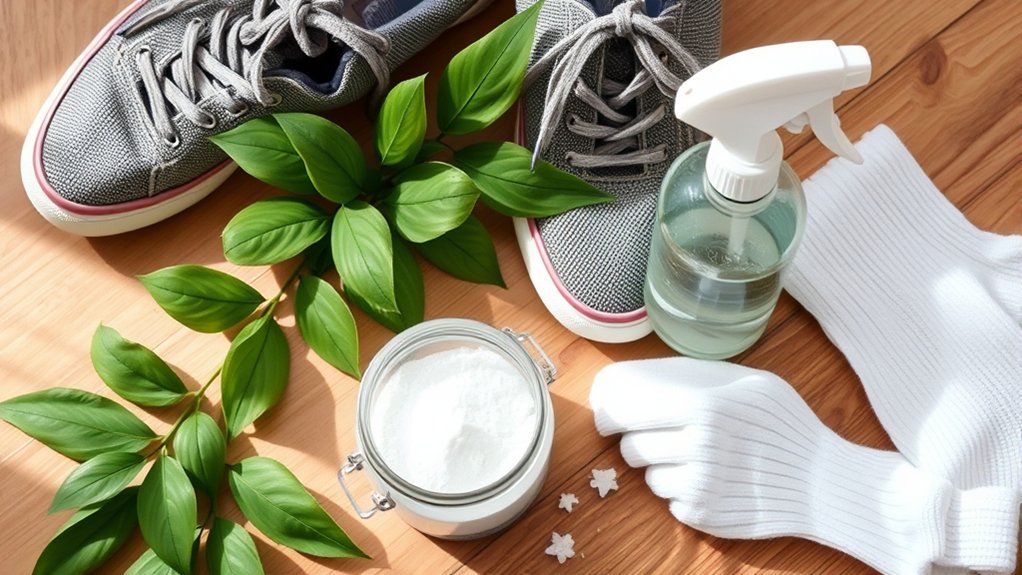
To tackle odor inside the shoe material, mix equal parts white vinegar and water in a spray bottle and spritz the interior evenly. This helps disrupt bacterial growth effectively.
After that, sprinkle baking soda inside to absorb leftover moisture and odors overnight.
Add a few drops of essential oils like tea tree, cedarwood, or clove to the baking soda or on cotton pads placed inside the shoes. These oils provide antimicrobial benefits and a natural scent.
Finally, dry your shoes in direct sunlight. The UV exposure further reduces bacteria and odor compounds.
This multi-step approach ensures thorough deodorization that works well for different shoe materials and stubborn odors.
How Shoe Inserts and Insoles Help Keep Shoes Fresh
A key factor in maintaining shoe freshness lies in selecting the right inserts and insoles designed to combat odor. You’ll want to take into account both fashion trends and material durability to guarantee your shoes remain stylish and functional.
Effective insoles reduce bacteria and moisture, the main culprits behind odor. Look for features such as:
- Antibacterial or odor-absorbing materials that inhibit bacterial growth
- Natural fibers or activated charcoal to trap and neutralize smells
- Moisture-wicking properties that promote airflow and keep shoes dry
- Deodorizing elements suited for frequent wear or athletic use
- Durable constructions that align with current fashion trends while maintaining longevity
When and How to Replace Insoles to Stop Shoe Odor
When you want to keep shoe odor under control, replacing your insoles regularly is essential. The recommended replacement frequency is every 30 to 60 days, depending on use and insole materials.
Insoles with antimicrobial or moisture-wicking properties offer enhanced odor control but still require timely replacement to prevent bacteria and sweat buildup.
It’s a good idea to inspect your insoles frequently by removing them to check for persistent odors, compressed cushioning, or visible mold. These are clear signs that it’s time for new ones.
Proper replacement means selecting clean, high-quality insoles that match your shoe type. Then, insert them carefully to keep your shoes hygienic.
Consistently swapping out worn insoles, along with effective shoe care, can really cut down on odor and keep your shoes feeling fresh longer.
Why Socks and Foot Hygiene Matter for Shoe Odor Prevention
Since bacteria and moisture drive shoe odor, wearing clean, moisture-wicking socks and maintaining proper foot hygiene play critical roles in prevention.
Bacteria and moisture cause shoe odor, so clean socks and good foot hygiene are essential to prevent it.
The interaction between footwear materials and sock types markedly affects bacterial growth and odor.
To minimize shoe odor, focus on choosing socks made from moisture-wicking fibers like merino wool or synthetic blends. It’s also a good idea to select socks with antimicrobial or deodorizing treatments. Changing socks daily helps avoid transferring bacteria to your footwear.
Don’t forget to wash your feet thoroughly and dry them completely to reduce microbial growth. Removing dead skin regularly can limit places where fungi and bacteria like to hang out.
Taking these simple steps makes a big difference in keeping your shoes smelling fresh.
Long-Term Strategies to Keep Shoes Odor-Free
To keep your shoes odor-free in the long run, it’s important to stay on top of your footwear hygiene by cleaning and airing them out regularly. This simple habit goes a long way in preventing bad smells.
You can also use natural deodorizers like baking soda or vinegar—they work really well to cut down on bacteria that cause odors.
And don’t forget about your insoles! Replacing them every now and then helps stop moisture from building up, which keeps your shoes smelling fresh for longer.
With these easy steps, your shoes will stay nice and odor-free.
Consistent Footwear Hygiene
Maintaining consistent footwear hygiene plays an essential role in preventing shoe odor over the long term. The shoe material influences odor absorption, so managing moisture and bacteria is critical.
You should adopt these practices to maintain freshness: Wash and thoroughly dry your feet daily, focusing between toes to reduce sweat and bacteria. Wear moisture-wicking socks and change them every day to keep feet dry and decrease bacterial growth inside shoes.
Air out shoes in a well-ventilated space after each use to evaporate moisture and inhibit bacterial proliferation. Clean shoes and insoles regularly with antibacterial sprays or vinegar solutions to eliminate odor-causing bacteria.
Rotate footwear frequently, allowing each pair ample drying time between uses to prevent persistent odors.
These steps guarantee your shoes remain odor-free by controlling moisture and bacterial buildup inherent in various shoe materials. Following them consistently really makes a difference.
Use Natural Deodorizers
While controlling moisture and bacteria is essential, incorporating natural deodorizers offers an effective, long-term solution to keep your shoes fresh. Different shoe materials respond uniquely to deodorizing agents, so selecting appropriate natural options enhances odor absorption and preservation.
For example, activated charcoal excels at moisture control in leather shoes, while baking soda effectively neutralizes acids in fabric footwear.
| Deodorizer | Function |
|---|---|
| White vinegar mixture | Neutralizes odors by breaking down bacteria |
| Activated charcoal | Absorbs moisture and odor compounds |
| Baking soda | Neutralizes acids, reduces bacteria |
| Dried tea bags | Absorb moisture, diminish smells |
| Essential oils | Provide long-lasting natural deodorization |
Using these natural deodorizers regularly improves shoe material integrity and keeps your footwear odor-free for longer. It’s an easy way to maintain fresh shoes without harsh chemicals.
Regular Insole Replacement
Although natural deodorizers help control shoe odor, regularly replacing your insoles plays a critical role in long-term freshness. Proper insoles maintenance removes accumulated sweat and bacteria that cause odor buildup. Replace insoles every 3 to 6 months, depending on usage and material quality.
Select insoles made from antimicrobial or odor-absorbing materials to enhance moisture control and airflow. It’s a good idea to inspect them frequently for wear or odor retention. That way, you can stay ahead of any unpleasant smells.
Keep these tips in mind for effective insoles maintenance: Replace insoles promptly when signs of odor or degradation appear. Use breathable, high-quality insoles to extend replacement intervals.
Opt for antimicrobial properties to inhibit bacterial growth. Also, maintain consistent airflow inside your shoes. Don’t forget to monitor moisture levels to prevent odor formation.
This disciplined approach guarantees sustained shoe hygiene and freshness. It’s definitely worth the effort to keep your shoes feeling and smelling great!
Frequently Asked Questions
Can Diet Affect Shoe Odor?
Yes, your diet affects shoe odor by influencing odor bacteria growth through sweat composition. Consuming balanced foods and hydrating well reduces bacteria. This makes shoe cleaning more effective and minimizes persistent odors caused by bacterial buildup inside your shoes.
Are There Specific Shoe Materials That Resist Odor Better?
You’ll find leather and natural fibers like wool offer superior shoe material odor resistance due to breathability and antimicrobial properties. Mesh fabrics also enhance airflow, reducing moisture buildup.
On the other hand, synthetic plastics typically trap odors, lowering odor resistance. So, choosing the right material really makes a difference when it comes to keeping your shoes smelling fresh.
How Do Professional Shoe Deodorizers Compare to Home Remedies?
You’ll find shoe deodorizer effectiveness superior in professional products, as they target bacteria deeply and consistently.
In contrast, home remedy safety varies, risking material damage and inconsistent results. This makes professional options more reliable for odor control.
Can UV Light Be Used to Eliminate Shoe Odor?
Though UV light might seem like a futuristic gadget, you can use it effectively for shoe deodorization. UV-C light destroys odor-causing bacteria’s DNA, which is pretty cool.
It usually takes about 10-15 minutes of exposure to get rid of shoe odor efficiently. So, it’s a simple and tech-savvy way to freshen up your shoes without much hassle.
Does Wearing the Same Shoes Daily Worsen Odor?
Yes, wearing the same shoes daily worsens odor by trapping moisture and bacteria. When your feet sweat, the moisture gets absorbed by the shoe, creating a perfect environment for bacteria to grow. This bacteria is what causes that unpleasant smell.
For proper sneaker hygiene, you need odor absorption materials and alternate footwear to allow drying. Switching shoes gives them time to air out and prevents bacterial growth. This simple habit can help keep your shoes smelling fresh longer.
Conclusion
By tackling shoe odor at its roots: moisture, bacteria, and poor airflow, you’ll keep your footwear fresh as a mountain breeze. Regular cleaning, strategic use of baking soda or vinegar, and timely insole replacement act as your arsenal against stubborn smells.
Don’t underestimate the power of proper socks and foot hygiene. They’re the foundation of odor control. With these precise steps, you’ll transform your shoes from odor traps into breathable havens of comfort and cleanliness.