
What Does C Mean In Shoe Size – Width Meaning Guide
C width in shoe sizing refers to the foot’s width, but it varies by gender. For men, it’s narrower than the standard D width. For women, it’s wider than their standard B width.
This sizing helps make sure you get a tailored, comfortable fit that prevents pressure points and foot problems. Getting the proper measurement, especially later in the day, is key for accuracy.
Understanding these nuances can really improve your shoe selection and overall foot health. Keep exploring to uncover more about fit and options.
Key Takeaways
- C width indicates a moderate or narrow shoe fit, narrower than men’s standard D but wider than women’s narrow B width.
- For men, C width is considered narrow; for women, it represents a wider fit than the standard B width.
- C width shoes accommodate foot width variations, reducing pressure points and improving overall comfort.
- Shoe width sizing varies by brand, so fit and comfort should be prioritized over the C label alone.
- Measuring feet later in the day ensures accurate width selection, as feet naturally swell and expand throughout daily activities.
What “C Width” Means in Shoe Sizing

What exactly does a “C width” mean when you’re choosing shoe sizes? In shoe sizing standards, “C width” identifies a moderate or narrow fit around the widest part of your foot. This designation helps accommodate foot width variations, ensuring a better fit than generic sizing.
While the exact dimensions can vary by brand, C width generally signifies a shoe narrower than standard widths but wider than the narrowest options. Using this width label guides you in selecting shoes that minimize pressure points and discomfort.
How Does C Width Differ for Men and Women?
How does the meaning of C width shift between men’s and women’s shoe sizing? The key lies in gender specific fit and foot width differences.
Understanding how C width varies in men’s and women’s shoes is crucial for the perfect fit.
For women, C width shoes offer a wider fit than the standard B width, providing more room across the ball of the foot to accommodate broader feet comfortably.
Conversely, in men’s sizing, C width represents a narrower fit than the standard D width, resulting in a snugger, more streamlined fit.
This means that the same C label corresponds to different actual widths depending on gender. Women’s C width is generally wider, while men’s C width is narrower.
Understanding these distinctions is essential when selecting shoes. Gender specific fit directly impacts comfort and performance based on inherent foot width differences.
Why Shoe Width Matters for Your Comfort
Recognizing the difference in C width between men’s and women’s shoes highlights the importance of selecting the correct shoe width for your comfort. Proper shoe width guarantees adequate space for your toes, preventing pressure points that can cause discomfort or injury.
When your shoes fit well, shoe padding cushions your feet effectively, while arch support maintains proper foot alignment, reducing strain during daily activities.
Wearing shoes that are too narrow or too wide compromises both padding and arch support, leading to blisters, bunions, and foot fatigue. Over time, ill-fitting widths can contribute to musculoskeletal issues affecting posture and gait.
How to Measure Your Foot for C Width Shoes
To measure your foot accurately for C width shoes, begin by marking the widest part of your foot while you’re standing. This helps you capture the true girth of your foot under your full weight.
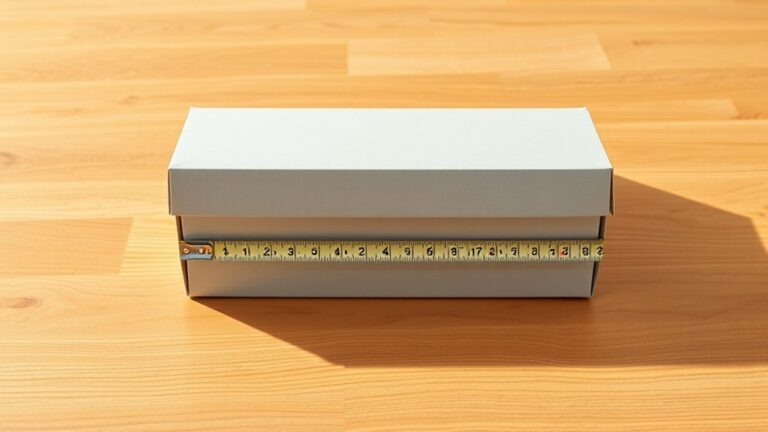
You can use a Brannock device or a flexible tape measure to get this width precisely.
Make sure to measure both feet because one might be a bit larger than the other.
Also, for the most accurate results, try to measure your feet later in the day when they tend to be naturally at their largest.
This way, you’ll get a better fit and more comfort.
Measuring Foot Width
Wondering how to determine if a C width shoe fits your foot? Measuring your foot width accurately is essential, especially when you consider shoe material and foot arch support. These factors really influence comfort, so it’s worth getting it right.
Here’s how you do it: stand barefoot on paper and mark the widest points across the ball of your foot. Then, use a flexible ruler or tape to measure the distance between these points.
Make sure to measure both feet and use the larger measurement to guarantee a proper C width fit. It’s best to do this at the end of the day when your feet are swollen for the most accurate result.
Finally, record your measurement in millimeters or inches and compare it to width charts. This method helps you pick C width shoes that truly accommodate your foot’s unique width and arch needs, so you get the best fit and comfort.
Using Brannock Device
While measuring foot width on paper gives you a general idea, using a Brannock device provides a precise and standardized method to determine if C width shoes will suit your foot. This footwear innovation, integral to shoe manufacturing, involves placing your foot on the device’s metal plates, guaranteeing your weight is evenly distributed.
The sliding width indicator moves until it gently contacts the widest part of your foot at the ball, without compressing it. Keep your foot relaxed and fully supported during this process to guarantee accuracy.
Once measured, you record the width reading and compare it against sizing charts to confirm if C width shoes align with your foot’s dimensions.
This method ensures a reliable fit, reflecting advancements in footwear innovation and precision in shoe manufacturing processes. It’s a simple step that really makes a difference when shopping for shoes that need to fit just right.
Timing Your Measurement
Because your feet naturally expand throughout the day, measuring them in the afternoon or evening gives you the most accurate width for selecting C width shoes. Timing your measurement right helps account for those natural changes in foot shape. This way, you can be sure your shoe size fits comfortably.
Here’s how to measure your foot properly:
Stand upright on a flat surface with your foot on paper. Trace the outline carefully, marking the widest points across the ball. Then, use a flexible ruler or tape to measure the distance between those points in millimeters or inches.
Do this for both feet and note the larger measurement when choosing your shoe size. After that, compare your measurements to sizing charts to see if C width is the best fit for your foot shape.
Getting the timing right when measuring means you’ll get the best fit and comfort from your shoes.
Where to Buy Quality C Width Shoes
Where can you find quality C width shoes that fit your feet perfectly? Start with specialty shoe stores and boutiques that provide personalized fittings and cater to varied widths. These places often have trained staff who help you pick shoes that match current fashion trends while making sure they’re comfortable and durable.
Specialty shoe stores offer personalized fittings and stylish, comfortable C width shoes tailored just for you.
Online retailers like Zappos and Amazon make it easy too. They offer extensive size guides and flexible return policies, so buying C width shoes remotely isn’t stressful at all.
You can also check out brand-specific stores like New Balance and Clark’s. They focus on casual and athletic footwear with precise width options.
Department stores such as Nordstrom and Macy’s carry a wide range of styles for different occasions. Just remember, taking good care of your shoes after buying them will help keep the fit and comfort intact.
With proper maintenance, your C width shoes will stay comfortable and stylish for a long time.
Busting Common Myths About C Width Shoes
You might be surprised to learn that C width shoes carry different meanings depending on gender. For women, C denotes a wider fit than the standard B. But for men, it actually indicates a narrower fit. This myth-busting clears up common misconceptions tied to sizing standards.
C width shoes aren’t universally narrow because gender affects their fit designation. Also, they’re not rare at all. Various brands offer plenty of C width options to choose from.
Don’t rely on how a shoe looks on the outside to judge its width or toe box space. And just making your shoe longer won’t fix width problems—it can actually cause other fit issues.
Keep in mind, width sizing standards vary across manufacturers. That’s why trying on shoes before buying is really important.
Understanding these points helps you get shoe width labels right and avoid common fitting mistakes.
Tips for Choosing Comfortable C Width Shoes
First, make sure to measure your feet accurately, especially at the widest point. This helps ensure that the C width really matches your foot’s dimensions.
It’s a good idea to shop later in the day, too, because your feet naturally swell by then, giving you a more realistic fit.
And remember, always focus on how the shoe feels rather than just the size label—check for any pressure or pinching as you move around.
Measure Feet Accurately
Although many overlook foot measurement details, accurately gauging your foot’s width is essential for selecting comfortable C width shoes. Footwear technology advances, but shoe sizing accuracy still depends on precise measurements.
Use a flexible measuring tape to capture the widest part of your foot while standing, ensuring the tape is snug without compressing.
Make sure to measure both feet and prioritize the larger size to accommodate natural discrepancies. This process helps you compare your measurements to width charts and determine if C width shoes suit your foot shape.
Measure feet while standing to account for weight-induced expansion. Use a flexible tape for precise circumference measurement. Measure both feet, selecting the larger dimension.
Avoid tight tape placement to prevent underestimating width. Consult width charts to match measurements with C width sizing.
Consider Time Of Day
When should you try on C width shoes to guarantee the best fit? Aim for late afternoon or evening when your feet are naturally at their largest. Feet expand throughout the day due to heat, activity, and prolonged standing, making this timing vital for accurate sizing.
Trying C width shoes during this period ensures the shoe accommodates daily foot swelling, enhancing comfort and fit. Shoe manufacturing processes often account for foot expansion, but real-world testing is essential.
Also, considering fashion trends, which sometimes prioritize aesthetics over fit, you must prioritize accurate timing to avoid discomfort. Avoid morning fittings since feet are less swollen then, potentially leading to shoes that feel tight later.
Prioritize Fit Over Labels
After choosing the ideal time to try on C width shoes, focus on how the shoes actually fit your feet rather than relying solely on the labeled width. Shoe width can vary a lot across brands, so it’s really important to check the fit around the widest part of your foot.
Also, think about how flexible the shoe material is and how it works with your foot shape.
Don’t forget to consider the thickness of your socks—thicker socks need a bit more room. You want a snug, comfortable fit that keeps pinching or blisters at bay, but isn’t too tight.
Here are some quick tips to keep in mind:
- Test fit with the socks you usually wear
- Check for even pressure across your foot
- See how much the shoe material stretches and breathes
- Make sure there’s no slipping at the heel or ball of your foot
- Leave enough space for your foot to naturally expand when you move
Frequently Asked Questions
Can Children’s Shoes Have a C Width Designation?
Yes, children’s shoes can have a C width designation. This reflects width variations in children’s sizing.
You’ll find some brands use C to indicate a wider fit. So, always verify sizing specifics before purchasing. That way, you get an accurate fit for your child’s feet.
Does C Width Affect Shoe Price or Availability?
You won’t find C width shoes hiding in limited supply; shoe manufacturing guarantees solid retail availability. They’re produced alongside standard widths, so you’re unlikely to see price hikes or scarcity when shopping for C width footwear.
In other words, C width shoes are pretty easy to come by. You won’t have to hunt around or pay extra just because of the width. Shopping for C widths is usually just as straightforward as picking standard sizes.
Are C Width Shoes Suitable for People With Flat Feet?
You can wear C width shoes if your flat feet need moderate width, but prioritize material durability and arch support over fashion trends.
Always guarantee stability and consult a specialist to confirm they suit your foot structure precisely.
It’s all about finding the right balance between comfort and support for your feet. Don’t hesitate to ask a pro if you’re unsure!
How Does C Width Compare Internationally in Shoe Sizing?
You’d think C width’s universal, but international sizing turns it into a shapeshifter. Width comparison? In the US, it’s medium-narrow, while Europe ignores width labels.
And the UK’s C dances between narrow and medium. It’s kind of all over the place depending on where you are! So, don’t assume C means the same everywhere.
Can Orthotic Inserts Fit Properly in C Width Shoes?
You can fit orthotic inserts in C width shoes if the shoe material allows flexibility and there’s enough volume.
Make sure to prioritize comfort by testing the shoes with the inserts inside. Check that no tightness or pressure points develop while you’re wearing them.
If the shoes feel snug, it might be worth trying a different pair or material that offers more give. Comfort is key when using orthotic inserts!
Conclusion
So, you’ve learned that “C width” isn’t just some arbitrary letter. It’s an essential measurement for shoe fit, especially for those needing a narrower profile. Ironically, ignoring this detail might leave you wondering why your “perfect size” feels anything but.
Measuring accurately and choosing wisely guarantees comfort that’s anything but average. Remember, precision in width isn’t just a luxury. It’s the science behind every step you take.