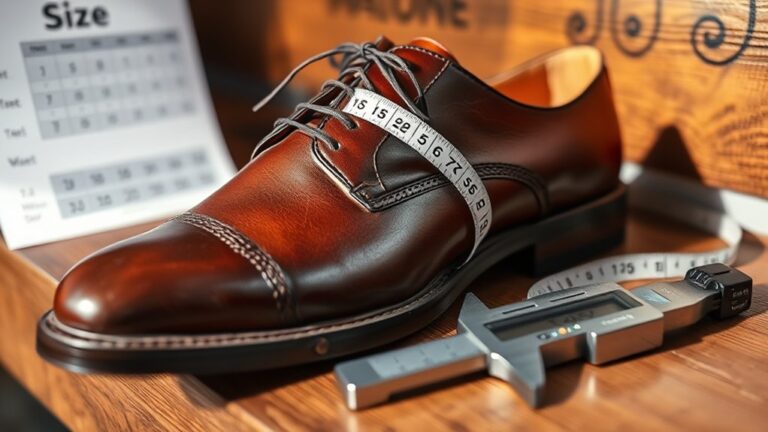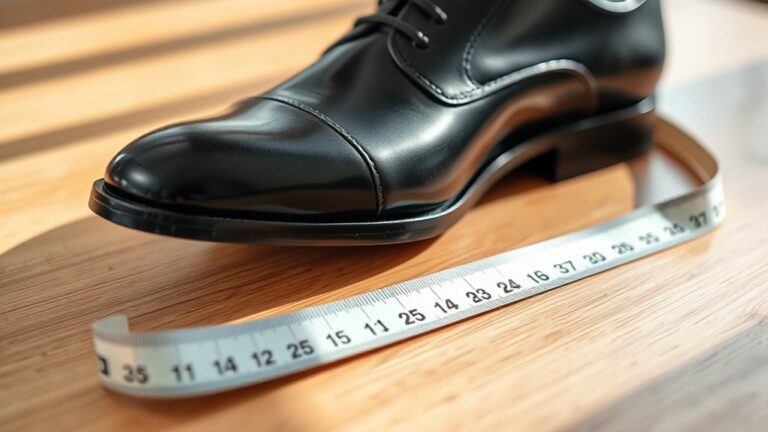
What Is 11C In Shoe Size – Size Meaning And Guide
11C in kids’ shoe sizes means a narrow width (“C”) combined with a foot length of about 4.3 to 4.5 inches. It typically fits infants roughly 9 to 15 months old during their early walking stages.
This size guarantees a precise fit and support that’s critical for healthy foot development. You’ll want to measure both feet carefully and choose the longer foot’s length for accuracy.
Understanding how 11C fits and shifts as your child grows helps you pick the best shoes for comfort and support. It’s all about making sure those little feet stay happy and healthy!
Key Takeaways
- Size 11C indicates a toddler shoe with a foot length of about 4.3 to 4.5 inches and a medium to slightly narrow width.
- It typically fits infants aged 9 to 15 months transitioning from crawling to early walking stages.
- The “C” width classification denotes a narrow to medium foot width, requiring proper measurement for comfort.
- Shoes sized 11C should offer flexible soles and adjustable closures for support and fit customization.
- Regular foot measurements and fit checks ensure healthy foot development and timely size adjustments.
What Does 11C Mean in Kids’ Shoe Sizes
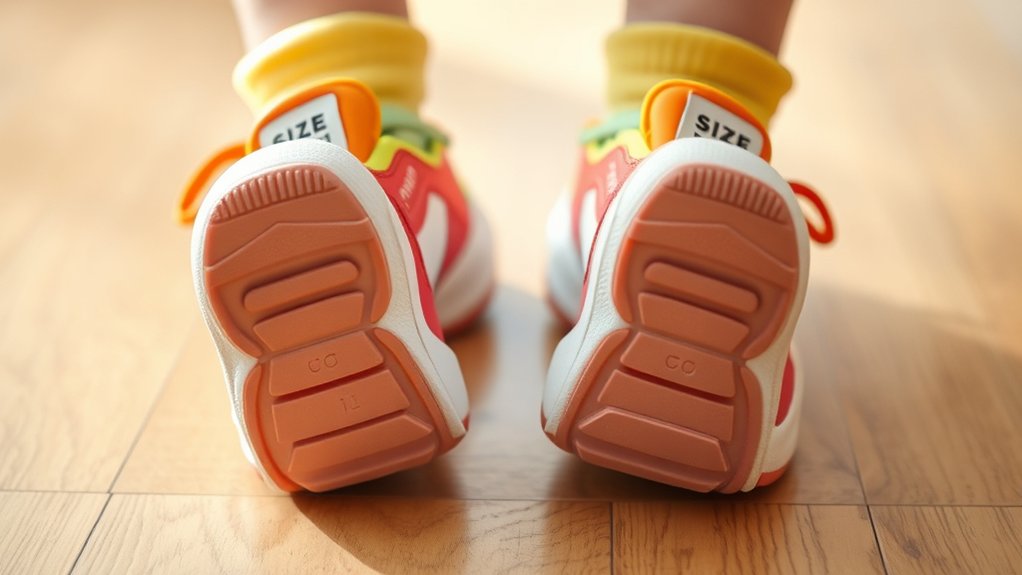
When you see a kids’ shoe size labeled as 11C, it specifically indicates a foot length of about 11 inches combined with a width designation of “C.” This usually means a standard or slightly wider medium width in children’s footwear.
So, the size isn’t just about length but width too, which is super important for a good fit.
This sizing helps make sure the shoes fit just right, which is key for comfort and healthy foot development. When you’re picking out shoes in size 11C, keep an eye on the material. Flexible, breathable fabrics are the best because they support growing feet and last longer.
Also, shoe manufacturers often have lots of color options, so you can find something your kid will love without worrying about fit.
Knowing what 11C means lets you use sizing charts with confidence. That way, your child’s shoes will fit their feet properly, avoiding discomfort from shoes that are too narrow or too long.
Typical Age and Foot Length for 11C
You’ll find that size 11C usually fits infants who are around 9 to 12 months old. It corresponds to an average foot length of about 4.3 inches, or 11 centimeters.
Of course, every child grows at their own pace, so there’s some natural variation in this range.
Knowing these measurements can really help you make sure your little one’s shoes fit comfortably as their feet keep growing fast.
Age Range Guide
How do you determine if size 11C fits your child’s foot? Size 11C typically accommodates infants aged 12 to 15 months, corresponding to a foot length of about 4.5 inches (11.4 cm).
This size is vital as it marks the shift from crawling to early walking stages, so shoe durability must be prioritized to support active movement. Choose materials that balance flexibility and sturdiness, like breathable mesh combined with reinforced soles, to guarantee comfort and longevity.
The “C” width indicates a standard medium fit, suitable for most toddlers in this age range. Selecting shoes with appropriate material preferences enhances durability and foot health, reducing wear from frequent use.
Understanding this age range guide helps you make informed decisions when selecting size 11C footwear for your child’s developmental needs. It’s all about finding the right fit to keep those tiny feet comfortable and supported as they grow.
Average Foot Length
Two critical factors define the 11C shoe size: an average foot length of approximately 4.75 inches (12.1 cm) and its suitability for infants between 9 and 12 months old.
This measurement lines up with typical foot development at that stage, making sure the fit is just right for proper foot care.
Since infant feet grow so fast, picking the correct size like 11C is key for comfort and support.
You’ll want to check the fit regularly because shoes that are too tight or too loose can slow down natural growth.
Also, keeping shoes in good shape is important for protecting those delicate feet.
Clean and inspect them often to avoid wear that might reduce protection.
Knowing the average foot length for 11C helps you make smart choices that support healthy foot growth during early infancy.
How 11C Narrow Width Affects Toddler Shoe Fit
When you’re fitting an 11C shoe, keep in mind that it has a narrow width. This can be a bit tricky if your toddler’s foot is a little wider than usual. You’ll want to make some careful adjustments.
For example, check that the shoe feels snug but not too tight. It’s important to avoid any pressure points that might cause discomfort.
Getting the fit just right helps keep your child comfortable and supports healthy foot development, especially for those with narrow feet.
Narrow Width Challenges
Although 11C shoes are specifically designed for toddlers with narrow feet, selecting this width without confirming your child’s foot shape can lead to significant fit issues.
If your toddler’s foot arch is moderate to wide, an 11C narrow width can cause excessive tightness, restricting natural movement.
The shoe material’s rigidity or lack of flexibility may make discomfort worse by not allowing slight foot expansion during active play.
Improper fit from narrow widths can impair circulation and increase the risk of blisters or pressure points.
So, it’s really important to get an accurate foot measurement to see if the 11C narrow width actually provides enough room for the foot arch and overall foot volume.
Making sure the shoe fits right helps support healthy foot development and prevents problems that come from shoes that are too tight.
Fit Adjustments Needed
Since 11C shoes are tailored for narrow toddler feet, you’ll often need to make specific fit adjustments to guarantee both comfort and stability. Confirming proper foot development means preventing slipping and pressure points by using insoles, heel grips, or padding. You might also consider sizing up slightly to accommodate growth without compromising snugness.
Effective shoe care involves regularly checking fit as your toddler’s foot changes rapidly. It’s all about making sure those shoes keep up with your little one’s fast-growing feet.
| Adjustment Type | Purpose | Benefit |
|---|---|---|
| Insoles | Fill extra space | Prevents slipping |
| Heel grips | Secure heel fit | Enhances stability |
| Padding/Lacing | Customize tightness | Optimizes comfort |
These measures confirm your toddler’s 11C narrow shoes support healthy foot development without restricting natural growth. Keeping that balance is key to happy, healthy feet!
How to Measure Your Child’s Foot for Size 11C
Accurately measuring your child’s foot is essential to determine the correct size 11C fit. Begin by having your child stand flat on a piece of paper with their heel firmly against a wall.
Trace the foot’s outline, keeping the pen perpendicular to the paper to avoid distortion.
Next, use a ruler to measure the longest distance from the heel to the tip of the longest toe on the tracing. This precise measurement is critical because shoe manufacturing relies on strict sizing standards that convert foot length in centimeters or inches into size 11C.
Make sure to measure both feet, as slight differences are common. It’s best to select the size based on the longer foot to guarantee comfort and a good fit within these standards.
This method assures your child’s shoe matches established sizing specifications accurately.
Choosing 11C Kids’ Shoe Size Over Other Sizes
After measuring your child’s foot precisely, you can confidently choose the 11C size when it matches the 6.75-inch length.
Choose size 11C confidently when your child’s foot measures exactly 6.75 inches for an ideal fit.
Opting for 11C over larger sizes like 12C or 13C guarantees a snug fit for toddlers with narrow or average-width feet. This helps prevent discomfort and slipping.
When selecting 11C shoes, pay close attention to material considerations. Flexible, breathable fabrics support foot development while providing durability.
Also, reviewing available color options lets you balance practicality with style preferences. This way, the shoes meet both functional and aesthetic needs.
Choosing 11C is ideal if your child’s foot length aligns with this measurement. It optimizes fit precision and comfort for toddlers aged 12-15 months, maintaining proper support without excessive room.
Tips for Comfort and Growth Room in 11C Shoes
When fitting 11C shoes, you need to leave about a thumb’s width of space at the toe to accommodate natural foot growth and prevent discomfort.
Guarantee the shoe fits snugly around the heel without slipping, while allowing ample room in the toe box for expansion.
Select shoe material that’s flexible yet supportive, such as soft leather or mesh uppers, to conform to the foot arch and promote natural development.
Regularly measure your child’s feet every 2-3 months to adjust sizing promptly.
Opt for shoes with adjustable closures like Velcro straps to customize fit as growth occurs.
Prioritize flexible soles to facilitate proper foot motion and reduce pressure points.
These strategies ensure comfort and accommodate the dynamic growth patterns typical in 11C sized feet.
Do 11C Sizes Fit the Same Across Different Brands?
Although 11C is a standardized size designation, you’ll find that fit can vary considerably between brands due to differing sizing systems and manufacturing tolerances. An 11C from one brand may feel narrower or wider than another, as the “C” width isn’t uniformly defined. You should consult brand-specific size charts because length and width can subtly differ, impacting overall fit.
Material flexibility plays a vital role here. Shoes with more pliable uppers may accommodate slight sizing deviations better, enhancing comfort.
On the other hand, brands that prioritize shoe durability often use stiffer materials, which can make sizing inconsistencies more noticeable.
To guarantee an ideal fit, you need to try shoes on or reference detailed brand measurements rather than relying solely on the 11C label. The actual experience varies with manufacturing and material choices, so don’t just trust the size number alone.
How to Transition From 11C to Bigger Sizes
Managing the shift from an 11C shoe size to larger sizes requires careful attention to your child’s foot growth and fit requirements. Begin by regularly measuring your child’s foot, ensuring there’s about a pinky finger’s width of space before moving up to size 12 or 13 in toddler or preschool categories.
As growth continues, transition into grade school sizes starting at 3.5 or 4, focusing on fit and comfort. Prioritize shoe material that offers flexibility and breathability to accommodate developing feet.
Also, consider color options that appeal to your child for increased wearability and satisfaction. Avoid shoes that are too loose, as they can impede proper foot development.
This measured approach guarantees your child’s feet remain supported and comfortable during each growth phase. It’s all about making sure the shoes fit well and feel good every step of the way.
Frequently Asked Questions
Are 11C Shoes Suitable for Children With Wide Feet?
11C shoes aren’t suitable for children with wide feet. Their narrow shoe width can make them feel tight and uncomfortable. This can also restrict natural foot growth, which is something you definitely want to avoid.
It’s better to choose wider widths like W or D. These options provide ideal comfort and support. So, if your child has wide feet, going for a wider shoe is always the smarter choice.
Can 11C Shoes Be Used for Indoor Activities Only?
Of course, if indoor fashion trends include crawling and toddling, 11C shoes fit perfectly. Their lightweight, flexible design makes them great for seasonal wear indoors.
However, they don’t have the rugged sole needed for outdoor durability and protection. So, keeping them indoors is really the best way to go. It just makes sense, right?
How Durable Are Shoes in Size 11C?
You’ll find 11C shoes quite durable when made with reinforced stitching and quality materials. Their size accuracy guarantees proper fit, which helps reduce wear.
It’s a good idea to prioritize brands that emphasize shoe comfort and construction. That way, you get long-lasting performance, especially if the shoes are for active use.
What Materials Are Best for 11C Toddler Shoes?
Think of 11C shoes as a fortress; you’ll want breathable mesh and soft leather for comfort features. Material comparison shows EVA foam and rubber soles offer flexibility, while hypoallergenic fabrics prevent irritation, ensuring durability and toddler foot health.
These materials work together to keep little feet comfy and protected. Plus, choosing the right stuff helps avoid any fuss from sensitive skin. So picking shoes with these qualities is a smart move for your toddler.
Are 11C Shoes Available in Orthopedic Styles?
Yes, you’ll find 11C orthopedic shoes designed with sizing accuracy and enhanced support. While fashion trends often focus on aesthetics, these specialized shoes really prioritize foot health. They offer wider toe boxes and arch support for proper alignment and comfort.
Conclusion
Understanding what 11C means in kids’ shoe sizes empowers you to make precise choices for your child’s growing feet. Think of 11C as a key that unlocks comfort, fit, and proper development. It’s narrow enough for toddlers needing that snug support, yet flexible for growth.
By measuring carefully and recognizing brand variations, you guarantee every step is confident and pain-free. After all, perfect fit isn’t just a size. It’s the foundation of every joyful stride your child takes.