What Is A Size 40 Shoe In Us – Size Conversion Explained
If you wear a European size 40 shoe, your foot length measures about 25 cm (9.84 inches). This typically converts to a US women’s size 9 to 9.5 or a men’s size 7.5 to 8.5. Keep in mind, sizes vary across brands because of differences in lasts, materials, and regional standards.
So, accurate foot measurement is really important. Understanding these little differences ensures a better fit. Exploring size overlaps, gender differences, and shoe types will definitely help you pick the right shoe.
Key Takeaways
- European size 40 typically converts to US women’s sizes 9 to 9.5 and US men’s sizes 7.5 to 8.
- Size 40 corresponds to approximately 25 cm (9.84 inches) foot length, used as a baseline for conversion.
- US shoe sizes differ by gender; women’s sizes are about 1.5 sizes larger than men’s for the same foot length.
- Size overlaps occur, with EU 40 marking the largest kids’ size and smallest adult size in US sizing.
- Brand variations and shoe type affect fit, so always consult specific size charts for accurate conversion.
What Does European Size 40 Mean in Inches and CM?
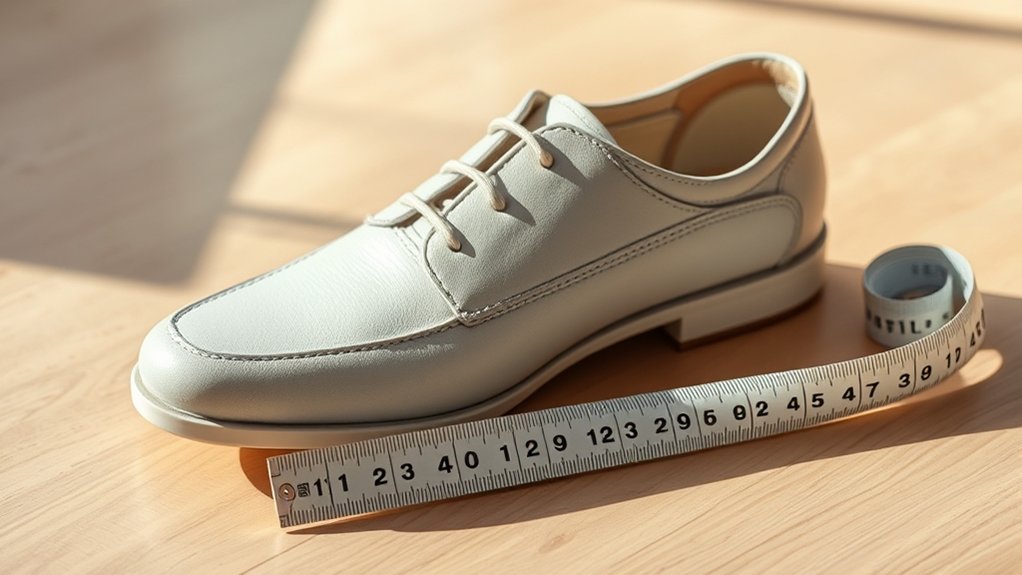
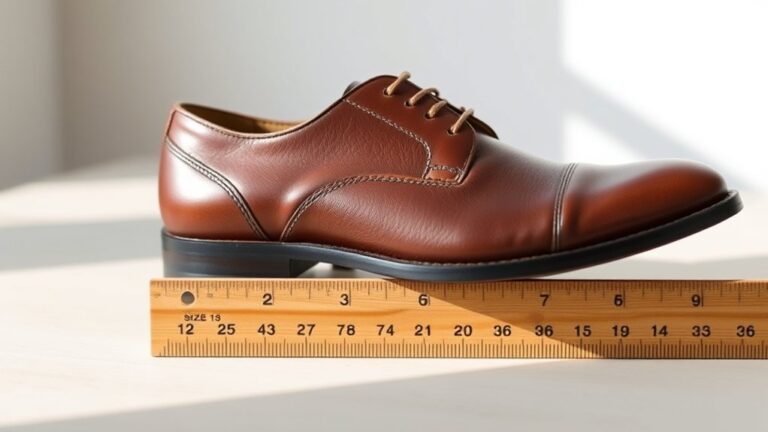
How do you translate a European size 40 into inches and centimeters? A size 40 shoe corresponds to a foot length of approximately 25 centimeters or 9.84 inches. This measurement is crucial for determining the shoe width and ensuring proper arch support, both of which impact overall comfort and fit.
While length is the primary indicator, shoe width varies by brand and model, so it’s important to take it into account alongside foot length.
Accurate arch support relies on matching both length and width to your foot’s shape, preventing discomfort and injury.
When selecting a size 40 shoe, use the 25 cm or 9.84-inch length as a baseline. But also evaluate shoe width and arch support features to guarantee a precise and supportive fit tailored to your foot’s anatomy.
How to Convert European Size 40 to US Women’s and Men’s Shoe Sizes
To convert a European size 40 to US women’s sizes, you generally subtract about 31. That means a European 40 is roughly a US women’s size 9.
When it comes to men’s sizes, you subtract around 32.5, which gives you about a US size 7.5.
Just remember, these conversions aren’t exact and can vary depending on the brand, so it’s always a good idea to check the specific sizing chart for the shoe you’re interested in.
Women’s Size 40 Conversion
Wondering how European size 40 translates into US shoe sizes? For women, size 40 corresponds to US sizes 9.5 to 10. This conversion is based on foot length, roughly 25 cm (9.84 inches).
When selecting shoes, consider shoe material and foot arch support. These affect fit and comfort even if the sizing is accurate.
| Measurement Type | European Size 40 | US Women’s Size |
|---|---|---|
| Foot Length | 25 cm (9.84 in) | 9.5 – 10 |
| Shoe Material | N/A | Affects fit |
| Foot Arch | N/A | Important factor |
Always check brand-specific charts because there can be minor variations. Proper shoe material and arch support really optimize comfort, which is vital when converting sizes precisely.
Men’s Size 40 Conversion
Although European size 40 commonly corresponds to US men’s sizes 7.5 to 8.5, the exact conversion can vary by brand and shoe style. You should measure your foot length, which is approximately 25.5 cm for size 40, to confirm an accurate fit.
Keep in mind that shoe material impacts sizing. Leather may stretch over time, while synthetic fabrics tend to retain their shape. Color preferences can also influence your choice, as some brands offer wider fits or different sizing standards in certain colorways.
Always consult brand-specific sizing guides to address variations in width and fit. For US women’s sizes, size 40 converts roughly to 9.5 to 10.5, but men’s sizing remains your best reference for a precise fit when purchasing European size 40 shoes.
How to Measure Your Foot Accurately for Shoe Size Conversion
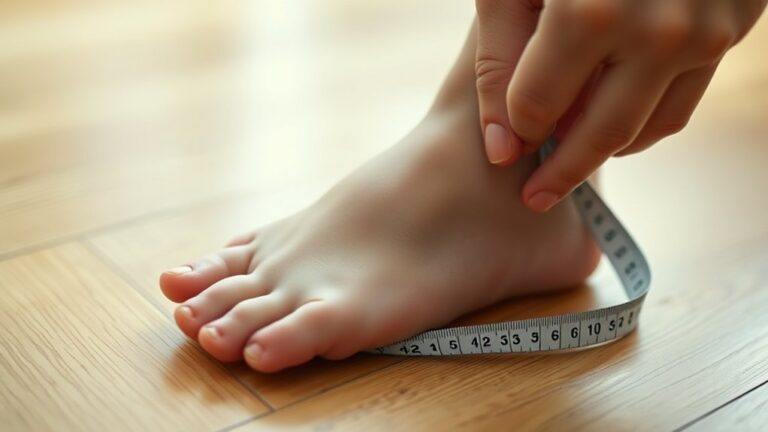
When you measure your foot for shoe size conversion, stand barefoot with your weight evenly distributed. This helps capture an accurate length from heel to the tip of your longest toe. Use a ruler or measuring tape to record this length in inches or centimeters, making sure your foot is flat.
Since shoe width and foot arch influence fit, note the widest point of your foot and think about your arch height during measurement. It’s a good idea to measure both feet at the end of the day when they’re typically largest.
Consider your foot’s widest point and arch height, measuring both feet at day’s end for best accuracy.
Then, use the larger measurement for sizing.
Accurate measurement prevents discomfort and ensures a proper shoe fit. Once you have precise foot length and width data, check the relevant size chart to convert your measurements to the corresponding size 40 or its US equivalent.
Don’t forget to consider your foot arch and shoe width to find the ideal fit.
Why Do Shoe Sizes Vary Between Brands?
After measuring your foot accurately, you might notice that a size 40 in one brand doesn’t feel the same as a size 40 in another. This happens because brands have their own ways of sizing shoes. They use different lasts, which are molds that shape the shoe, and this affects how the shoe fits and feels inside.
Also, manufacturing standards and sizing methods vary between brands. So, even if two shoes are labeled size 40, their actual internal dimensions can be quite different. The materials and how the shoes are made also play a big role in comfort and fit.
Some brands even adjust their sizing for specific markets or groups of people, making things a bit more complicated. Plus, regional sizing standards can add to the confusion.
Knowing all this can help you pick the right shoe size, no matter what brand you’re looking at.
Key Differences in Shoe Sizes: US, UK, and EU Systems
When you’re converting a size 40 shoe, you’ll see that the EU system uses Paris points to measure the last length, which is roughly 25 cm.
Now, the US system is a bit different because it separates men’s and women’s sizes. So, a European 40 actually corresponds to different US sizes depending on whether it’s for men or women.
On top of that, UK sizes vary as well, so it’s really important to understand these measurement units and gender differences if you want to get an accurate conversion.
Size Measurement Units
Although shoe sizes may appear similar across regions, the US, UK, and EU systems rely on distinct measurement units that affect sizing standards. US sizes use barleycorn units, where each full size equals 1/3 inch. This influences shoe width and length.
UK sizing generally runs 0.5 to 1 size smaller than US. It’s also based on barleycorns but starts at different points.
EU sizes use Paris points—2 mm increments—measured straightforwardly by foot length in centimeters. You’ll want to check sizing charts for precise conversion since shoe width and length differ by system.
| System | Unit | Increment | Typical Size 40 Equivalent |
|---|---|---|---|
| US | Barleycorn | 1/3 inch | Men’s 7.5–8, Women’s 9 |
| UK | Barleycorn | 1/3 inch | 6 |
| EU | Paris point | 2 mm | 40 |
| Foot Length | cm | – | Approx. 25.4 cm |
Gender Size Variations
How do gender differences impact shoe size conversions between US, UK, and EU systems?
When converting a size 40 shoe, you’ll find that US men’s sizes run about 1.5 to 2 sizes smaller than EU.
Meanwhile, US women’s sizes are roughly 1.5 sizes larger than men’s for the same EU size.
UK sizes generally fall about one size below EU for both genders.
Keep in mind, shoe width and arch support requirements vary by gender, influencing fit beyond length alone.
For example, men’s shoes typically offer wider widths and different arch support compared to women’s shoes of equivalent length.
Because sizing overlaps near US size 7 or 8, you should check brand-specific charts carefully to ensure proper width and arch support when converting a size 40 shoe.
Essential Tips for Choosing the Right Shoe Size Online
Since shoe sizing varies a lot between brands and regions, you should always measure your foot accurately in centimeters or inches before picking a size online. Make sure to use brand-specific size charts to match your measurements precisely.
Also, think about the shoe material. Flexible fabrics might fit different foot arch types better than stiff ones.
Don’t forget to consider the shoe’s width and fit options like narrow, standard, or wide to make sure your foot arch gets the right support.
Check out customer reviews for tips on sizing accuracy and how the shoes typically fit.
If you’re stuck between two sizes, it’s usually safer to go with the larger one to avoid discomfort since you can’t try shoes on before buying.
Paying attention to these details will help you pick the right size and ensure your new shoes are comfortable and perform well.
How Do Kids’ Shoe Sizes Compare to Adult Sizes in US and EU?
Wondering how kids’ shoe sizes line up with adult sizes in US and EU measurements? In the US, kids’ sizing runs from 0 to 13.5, with size 13.5 roughly matching a women’s 7 or 7.5. This marks the key size overlap between kids’ and adult categories.
Adult sizes start near 6 inches foot length, while a US kids’ size 1 corresponds to 4.5 inches, reflecting foot growth progression.
In the EU system, kids’ sizes range from 16 to 40, with size 40 approximately equal to a US women’s 9 or 9.5.
This EU size 40 represents both the largest kids’ size and the smallest adult size, creating a clear size overlap.
Understanding these overlaps helps you select accurate shoe sizes across US and EU standards.
When to Adjust Your Shoe Size for Running and Athletic Shoes
Understanding the nuances of size overlaps between kids’ and adult shoe measurements is a helpful foundation. But selecting the right size for running and athletic shoes requires a few more things to keep in mind.
You should size up by at least half a size to accommodate shoe swelling and guarantee an ideal athletic fit. A slightly looser fit helps prevent blisters and supports foot stability. It’s also important to test for a thumb’s width space at the toe. That little gap really makes a difference.
| Factor | Recommendation | Reason |
|---|---|---|
| Shoe Swelling | Size up 0.5+ size | Accommodates foot expansion |
| Toe Box Width | Choose wider toe box | Prevents discomfort |
| Athletic Fit | Slightly looser than casual | Reduces injury risk |
Summary: Finding the Right Fit From European Size 40 and Beyond
Although European size 40 is a common reference point, converting it accurately to US sizes requires attention to gender-specific differences and brand variations.
For women, EU 40 typically equals US size 9, while for men, it corresponds to US size 7. These conversions align with a foot length of about 25 cm (9.84 inches).
When selecting shoes, consider how fashion trends influence sizing preferences and how different shoe materials affect fit and comfort.
Because brand-specific charts may vary, always verify sizing before purchasing.
Understanding these factors guarantees you find the right fit from European size 40 and beyond, optimizing both style and function in your footwear choices.
Accurate conversion helps you navigate international sizing confidently, especially when exploring new brands or materials.
Frequently Asked Questions
Are Size 40 Shoes Available in Wide or Narrow Widths?
Yes, you’ll find size 40 shoes in wide or narrow widths, though availability varies by brand. Check specific sizing charts, as shoe color options and fashion trends often influence which widths brands prioritize producing.
It’s always a good idea to look closely at the details for each brand. That way, you can be sure you’re getting the fit that works best for you.
How Do Insoles Affect the Fit of a Size 40 Shoe?
Oh sure, just toss in insoles and magically your size 40 shoe shrinks! Insoles affect shoe width and arch support, often reducing interior space, so you might need a size up for proper fit and comfort.
It’s not just about length either—insoles can change how your foot sits inside the shoe. So if your shoes feel tight after adding them, that’s why.
Basically, think of insoles as extra layers that take up some room. You might want to try a size 41 instead if you want to keep things comfy.
Can I Wear Size 40 Shoes if I Have High Arches?
You can wear size 40 shoes with high arches by choosing models that offer good arch support. It’s important to pick shoes that feel comfortable and provide the right fit for your feet.
Also, consider the style and color options that match your personal taste. Don’t forget, adding custom insoles or looking for shoes designed specifically for high arches can make a big difference.
Comfort doesn’t have to come at the expense of fashion. You can have both when you find the right pair!
What Materials Are Best for Comfort in Size 40 Shoes?
You’ll want shoe materials like genuine leather and memory foam insoles that adapt to your foot arch, offering support and cushioning. Breathable mesh and moisture-wicking linings also improve comfort by managing airflow and dryness effectively.
Choosing the right materials really makes a difference, especially in size 40 shoes. It’s all about keeping your feet supported and dry throughout the day. So, go for materials that feel good on your skin and help your feet breathe.
Are Size 40 Shoes Suitable for Orthotic Inserts?
Yes, size 40 shoes can suit orthotic inserts if the shoe manufacturing includes removable insoles and ample toe box space. This makes it easier to fit the orthotics without making the shoes feel tight or uncomfortable.
Fashion trends now favor designs that accommodate orthotics, which is great. It means you can have both comfort and style without compromising the fit. So, finding size 40 shoes that work with your inserts is definitely possible.
Conclusion
Imagine sliding your foot into a perfectly fitting size 40 shoe, feeling the precise contour supporting every step. By understanding conversions, measuring accurately, and considering brand variations, you guarantee comfort and performance.
Whether steering through US, UK, or EU sizes, or choosing athletic footwear, these insights guide you to the ideal fit. With this knowledge, you’re equipped to confidently select shoes that match your size and style, turning every step into a seamless experience.