There Was An Old Woman Who Lived In A Shoe – Nursery Rhyme Meaning
When you explore “There Was an Old Woman Who Lived in a Shoe,” you uncover layers of political critique. It portrays King George II as the overwhelmed “old woman” and the unruly Parliament as her children. The rhyme also captures the emotional toll of caregiving, symbolizing burnout through the crowded shoe image.
Over time, its versions shift from harsh discipline to nurturing themes, reflecting changing societal values. Unpacking these elements reveals how this simple rhyme echoes complex historical, cultural, and emotional truths you might not expect. It’s pretty interesting when you think about how much meaning is packed into such a short rhyme.
Key Takeaways
- The rhyme symbolizes overwhelming caregiving and maternal exhaustion through the image of an old woman living in a shoe with many children.
- It critiques 18th-century British politics, representing King George II as the “old woman” and unruly Parliament members as the children.
- Shoes in the rhyme serve as metaphors for societal roles, protection, and the burdens of motherhood and domestic life.
- Variations in the rhyme reflect evolving cultural attitudes toward discipline, nurturing, and emotional support for children and caregivers.
- The rhyme encapsulates themes of childhood vulnerability, societal expectations, and the emotional challenges of caregiving across history and today.
The Origins and Historical Context of the Nursery Rhyme

Although it might seem like a simple children’s tale, the nursery rhyme “There Was An Old Woman Who Lived In A Shoe” carries a rich historical context rooted in late 18th-century political satire. You’ll find its earliest printed form in Joseph Ritson’s *Gammer Gurtons Garland* (1794), but its origins reach back further.
The rhyme subtly critiques King George II, nicknamed “the old woman,” reflecting public dissatisfaction with his perceived weak leadership. Economic decline following the South Sea Bubble crash of 1721 fueled widespread social unrest, which the rhyme captures through its imagery of struggle and overcrowding.
When you analyze this context, you see the nursery rhyme isn’t just a children’s verse. It’s actually a veiled commentary on governance, economic hardship, and the tension simmering within society during that turbulent period.
Political Symbolism in the Nursery Rhyme’s ‘Old Woman’ and Children
You’ll notice the “old woman” in the rhyme actually stands for King George II. It’s a sharp bit of political satire aimed at the early 18th-century rule.
Then, the unruly children? They symbolize members of Parliament. The rhyme highlights how their independence was pretty much constrained under the monarchy’s shadow.
Old Woman as King
A closer look at the nursery rhyme reveals that the “old woman” serves as a symbolic stand-in for King George II, capturing the widespread political dissatisfaction during his reign. This figure embodies royal symbolism and functions as a political allegory critiquing monarchical authority. The portrayal reflects delegated power and the struggles within governance.
The “old woman” symbolizes King George II’s unpopular rule. The shoe represents the constrained and overcrowded seat of power. The nickname “old woman” highlights perceived weakness or ineffectiveness.
The rhyme critiques monarchy covertly amid 18th-century political tensions. It uses allegory to express dissatisfaction with royal authority and control. So, it’s really a clever way people voiced their frustrations without being too obvious.
Children Represent Parliament
Understanding how the “old woman” symbolizes King George II naturally leads you to examine the role of the “children” in the rhyme. These children represent Parliament members, unruly and resistant to control. This mirrors early 18th-century political tensions.
Through literary analysis, you see the old woman’s attempts to whip and send them to bed as efforts to discipline Parliament’s rebellious factions. Urban legends around the rhyme deepen this political symbolism. They highlight the monarchy’s fraught influence over governance.
| Symbol | Representation | Political Implication |
|---|---|---|
| Old Woman | King George II | Authority, limited control |
| Children | Parliament Members | Unruly, uncontrollable forces |
| Whipping | Discipline efforts | Attempts to enforce order |
| Sending to Bed | Suppression tactics | Control over dissent |
Satire on Governance
Although the nursery rhyme seems simple on the surface, it cleverly satirizes governance during King George II’s reign by using the “old woman” and her unruly children as political symbols. When you examine its urban legends and folklore traditions, you uncover a pointed critique of early 18th-century British politics.
The old woman embodies King George II, while her chaotic children represent Parliament members under Sir Robert Walpole’s control.
This rhyme reflects public discontent after the South Sea Bubble economic collapse. It highlights the monarchy’s overpowering grip on governance and shows how little political independence lawmakers really had.
The child chaos symbolizes the societal unrest of the time.
Nursery rhymes like this one played a surprising role as covert political commentary. They gave people a way to express dissatisfaction without directly challenging those in power. It’s fascinating how something so simple can carry such a sharp message.
How the Rhyme Reflects the Challenges of Caregiving
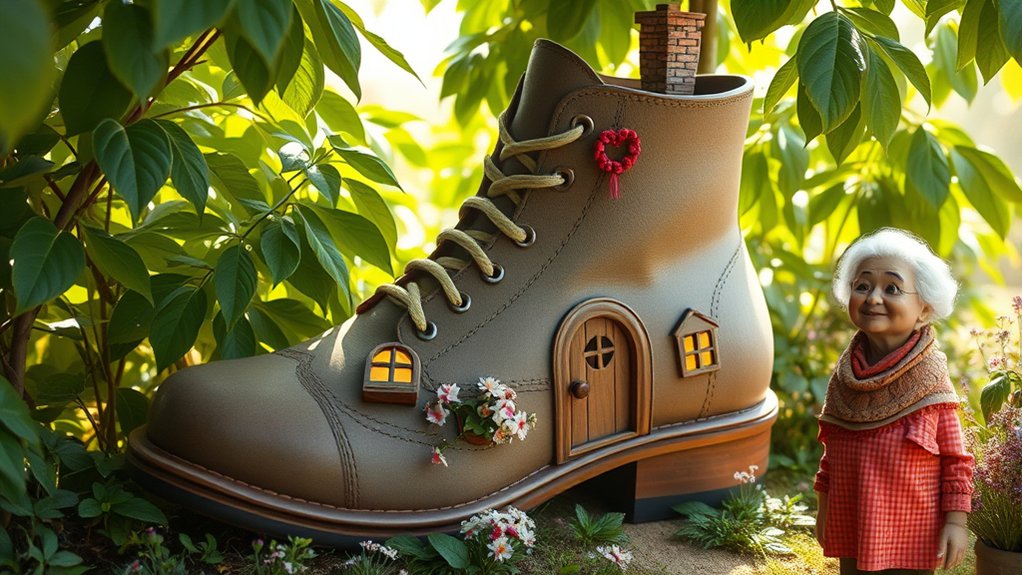
When you consider the woman living in a shoe surrounded by many children, you instantly grasp the overwhelming and often unmanageable nature of caregiving that the rhyme portrays. The crowded shoe symbolizes the physical and emotional exhaustion caregivers endure, highlighting caregiver burnout as a real and pressing issue.
You can see how the woman’s struggle reflects emotional exhaustion, as she tries to provide for numerous dependent children with limited resources and support. This vivid imagery serves as a metaphor for societal neglect, showing how caregivers often face immense pressure without adequate help.
The rhyme captures these challenges by illustrating the tension between maintaining order and managing the relentless demands of caregiving, making it a timeless reflection of the hardships inherent in such roles. It really shows how tough caregiving can be, doesn’t it?
Variations of the Nursery Rhyme Over Time and Their Meanings
The image of the overwhelmed woman in the shoe doesn’t just capture caregiving struggles. It also reflects how society’s views on discipline, motherhood, and childhood have evolved.
As you explore variations of the rhyme, you’ll notice shifts in moral lessons and storytelling techniques that mirror cultural attitudes over time.
Early versions featured some pretty harsh elements. For example, violent discipline like whipping children to bed was mentioned as early as 1794. There were also darker themes, including the preparation of a coffin in 1797.
Over time, the rhyme softened a bit. Christian retellings around 1978 brought in more nurturing and love.
Nowadays, the focus tends to be on care and emotional support. You’ll also find social commentary on motherhood and childhood roles.
These changes show how the rhyme’s meaning deepened, moving from harsh realities toward compassion.
It’s a great example of how evolving societal values get reflected through storytelling.
The ‘Death Mother’ Archetype and Its Role in the Rhyme
Since you’re exploring the deeper layers of the nursery rhyme, it’s important to recognize how the ‘Death Mother’ archetype shapes its meaning. This figure embodies a paradox of nurturing care and destructive neglect. It highlights societal expectations for caregivers to prioritize others’ needs through emotional suppression.
In the rhyme, the old woman’s overcrowded shoe symbolizes the psychological impact of relentless caregiving. Children are encouraged to hide pain and conform to passivity.
The archetype reveals darker caregiving aspects like neglect, emotional burnout, and denial of grief that often remain unspoken.
By understanding this, you see how familial and societal pressures enforce emotional repression, causing unresolved trauma. The ‘Death Mother’ challenges you to acknowledge the hidden costs of self-sacrifice embedded in caregiving roles.
It really makes you think about what goes on beneath the surface.
Symbolic Meanings of the Shoe in Cultural Context
You’ll notice that shoes often symbolize fertility and motherhood, which reflects a woman’s nurturing role in many cultures. They also serve as powerful cultural symbols, standing for protection and the intimate space of caregiving.
And if you think about nursery rhymes, shoes frequently act as metaphors for domestic life and the changes tied to growth and development.
Fertility And Motherhood
How do shoes come to symbolize fertility and motherhood across cultures? The mythical symbolism of shoes often links them to fertility and nurturing, reflecting deep cultural interpretations. Shoes represent the womb’s protective space and the burdens and resilience inherent in motherhood.
When you analyze nursery rhymes like the old woman living in a shoe, you see these themes vividly illustrated. Consider these points:
- Shoes as metaphors for fertility and abundance date back over 5,000 years.
- Folklore uses shoes to symbolize nurturing and maternal protection.
- The shoe’s enclosure parallels the womb’s nurturing environment.
- Large families in the shoe signify maternal sacrifice and endurance.
- Cultural interpretations emphasize motherhood’s social expectations through shoe imagery.
This symbolic depth reveals how shoes encapsulate fertility and motherhood’s complex cultural meanings. It’s pretty fascinating how something as everyday as a shoe can carry such rich meaning, right?
Shoes As Cultural Symbols
Although shoes serve a practical purpose, they carry profound cultural symbolism that extends far beyond mere footwear. You’ll find that shoes often reflect cultural identity, indicating social status, gender roles, and even life journeys.
For example, fashion trends don’t just follow aesthetics; they mirror shifting cultural values and economic realities.
The material and style of shoes reveal much about societal hierarchy and personal identity in different cultures. Historically, shoes have symbolized fertility, protection, and *metaphorical shifts*.
They appear in folklore as metaphors for escape or entrapment.
When you examine a shoe, you’re looking at a layered symbol. It communicates mobility, cultural narratives, and social expectations. Recognizing these meanings helps you appreciate why shoes in nursery rhymes, like the old woman’s shoe, resonate with such rich cultural significance.
Metaphors For Caregiving
Beyond their cultural and social symbolism, shoes in nursery rhymes often carry deeper meanings connected to caregiving and the life journey. When you consider shoe craftsmanship, you see more than footwear; you see a metaphor for protection and support that caregivers provide.
Cultural footwear reflects identity and social roles, mirroring the caregiver’s position within societal expectations. The shoe’s symbolism shows the burden and resilience required in caregiving, especially when “living in a shoe” suggests overwhelming responsibility.
Key metaphors include fertility and abundance as nurturing symbols, life’s journey represented through worn soles, boundaries and internal cues in caregiving roles, social status linked to cultural footwear, and the endurance needed to navigate caregiving challenges.
You can really recognize the shoe as a powerful emblem of caregiving’s complexities.
Why the Nursery Rhyme’s Themes Still Resonate Today
Because the nursery rhyme captures themes of caregiving, chaos, and societal expectations, it continues to resonate deeply with modern audiences. You’ll find its portrayal of overwhelmed motherhood reflects current concerns about mental health and caregiver burnout, making the rhyme a poignant piece of urban folklore.
Its evolving versions reveal shifting cultural attitudes toward discipline and nurturing, emphasizing childhood resilience amid instability.
When you consider the archetype of the old woman, you see parallels to today’s narratives about unsupported mothers facing societal neglect. This rhyme’s metaphorical richness and enduring mystery allow it to mirror universal fears and hopes, showing you how deeply connected past and present experiences of caregiving and childhood vulnerability truly are.
Frequently Asked Questions
Who Originally Wrote “There Was an Old Woman Who Lived in a Shoe”?
You won’t find a single author for “There Was an Old Woman Who Lived in a Shoe,” as its historical origins are rooted in oral tradition. Literary analysis shows it evolved before Joseph Ritson’s 1794 publication popularized it.
What Age Group Is the Nursery Rhyme Intended For?
You’ll find this nursery rhyme best suits children aged 2 to 6. It provides age-appropriate content that supports early learning.
With parental guidance, it balances playful rhythm and simple themes. This makes it ideal for developing young minds effectively.
Are There Popular Modern Adaptations of the Rhyme?
Like a chameleon changing colors, modern reinterpretations transform the rhyme, softening themes and highlighting care.
You’ll find pop culture references in books and videos, making the old tale resonate with today’s audiences thoughtfully.
How Has the Rhyme Been Used in Educational Settings?
You’ll use the rhyme’s literary symbolism to teach storytelling and social themes. This approach applies teaching strategies that enhance phonemic awareness and memory. It also encourages critical thinking about cultural narratives.
This is especially useful in early childhood education settings. It makes learning more engaging and meaningful for young kids. Plus, it helps them connect with stories on a deeper level.
Is the Rhyme Associated With Any Particular Holiday or Event?
You won’t find holiday symbolism or cultural references linking this rhyme to any specific celebration. Instead, it reflects broader societal themes. So, it’s more a timeless folk tale than a holiday or event-associated nursery rhyme.
It’s kind of like those stories that just stick around because they say something universal, you know? Not tied down to one time or place, but something people can relate to no matter when they hear it.
Conclusion
You see, the old woman’s shoe isn’t just a cramped home. It symbolizes the weight of responsibility and resilience you carry in caregiving. As you navigate its worn walls, you confront political struggles, cultural shifts, and the complex dance between nurturing and sacrifice.
This rhyme, layered with symbolism, invites you to reflect on how care, hardship, and survival intertwine. It proves its timeless relevance in understanding both personal and societal endurance.