
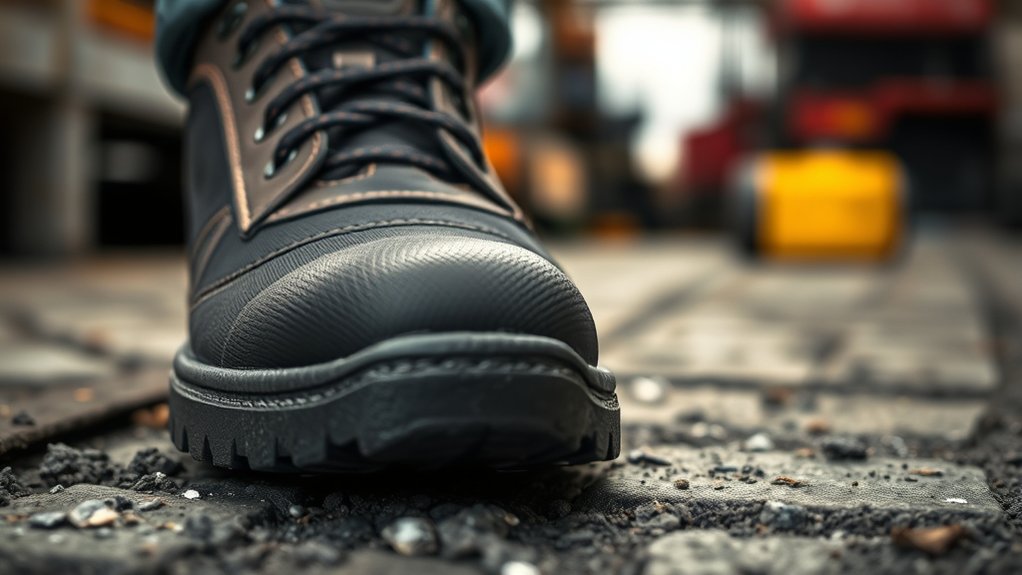
What Is A Composite Toe Shoe – Safety Features Explained
A composite toe shoe uses reinforced non-metallic materials like fiberglass, carbon fiber, or Kevlar to provide impact and compression protection equal to steel toes. They meet ASTM F2413-24 safety standards, so you know they’re up to the task.
You’ll benefit from lightweight, rust-resistant, and well-insulated footwear that’s metal detector-friendly and comfortable for long shifts. These shoes also resist cold brittleness and electrical hazards.
If you want to understand how they compare to steel toes and fit your specific work needs, there’s more detailed info ahead.
Key Takeaways
- Composite toe shoes use non-metallic materials like fiberglass and Kevlar to provide impact and compression protection meeting ASTM F2413-24 standards.
- They offer lightweight, rust-resistant, and non-conductive safety, including electrical hazard protection (EH rating) for various work environments.
- Composite toes disperse impact energy effectively while providing superior insulation, maintaining foot comfort in both hot and cold conditions.
- These shoes are metal detector-friendly and reduce foot fatigue through enhanced flexibility and lighter weight compared to steel toe shoes.
- Regular maintenance and proper fit ensure durability, safety, and comfort, with composite toes resisting corrosion and cold-induced brittleness.
What Is a Composite Toe Shoe?
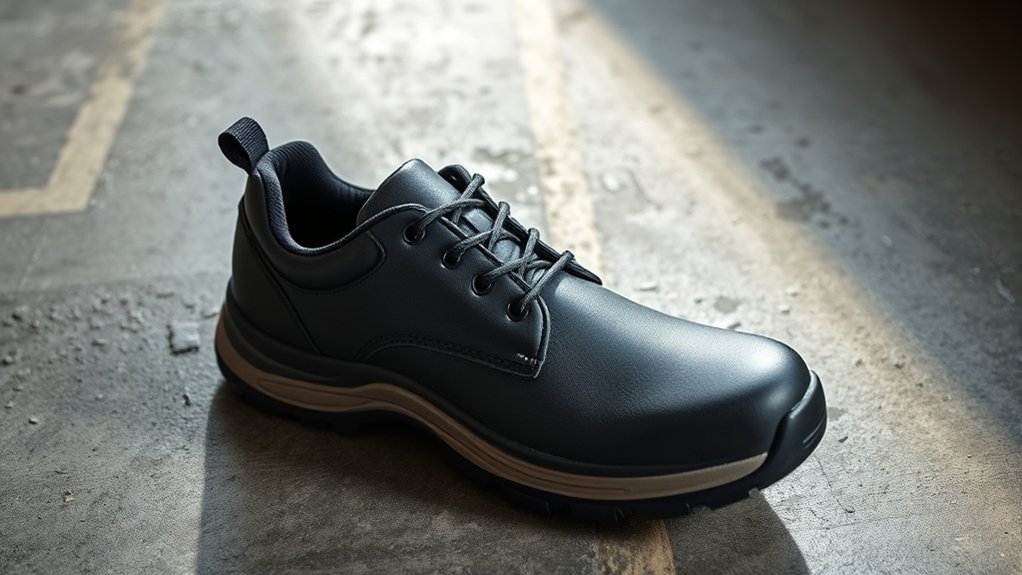
What makes a composite toe shoe different from traditional steel-toe footwear? Unlike steel toes, composite toe shoes feature reinforced toe caps made from non-metallic materials like fiberglass, carbon fiber, or Kevlar. This design offers comparable impact and compression protection but with enhanced material durability and lighter weight.
Composite toe shoes use non-metallic materials for durable, lightweight protection comparable to traditional steel toes.
You’ll appreciate that composite toes don’t conduct heat, cold, or electricity, providing better insulation and electrical resistance. This makes them ideal for sensitive work environments.
With evolving fashion trends, these shoes maintain a modern look without sacrificing safety or functionality.
Their flexibility and non-metallic composition also make them suitable where metal detectors are present. Overall, composite toe shoes combine safety, comfort, and style through advanced materials engineered for durability and performance in demanding conditions.
Which Safety Standards Do Composite Toe Shoes Meet?
To make sure your composite toe shoes are up to the mark, they should meet the ASTM F2413-24 standard. This means they need to handle an impact of 75 pounds and withstand compression up to 2,500 pounds.
On top of that, many shoes also come with Electrical Hazard (EH) certification, which helps protect you from electric shocks.
ASTM Impact Requirements
Composite toe shoes must adhere to ASTM F2413-24 standards to assure adequate impact resistance. These standards ensure the toe cap withstands at least 75 pounds of force without deforming, matching steel toe protection while offering better material durability.
The testing simulates real-world hazards by dropping weighted objects on the toe cap.
You’ll find impact resistance marked with hazard codes like “I” on compliant footwear, confirming safety performance. Despite evolving fashion trends, these standards maintain rigorous protection without compromising style.
Key ASTM impact requirements include:
- Toe cap withstands 75 pounds force minimum
- Weighted object drop test simulates impact
- Pass both impact and compression tests
- Marked with hazard code “I” for impact
- Guarantees composite toes match steel toe safety
Electrical Hazard Certification
How do electrical hazard certifications enhance the safety of composite toe shoes? These certifications confirm that the shoes provide electrical safety by protecting you from accidental contact with live electrical circuits up to 600 volts in dry conditions.
Composite toe shoes meeting ASTM F2413-18 I/75 and C/75 standards also satisfy the EH requirement, ensuring workplace protection against electric shock.
To earn this certification, shoes undergo rigorous testing to verify they’re non-conductive and provide reliable insulation. It’s important to note that not all composite toe shoes have electrical hazard certification. So, look for explicit labeling confirming compliance.
What Materials Make Up Composite Toe Caps?
Although metal toe caps have been the traditional choice for safety footwear, modern alternatives use advanced non-metallic materials like fiberglass, carbon fiber, Kevlar, and plastic composites. These materials are designed to meet tough safety standards like ASTM F2413. Plus, they keep up with fashion trends and help promote material recycling.
You’ll find that composite toe caps usually include:
- Fiberglass: lightweight, durable, and non-conductive
- Carbon fiber: offers an exceptional strength-to-weight ratio
- Kevlar: known for high tensile strength and great impact absorption
- Plastic composites: versatile and moldable, which is great for design flexibility
- Recycled materials: helping support sustainability in manufacturing
Composite Toe vs. Steel Toe: Protection Comparison
You’ll find that both composite and steel toe caps meet the same ASTM impact and compression standards, so they both provide reliable protection.
That said, steel toes tend to be heavier and can feel less comfortable if you’re wearing them all day.
On the other hand, composite toes are lighter and offer better insulation, which can make a big difference depending on your work environment.
Knowing these differences helps you pick the right balance between protection and comfort for your needs.
Impact Resistance Differences
What sets composite toe shoes apart from steel toe shoes in impact resistance? Both meet ASTM F2413 standards, surviving impacts up to 75 pounds, but their mechanisms differ.
Composite toes excel in impact absorption by dispersing energy evenly, while steel toes absorb shock but may deform under extreme force.
Composite materials maintain deformation resistance, not bending or cracking upon impact.
Consider these differences:
- Composite toes distribute impact energy evenly, reducing localized stress
- Steel toes absorb shocks but can deform, potentially compromising protection
- Both types undergo rigorous impact testing for certification compliance
Composite toes offer superior insulation, minimizing temperature effects on impact comfort.
Steel toes may conduct heat or cold, affecting performance in extreme environments.
Understanding these distinctions helps you select the appropriate safety footwear for your work demands. It’s all about matching the shoe to your specific needs.
Weight And Comfort
Beyond impact resistance, the weight and comfort of composite toe shoes play a big role in how they perform compared to steel toe shoes. Composite toes are lighter, which helps reduce fatigue and pressure on your foot arch during long shifts.
This lighter weight also boosts breathability, mobility, and overall comfort without sacrificing safety standards. Plus, unlike steel toes, composite toes insulate against extreme temperatures, so your feet stay comfortable in all kinds of environments.
| Feature | Composite Toe Shoes |
|---|---|
| Weight | Lighter, reduces fatigue |
| Foot Arch Support | Better pressure distribution |
| Breathability & Insulation | Superior, non-conductive material |
Choosing composite toe shoes means you get reliable protection with better comfort. That way, you can stay agile and comfortable all day long.
Why Composite Toe Shoes Are More Comfortable
Three key factors make composite toe shoes especially more comfortable than their steel-toe counterparts. First, their lightweight design markedly reduces foot fatigue, especially when you’re on your feet for extended periods.
Composite toe shoes offer superior comfort with a lightweight design that significantly reduces foot fatigue during long hours.
Second, composite materials offer superior insulation, maintaining stable foot temperature in cold environments.
Third, their flexibility promotes natural foot movement, supporting your foot arch effectively.
When choosing composite toe shoes, consider accurate shoe sizing to ensure proper fit and prevent discomfort. Also, look for enhanced support for the foot arch to reduce strain.
Reduced weight helps decrease fatigue.
Non-metallic toe caps don’t conduct heat or cold, which is a big plus. Plus, improved flexibility allows for a more natural gait and movement.
These factors collectively provide a comfortable experience tailored to demanding work conditions.
Debunking Common Myths About Composite Toe Shoes
Several misconceptions about composite toe shoes persist, but you can confidently dismiss these myths when evaluating their safety and performance.
Contrary to popular belief, composite toe shoes meet the same ASTM F2413 impact and compression standards as steel-toe options, proving their strength and durability.
These shoes don’t rust or corrode since they use non-metallic materials like fiberglass and carbon fiber, which is a key advantage in material sourcing.
Pricing varies, so composite toes aren’t inherently more expensive.
They effectively disperse impact energy, ensuring robust protection.
Despite some thinking composite toes lack durability, modern manufacturing techniques aligned with current fashion trends ensure both functionality and style.
Understanding these facts helps you make informed choices without falling for outdated myths.
How Composite Toe Shoes Perform in Cold Weather
When working in cold environments, you’ll find that composite toe shoes offer distinct advantages over steel-toe alternatives because of their superior insulation properties. Their non-metallic composite materials provide excellent thermal insulation, which minimizes heat transfer away from your toes. This cold resistance keeps your feet warmer and more comfortable during prolonged exposure to low temperatures.
Plus, composite toe shoes often have waterproofing and enhanced insulation features that boost performance in harsh conditions even more. Consider these benefits: composite toes don’t conduct cold like steel, so they help maintain warmth. They also improve thermal insulation, which lowers the risk of frostbite.
The materials used resist cold-induced brittleness, so the shoes stay durable longer. Enhanced waterproofing complements their cold resistance. Overall, your foot comfort increases in freezing environments.
Choosing composite toe footwear helps you stay safe and comfortable when facing cold weather challenges. It’s a smart move for anyone working in chilly conditions.
When Composite Toe Shoes Are the Best Choice for Work
Although steel-toe shoes have their place, composite toe shoes become the best choice in work environments where non-metallic materials are required to avoid setting off metal detectors or where electrical hazard protection is critical.
You’ll also find them ideal for wet or corrosive conditions, and when you need lightweight footwear to reduce fatigue on long shifts. Considering fashion trends and brand comparisons, many manufacturers now offer composite toe shoes that blend safety with style.
| Work Condition | Benefit | Recommended Feature |
|---|---|---|
| Metal Detector Zones | Non-metallic, no alarms | Composite toe |
| Electrical Hazards | Non-conductive | EH-rated composite |
| Cold Weather | Insulating | Thermal lining |
| Long Standing Hours | Lightweight comfort | Shock-absorbing sole |
| Wet/Corrosive Environments | Rust-resistant | Composite materials |
Choose composite toe shoes when these conditions match your work demands.
Choosing and Maintaining Composite Toe Shoes
How do you guarantee your composite toe shoes provide peak protection and durability? Start by selecting shoes that meet ASTM F2413 standards for impact and compression resistance. This ensures safety without sacrificing comfort amid evolving fashion trends.
Consider brand popularity as a marker of reliability and innovation in safety footwear. And don’t forget to prioritize a proper fit by trying shoes on in the evening with work socks to avoid discomfort.
Maintain your shoes by following these key steps: inspect toe caps and soles regularly for cracks or dents. Clean them with mild soap and water, and avoid harsh chemicals.
Store your shoes in a dry, cool place to prevent material degradation. Replace them every 6-12 months or sooner if they get damaged.
Plus, stay updated on fashion trends so you can balance safety with style.
Frequently Asked Questions
Can Composite Toe Shoes Be Worn in Wet or Muddy Conditions?
Yes, you can wear composite toe shoes in wet or muddy conditions. They offer water resistance and mud protection through waterproof uppers and slip-resistant soles. This helps keep your feet dry and stable.
These features ensure durability and safety even in challenging environments. So, whether you’re working outdoors or navigating slippery surfaces, composite toe shoes have got you covered.
Are Composite Toe Shoes Suitable for Hiking or Casual Wear?
You’ll find composite toe shoes suitable for casual wear because they’re comfortable, lightweight, and have good insulating properties.
When it comes to hiking, you’ll want to think about things like sole grip and boot construction. These factors help make sure you get enough support and durability for the trails.
How Do Composite Toe Shoes Affect Foot Odor and Breathability?
Like a breeze through autumn leaves, composite toe shoes enhance breathability and moisture management. This helps you control odor effectively. Their ventilated design reduces sweat buildup, keeping your feet fresher during long wear.
And the best part? You get all this without sacrificing safety. So, you can stay comfortable and protected at the same time.
Do Composite Toe Shoes Require Special Cleaning Products?
You don’t necessarily need special cleaning products, but following specific cleaning routines helps. Using mild soap and water or products designed for composite materials preserves integrity.
Just be sure to avoid harsh chemicals. They can wear down the material and mess with the look of your shoes. Keeping it simple really does the trick.
Can Composite Toe Shoes Be Recycled or Disposed of Safely?
Only about 9% of composite materials get recycled, so you should explore specialized recycling options or manufacturer take-back programs for environmentally friendly disposal.
Try to avoid landfill waste by separating recyclable parts like insoles and soles whenever possible. It’s a small step that can make a big difference.
Recycling composite toe shoes isn’t always straightforward, but looking into these options helps reduce environmental impact.
Conclusion
Think of composite toe shoes as your lightweight shield. They’re strong enough to protect without weighing you down. They meet strict safety standards by combining advanced materials for durable defense.
Unlike steel, they offer more comfort and insulation, especially in cold conditions. Choosing composite toes means you get the right balance between protection and ease. It’s time to debunk myths with their proven performance.
If you maintain them well, they’ll be your reliable armor on the job. They adapt to your needs without any compromise.