What Size Shoe Does A 5 Year Old Boy Wear – Shoe Size Chart Guide
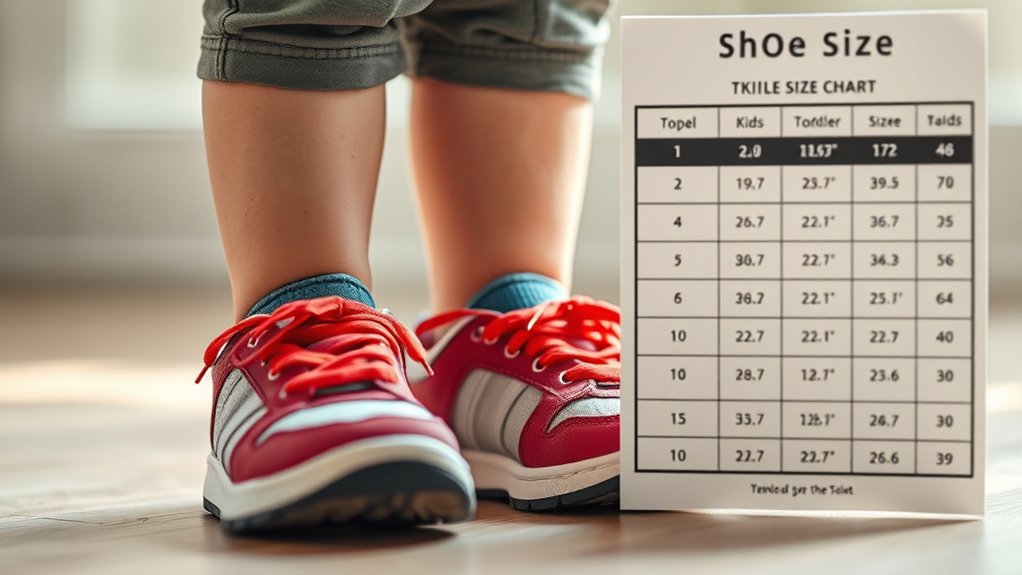
A 5-year-old boy typically wears US shoe sizes between 10.5 and 13, with foot lengths around 6.5 to 7 inches (16.5 to 17.5 cm). You should measure his feet in the afternoon using a tracing or sizing guide for an accurate fit. It’s a good idea to check every two months to keep up with his growth.
Aim for about a thumb’s width of space in the shoe to guarantee comfort and proper development. Understanding sizing categories and fitting tips can really help you pick the best shoes as he grows. This way, you’ll make sure his shoes fit well and support his feet properly.
Key Takeaways
- A 5-year-old boy typically wears US shoe sizes 10.5 to 13, corresponding to foot lengths of about 6.5 to 7 inches (16.5 to 17.5 cm).
- Shoe sizes for this age fall mostly within the preschool or little kids’ range, supporting natural foot development and growth.
- Measure feet in the late afternoon with the child standing fully weighted, tracing both feet and choosing the larger size.
- Leave about a thumb’s width (1 cm) of space at the toe inside the shoe for comfort and growth allowance.
- Check shoe size every two months, watching for discomfort or wear to ensure proper fit and healthy foot development.
What Shoe Size Does a 5 Year Old Boy Usually Wear?
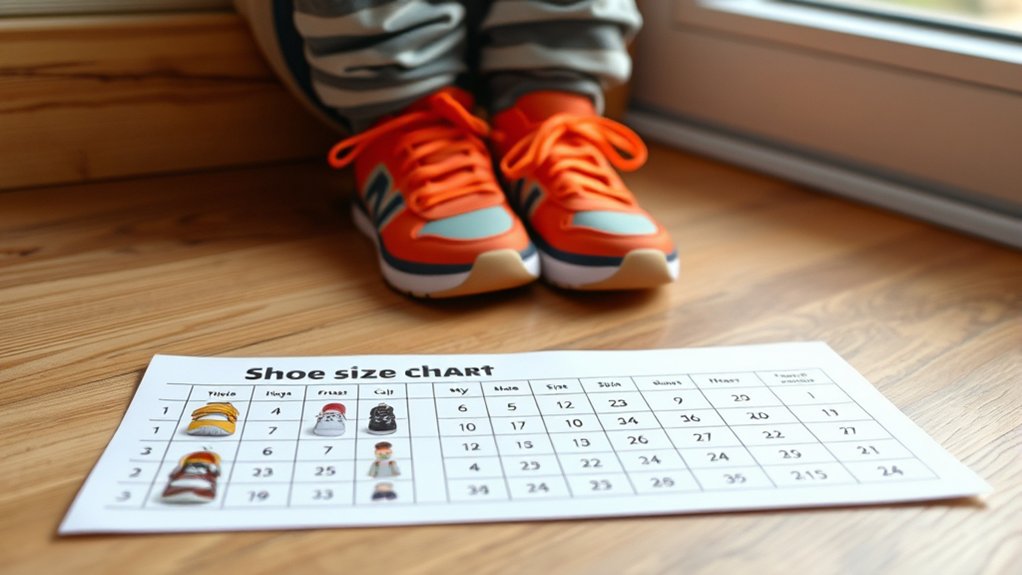
Although foot growth varies among children, a 5-year-old boy typically wears a US shoe size between 11 and 12. This range corresponds to a foot length of roughly 6.5 to 7 inches (16.5 to 17.5 cm), aligning with Euro sizes 27 to 28.
Understanding these measurements is important in shoe manufacturing because precision guarantees a proper fit and comfort.
Manufacturers use principles of foot biomechanics to support natural movement and accommodate growing feet. Since children’s feet develop rapidly, it’s essential to measure them regularly to keep the sizing accurate. This helps avoid problems like improper support or discomfort.
By choosing shoes based on accurate size ranges, you help promote healthy foot development. This ensures the footwear matches the dynamic nature of a 5-year-old boy’s foot biomechanics and growth patterns.
It’s all about keeping those little feet happy and healthy as they grow!
What Are Kids’ Shoe Size Categories and Age Ranges?
When you shop for children’s shoes, understanding the size categories and corresponding age ranges helps you find the best fit. Kids’ shoe sizes are divided into infant (0-3.5), toddler (4-10), preschool (10.5-3), and grade school (3.5-7) categories.
A 5-year-old boy typically wears sizes between 10.5 and 13, placing him in the preschool or little kids’ range.
Sizes for children aged 4 to 8 generally fall within 10.5 to 3, while those 8 and older start at 3.5.
As children grow, you’ll notice shifts in shoe fashion trends and the importance of selecting appropriate shoe material for comfort and durability.
Knowing these categories helps you choose styles that fit well and support healthy foot development.
How to Measure Your 5 Year Old’s Foot at Home
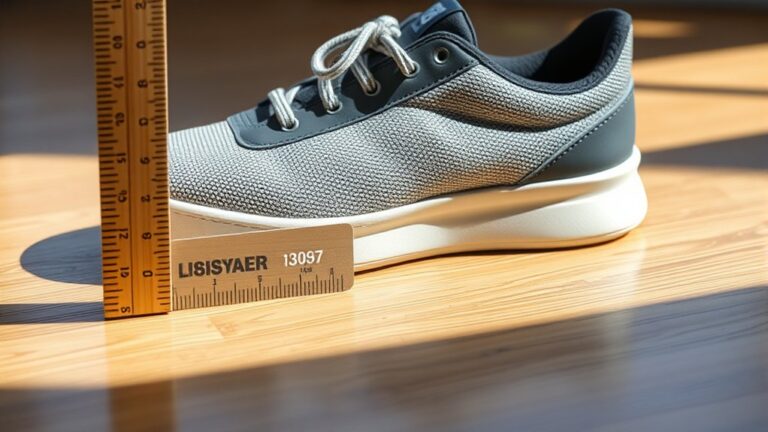
To measure your 5-year-old’s foot accurately at home, start by printing a sizing guide at 100% scale or simply trace their foot on a piece of paper.
Make sure your child is standing with their full weight on their feet—that way, you get a more realistic measurement.
It’s best to do this at the end of the day since feet tend to swell a bit by then.
Don’t forget to measure both feet and pick the larger measurement to ensure the best fit.
Printable Sizing Guide
Before measuring your 5-year-old’s foot at home, print the sizing guide at 100% scale on an 8.5″ x 11″ sheet to guarantee accuracy. Use a credit or ID card to confirm the printed ruler matches the actual measurement scale.
Have your child stand straight, full weight on their feet, ideally in the late afternoon when feet tend to swell slightly for a better fit.
Trace the outline of each foot on the printed guide, concentrating on the longest toe point.
Measure this length with a ruler or tape measure, then refer to the size chart to find the appropriate shoe size.
Foot Tracing Method
Once you have your printed sizing guide ready, the next step is measuring your 5-year-old’s foot accurately at home.
Have your child stand barefoot on a piece of paper with their heel against a wall.
Use a ruler or measuring tape to mark the longest toe point on the paper to determine foot length.
Make sure to measure both feet, as one may be larger. Use the longer measurement for sizing.
Record the length in inches and centimeters to compare with your sizing guide.
Precise measurement guarantees you select shoes with the right shoe material and fit.
This directly impacts shoe durability and comfort.
Accurate sizing prevents premature wear caused by ill-fitting shoes.
It helps your child’s shoes last longer while supporting proper foot development.
Measuring Tips and Timing
Although measuring your child’s foot might seem straightforward, timing and technique play crucial roles in guaranteeing accuracy. To get the most precise size, measure your 5-year-old’s feet in the late afternoon when foot swelling peaks. Proper measurement helps select shoes with suitable shoe materials that support growth and maintain foot hygiene.
Keep these tips in mind:
- Have your child stand with full weight on both feet to assess true length.
- Use a printable guide at 100% scale or trace the foot, measuring from heel to the longest toe.
- Measure both feet, choosing the size based on the larger one.
- Re-measure every two months to accommodate growth and maintain proper fit.
Accurate sizing ensures comfort and helps preserve foot health as your child grows.
How Often Should You Check Your Child’s Shoe Size?
You should check your 5-year-old’s shoe size about every two months. Their growth slows down to roughly 1mm per month, but that’s still enough to make shoes feel tight pretty quickly.
Keep an eye out for signs like discomfort, worn-out soles, or cramped toes—these are good clues that it’s time to measure again.
Frequency Based On Age
Since children’s feet grow at varying rates depending on their age, checking their shoe size regularly is essential to guarantee a proper fit. Proper shoe material and support for the foot arch are vital for comfort and healthy development.
You should adapt the frequency of measurements based on your child’s age to avoid discomfort or damage from ill-fitting shoes.
- Ages 1-3: Measure every 1-2 months during rapid growth phases.
- Ages 3-6: Check every 2-3 months as growth slows to about 1mm per month.
- Ages 6-10: Measure every 3-4 months because growth is slower.
Regular checks prevent issues caused by tight or loose shoes, preserving foot health and accommodating natural foot arch development.
Adjusting measurement frequency ensures your child’s shoes always fit well and support their growing feet.
Signs To Measure
When children’s shoes start feeling tight or cause discomfort, it signals that it’s time to gauge their feet again. Pay close attention if your child complains about blisters or limps, as these are clear signs that the shoe material no longer fits properly. Shoes that pinch or rub can damage delicate skin regardless of shoe color or style.
To guarantee accurate sizing, measure your child’s feet every two months, especially during rapid growth phases like ages 4 to 6. Always measure feet late in the afternoon when swelling is at its peak. Use a printable guide or visit a store to measure both feet, comparing sizes regularly.
Consistent monitoring ensures shoes provide proper support and comfort, extending the lifespan of your child’s footwear regardless of shoe color or material. It’s a simple step that makes a big difference in keeping your little one happy on their feet.
Growth Rate Impact
Although children’s foot growth varies individually, keeping a close eye on their shoe size is vital to maintaining comfort and support. At age 5, growth patterns slow to about 1mm per month, but frequent checks remain important to avoid discomfort and ensure proper fit.
Regularly measuring their feet helps you replace shoes before outgrowing them, preserving shoe durability and foot health.
To manage growth rate impact effectively, consider:
- Checking shoe size every 2 months during rapid growth phases
- Replacing shoes every 2-3 months for kids under 3, less often as they age
- Monitoring shoe wear to maintain durability and support
- Scheduling size checks every 3-4 months for ages 6-10 to adjust for slower growth
This proactive approach guarantees shoes fit well and accommodate evolving foot size. It really makes a difference in keeping your child comfortable and their feet healthy.
How to Choose Shoes When Your Child’s Feet Are Between Sizes
If your child’s foot measurement falls between two sizes, always opt for the larger size to guarantee comfort and room for growth. Measure your child’s feet at the end of the day when they’re largest for the most accurate sizing.
If one foot is bigger, choose the shoe size based on that foot to avoid discomfort.
When selecting shoes, consider the shoe material carefully. Go for breathable, flexible fabrics that adapt to growing feet.
Also, pick a shoe color your child likes to encourage consistent wear.
If the larger size feels slightly loose, use thicker socks or insoles to improve the fit.
Make sure to regularly measure your child’s feet every two months, especially when they’re between sizes. This helps ensure the shoes remain comfortable and supportive as they grow.
How to Make Sure Kids’ Shoes Fit Comfortably and Allow Growth
Ensuring your child’s shoes fit comfortably and allow room for growth means regular foot measurements and paying close attention to the fit. Kids’ feet grow fast, so checking their size every two months helps you stay ahead.
When picking shoes, look for materials that are flexible, breathable, and padded to keep their feet comfy and prevent cramping.
Footwear fashion doesn’t have to come at the cost of a good fit. Choose styles that let your child’s feet move naturally and grow without restriction.
Keep these tips in mind:
- Measure feet in the late afternoon when they’re largest for accuracy.
- Leave about a thumb’s width (1 cm) of space from the longest toe to the shoe’s end.
- If you’re between sizes, go for the larger one to avoid tightness.
- Opt for breathable, flexible shoe materials to boost comfort and durability.
When and How Kids Transition to Adult Shoe Sizes
As your child’s feet grow beyond the largest big kids’ sizes, typically around size 7 or 8, they’ll need to shift to adult shoe sizes. This change usually happens between ages 9 and 12 when their foot length exceeds about 9 inches (23 cm).
At this point, you’ll notice that their shoe width and foot shape may require different considerations since adult shoes often differ in these aspects. When selecting adult shoes, pay close attention to shoe material for flexibility and breathability to guarantee comfort and proper fit.
Also, keep in mind that big kids’ size 7 roughly converts to a women’s size 8.5 or men’s 7.5. Moving to adult sizing accommodates their growing feet and changing proportions effectively.
Tips for Shopping and Returning Kids’ Shoes to Get the Right Size
When shopping for shoes for your 5-year-old, measuring their feet in the late afternoon gives you the most accurate size because their feet naturally swell throughout the day. Make sure to pick a size that leaves about a thumb’s width (0.2 inches) of space at the toe. This helps prevent discomfort and allows room for growth.
It’s a good idea to measure their feet every two months since kids grow so quickly. Also, think about shoe color preferences and materials to match both style and comfort.
Keep these tips in mind: try shoes on and have your child walk around the store to check the fit. Choose breathable materials for all-day comfort, and pick colors your child loves to encourage them to wear the shoes.
If the shoes don’t fit right or cause blisters, return or exchange them within 45 days.
This way, you’ll make sure the shoes fit well and your little one’s feet stay happy.
Frequently Asked Questions
Are There Specific Shoe Brands Better for 5-Year-Old Boys?
You’ll find brands like Stride Rite and New Balance better for 5-year-old boys, thanks to supportive fits. When shoe shopping, consider shoe color choices and sizing consistency.
This helps guarantee comfort and style for active kids. It’s all about finding the right fit that keeps up with their energy. Plus, picking colors they like makes it more fun for them to wear.
How Do Shoe Widths Affect Fit for Children’s Shoes?
Think of shoe widths like puzzle pieces. With proper fitting techniques, you guarantee the pieces align perfectly.
Considering shoe width helps prevent discomfort and promotes healthy foot development. It also makes sure you pick shoes that fit snugly without squeezing or slipping.
Getting the right width really makes a difference in how comfortable and supportive the shoes feel for your child.
Can Wearing Wrong Shoe Sizes Affect a Child’s Foot Development?
Yes, wearing the wrong shoe sizes can hinder your child’s foot growth and lead to long-term problems. Proper shoe fitting guarantees healthy development, prevents deformities, and supports balanced gait and muscle strength in growing feet.
It’s really important to pay attention to how shoes fit because growing feet need room to develop properly. If shoes are too tight or too loose, they can cause discomfort and even affect the way your child walks. So, always make sure to check the size regularly as your child grows.
What Materials Are Best for Children’s Shoe Comfort?
Imagine soft leather’s gentle hug versus stiff plastic’s harsh grip. For comfort enhancement, choose breathable mesh and cushioned EVA foam insoles. These shoe materials guarantee flexibility, shock absorption, and natural foot movement.
They really help promote healthy, happy feet. It’s all about making sure your child feels good every step of the way. So, think soft, breathable, and cushioned when picking shoes!
How to Care for and Clean Children’s Shoes Properly?
You should use a soft brush and mild soap for shoe cleaning. Avoid harsh chemicals, and air dry footwear naturally.
Regular footwear maintenance includes promptly removing dirt and following washing instructions. Also, don’t forget to replace insoles to guarantee hygiene and durability.
Conclusion
Now that you know how to measure and choose the right shoe size for your 5-year-old, you can avoid the frustration of ill-fitting shoes. No need to rely on a wax tablet and stylus! Regularly checking their feet guarantees comfort and healthy growth.
Understanding size shifts helps you shop smart. Keep these tips in mind, and you’ll make shoe shopping smoother. This way, your child can step confidently into every new adventure.