What Shoe Size Is 37 – Conversion Guide And Chart
If you wear a European size 37, your foot length is about 9.25 inches (23.5 cm). This typically matches a US women’s size 6.5 to 7 and a UK women’s 4.5 to 5. Men’s shoes rarely go down to size 37, as men usually start at EU 39.
Width and foot shape affect fit, so measuring both feet and checking brand charts is key. Keep exploring to understand regional nuances, kids’ sizes, and fit tips for accurate sizing.
Key Takeaways
- European size 37 corresponds to a foot length of about 9.25 inches (23.5 cm) and generally fits medium width feet.
- Size 37 converts to US women’s size 6.5–7 and UK women’s size 4.5–5, with slight variations across brands.
- Men’s shoe sizes usually start at EU 39, making size 37 rare and primarily considered a women’s size in Europe.
- For kids, size 37 matches US kids’ 4.5–5, suitable for ages 7–9, but it does not apply to toddlers.
- Accurate sizing requires measuring both feet barefoot, considering width and arch type, and consulting brand-specific size charts.
What Size 37 Means in European Sizing
Although shoe sizing systems vary worldwide, size 37 in European sizing specifically corresponds to a foot length of about 9.25 inches (23.5 centimeters).
Size 37 in European sizing matches a foot length of approximately 9.25 inches or 23.5 centimeters.
When selecting size 37 footwear, you guarantee a fit aligned with this precise measurement, optimizing shoe comfort by reducing pressure points and avoiding constriction.
Foot health benefits considerably from this accuracy, as properly sized shoes prevent issues like blisters, bunions, and arch strain.
Keep in mind that while size 37 generally represents a medium width, variations exist across manufacturers and shoe styles. So, trying on shoes remains essential for ideal comfort.
The consistent length measurement in Euro sizing helps you make informed choices across casual, dress, and athletic footwear.
This way, you maintain both shoe comfort and foot health effectively.
What Size 37 Means in US Women’s Sizes
How do you translate a European size 37 into US women’s shoe sizing? Typically, a size 37 corresponds to a US women’s size 6.5 to 7, representing a foot length around 9.25 inches (23.5 cm).
However, this conversion can slightly vary depending on the shoe brand or style.
When selecting your US size, consider not only the length but also the shoe width and the shape of your foot arch, as these factors influence fit and comfort.
To guarantee accuracy, measure your foot precisely and consult the specific brand’s size chart, since shoe width and arch support differ across manufacturers.
Generally, EU size 37 is categorized as a small to medium US women’s size.
But paying attention to width and arch characteristics is essential for an ideal fit.
Size 37 Conversions for UK and Other Regions
When you’re looking at a size 37 European shoe, it usually matches up pretty closely with a UK size 4 to 5. Of course, this can depend on whether it’s men’s or women’s sizing and the brand you’re checking out.
European sizes are based on specific foot length measurements—typically around 23 to 23.5 cm—which makes these conversions a bit easier to understand.
That said, keep in mind that regional differences can affect the fit. So, even though size charts give you a good starting point, it’s always smart to measure your foot and compare those numbers before making a final choice.
This way, you’ll get a comfortable fit every time.
UK Size Equivalent
Since shoe size conversions can vary slightly between brands, you’ll find that a European size 37 typically matches a UK women’s size 4.5 to 5 and a men’s size 4.
When selecting shoes, consider fashion trends and shoe materials, as these factors influence sizing precision. UK sizes are generally about one size smaller than US sizes, but size 37 conversions show minimal difference.
| European Size | UK Women’s Size | UK Men’s Size | Notes |
|---|---|---|---|
| 37 | 4.5 | 4 | Brand-dependent variations |
| 37 | 5 | 4 | Slight differences in width |
| 37 | 4.5-5 | 4 | Check specific brand charts |
| 37 | 4.5 | 4 | Consider shoe material fit |
| 37 | 5 | 4 | Aligns with current fashion trends |
European Size Standards
Although European size 37 primarily corresponds to a UK women’s size between 4.5 and 5 and a UK men’s size 4, you should always verify specific measurements in centimeters. These typically range from 23.5 to 24.0 cm. This precision matters, especially as shoe material and fashion trends influence fit and comfort.
Keep these points in mind when considering size 37 conversions:
Size 37 generally equates to US women’s 6.5 to 7 and US men’s 5 to 5.5. Variations exist among European brands, so it’s a good idea to consult brand-specific charts.
This size fits medium width for women and tends to be narrower for men, depending on the shoe material. Fashion trends can also alter sizing standards, which affects how size 37 fits across different models.
Accurate measurement guarantees your shoes meet comfort and style expectations precisely. So, always double-check before you buy!
Regional Conversion Variations
How do regional sizing standards impact the conversion of a European size 37 to UK and other measurements? Size 37 generally equates to UK 4 or 4.5, but regional variations affect this conversion.
In the UK, women’s size 37 aligns with 4.5, while men’s corresponds to 4.
Australia typically matches size 37 to UK 4.5. These slight discrepancies arise from differing measurement protocols and evolving fashion trends that influence sizing norms.
So, it’s not always a one-to-one match.
When selecting shoes, you should consider these variations to guarantee fit accuracy and accommodate material durability, especially since tighter fits can compromise long-term wear.
Always consult specific regional sizing charts to confirm conversions because manufacturers may vary their size 37 interpretation.
Understanding these nuances helps you navigate international footwear markets with precision and confidence.
It’s a small step that makes a big difference when shopping across borders.
Why You’ll Rarely Find Men’s Shoes in Size 37
Because men’s shoe sizes typically start at 6.5 US (which is about a European size 39), you’ll rarely find men’s shoes in size 37. This mainly comes down to standardized shoe manufacturing and the fashion trends that focus on average adult male foot sizes.
Men’s shoes usually start at US size 6.5 (EU 39), making size 37 extremely rare.
Size 37 is usually considered a women’s size in Europe, so it falls outside the usual men’s sizing range.
Here are a few key reasons why: manufacturers prioritize men’s sizes 39 and up. Size 37 is mostly designed and marketed for women.
Plus, fashion trends don’t often call for men’s shoes below size 39.
That said, you might find custom or specialty men’s shoes in size 37, but they’re definitely uncommon.
Knowing this makes it easier to understand why men’s shoes in size 37 are so rare.
How to Measure Your Feet to Make Sure Size 37 Fits
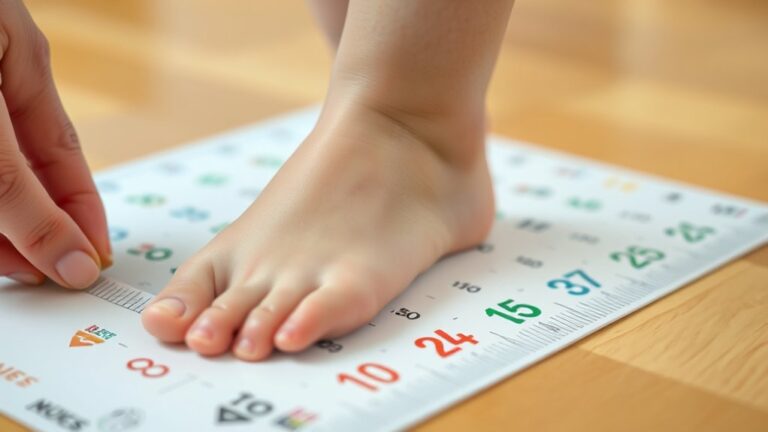
To guarantee size 37 fits correctly, you need to measure your feet with precision using a flat surface and a reliable measuring tool.
Stand barefoot with your weight evenly distributed to ensure your foot arch is properly compressed, reflecting its true length. Use a ruler or tape measure aligned straight from your heel to the tip of your longest toe.
Ideally, measure while wearing socks similar to those you plan to wear with the shoes.
Measure both feet, then select the larger measurement to accommodate slight size variations.
Remember, shoe material influences fit. Flexible fabrics may allow a snugger fit, while rigid materials require precise sizing.
Compare your foot length to a size 37 chart to confirm suitability.
This way, you guarantee maximum comfort and performance. It’s a simple step that makes a big difference.
The Role of Shoe Width in Shoe Size 37 Fit
While a size 37 shoe provides the correct length, its width considerably influences the overall fit and comfort. Shoe width determines how well the shoe contours your foot’s shape, directly impacting foot comfort and preventing discomfort.
Size 37 typically comes in several widths, including Narrow (N), Medium (M), Wide (W), and Extra Wide (XW). Selecting the right width is critical for these reasons:
- Proper shoe width avoids pinching and pressure points.
- It prevents blisters caused by friction from ill-fitting shoes.
- Correct width reduces slipping, stabilizing your foot inside the shoe.
- Tailoring width to your foot shape supports long-term foot health.
Size 37 Conversions for Kids and Toddlers
When you’re looking at size 37 for kids and toddlers, you’ll see that this Euro size usually matches up to about a US kids’ 4.5 to 5. It fits foot lengths around 9.25 inches, which is pretty handy to know.
Now, toddler sizes are a bit different. They tend to be smaller, generally ranging from Euro 21 to 23, and are perfect for kids aged 2 to 4.
Toddler Size 37 Equivalents
Although toddler shoe sizes rarely include size 37, you might encounter this measurement when converting European sizes for older children. Size 37 typically applies to big kids or youth but not toddlers, whose sizes range from US 3.5 to 8.5.
When steering through fashion trends, you’ll find that shoe material profoundly impacts fit and comfort, especially for growing feet.
For toddlers, size 37 conversions require careful attention to exact measurements rather than relying solely on numeric labels. Keep these points in mind:
- Size 37 usually equates to US 4.5–5 in youth sizing, not toddlers
- Toddlers’ shoes are smaller and measured differently, focusing on length in centimeters
- Fashion trends may influence material choices, affecting fit and flexibility
- Confirm shoe material quality to guarantee appropriate support for toddlers’ feet
Kids Size 37 Measurements
Understanding the exact measurements for kids’ size 37 shoes helps you select the right fit as children grow beyond toddler sizes. Size 37 typically corresponds to a foot length of about 9.25 inches (23.5 cm), fitting children aged 7 to 9 years depending on the brand. This size aligns with US kids’ sizes 4.5 to 5.
Precise foot measurement is essential since manufacturers may vary slightly in sizing. When choosing size 37 shoes, prioritize shoe comfort by ensuring adequate space and support, especially as kids become more active.
Material selection also plays a critical role. Breathable, flexible materials enhance comfort and accommodate foot growth.
Properly fitted shoes reduce the risk of discomfort and developmental issues, making size 37 a key transitional size for growing children. So, take your time to measure and choose wisely!
Conversion Chart Overview
How do size 37 European shoes translate for kids and toddlers in different sizing systems? Understanding these conversions means looking at historical sizing systems and cultural differences that affect footwear standards.
Size 37 Euro usually corresponds to:
- Big Kid US size 5 to 5.5
- Little Kid US size 8 to 8.5
- Foot length around 9.25 inches (23.5 cm)
Variations depend on manufacturer and region.
Size 37 is mainly an adult women’s size but sometimes fits older children, not infants. Since sizing systems developed differently worldwide, conversion charts only provide rough estimates.
You should measure feet carefully to get the best fit.
Keep in mind cultural sizing differences and the history behind today’s standards. This way, you can be more confident when choosing size 37 shoes for kids and toddlers.
Tips for Using Shoe Size Conversion Charts Accurately
When converting shoe sizes, you’ll get the most accurate results by measuring your foot length while standing and wearing socks. Then, check the specific regional conversion chart that matches your target market.
It’s a good idea to cross-reference both length and width measurements because these dimensions really affect the fit.
Also, think about your foot arch type. If you have a higher arch, you might need more precise width adjustments. Keep in mind that shoe material affects how the shoe molds to your foot over time. Rigid materials need exact sizing, while flexible ones offer some give.
Since sizing can vary between brands and styles, always look for manufacturer-specific charts when you can. For example, size 37 usually corresponds to US women’s 6–6.5 or men’s 5–5.5, but it’s best to rely on detailed measurements and charts for the most precision.
Common Mistakes When Buying Size 37 Shoes Online
Accurate foot measurement and consulting regional conversion charts are only part of the equation when buying size 37 shoes online. You’ve got to navigate fashion trends and shoe manufacturing variations to avoid common pitfalls. Many shoppers mistakenly rely solely on the size 37 label without thinking about regional differences, which often leads to a poor fit.
Accurate sizing and understanding regional differences are crucial to avoid poor fits when buying size 37 shoes online.
Here’s the deal: measure both feet precisely because asymmetry can affect the correct size. Also, choose width options carefully; narrow or wide fits can change comfort even if the size says 37.
Always check the brand’s specific sizing chart and read fit reviews since manufacturing standards can vary a lot. Don’t assume sizing is universal across styles—shoe lasts and construction play a big role in how they actually fit.
Keep these points in mind to make sure your size 37 shoes match your measurements and current fashion trends.
Frequently Asked Questions
Are Size 37 Shoes Suitable for Wide Feet?
Size 37 shoes can suit wide feet if the shoe material is flexible and the heel height isn’t too restrictive.
Check for wide-specific options, as standard widths may cause discomfort or tightness despite the size matching your foot length.
It’s always good to try shoes on or read reviews to see if they accommodate wider feet comfortably.
Don’t hesitate to look for brands that offer wider fits in smaller sizes—they can make a big difference!
How Does Sock Thickness Affect Size 37 Shoe Fit?
Sock thickness affects size 37 fit by altering sock compression and interacting with shoe padding. Thicker socks increase compression and foot volume, reducing space. Meanwhile, thinner socks decrease compression, which can cause looseness.
This looseness might make the shoe padding less effective in supporting your foot. So, the thickness of your socks really changes how your shoe feels and fits. It’s all about balancing comfort and support with the right sock choice.
Can Size 37 Shoes Accommodate Orthotic Insoles?
Like fitting a puzzle piece, size 37 shoes can accommodate orthotic insoles if you consider your foot arch shape and opt for flexible shoe material.
Choose removable insoles and slightly larger sizes for ideal comfort and support.
It’s all about making sure your shoes have enough room and flexibility to work with the insoles you need.
Do Shoe Styles Impact the Fit of Size 37?
Yes, shoe styles impact size 37 fit considerably. Different shoe materials affect stretch and comfort, while foot arch design demands varied support.
Consider style-specific arch support and material flexibility to guarantee a perfect, precise fit. It really depends on the shoe’s design and how it matches your foot shape. So, always try them on if you can!
How Often Should I Remeasure My Feet for Size 37?
Don’t wait for your feet to start plotting a mutiny. Remeasure every 6 to 12 months.
Keep track of changes in foot length and shoe width precisely. Otherwise, you might end up squeezing into size 37 shoes that no longer fit your actual dimensions.
Conclusion
Now that you’ve navigated the size 37 maze, you’re equipped to find your perfect fit without a hitch. Remember, conversions aren’t just numbers; they’re the bridge connecting your feet to comfort worldwide. Always measure accurately and consider width for precision.
Avoid common online pitfalls by double-checking charts and regional differences. With these tips, buying size 37 shoes will feel less like guesswork and more like a well-calculated science experiment that guarantees success.