How To Measure Shoe Width – Width Sizing Guide
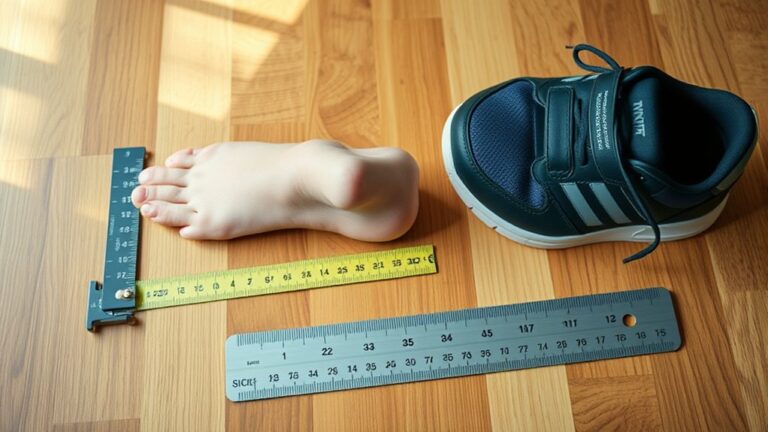
To measure your shoe width accurately, stand barefoot on a flat surface with even weight distribution. Trace the widest part of your foot, usually across the ball, marking the outermost points.
Next, measure the distance between these marks using a rigid ruler or flexible tape. Be sure to compare both feet and use the larger measurement.
Make certain of consistency by marking the same area each time on a flat surface. This precise process helps match shoe width for comfort and health.
Stick around for more tips and sizing guidance coming up!
Key Takeaways
- Stand barefoot on a flat surface and trace around the widest part of your foot, usually across the ball, to capture accurate width.
- Measure the distance between the outermost points of the traced widest part using a rigid ruler or flexible tape in millimeters or inches.
- Repeat the measurement for both feet and use the larger width to select your shoe size and width category.
- Ensure consistent marking of the widest part and measure on an even surface to avoid distorted or inaccurate readings.
- Compare your measurement with standardized shoe width charts to choose appropriate width, considering material flexibility and activity type.
Why Shoe Width Matters for Comfort and Foot Health
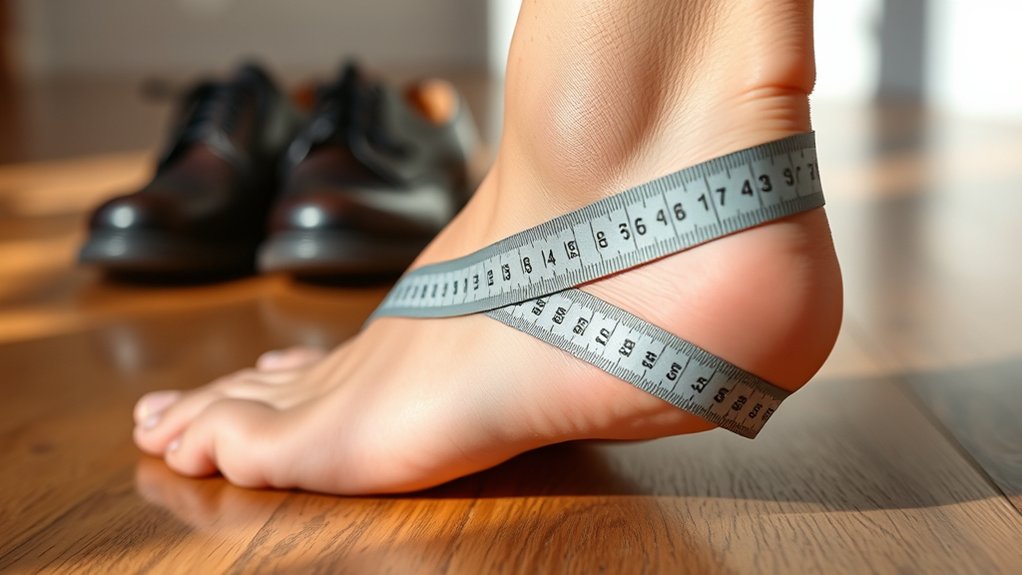
Although many focus on shoe length, choosing the correct shoe width is just as important for your comfort and foot health. Proper shoe width gives your foot enough space, which helps prevent problems like blisters, bunions, and nerve damage.
Wearing shoes that are too narrow can squeeze your foot, while shoes that are too wide might make you feel unstable and cause friction.
The material of the shoe matters a lot here. Flexible materials can handle slight differences in width, but stiff materials need a precise fit to feel right.
Fashion trends often put style over fit, resulting in narrower shoes that mightn’t suit your foot width.
Ignoring shoe width can change how you walk, cause pain, and lead to long-term foot problems.
To keep your feet comfortable and supported, always pick shoes that fit both your length and width well, no matter the material or style.
How to Measure Your Foot Width at Home
How exactly can you measure your foot width accurately at home? Start by standing barefoot on a flat surface with a piece of paper beneath your foot. Distribute your weight evenly to simulate natural foot expansion.
Using a pen held upright, trace around the widest part of your foot, usually across the ball area. Mark the outermost points where your foot touches the paper. Then, measure the distance between these marks in millimeters or inches.
Trace your foot’s widest part with a pen, mark the edges, and measure the distance accurately.
Repeat for both feet and select the larger measurement, since foot widths often vary. It’s best to do this at the end of the day when your feet reach their fullest size.
Knowing your precise width helps you pick shoes that fit comfortably and match the shoe material’s flexibility for lasting wear.
Tips for Accurate Shoe Width Measurement (With Videos and Tools)
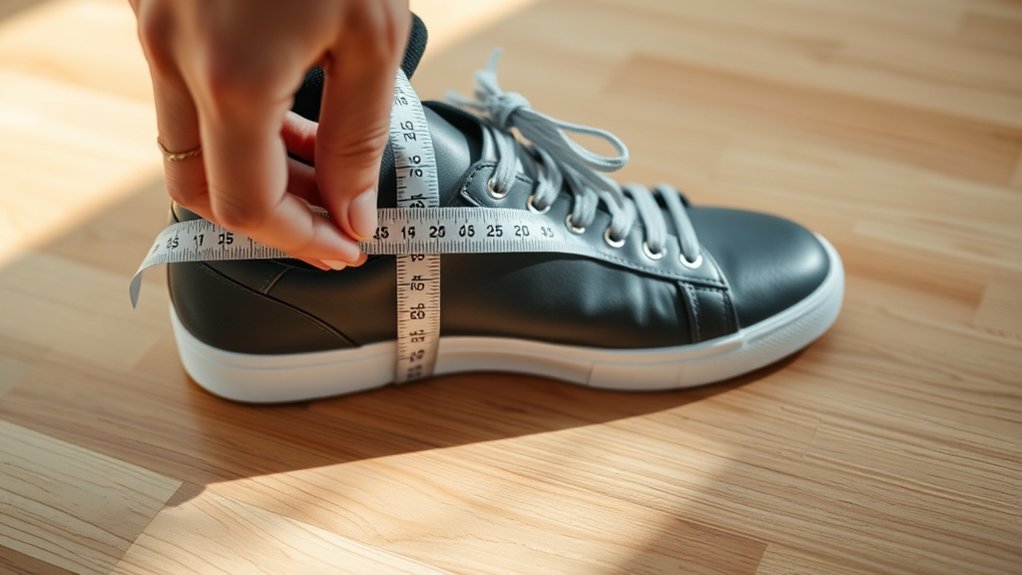
When measuring your shoe width, using the right tools and techniques guarantees accuracy. Start with proper foot measurement techniques: stand flat with weight evenly distributed, as your foot naturally expands under pressure. Use flexible measuring tapes or rulers to gauge the widest part of your foot, typically across the ball area.
Alternatively, you can trace your foot outline on paper to identify the widest points precisely. Mark these points and measure the distance between them in inches or millimeters for exact results.
Using reliable measurement tools like digital calipers or printable foot tracers can really help boost precision.
Finally, make sure to refer to standardized width charts to interpret your measurements correctly. Adding video demonstrations for these steps can make it even easier to get the technique right. This way, you’ll feel confident and get accurate shoe width measurements every time.
How to Choose the Right Shoe Width for Your Foot Type
First, take a good look at your foot shape to figure out whether you need a narrow, standard, or wide width. Getting precise measurements really helps with this step.
Then, think about what you’ll be using the shoes for—different activities might call for shoes that can adjust in width a bit more than others.
And lastly, make sure you strike a balance between width and comfort. Your toes should have enough room to move without feeling cramped, but you also don’t want extra space that makes your feet feel unstable.
Assess Your Foot Shape
Because your foot shape directly influences comfort and fit, accurately evaluating it is vital before selecting shoe width. Start by measuring the widest part of your foot, usually across the ball, using a flexible tape. Then, compare your measurement against standard width categories like A, B, C, D, and E to figure out if your foot is narrow, medium, or wide.
Take a good look at your foot’s overall profile too. If you have a wider forefoot or a high instep, you’ll likely need broader shoes to fit comfortably.
Also, think about your ankle flexibility and arch height since these affect how your foot settles inside the shoe.
If you notice your toes or ball area sticking out beyond the shoe edges, it’s a good idea to go for a wider fit.
Taking the time to assess your foot carefully makes sure the shoe width matches your foot’s shape perfectly, which means better comfort and support.
Consider Activity And Use
Although your foot shape plays a critical role in choosing shoe width, the type of activity you engage in considerably affects the ideal fit. Different activities cause foot swelling or require extra support, making wider shoes necessary. For example, athletic activities often benefit from E or EE widths to prevent blisters and enhance stability.
Footwear fashion and shoe material also influence performance and comfort during use. Consider the following guide:
| Activity Type | Recommended Width | Reason |
|---|---|---|
| Running | E or EE | Accommodates swelling, reduces blisters |
| Hiking | Wide (E+) | Extra support on uneven terrain |
| Prolonged Standing | Wide | Reduces pressure and fatigue |
| High-Impact Sports | Custom wide | Supports foot biomechanics |
Selecting width based on activity guarantees injury prevention and excellent foot function. So, always think about what you’ll be doing when picking out shoes.
Balance Width With Comfort
When choosing the right shoe width for your foot type, you want to make sure the fit provides enough room to avoid pinching or blisters while still giving you proper support. Start by measuring the widest part of your foot and comparing it to width charts to find the best fit.
If you have wide feet, go for shoes with broader soles and deeper toe caps. It’s also important that the shoe material can stretch or accommodate the natural expansion of your foot.
On the other hand, narrow feet usually do better with snug fits that have adjustable laces or straps to keep your foot from slipping around.
Getting the right shoe width is key for balance and keeping your natural alignment in check. This is even better when your shoes offer good arch support.
How to Read Women’s and Men’s Shoe Width Charts
To accurately read women’s and men’s shoe width charts, you’ll need to match your foot’s width measurement to the closest corresponding value on the chart.
Women’s widths range from A (narrow) to E (extra wide), while men’s widths typically span C (narrow) to E (wide). Each letter corresponds to specific measurement ranges, enabling you to identify the size that best fits your foot’s shape.
Keep in mind that shoe material and fashion trends influence how width affects fit. Flexible materials may accommodate slight width variations, whereas rigid ones require precise sizing.
By interpreting these charts correctly, you guarantee the shoe provides adequate support and comfort, tailored to your foot’s dimensions, rather than relying solely on length.
This precision helps you select shoes that maintain both style and function.
What to Do If Your Feet Are Narrow or Wide
If your feet measure less than 3.4 inches (8.6 cm) across the widest part, you likely have narrow feet that require specific shoe choices to guarantee a proper fit. Opt for shoes with adjustable laces or T-strap designs to secure your foot firmly, preventing slippage and discomfort.
On the other hand, if your feet exceed 3.9 inches (9.9 cm), you have wide feet and should look for brands offering extra-wide options like Clarks or Merrell. Prioritize stretchable materials such as leather or mesh since they adapt better to your foot shape.
Accurately measuring your foot width helps you pick shoe sizing that fits your foot arch and width. This reduces pressure points and improves support.
Choosing the right width is key to avoiding foot problems and staying comfortable.
Simple Ways to Improve Shoe Fit Beyond Width
Although measuring shoe width is essential, several additional factors influence overall fit and comfort. You should consider shoe padding, foot arch support, and adjustable features like laces or straps to customize fit beyond width. Trying shoes later in the day accounts for natural foot swelling, preventing tightness.
Insoles or orthotics can correct minor fit issues, especially around the foot arch or ball of the foot, guaranteeing better support. Proper heel fit is vital to avoid slipping and enhance stability.
| Factor | Tip for Improved Fit |
|---|---|
| Toe space | Guarantee toes move freely without pinching |
| Shoe padding | Use padded insoles for added comfort |
| Foot arch support | Select shoes or orthotics matching arch type |
| Adjustable fit | Choose shoes with laces, straps, or elastic panels |
Common Mistakes to Avoid When Measuring Shoe Width
Beyond considering factors like padding and arch support, accurately measuring shoe width remains a fundamental step in achieving a proper fit. To avoid common pitfalls in your measuring techniques, be mindful of these critical errors:
Don’t measure on uneven surfaces, which can distort width readings. Avoid using flexible tapes alone; pair them with a rigid ruler or straight edge for better precision. Make sure to mark the widest part of your foot consistently, usually the ball, to ensure an accurate width capture.
Measure both feet and base your sizing on the larger measurement. Take your time with this process—rushing can lead to imprecise marks and inconsistent measurements.
Using proper measurement tools and careful technique guarantees reliable width sizing. This helps prevent discomfort and ensures your shoes fit just right.
Frequently Asked Questions
Can Shoe Width Change With Age or Weight Fluctuations?
Yes, your shoe width can change with aging feet and weight fluctuations. Aging reduces tissue elasticity, which can cause your feet to widen. Weight gain also stretches ligaments, making your feet broader.
Even if you lose weight, it might not reverse the permanent width changes caused by these factors. So, it’s pretty common for your shoe size to shift over time. Just something to keep in mind when buying new shoes!
Are There Differences in Shoe Width Sizing by Brand?
You’d think shoe widths were a universal code, but brand variations create sizing inconsistencies so wild, it’s like fitting a giraffe’s foot into a rabbit’s slipper.
Always check each brand’s specific width chart meticulously. It really helps avoid those frustrating sizing surprises.
Trust me, your feet will thank you!
How Does Foot Swelling Affect Shoe Width Requirements?
Foot swelling increases your foot width, which affects how your shoes fit. Standard sizes often feel too tight when your feet swell.
Because of this, you’ll need wider shoes or ones with adjustable features during swelling peaks. This helps keep your feet comfortable and avoids circulation problems.
It’s all about making sure your shoes can accommodate the extra width when your feet aren’t at their usual size. That way, you stay comfortable and healthy.
Can Orthotics Impact the Shoe Width I Need?
Orthotics can be the elephant in the room during shoe fitting techniques, altering your required width. You’ll need to factor orthotic comfort by measuring your foot with them inside, ensuring proper shoe width for ideal fit and support.
It’s a simple step that makes a big difference. Wearing shoes with the right width helps avoid discomfort and keeps your feet happy throughout the day. So, always try on shoes with your orthotics before deciding!
Is There a Standard Unit for Shoe Width Measurement?
There isn’t a universal shoe width standard; measurement consistency varies by brand and region. You’ll find widths labeled with letters, not fixed units. So, you have to cross-reference these with your foot dimensions for accuracy.
It might seem a bit confusing at first, but once you get used to checking the labels against your own measurements, it becomes easier. Just remember, every brand might do it a little differently.
Conclusion
Understanding your shoe width is vital for comfort and foot health, yet many overlook its impact. You might think length alone matters, but improper width can cause pain and deformities.
By accurately measuring your foot width at home and using reliable charts, you’ll avoid common fitting errors. Remember, even slight width adjustments can transform your shoe experience. It really helps prevent long-term issues.
So, take precise measurements seriously to guarantee the best fit and lasting foot wellness. Your feet will thank you for it!