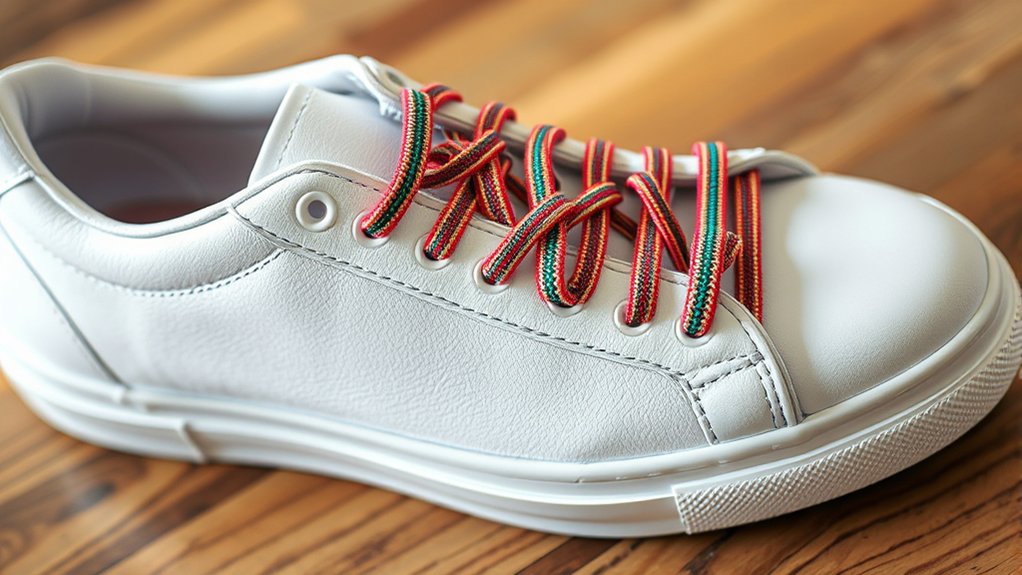
How To Lace A Shoe – Popular Lacing Techniques
To lace a shoe effectively, start with the classic criss-cross for secure, even tension. Use straight bar lacing to create a clean, symmetrical look, or try heel lock lacing to prevent heel slippage and improve ankle support.
Adjust fit with parallel, gap, or single helix lacing based on your foot shape or pressure points. For added style, explore decorative patterns that provide both function and visual appeal.
Explore these techniques further to optimize comfort and performance. It’s all about finding what feels right for you and your shoes!
Key Takeaways
- Start with the classic criss-cross method for a secure and comfortable fit by threading laces diagonally through eyelets.
- Use straight bar lacing for a clean look, hiding diagonal segments inside to evenly distribute tension.
- Apply heel lock lacing to prevent heel slippage and enhance ankle support during activity.
- Customize lacing patterns like parallel or gap lacing to relieve pressure and improve fit for specific foot shapes.
- Experiment with decorative lacing styles using contrasting colors and intricate patterns for visual appeal.
How to Lace Shoes Using the Classic Criss Cross Method
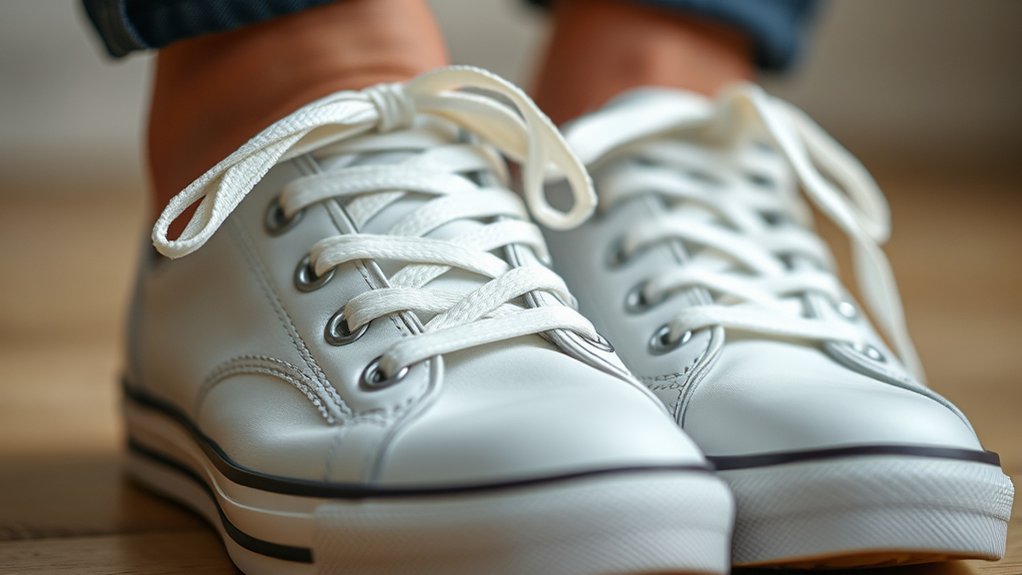
When you begin lacing shoes using the classic criss cross method, start by threading the lace through the bottom eyelets from underneath to establish a secure foundation.
Next, cross the laces diagonally, inserting each end into the eyelets directly above, creating a consistent crisscross pattern.
Cross the laces diagonally into the eyelets above for a neat, classic crisscross look.
As you go up, keep the tension even to make sure your shoes feel stable and comfortable. You can adjust the tightness to avoid any pressure points that might bother you.
Choosing the right lace materials, like durable cotton or synthetic blends, really makes a difference in how long your laces last and how they perform.
Also, using a color contrast between your laces and shoes can make the crisscross pattern stand out and look more stylish.
Finish off by tying a secure knot, like a bow, at the top to keep everything in place.
This method is practical but also lets you play around with the look, which is why so many people pick it for everyday wear.
Create a Clean Look With Straight Bar Lacing
Although it requires more attention to detail than the classic crisscross method, straight bar lacing offers a clean, symmetrical appearance by creating horizontal bars on the outside of the shoe with hidden diagonal segments inside. This technique distributes foot pressure evenly across the eyelets, reducing discomfort and preventing pressure points.
The minimalist aesthetic suits dress shoes and formal footwear, enhancing their sleek, tidy look. It might take a bit more time to get right, but the result is definitely worth the effort.
| Feature | Benefit |
|---|---|
| Horizontal outside bars | Clean, uniform appearance |
| Hidden diagonal inside | Even tension distribution |
| Minimalist aesthetic | Suitable for formal shoes |
Lock Your Heel in Place With Heel Lock Lacing
Straight bar lacing creates a sleek, uniform exterior, but it doesn’t address heel movement inside the shoe. To lock your heel in place, use heel lock lacing, which enhances ankle support and prevents slippage.
Start by threading each lace through the top eyelet on the same side, forming loops. Next, cross the laces diagonally and insert them into the opposite side’s loops.
Thread laces through the top eyelets to form loops, then cross and insert into opposite loops for a secure fit.
When you tighten these loops evenly, they pull your heel snugly into the shoe, securing it firmly.
This method reduces friction and the risk of blisters by minimizing heel movement. Heel lock lacing is especially effective for runners and hikers who need reliable ankle support and a stable fit during dynamic activities.
It’s a simple trick but makes a big difference.
Adjust Shoe Fit With Parallel, Gap, and Single Helix Lacing
To customize your shoe’s fit and relieve pressure points, you can use lacing techniques like parallel, gap, and single helix lacing.
Parallel lacing skips alternate eyelets, which reduces lacing pressure on the top of your foot. This helps enhance comfort, especially if you have wider foot shapes.
Gap lacing introduces a deliberate space in the pattern to alleviate tightness around sensitive areas such as the arch or instep. It adapts the fit to your foot shape’s unique contours.
Single helix lacing starts diagonally from the big toe eyelet to the opposite top eyelet. This lifts the toe box to relieve toe pain while still maintaining secure lacing pressure.
Choose the Best Lacing for Your Foot Shape and Common Problems
Mastering specific lacing techniques like parallel, gap, and single helix lacing sets the stage for selecting the best method tailored to your foot shape and common issues. Choosing the right lacing optimizes fit, reduces pain, and offers targeted problem solutions.
| Foot Shape | Recommended Lacing Technique |
|---|---|
| High Arches | Gap Lacing reduces arch pressure |
| Wide Forefeet | Parallel Lacing increases space |
| Narrow Heels | Heel Lock prevents slipping |
Fix Common Foot Problems With Specialized Lacing Techniques
Although foot problems can vary widely, applying specialized lacing techniques lets you target specific issues like heel slippage, arch pressure, or toe discomfort.
For instance, the heel lock lacing technique secures your heel, preventing slippage and reducing blister risk.
If you experience foot swelling, gap lacing creates extra space, which helps alleviate tightness.
To enhance arch support, use high arch-specific lacing patterns that relieve pressure points and improve comfort.
You can also adjust tension with parallel or diagonal lacing to reduce discomfort on the top of your foot or toes.
For toe pain or black toenails, techniques like the single helix add space in the toe box.
By customizing lacing this way, you improve stability, reduce foot fatigue, and better accommodate various foot conditions during activity.
It’s a simple change that can make a big difference!
Try Decorative and Artistic Lacing Styles
You can totally transform your shoes with creative lacing patterns like starburst or zig zag. These styles use specific crossovers and straight sections to create some really eye-catching designs.
They’re great because they add visual impact by creating symmetry and cool geometric shapes that really stand out. To get these effects just right, you’ll often need longer or specialized laces made for intricate looping and crossing.
Creative Pattern Ideas
How can you transform ordinary shoe lacing into a striking visual statement? By exploring creative pattern ideas like pentagram, starburst, and supernova, you introduce intricate crossover and straight sections that elevate pattern complexity. Employing color combinations—contrasting or multiple hues—further accentuates these designs, making each detail pop.
Patterns such as cascade and cyclone fence simulate flowing or chain-link effects, adding artistic flair. You can also draw inspiration from Escher’s optical illusions, like fish swimming in opposite directions, to create mesmerizing visual effects.
Keep in mind, these complex patterns often require longer laces and precise planning to execute correctly.
Visual Impact Techniques
Building on creative pattern ideas, visual impact techniques focus on how specific lacing arrangements and color choices transform your shoes into artistic expressions. By employing decorative and artistic lacing styles like pentagram, starburst, and supernova, you create intricate geometric shapes that serve as striking focal points.
Incorporating Escher-inspired patterns adds surreal optical illusions, which really boost the visual complexity. Techniques such as zig zag and cyclone fence introduce dynamic textures through alternating vertical and diagonal laces. These styles give your shoes a fresh, energetic vibe.
To maximize visual impact, use bi-color laces to emphasize pattern details and achieve strong color contrast. Maintaining symmetry balance is essential because it helps the design look harmonious and deliberate.
When you apply these methods, you can elevate your shoe lacing beyond just functionality into an intentional, eye-catching art form.
Troubleshoot Common Lacing Issues and Get the Best Fit
Although proper lacing techniques vary depending on foot shape and activity, troubleshooting common issues guarantees ideal fit and comfort. Consider your shoe material and use appropriate lacing tools to adjust tension precisely. For heel slipping, try the heel lock technique.
Wide feet benefit from parallel lacing or skipping midfoot eyelets. Tightness near the top? Loosen laces or switch to straight bar lacing. Adjust tension for high arches or narrow heels to optimize support.
Regularly check and re-tie laces during activity to maintain comfort.
| Issue | Solution | Benefit |
|---|---|---|
| Heel slipping | Heel lock lacing | Reduces blisters, secures heel |
| Wide feet | Parallel lacing | Increases comfort |
| Top tightness | Loosen or straight bar | Improves fit |
| High arches | Targeted tension | Enhances support |
| General comfort | Adjust laces regularly | Maintains fit throughout use |
Frequently Asked Questions
What Type of Lace Material Is Best for Athletic Shoes?
You’ll want synthetic lace material for athletic shoes because it offers superior durability, moisture resistance, and flexibility. These qualities keep your laces secure and comfortable during intense workouts or sports activities, enhancing overall performance.
Synthetic laces really hold up well. They don’t soak up sweat like cotton ones do, so they stay strong and don’t get soggy or heavy. Plus, they stretch just enough to stay snug without feeling tight or uncomfortable.
How Often Should I Replace My Shoelaces?
You should replace your shoelaces every 3-6 months, as 40% show wear by then. Staying updated with fashion trends means regularly revitalizing lace accessories to maintain both performance and style integrity in your footwear.
It’s a simple way to keep your shoes looking fresh and functioning well. Plus, swapping out old laces can give your kicks an instant style boost without much effort. So, keep an eye on them and change them up when needed!
Can Lacing Techniques Improve Shoe Durability?
Yes, you can improve shoe durability by optimizing shoe tension with specific lacing patterns. Proper tension reduces stress on materials, preventing wear. Certain patterns also distribute pressure evenly, which helps enhance overall shoe longevity and structural integrity.
It’s pretty interesting how a simple change in lacing can make a difference. When the tension is just right, your shoes don’t get stretched or strained in the wrong places. This means they last longer and stay comfortable too.
Are There Lacing Methods Suitable for Children’s Shoes?
Yes, you can choose lacing methods like elastic or quick-lace systems that prioritize children’s comfort and support playful designs.
These techniques simplify putting on shoes while maintaining a secure fit tailored to active kids’ needs.
They’re perfect for little ones who want to get their shoes on quickly without fuss. Plus, they keep things comfy and snug during playtime.
How Do I Clean and Maintain Shoelaces Effectively?
You should remove shoelaces, soak them in warm, soapy water, then air dry. Apply shoe polish to leather laces for shine. Regular cleaning prevents odor buildup, ensuring odor prevention and extending lace durability effectively.
It’s pretty simple, really. Just take them out and give them a good soak. Then let them air dry—no need to rush it.
For leather laces, a little shoe polish goes a long way to keep them looking sharp. Keeping your laces clean not only helps with odors but also makes them last longer.
Conclusion
Now that you’ve explored various lacing techniques, you’re equipped to optimize your shoe fit and comfort like a skilled artisan from a bygone era. Whether you prefer the classic criss cross or need a heel lock for extra stability, each method addresses specific foot needs.
Don’t hesitate to experiment and troubleshoot to find your perfect fit. With these precise techniques, you’ll step confidently, blending timeless craftsmanship with modern comfort.