Where Should Your Toe Be In A Shoe – Proper Fit Explained
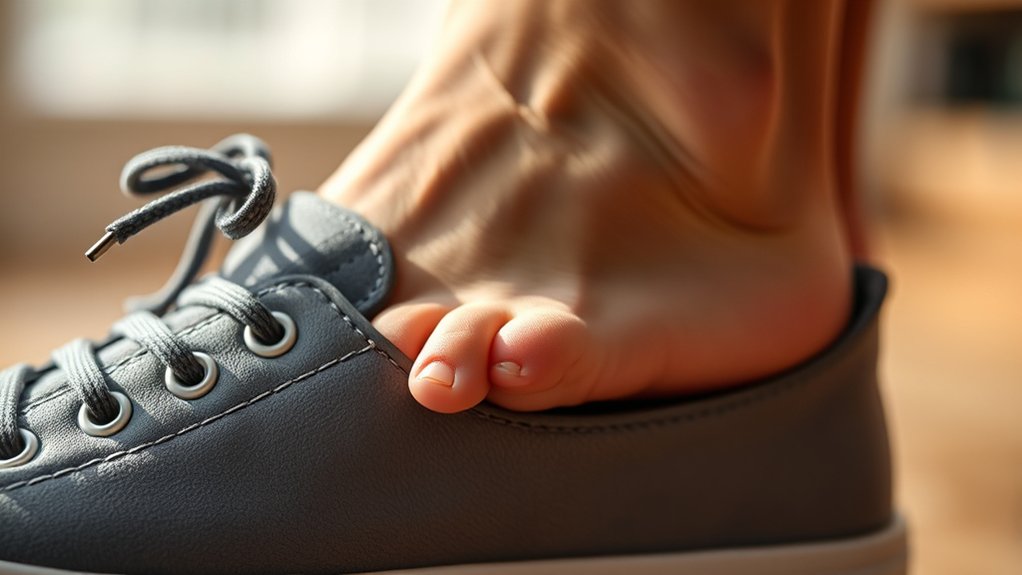
Your longest toe should have about 3/8 to 1/2 inch of space from the shoe’s front to allow natural movement and prevent pressure. Measure while standing, making sure both feet fit well since size labels don’t always guarantee proper toe space.
Shoes need a flexible toe box that matches your foot shape to avoid discomfort, blisters, or injury. Different activities might require varying toe room to support foot expansion and function.
Knowing these details really helps optimize fit and keep your feet healthy. It’s all about making sure your shoes feel good and work well for what you do.
Key Takeaways
- Leave about 3/8″ to 1/2″ (9-12 mm) of space from your longest toe to the shoe’s tip for comfort and natural movement.
- Toes should wiggle freely without pressing or pinching against the front of the shoe.
- Proper toe space supports natural toe splay and foot expansion during activity, reducing injury risk.
- Measure both feet standing naturally, as one foot may be larger, to ensure accurate shoe fit.
- Avoid shoes with narrow or tight toe boxes that cause discomfort, redness, or overlapping toes.
Why Proper Toe Room Matters for Foot Health
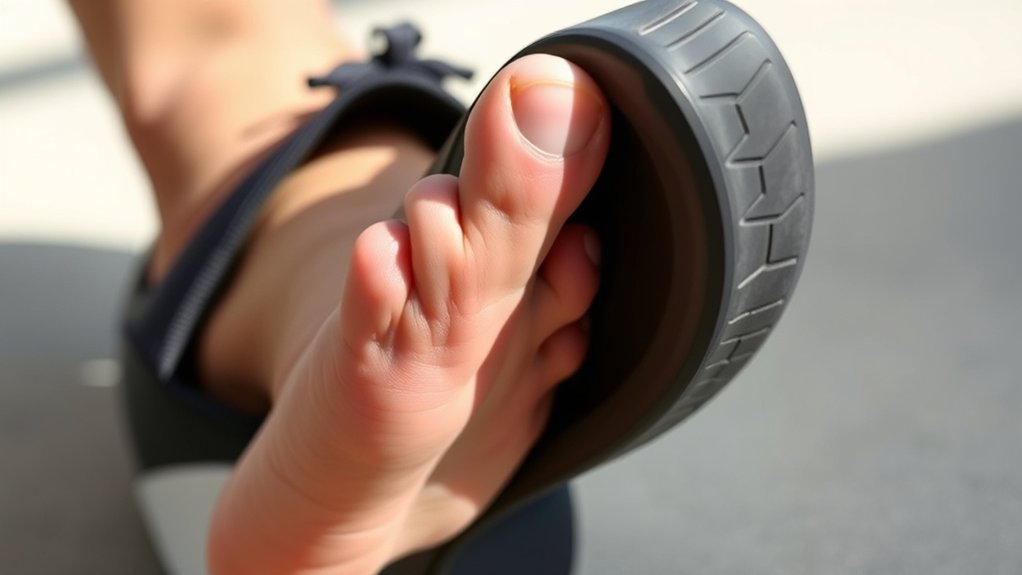
Although it may seem minor, ensuring proper toe room in your shoes plays a critical role in maintaining foot health. Proper toe space allows your toes to move naturally, preventing pressure that can cause blisters, bunions, or ingrown toenails.
You should leave about 3/8″ to 1/2″ of space from your longest toe, whether or not it’s your big toe, to the shoe tip. This space supports natural toe splay and expansion during walking or activity.
Keep in mind, shoe features like heel height and foot arch support affect overall fit but don’t substitute for adequate toe room. Shoes that are too tight restrict toe movement and cause discomfort, while excess space can lead to slipping and instability. That can compromise your foot’s biomechanical function.
How to Measure Your Toe Space Correctly
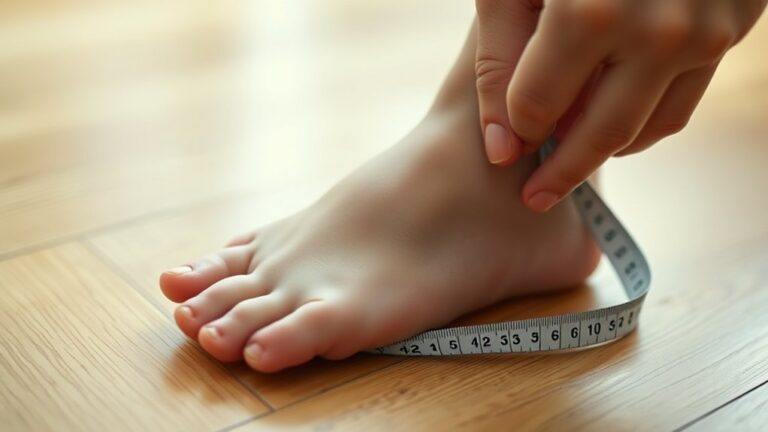
To measure your toe space correctly, start by standing naturally.
Then, take a ruler and measure the distance from your longest toe to the tip of the shoe.
You’ll want to leave about 3/8 to 1/2 inch (9-12 mm) of clearance.
This extra space ensures that your toes have enough room.
Think of it as giving your toes a little wiggle room to move and spread out comfortably.
The goal is to avoid anything that feels too tight or too loose.
With this simple step, you’ll make sure your shoes fit just right!
Measuring Toe Space
When measuring your toe space, start by identifying the longest toe on each foot, which may not always be the big toe. Use a ruler to measure from this toe’s tip to the shoe’s end, guaranteeing about 3/8 to 1/2 inch (9-12 mm) of clearance.
Measure both feet since one may be larger.
Proper toe space allows natural movement and splay without tightness. This is essential for comfort and foot health. Also, consider shoe materials, as some stretch while others remain rigid, which affects the fit.
Adequate arch support complements correct toe space by maintaining foot alignment and reducing pressure on toes. Always check toe room while standing or walking to confirm the shoe accommodates dynamic foot expansion. This helps prevent discomfort or pressure points.
Accurate measurement ensures an ideal fit and foot function. So take your time with it—you’ll thank yourself later!
Ideal Toe Clearance
How much space should you leave between your longest toe and the shoe’s end for ideal comfort? Aim for approximately 3/8 to 1/2 inch of clearance inside the toe box. This space allows natural toe movement, preventing pinching and pressure that cause discomfort.
Remember, your longest toe isn’t always the big toe, so measure all toes to identify it accurately. Proper toe clearance guarantees fit consistency across shoe types, reducing the risk of blisters, calluses, and long-term foot problems.
When trying on shoes, make sure they feel comfortable right away. There should be enough room for your toes to wiggle without hitting the shoe’s end. Keeping this precise toe box space is essential for both comfort and foot health during daily activities.
Signs Your Toes Are Too Cramped in Shoes
If your toes press uncomfortably against the front of your shoes or feel pinched, it’s a clear sign the fit is too tight. Excessive toe pressure reduces shoe comfort and can cause pain during walking or standing. When your toes feel squeezed or can’t move freely, your shoes lack adequate space. Ideally, there should be 3/8 to 1/2 inch beyond the longest toe.
Overly narrow shoes may force your toes to overlap, turn red, or develop blisters. These are all signs your toes are cramped.
Prolonged toe pressure can lead to issues like bunions, corns, or ingrown toenails. These problems come from persistent compression.
Recognizing these signs early helps you pick footwear that keeps your toes aligned and comfortable. This way, you prevent long-term foot problems and keep your feet happy.
Why Shoe Size Numbers Can Mislead on Toe Room
You can’t just depend on shoe size numbers alone because they differ from brand to brand and don’t always show how much room your toes actually have.
It’s really about checking the shape and width of the toe box, not just the length.
Also, make sure to measure both of your feet since they can be different sizes, which will impact how the shoe fits your toes.
Shoe Size Variability
Although shoe size numbers provide a general reference, they often mislead you when determining proper toe room because sizes vary markedly across brands and styles. One size increment corresponds roughly to 1/3 inch in length, which doesn’t guarantee consistent internal dimensions.
Brand differences markedly affect the toe box shape, width, and internal length, all essential for toe comfort. The shoe aesthetics prioritized by manufacturers can influence these design elements, causing variability even among shoes labeled the same size.
You can’t rely solely on numerical size to guarantee a proper fit; instead, assess the actual space in the toe box. Understanding shoe size variability helps you avoid the pitfalls of choosing shoes that are too tight or too loose, improving overall foot health and comfort.
Importance Of Fit
How accurately does a shoe size number represent the space your toes need? Not very, since sizing varies widely across brands and styles. This makes size numbers unreliable indicators of toe room.
Proper fit depends on leaving about 3/8″ to 1/2″ of space from your longest toe to the shoe’s tip, regardless of the labeled size. Shoes with the same size number often differ in toe box shape and width. This affects both comfort and foot health.
Relying on shoe size alone can lead to tightness or looseness, causing discomfort or even injury. While shoe aesthetics and brand reputation might influence your choice, it’s better to prioritize actual fit and toe space.
This way, you guarantee maximum comfort and prevent foot problems. In the end, accurate fit beats size labels every time when it comes to healthy, well-fitted footwear.
Measuring Both Feet
Since foot size can vary between your left and right foot, measuring both is essential to guarantee proper shoe fit. Shoe size numbers often mislead because they don’t account for differences in toe room across brands or styles.
Even if a shoe color or brand reputation attracts you, rely on precise measurements instead of size labels. Fit the shoe to your larger foot to ensure proper toe space, measuring from your longest toe to the shoe’s tip.
Use this table to compare key factors affecting fit:
| Factor | Description | Impact on Toe Room |
|---|---|---|
| Foot Length | Measure both feet | Fit to larger foot for comfort |
| Shoe Size Number | Standardized but variable | Misleading due to brand variation |
| Toe Length | Longest toe measurement | Determines actual toe space |
| Brand Reputation | Consistency in sizing | May reduce sizing surprises |
| Shoe Color | No impact on fit, purely aesthetic | Should not influence size choice |
How to Match Your Toe Box to Your Foot Shape
When selecting shoes, you need to guarantee the toe box matches the shape of your foot to provide adequate comfort and support. Assess your foot’s width and toe shape, whether tapered, square, or wide, to find custom shoe shapes that align well.
Remember, the longest toe may not be your big toe, so measure carefully to ensure the toe box accommodates it with 3/8 to 1/2 inch of space for natural movement. A toe box that’s too narrow or improperly shaped causes pinching and discomfort, affecting foot arch alignment and leading to issues like bunions.
Matching the toe box precisely to your foot shape promotes healthy toe splay and long-term foot health. Make sure your shoes support both comfort and biomechanical function.
How Different Activities Change How Much Toe Space You Need
Although your feet may feel comfortable in certain shoes during everyday use, different activities demand varying amounts of toe space to accommodate foot expansion and movement.
For example, running requires more room due to foot expansion, which can increase by up to half an inch during high-impact exercise. This additional toe space guarantees an activity-specific fit that prevents discomfort and injury.
In contrast, sports and dancing need a snugger fit with adequate toe room to support dynamic movements and reduce injury risks. Proper toe space allows natural toe splay and accommodates swelling, minimizing blisters and pressure points.
Understanding how foot expansion varies with activity helps you select shoes that provide the correct toe room. That way, you get better comfort and foot health during whatever physical demands you’re facing.
It’s all about matching your shoes to your activity, so your feet feel great no matter what you’re doing.
Tips for Checking Toe Room When Trying Shoes
Understanding how different activities affect your toe space needs helps you focus on verifying proper fit when trying on shoes.
First, make sure there’s about 3/8 to 1/2 inch of space from your longest toe, which may not be your big toe, to the shoe’s end.
Ensure 3/8 to 1/2 inch space from your longest toe to the shoe’s tip for proper fit.
Take a close look at the shoe material for flexibility. Rigid materials can restrict natural toe movement, so keep that in mind.
Stand and walk around to check that your toes don’t press or pinch, since that means there isn’t enough room.
Also, don’t forget to assess arch support. Proper support influences overall fit and foot alignment, which in turn affects toe comfort.
Avoid shoes that feel tight at the front. Your toes should move freely without hitting the shoe’s end during activity.
This approach helps reduce discomfort and lowers the risk of injury.
It’s all about promoting ideal foot health and comfort while wearing your shoes.
Frequently Asked Questions
Can Toe Socks Improve Comfort in Tight Shoes?
Yes, toe sock benefits include enhancing tight shoe comfort by reducing friction and pinching. They promote natural toe separation, prevent blisters, and provide cushioning. This helps you wear tight shoes more comfortably and maintain better foot alignment throughout the day.
How Does Toe Room Affect Balance and Posture?
Imagine standing on a narrow ledge. Without proper toe alignment, your balance falters.
When you guarantee adequate toe room, you enhance foot stability. This promotes better posture and reduces strain on your ankles and knees during movement.
It’s a simple adjustment that can make a big difference in how you feel and move throughout the day.
Are There Specific Materials Better for Toe Box Flexibility?
Toe box materials like mesh, knit, and soft leather offer superior shoe flexibility, allowing natural toe splay and movement.
In contrast, rigid leather or plastic reduce flexibility. This can increase discomfort and restrict toe function during wear.
Can Orthotics Change the Required Toe Space in Shoes?
About 60% of people using orthotics find their foot arch support alters shoe width needs. You’ll likely need adjusted toe space to accommodate orthotics, ensuring proper alignment without compromising comfort or crowding your toes.
It’s pretty common to have to rethink the space in your shoes when you add orthotics. This way, your feet stay comfy and everything fits just right. So, don’t be surprised if you need a little extra room up front!
How Often Should I Replace Shoes to Maintain Proper Toe Fit?
You should replace shoes every 300 to 500 miles to maintain proper toe fit, considering shoe durability and footwear warranties.
Regular replacement prevents toe crowding and guarantees ideal support. This helps preserve both comfort and foot health effectively.
Conclusion
You might think a snug fit means better support, but cramped toes can lead to serious foot issues. Proper toe room isn’t just about comfort. It’s essential for circulation, balance, and preventing deformities.
Always measure your toe space accurately and think about how active you’ll be in those shoes. Remember, shoe size alone doesn’t guarantee the right fit.
Prioritizing correct toe placement protects your foot health and helps you move better. It really shows that getting the fit just right matters.