What Size Shoe Does A 7 Month Old Wear – Baby Shoe Size Guide
At 7 months old, your baby typically wears US shoe sizes between 2 and 3, fitting foot lengths from about 3.75 to 4.25 inches. To guarantee a proper fit, measure your baby’s feet in the late afternoon while they stand, leaving roughly half an inch of room for growth.
Look for shoes with a wide toe box and non-slip soles to support healthy foot development. Keep checking sizes regularly as your little one grows. It’s always a good idea to stay on top of their shoe size changes.
Learn how to measure and choose the best shoes next. This way, you’ll make sure your baby’s feet stay comfy and healthy as they explore the world.
Key Takeaways
- A 7-month-old baby typically wears US shoe sizes 2 to 3, fitting foot lengths between 3.75 and 4.25 inches.
- Measure baby’s foot in the late afternoon with heel against a wall for the most accurate length.
- Leave about half an inch (1 cm) of extra space in the shoe to accommodate foot growth.
- Use printed size guides or trace feet barefoot on a hard surface to determine the correct shoe size.
- Choose flexible, breathable shoes with a wide toe box and non-slip soles to support healthy foot development.
What Shoe Size Does a 7-Month-Old Baby Usually Wear?
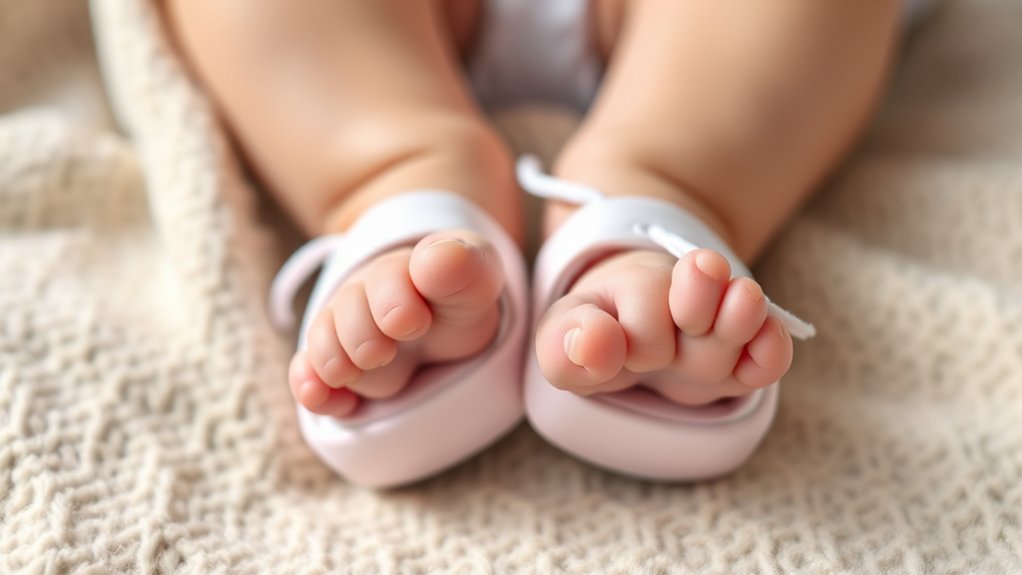
At 7 months old, your baby will likely wear shoe sizes ranging from 2.5 to 4 US, depending on their foot length. Most babies at this age have feet measuring about 3.5 to 4 inches, so sizes 3 or 3.5 are common.
At 7 months, babies typically wear US shoe sizes 2.5 to 4, with 3 or 3.5 being most common.
It’s important to choose shoes that provide roughly half an inch of extra space for growth, ensuring comfort and healthy foot development.
When considering fashion trends, you’ll find many options designed with breathable, flexible shoe materials that support your baby’s delicate feet. Prioritize soft, non-toxic fabrics and lightweight soles to promote natural movement.
Since shoe sizes can vary, staying attentive to your baby’s foot length helps you select the right fit, combining style with proper support.
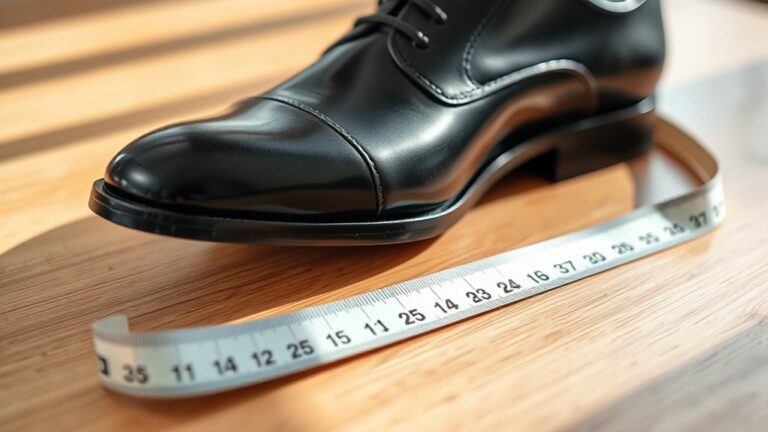
How to Measure Your 7-Month-Old’s Feet Accurately at Home
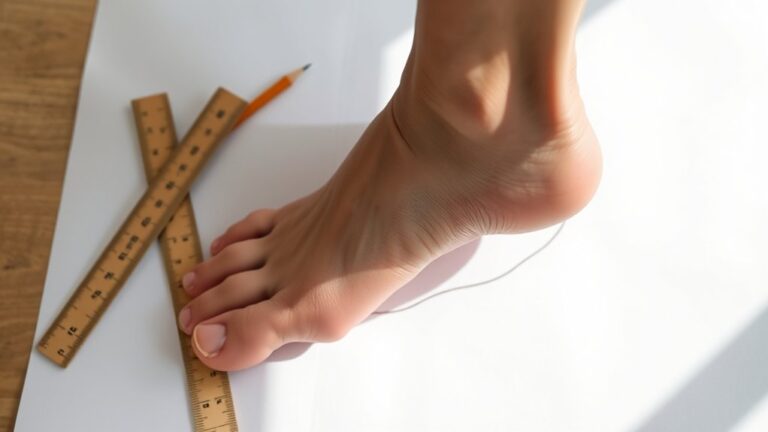
To measure your 7-month-old’s feet accurately, start by tracing their foot while they stand barefoot and evenly weight-bearing. This helps you get the exact length.
Then, to make sure the shoes fit well, wrap a soft tape around the widest part of the foot to check the circumference.
Measuring Foot Length
How can you guarantee your 7-month-old’s shoes fit perfectly? Start by measuring their foot length accurately at home.
Have your baby stand barefoot on a piece of paper with their heel flush against a wall.
Mark the tip of the longest toe and the bottom of the heel using a pen.
Then, measure the distance between these marks with a ruler in centimeters or inches.
Measure both feet and use the larger size to ensure comfort.
Remember, shoe material and heel height also impact fit, so choose shoes with soft, flexible materials and minimal heel height to support natural foot development.
Repeat this measurement every two months to keep up with your baby’s rapid growth and maintain proper shoe fit.
Checking Foot Circumference
Why does measuring your baby’s foot circumference matter as much as length? Because a proper fit depends on both dimensions, especially considering sock thickness and shoe materials.
To measure accurately, wrap a flexible tape or string around the widest part of your 7-month-old’s foot, just behind the toes. Make sure their foot is flat and relaxed. It’s best to do this in the late afternoon when feet may swell slightly.
Measure both feet and use the larger circumference for sizing. This helps ensure the shoes or socks won’t be too tight on either foot.
| Step | Method | Tip |
|---|---|---|
| Position | Sitting or lying down | Keep foot flat and relaxed |
| Measurement Tool | Flexible tape or string | Use ruler afterward for accuracy |
| Timing | Late afternoon | Feet slightly swollen for fit |
| Both Feet Measured | Yes | Use larger measurement for sizing |
How to Use Printable Size Guides and Foot Tracing for Baby Shoes
When you download and print the baby shoe size guide at 100% scale, make sure to double-check its accuracy by placing a credit card on the page. Cut out the length and width rulers along the dotted lines so you can measure your baby’s feet just right.
Have your baby stand barefoot on a hard surface, then carefully trace each foot. Make sure their foot is flat and fully extended.
Measure the foot length from heel to big toe. For the circumference, wrap a ribbon around the widest part of the foot.
Write down these measurements and compare them with the size guide to find the perfect shoe size.
Remember, the material and color of the shoes also affect comfort and style.
Understanding Baby Shoe Size Charts by Age and Foot Length
When you’re picking out shoes for your baby, you’ll often come across size charts that connect age ranges to foot lengths, measured in inches or centimeters.
For instance, a 7-month-old usually wears US sizes 2 to 3, which corresponds to foot lengths between 3.75 and 4.25 inches.
It’s helpful to use these measurements along with age-based guidelines.
This way, you can find the right fit that supports your baby’s foot development and keeps their little feet comfortable.
Age-Based Size Reference
One of the most effective ways to choose the right baby shoe size is by using age-based size references, which correlate your baby’s foot length with typical age ranges. For a 7-month-old, this usually means selecting shoes sized between 2 and 3 in US infant sizing, corresponding to foot lengths of 4.7 to 5.1 inches (12 to 13 cm).
These references account for rapid growth, helping you pick shoes that fit comfortably without restricting movement or development.
When selecting shoes, consider shoe material, as soft, breathable fabrics support healthy feet better than stiff options.
Also, factor in color preferences to match your baby’s style while ensuring the shoe’s design doesn’t compromise fit.
Using age-based charts simplifies your choice, balancing comfort, growth, and aesthetics effectively.
Foot Length Measurements
Besides age-based references, measuring your baby’s foot length offers a more personalized approach to selecting the right shoe size.
For a 7-month-old, foot length typically ranges between 4.4 and 4.8 inches (11.2 to 12.2 cm), which corresponds roughly to US sizes 2 or 3. Using a reliable baby shoe size chart, you can match these measurements accurately, ensuring a proper fit.
Regularly measuring your baby’s foot is essential, as their feet grow quickly during the first year.
When choosing shoes, consider not only fit but also shoe materials that support comfort and flexibility. Staying updated with current fashion trends can help you find stylish options without compromising on quality.
Accurate foot length measurement helps you select the best size, promoting healthy foot development.
It really makes a difference in keeping your baby comfortable and happy as they grow. So, keep those measurements handy!
When and How Often Should You Measure Your Baby’s Feet?
Because babies’ feet grow rapidly, you should measure them every two months to make certain their shoes fit properly. Regular measurements help you keep up with your baby’s milestones and confirm their footwear supports indoor activities comfortably.
For the most accurate size, measure your baby’s feet in the late afternoon when they’re slightly swollen. Have your baby stand upright during measurement to capture true length and circumference. Use a reliable measuring tool, like a foot tracing or a printable size guide, for precision.
Beyond scheduled checks, watch for signs of ill-fitting shoes. Red marks or cramped toes signal it’s time to re-measure. Staying attentive to these factors guarantees your baby’s shoes always fit well, promoting healthy foot development and comfort during every stage.
How to Choose Shoes That Support Your Baby’s Growing Feet
When selecting shoes for your baby, prioritize soft, flexible materials that support natural foot movement and growth. Choose shoe material that bends easily and breathes well to keep tiny feet comfortable. Avoid stiff shoes or heavy shoe decoration that can restrict movement or irritate sensitive skin.
Make sure the shoes have a wide toe box and a non-slip sole for stability during early steps. Regularly measure your baby’s feet to pick the right size with about a half-inch of extra space for growth.
| Feature | Why It Matters | What To Look For |
|---|---|---|
| Shoe Material | Flexibility & breathability | Soft leather or fabric |
| Toe Box | Allows toe movement | Wide and roomy |
| Sole | Prevents slipping | Non-slip rubber or textured |
Tips for Buying and Checking the Fit of Shoes for 7-Month-Olds
Although your 7-month-old may not be walking yet, buying shoes that fit well is essential for comfort and healthy foot development.
Even before walking, well-fitting shoes are vital for your 7-month-old’s comfort and foot health.
Measure their feet in the late afternoon when swelling peaks, making certain they stand with full weight for accurate length and width.
Leave about 1 centimeter of space at the toe to accommodate growth and movement.
Check that the shoes don’t squeeze or leave red marks and that toes can wiggle freely.
Choose shoe material that’s breathable and flexible to support developing feet.
While it’s tempting to follow fashion trends, prioritize fit and comfort over style.
Remember to re-measure every two months, as your baby’s feet grow quickly.
This approach ensures your baby stays comfortable and supported as they begin exploring.
It’s all about keeping those little feet happy and healthy!
Frequently Asked Questions
Can 7-Month-Old Babies Wear Socks With Shoes?
Yes, you can dress your 7-month-old in socks with shoes for baby shoe safety. Choosing thin, breathable socks balances sock vs shoe comfort, preventing tightness while protecting feet from blisters and keeping them dry and cozy.
It’s all about finding the right fit. You want the socks to be snug enough to stay on but not so tight that they squeeze little toes. And breathable fabric helps keep those tiny feet comfortable all day long.
Are There Specific Shoe Brands Recommended for 7-Month-Olds?
Like choosing the right tool for a masterpiece, you’ll want Stride Rite or Robeez for your baby. Their shoe material excels in flexibility and breathability. Brand comparisons show they prioritize foot health and safety for 7-month-olds.
Both brands really focus on making sure little feet are comfortable and supported. It’s kind of like giving your baby the perfect start for walking adventures. You can trust these shoes to keep those tiny toes happy and healthy.
How Do Weather Conditions Affect Shoe Choice for Babies?
You’ll choose seasonal footwear based on weather preparedness, opting for insulated, waterproof shoes in cold or rainy conditions.
And when it’s hot out, you’ll want lightweight, breathable shoes instead. This way, your baby’s feet stay comfortable, dry, and safe all year round.
Can Shoes Help Babies Learn to Walk Better?
Shoes with soft, sturdy material and a proper fit support stability, strengthening your baby’s steps. They help you build healthy habits that enhance balance and boost confidence.
As your baby learns to walk, these shoes make the process easier and more efficient. It’s all about giving them the right support to move comfortably and safely.
Should I Buy Shoes in Advance for Growth Spurts?
You should buy shoes in advance by half a size to accommodate growth spurts. Choose flexible shoe material for comfort, and regularly track your baby’s foot size to guarantee shoes fit properly and support healthy development.
It’s a good idea to keep an eye on how fast your little one’s feet are growing. That way, you can be ready with the right size when they need new shoes. Just remember, comfort and fit are key to healthy foot growth.
Conclusion
So, you’ve mastered the art of measuring your 7-month-old’s feet without turning it into a wrestling match. Congratulations! Remember, those tiny toes grow faster than you can say “baby shoe sale,” so keep measuring often.
Use printable guides like a pro, and pick shoes that actually support those wobbly steps. Because nothing says “parenting success” like perfectly fitted shoes and avoiding the dreaded “Oops, too small!” tantrum.
You’ve got this!