What Is A D Width Shoe – Width Meaning Explained
A D width shoe means a standard, medium fit for men and a wider fit for women, balancing comfort and support. It’s ideal if your feet feel neither too tight nor overly loose across the widest part.
Proper fit prevents foot problems, improves alignment, and aids circulation. If you experience discomfort or notice pressure points, measuring your foot width can confirm if D width suits you.
Understanding these details helps you pick the right shoe for lasting comfort and health. It’s all about finding what works best for your feet so you can stay comfortable all day long.
Key Takeaways
- D width is a standard or medium shoe width for men and a wide fit for women, accommodating average to broader feet.
- Proper shoe width, like D, ensures foot health by preventing blisters, bunions, and improving alignment and comfort.
- D width offers more room than narrow widths but less than wide options, ideal for most men with average foot width.
- Measure foot width in the late afternoon using a tape and tracing method to determine if D width shoes are suitable.
- D width shoes come in various styles and brands, balancing comfort, support, and fashion for everyday and athletic wear.
Understanding D Width in Men’s and Women’s Shoes
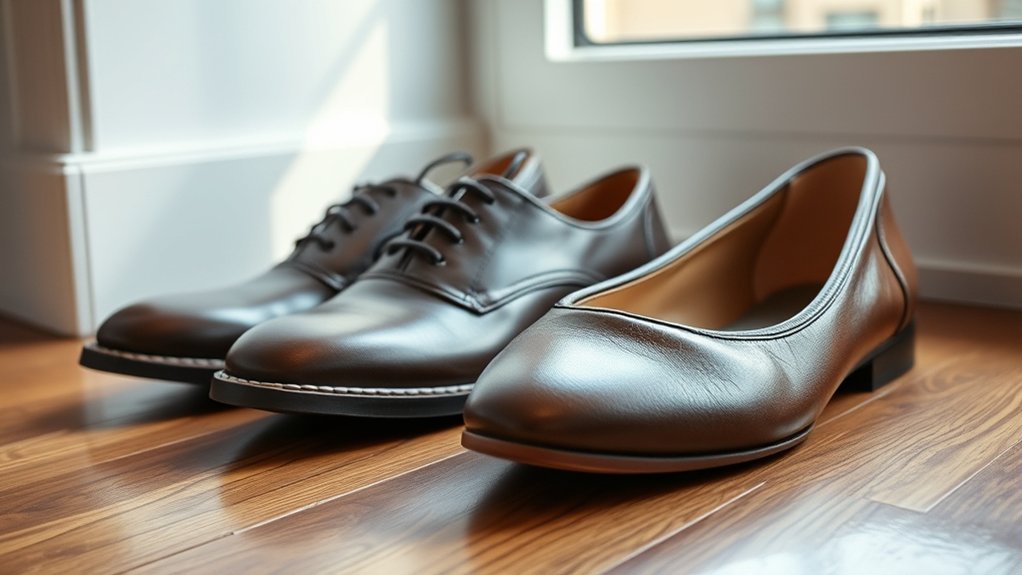
While D width is the standard fit for men’s shoes, indicating a medium width suitable for average foot shapes, it represents a wider fit in women’s footwear. This provides extra room across the forefoot for those with broader feet.
D width is standard for men but offers a roomier fit for women with broader feet.
When selecting shoe material, you should consider that some fabrics and leathers stretch more, affecting the fit of D width shoes differently in men’s and women’s models.
Fashion trends often dictate the prevalence of certain widths. For example, slimmer profiles dominate women’s styles, making D width essential for comfort without sacrificing style.
Remember, the D width label corresponds to different actual foot measurements between genders due to varying sizing standards.
Understanding these distinctions helps you choose shoes that balance comfort, fit, and current fashion demands effectively. So, keeping these differences in mind can make a big difference when picking out your next pair of shoes.
Why Getting the Right Shoe Width Matters
Getting the right shoe width is really important because it helps keep your feet properly aligned and reduces those annoying pressure points that can lead to pain or blisters.
When you wear a D width shoe—if that’s the right fit for you—it can actually help prevent common problems like bunions and calluses.
Plus, making sure your shoes fit well in width not only boosts comfort but also protects your foot health throughout your daily activities.
Foot Health Benefits
Why does wearing the correct shoe width, such as a D width for men, matter for your foot health? Proper shoe manufacturing considers foot anatomy to guarantee shoes align with your foot’s natural shape.
Wearing D width shoes that fit accurately prevents blisters, bunions, calluses, and corns caused by improper fit.
They support correct foot alignment, reducing strain on muscles and joints, which lowers the risk of chronic foot pain and deformities.
Additionally, well-fitted shoes promote better circulation and minimize pressure points, preventing numbness and discomfort during prolonged use.
Choosing the right width enhances biomechanics, improves stability, and reduces fatigue.
Ultimately, this contributes to long-term foot health. Prioritizing the correct shoe width is essential to maintain foot integrity and prevent structural issues.
Preventing Fit Issues
Because wearing the correct shoe width, such as a D width, directly influences comfort and foot health, choosing the right fit is essential to preventing common issues like blisters, pressure points, and discomfort caused by shoes that are either too narrow or too wide.
When selecting shoes, consider shoe material, as flexible or breathable fabrics can adapt better to your foot shape, reducing friction and fit problems.
Ensuring the correct width prevents heel slippage, toe crowding, and calluses by supporting your foot’s natural structure.
Additionally, opting for D width shoes available in multiple color options allows you to maintain both proper fit and style without compromising foot health.
Proper width choice mitigates risks of deformities, joint pain, and fatigue during daily wear.
How D Width Stacks Up Against Other Shoe Widths
Although shoe widths vary widely, the D width occupies a central position in the sizing spectrum. In a shoe width comparison, D represents the standard or medium width for men and a wide fit for women.
It offers more room across the forefoot and toe box than narrower widths like AA or B, enhancing fit and comfort for those with average or slightly wider feet.
Conversely, D provides less volume than wider widths such as E or EE, making it unsuitable for very broad feet.
For most men, D is the default width, balancing snugness and spaciousness effectively.
Understanding how D width stacks up helps you choose footwear that ideally matches your foot’s dimensions, ensuring both fit and comfort.
Signs You Need a D Width Shoe
If your shoes consistently feel tight across the widest part of your foot, it’s a clear indication you might need a D width shoe. This narrower fit often causes discomfort, pinching, or redness, signaling a need for more room. Shoe manufacturing and evolving fashion trends sometimes prioritize slim silhouettes, but proper width remains essential for comfort.
Heel slipping, toe overlap, or gaps at shoe sides also point to an improper fit that D width shoes can correct. Paying attention to these signs can really improve how your shoes feel throughout the day.
| Symptom | What It Means |
|---|---|
| Tightness | Foot needs wider fit |
| Heel slipping | Shoe too narrow |
| Redness/Blisters | Pressure points from narrow shoe |
| Toe overlap | Insufficient toe space |
| Pain after wear | Need for better width support |
Measuring Foot Width to Find Your D Width
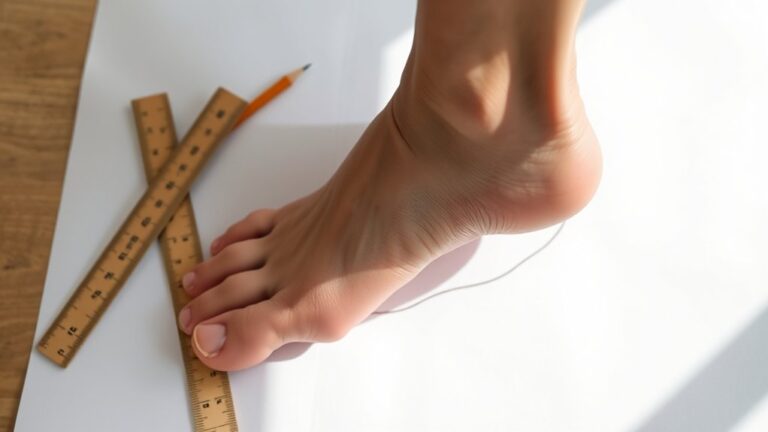
To measure your foot width accurately, start by standing on a piece of paper. Then, trace the widest part of your foot. Use a ruler or tape measure to find the exact distance.
It’s a good idea to do this for both feet since they mightn’t be the same size.
Usually, your feet are largest in the late afternoon, so try to measure them then. Once you have both measurements, use the bigger one to get the most accurate result.
Knowing these measurements makes it easier to figure out if a D width shoe will fit you well, especially when you check standardized sizing charts.
How To Measure
When measuring your foot width to find your D width, start by standing on a piece of paper and tracing the outline of the widest part of your foot, usually at the ball. Make sure your foot is relaxed and bearing full weight so you get an accurate shape.
Next, use a ruler or measuring tape to record the distance between the two furthest points on the traced outline. It’s a good idea to measure both feet since slight differences are common. Use the larger measurement to determine your width.
For best results, try to measure in the late afternoon or evening when your feet tend to swell a bit. Accurate foot width measurement is really important in shoe manufacturing to accommodate different foot shapes.
This helps balance comfort with fashion trends that often favor certain widths for style and fit.
Tools Needed
Accurate foot width measurement starts with having the right tools on hand. For precise results, you’ll need a flexible measuring tape, a piece of paper, and a pen or pencil. These tools help you trace and measure the widest part of your foot, the ball area, ensuring measurements align with shoe manufacturing standards and current fashion trends.
Stand on the paper with even weight distribution. Then, trace your foot and use the tape to measure between the widest points.
| Tool | Purpose | Tips |
|---|---|---|
| Flexible tape | Measures foot width | Use millimeters for precision |
| Paper | Surface for tracing foot | Place on flat, hard ground |
| Pen/Pencil | Mark foot outline | Trace firmly without lifting pen |
These tools guarantee accuracy for determining your D width shoe size. It’s really that simple!
Interpreting Measurements
Three key steps help you interpret your foot width measurements to identify if you fit a D width shoe.
First, measure both feet by standing on paper and marking the widest points across the ball of each foot. Use a flexible tape or ruler to measure the distance between these marks in inches or millimeters.
Second, take measurements in the late afternoon when your feet naturally swell, confirming accuracy aligned with shoe manufacturing standards.
Third, use the larger measurement to select your shoe width, guaranteeing comfort.
Understanding these measurements is vital, especially as fashion trends increasingly emphasize both fit and style. Accurate width measurement helps you navigate the often confusing sizing systems and ensures your D width shoe supports your foot’s true dimensions.
When to Consider Wide or Extra Wide Shoes
If you find your feet feeling cramped or experience pressure in the toes or sides while wearing standard D-width shoes, it’s time to think about wide or extra wide options. Shoe material flexibility and evolving fashion trends often influence fit, but don’t compromise comfort.
Wide shoes accommodate slipping heels, gaps, swelling, deformities, or orthotics, preventing blisters and calluses.
| Condition | Recommended Action |
|---|---|
| Cramped toes or side pressure | Choose wide or extra wide shoes |
| Slipping heels or gaps | Opt for wider fit |
| Severe swelling or deformities | Use extra wide shoes |
| Persistent discomfort or calluses | Consult specialist for sizing |
Measure foot width precisely and consult experts to ensure ideal foot health and shoe fit.
Top Shoe Styles Offered in D Width for Men and Women
Understanding when to choose wide or extra wide shoes naturally leads to checking out the range of options within the D width category. This width serves as a standard fit for men and a wide fit for women.
D width shoes come in various styles, including casual sneakers, dress shoes, loafers, and athletic footwear. These options keep up with current fashion trends while fitting different foot shapes comfortably.
Brands like Clarks, Ecco, and New Balance focus on materials that boost comfort and durability in their D width lines.
Plus, orthopedic and comfort-focused brands such as Dr. Comfort and Orthofeet offer D width shoes designed for reliable fit and support.
This versatility means you can find suitable footwear across formal, casual, and sports categories without giving up style or function. It’s all about finding the right shoe that feels good and looks great.
Frequently Asked Questions
Can D Width Shoes Help With Specific Foot Conditions?
Yes, D width shoes improve arch support and foot stability, helping you manage conditions like flat feet and overpronation. They offer extra room, reducing pressure and irritation for swollen feet or deformities, enhancing overall comfort.
Basically, they give your feet some breathing space. This makes a big difference if you’re dealing with discomfort or pain. So, if you need a little extra width, D width shoes might just be the way to go.
Are D Width Shoes Pricier Than Standard Widths?
You won’t find D width shoes costing an arm and a leg; shoe manufacturing keeps prices close to standard widths. Fashion trends rarely drive up costs, so you can expect similar pricing across widths in most brands.
Honestly, the price difference is usually pretty minimal. So, if you need a wider shoe, you don’t have to worry about breaking the bank. It’s pretty much a level playing field when it comes to cost.
Do D Width Shoes Affect Shoe Size Selection?
Yes, D width shoes can affect shoe fitting since their wider forefoot influences foot comfort. You might need to size up or down to accommodate your foot’s shape, ensuring proper fit and preventing discomfort or slipping.
It really depends on how your feet spread out in the shoe. So, don’t be surprised if you have to try a couple of sizes to find the perfect match. Comfort is key, after all.
Can I Convert Narrow Shoes to D Width With Insoles?
You can’t truly convert narrow shoes to D width with insoles alone, as shoe fitting depends on structural width comparison.
Insoles may help comfort but won’t change the shoe’s original width designation or long-term fit. So, while they might make your feet feel a bit better inside the shoe, they won’t actually make the shoe wider.
If you need a wider fit, it’s usually better to look for shoes designed with that width in mind.
Are D Width Shoes Available for Children?
Yes, children’s footwear often includes D width options. When choosing, use shoe fitting tips like measuring the forefoot width accurately to guarantee comfort and proper support.
This is especially important for kids with wider or growing feet. Taking the time to get the right fit can make a big difference in how they feel throughout the day. So, don’t hesitate to check for wider sizes when shopping.
Conclusion
Now that you understand what a D width shoe means, imagine slipping into a pair that perfectly hugs your foot’s natural shape. It’s not too tight, and not too loose.
Getting the right width guarantees comfort and support with every step. Whether you’re walking city streets or standing at work, it makes a big difference.
Measuring your foot width accurately is key. This way, you can confidently choose shoes that fit your unique profile and avoid discomfort or injury down the road.