What Was The First Nike Running Shoe? – History And Origins
You’ll find that Nike’s first true running shoe was the Pegasus, launched in 1982 to provide stability and cushioning with innovations like a heel Air wedge and lightweight EVA foam. This design built on Bill Bowerman’s earlier experimental shoes, including the 1969 Moon Shoe with its distinctive waffle sole.
The Pegasus set a new standard for performance footwear, shaping running culture and Nike’s identity. Exploring its origin reveals how those early innovations transformed athletic shoes forever.
Key Takeaways
- Nike’s first dedicated running shoe was the Pegasus, launched in 1982, focusing on stability, cushioning, and lightweight design.
- Before Nike’s rebranding, Bill Bowerman innovated running shoes, improving performance and comfort with prototypes like the Onitsuka Corsair.
- The 1972 Nike Cortez, while not the first running shoe, revolutionized running with its cushioning and traction, boosting Nike’s early market presence.
- Bowerman’s 1969 Moon Shoe introduced the waffle-pattern outsole, pioneering traction technology that influenced future Nike running shoes.
- Nike’s early running shoes played a crucial role in popularizing jogging and shaping the fitness culture in America.
How Nike and Blue Ribbon Sports Got Their Start
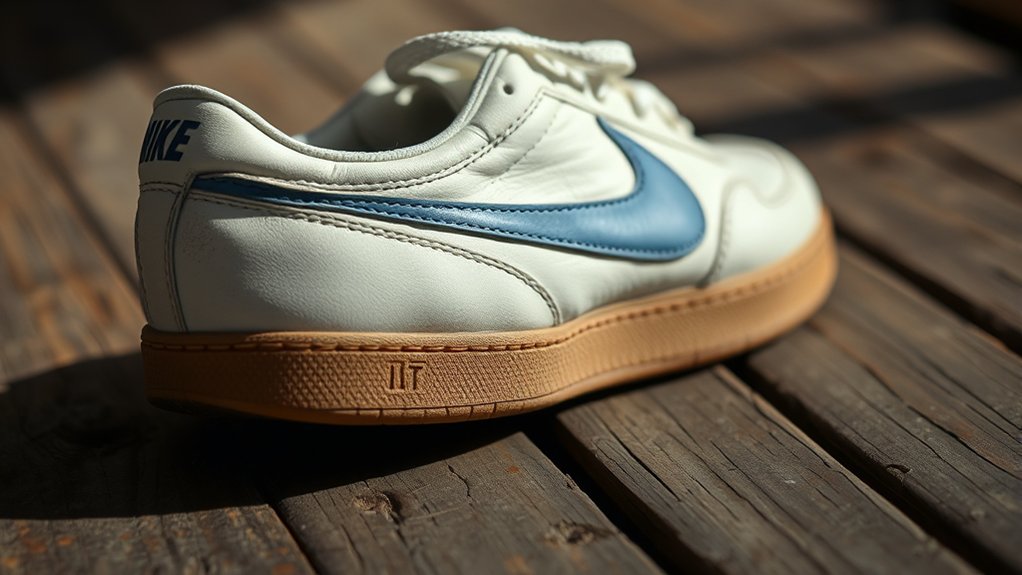
Although many know Nike as a global athletic brand today, it actually began in 1964 as Blue Ribbon Sports, founded by Phil Knight and Bill Bowerman in Eugene, Oregon. Initially, the company focused on shoe manufacturing through importing and distributing Onitsuka Tiger sneakers on the U.S. West Coast.
Nike started in 1964 as Blue Ribbon Sports, importing Onitsuka Tiger shoes on the U.S. West Coast.
This strategic partnership allowed Blue Ribbon Sports to establish a foothold against competitors like Adidas and Converse.
The brand evolution was driven by a desire to innovate beyond distribution, leading to the eventual end of their relationship with Onitsuka Tiger. In 1971, Blue Ribbon Sports rebranded as Nike, adopting a distinct identity with its now-iconic Swoosh logo.
Understanding this shift highlights how Nike’s roots in shoe manufacturing and strategic branding paved the way for its rise in the athletic footwear industry.
Bill Bowerman’s Early Innovations in Running Shoe Design
When a University of Oregon athlete suffered a stress fracture, Bill Bowerman saw an opportunity to rethink running shoe design from the ground up. He focused on innovative cushioning, developing the Onitsuka Corsair with a dual-density foam heel insert to reduce impact and a heel-to-toe drop aimed at unloading stress from the Achilles tendon.
By incorporating athlete feedback, Bowerman created the first sneaker designed specifically to ease Achilles strain, enhancing both comfort and performance.
Despite initial concerns from Onitsuka’s Japanese management about the elevated heel, Bowerman refined his prototypes, laying a foundation for future advancements.
His early innovations not only addressed injury prevention but also set the stage for Nike’s commitment to lightweight, supportive, and performance-driven running shoes. It was the beginning of a new era in how running shoes were designed and thought about.
The Moon Shoe’s Role in Nike’s First Running Shoe
Because Bill Bowerman sought to revolutionize running shoe traction and cushioning, he created the Nike Moon Shoe in 1969. It featured a groundbreaking waffle-pattern outsole inspired by his own waffle iron. This design marked a pivotal point in shoe craftsmanship and design evolution for Nike.
When you examine the Moon Shoe’s role, consider its innovative waffle sole, which provided lightweight traction and cushioning that really enhanced performance. The Moon Shoe also served as a prototype, influencing future Nike running shoes with problem-solving technology.
Plus, its limited production made it a rare symbol of early Nike innovation. It was even worn by athletes like Steve Prefontaine. So, the Moon Shoe wasn’t just any running shoe—it was a game changer from the start.
Meet the Nike Pegasus: Nike’s First Running Shoe
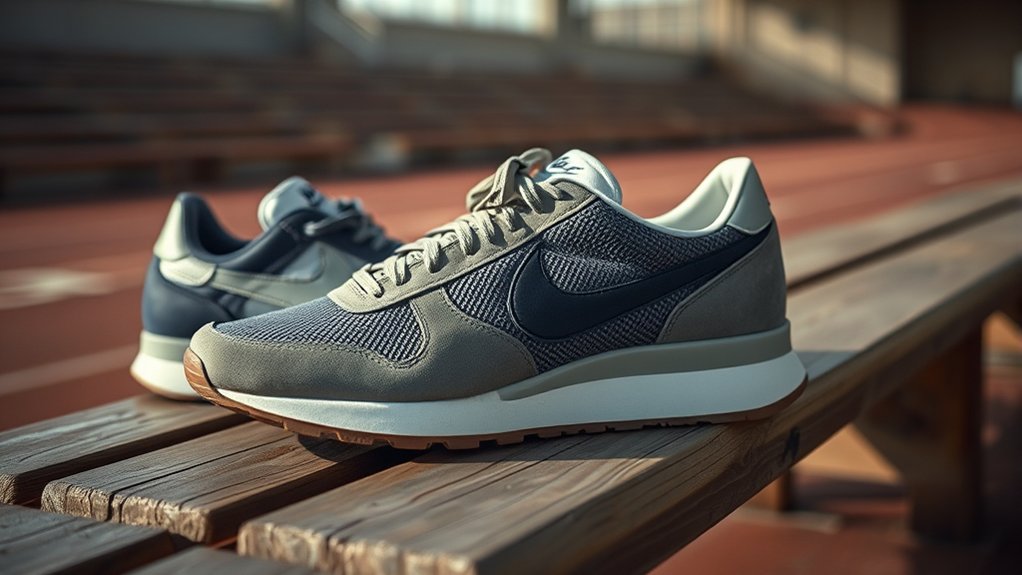
Since Nike was ready to push beyond prototypes like the Moon Shoe, they launched the Pegasus in 1982 as their first dedicated running shoe designed specifically to enhance stability and cushioning. You’ll notice that its shoe aesthetics emphasize simplicity and function, reflecting a focus on performance rather than flashy design.
Nike’s marketing strategies highlighted these innovations, appealing directly to serious runners. The Pegasus combined a heel Air wedge, lightweight EVA foam, and a waffle-pattern outsole to balance impact absorption with traction.
| Feature | Purpose | Impact on Runner |
|---|---|---|
| Heel Air Wedge | Cushioning | Targeted impact absorption |
| EVA Foam (Tomilite) | Lightweight support | Enhanced stability |
| Waffle Outsole | Traction | Improved grip on surfaces |
| Simple Design | Shoe aesthetics | Reliable, no-frills appeal |
| Marketing Focus | Innovation & performance | Built brand trust & loyalty |
Air Technology Innovations in the Nike Pegasus
Although Nike had experimented with cushioning before, the Pegasus truly showcased their Air technology innovations by integrating encapsulated Air units within the heel to absorb impact and enhance stability. This design marked a pivotal shift in running shoe engineering, emphasizing targeted Air cushioning that delivers precise impact absorption exactly where runners need it most.
They combined Air units with EVA foam, specifically Tomilite, which improved overall resilience and comfort.
Plus, they made incremental refinements that evolved the Pegasus’s cushioning system, maintaining its responsive feel over time.
All these elements came together to set a new standard in how running shoes support and protect athletes during their runs.
Why the Pegasus Became Nike’s Most Enduring Running Shoe
You’ll notice the Pegasus made Air technology accessible without sacrificing performance. It really set a new industry standard.
By balancing cutting-edge cushioning with affordability, it reached a wide range of runners who wanted both comfort and durability.
This smart combination helped the Pegasus earn its lasting reputation as Nike’s most dependable running shoe.
Air Technology Accessibility
What made the Nike Pegasus stand out as a running shoe that millions could rely on? Its success lies in the accessibility impact of Nike’s cushioning innovation.
By integrating a heel Air wedge, the Pegasus delivered superior shock absorption without the high price tag. This balance made advanced Air technology available to a broad audience.
You can appreciate this accessibility through three key factors:
- Affordable pricing around $50 opened doors to non-elite runners.
- Lightweight materials combined with targeted Air units met diverse running needs.
- Incremental design updates ensured consistent, reliable performance over time.
Together, these elements made Air technology not just a feature for professionals but a practical benefit for everyday runners. That’s how the Pegasus became a core, enduring model in Nike’s lineup.
Industry-Leading Performance
How did the Nike Pegasus secure its place as the most enduring running shoe in the market? You’ll find that its success stems from a continuous performance evolution driven by key technological advancements.
The Pegasus introduced a targeted heel Air wedge combined with an EVA foam midsole, delivering superior cushioning and stability that redefined industry standards.
Its waffle outsole enhanced grip and ground contact, improving your running efficiency.
What sets the Pegasus apart is Nike’s commitment to consistent, incremental updates that maintained durability and comfort without sacrificing affordability.
This balance of function and innovation ensured the shoe remained relevant for over 40 years.
When you choose Pegasus, you’re relying on a legacy of refined engineering that continually adapts to meet runners’ evolving needs.
It’s a shoe that grows with you, keeping pace with every step you take.
Nike’s First Running Shoe and Modern Jogging Culture
Although running had long been a popular sport, Nike’s introduction of the Cortez in 1972 transformed it into a mainstream fitness activity by combining innovative cushioning and traction with a lightweight design.
Nike’s 1972 Cortez revolutionized running with its lightweight design and advanced cushioning.
This shoe innovation didn’t just enhance performance; it reshaped running culture, making jogging accessible and comfortable for everyday people.
You can see its impact in three key ways:
- It introduced advanced cushioning and traction that prioritized athlete support and comfort.
- It empowered more Americans to adopt jogging as a regular fitness routine.
- It catalyzed a cultural shift toward health-conscious lifestyles, embedding running into daily life.
Frequently Asked Questions
What Materials Were Used in the Original Nike Pegasus?
You’ll find the original Pegasus used EVA foam midsole, durable rubber outsole, and lightweight breathable uppers. Its manufacturing techniques prioritized performance and affordability, but didn’t focus on sustainable materials, reflecting the era’s limited eco-conscious approach.
Back then, the focus was really on making a reliable running shoe that performed well without breaking the bank. Sustainability just wasn’t a big part of the conversation yet. So, while the materials were great for the time, they didn’t exactly keep the planet in mind.
Who Was the Lead Designer of the Nike Pegasus?
You might find it intriguing that the Nike Pegasus has evolved through decades of brand evolution. There wasn’t a single lead designer; instead, athlete collaborations and a dedicated team shaped its innovative, performance-focused design.
It’s really a product of many minds working together over time. Each new version builds on feedback and fresh ideas. That’s what keeps the Pegasus running strong year after year!
How Much Did the First Nike Pegasus Cost at Launch?
The first Nike Pegasus cost around $50 at launch. This pricing reflected Nike’s brand evolution and smart marketing strategies. It made reliable running shoes accessible to many people.
This helped the brand grow by appealing to both casual and serious runners. Nike really understood their audience and what they wanted. That approach made a big difference in their success.
Were There Any Celebrity Endorsements for the Nike Pegasus Initially?
You won’t find celebrity influence or brand partnerships at the Pegasus’ dawn. Nike trusted innovation over fame, letting performance alone shape its legacy.
This choice symbolized purity, focusing on the runner’s journey, not star power. It was all about what the shoe could do, not who was wearing it. Pretty refreshing, right?
How Did the Nike Pegasus Compare to Competitors’ Shoes in 1982?
You’ll notice the Nike Pegasus stood out in 1982 through technology advancements like the heel Air wedge and EVA foam. Nike really pushed the envelope with these features, making the shoe more comfortable and supportive than many others on the market.
On top of that, clever marketing strategies emphasized affordability and reliability. This approach helped the Pegasus appeal to a wide range of runners who wanted quality without breaking the bank.
When you look at cushioning, traction, and overall value, the Pegasus was definitely ahead of its rivals. It wasn’t just about flashy tech—it was about delivering real performance that runners could count on.
Conclusion
You’ve seen how Nike’s first running shoe, born from Bowerman’s groundbreaking ideas and the iconic Moon Shoe, paved the way for the Pegasus and modern jogging culture.
Remember, “Rome wasn’t built in a day,” and neither was Nike’s success. Each innovation added layers of performance and design, shaping what running shoes are today.
Understanding this history helps you appreciate the blend of creativity, technology, and persistence behind every pair you lace up.