Are Boys And Girls Shoe Sizes The Same – Size Differences Explained
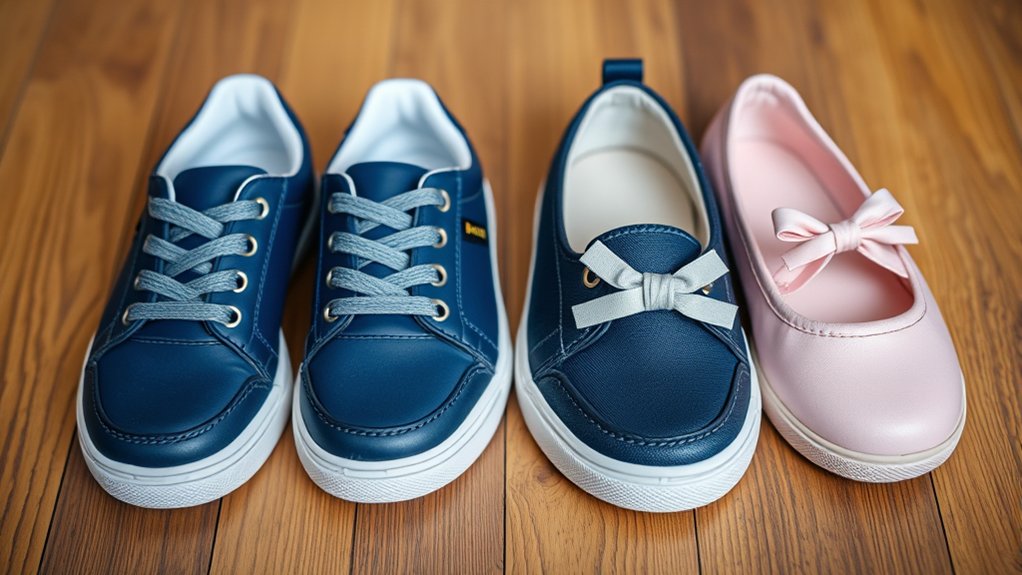
Boys’ and girls’ shoe sizes are the same through early childhood, typically up to size 13 or age 8, since their feet grow similarly in length and width. After this, boys’ feet generally become wider and larger, causing size and width differences to emerge.
Until then, unisex sizing applies, focusing on accurate foot measurements rather than gender. Understanding when and why these differences appear will help you choose the best fit and support for growing feet.
Key Takeaways
- Boys’ and girls’ shoe sizes are identical from toddler size 0 to youth size 7, using unisex sizing during early childhood.
- After age 8 or size 7Y, boys’ shoes tend to be wider and larger, while girls’ shoes become narrower with gender-specific sizing.
- Measurement methods for length and width are the same for both genders until size 7Y, focusing on accurate fit over labels.
- Proper shoe fit prioritizes foot length, width, support, and comfort rather than gender-specific size differences.
- Fashion and style influence adolescent footwear, but comfort, support, and foot development remain the primary considerations.
How Do Boys’ And Girls’ Shoe Sizes Compare When They’re Little?
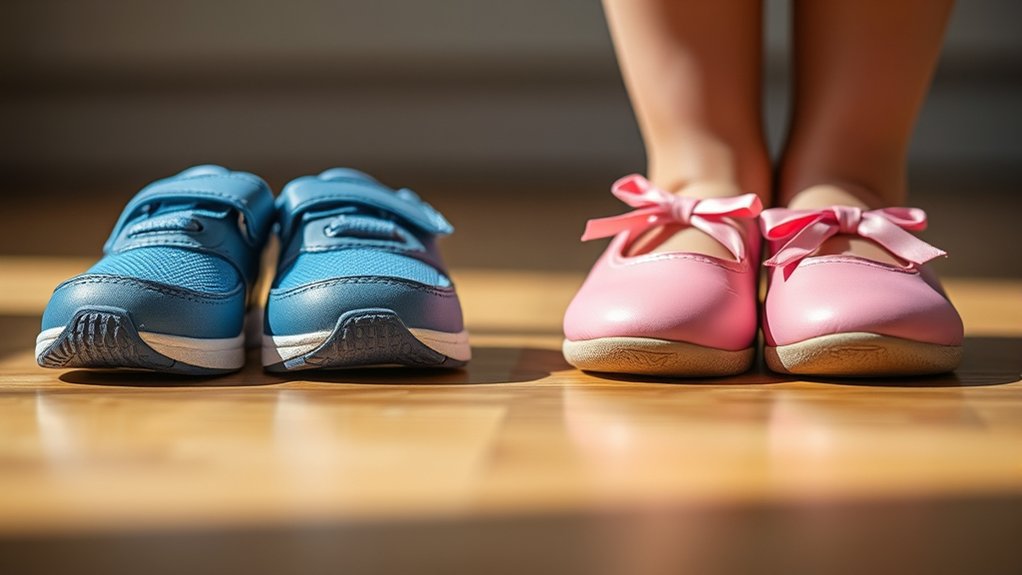
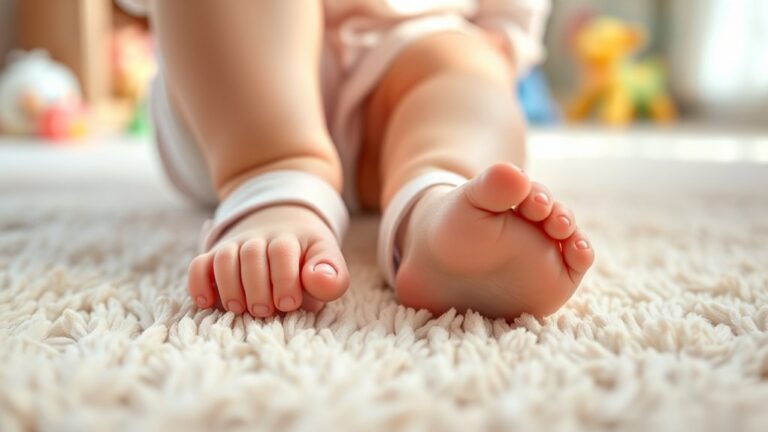
Although boys’ and girls’ feet develop similarly during early childhood, their shoe sizes remain identical from 0 to 13, using a unisex sizing system. You’ll find that both genders follow the same size charts, reflecting no measurable differences in length or width at this stage.
Gender neutral sizing simplifies selection, as shoe styles and measurements focus exclusively on foot dimensions rather than gender distinctions.
Foot shape variations between boys and girls are negligible during these years, so size overlap between toddler (T) and kids’ sizes further supports the unisex approach. It’s only after age 8 that boys’ feet tend to grow larger and wider, prompting gender-specific sizing.
Until then, you can confidently use gender neutral sizing when choosing shoes for young children.
What Are Shoe Size Ranges For Toddlers To Grade School Kids?
When selecting shoes for children from toddler to grade school age, understanding the size ranges helps guarantee proper fit as their feet grow. Toddler sizes typically span from 0 to 13, labeled as K, T, or C, before shifting into preschool sizes, which cover 11K to 3.
Grade school sizes begin at 3.5 and extend up to 7, overlapping with smaller women’s sizes.
These sizes progress continuously without gender differentiation. When choosing shoes, consider material differences that accommodate active development and ensure durability.
Style preferences also vary, with toddlers favoring softer, flexible materials, while grade school kids often prefer more structured designs reflecting their growing independence.
Accurate sizing combined with appropriate material and style choices supports healthy foot development throughout these stages. So, it’s really about balancing fit, function, and style to keep up with their growing and active feet.
When Do Boys’ And Girls’ Shoe Sizes Start To Differ?
You won’t notice differences between boys’ and girls’ shoe sizes until around age 8 or size 13 in kids’ shoes, as sizes remain largely unisex up to that point.
Around sizes 1Y to 3Y, boys’ feet may begin to show slight increases in length and width compared to girls’.
By youth sizes 7-8, these differences become more pronounced, reflecting natural growth patterns rather than arbitrary distinctions.
Cultural influences and gender stereotypes often shape how shoe sizes are marketed, encouraging separate sizing and styles earlier than necessary.
However, physiological changes primarily drive when sizing diverges.
Brands typically introduce gender-specific options around age 10 or size 4Y, aligning with foot development trends.
Remember, emphasizing accurate fit over gender labels ensures comfort and proper foot support regardless of these societal factors.
How Are Boys’ And Girls’ Feet Measured Differently For Shoe Size?
Measuring boys’ and girls’ feet is pretty much the same at the start. You look at the length by marking the longest toe, and then you check the width at the widest part while the child is standing. It’s straightforward and works for both.
But here’s where it gets a bit different—when kids get a little older, usually past early childhood, girls’ shoes tend to get narrower than boys’. So, the width becomes the main factor that sets them apart.
Age also plays a role in sizing. Up until around age 8, most shoes use unisex measurements. After that, you’ll typically see those gender-specific width differences kicking in.
Measurement Methods Compared
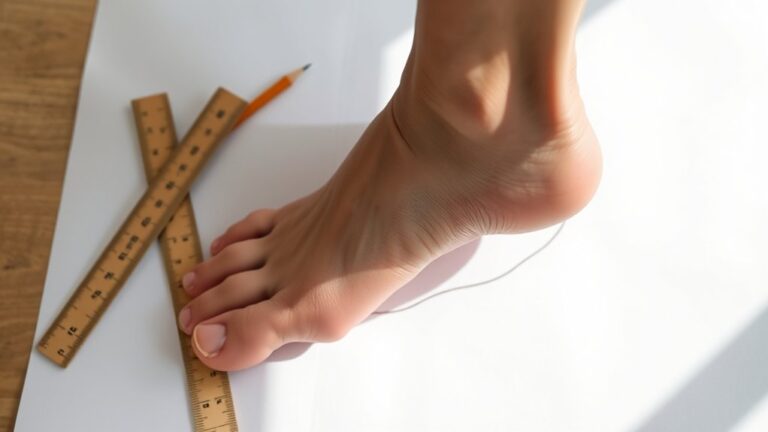
Although boys’ and girls’ feet may differ in shape and growth patterns, the methods used to measure their shoe sizes remain consistent. You’ll typically measure length by having the child stand on paper, marking the heel and longest toe, then measuring that distance precisely.
For width, you wrap a tape or paper around the foot’s widest part.
Stores often use a Brannock device, which accurately gauges both dimensions for all children. While shoe color preferences and brand size variations may influence your final choice, these measurement techniques don’t change by gender.
Regularly measuring feet ensures a proper fit as children grow rapidly.
So, regardless of whether you’re shopping for boys or girls, rely on these standard, precise methods to select the correct shoe size. It really helps to keep checking often to make sure the shoes still fit comfortably.
That way, kids can stay comfortable and avoid any foot issues as they grow.
Length Versus Width Focus
While boys’ and girls’ shoe sizes rely on the same foot length measurements, the width dimensions often differ, with boys typically needing wider shoes. You measure foot length from heel to longest toe using a ruler or specialized device. This process remains consistent across genders.
However, width is measured around the foot’s widest part and tends to vary, especially after size 7Y, when gender-specific widths become standard. For younger children under age 8, sizes focus primarily on length, making widths largely unisex.
As fashion trends evolve, boys’ shoes often accommodate broader feet with designs supporting wider widths. Girls’ shoes reflect narrower widths combined with color preferences influenced by style.
Understanding these distinctions guarantees you select shoes that fit both length and width accurately.
Age Impact On Sizing
How does age influence the way boys’ and girls’ feet are measured for shoe sizing? Up to about age 8, boys’ and girls’ feet are measured identically since their growth rates and foot dimensions closely align. This makes unisex sizing pretty common for younger kids.
As children approach ages 8 to 10, boys’ feet typically become wider and larger. This means measurements need to emphasize width alongside length. While the measurement techniques stay the same—focusing on both length and width—boys may need wider shoes to fit their changing foot shape.
Also, fashion trends and shoe color preferences often start influencing gender-specific styles in pre-teens, which goes hand in hand with sizing differences. Understanding these age-related shifts helps you pick shoes that fit well, combining accurate measurements with attention to evolving style preferences.
How Should You Measure Your Child’s Feet For Kids’ Shoe Sizes?
Because children’s feet grow quickly and can vary in size, you need to measure them accurately before selecting shoes. Have your child stand with heels against a wall on a flat surface, then mark the longest toe to gauge foot length.
Use a soft tape or paper to measure width at the widest part. Measure both feet and use the larger foot’s size. Leave about a pinky width (½ inch) of space for growth and comfort.
Re-measure every few months to accommodate rapid growth. Also, consider shoe material flexibility and current fashion trends to guarantee comfort and style.
| Step | Description |
|---|---|
| Length Measurement | Heel to longest toe, in inches/cm |
| Width Measurement | Around widest foot part |
| Fit Allowance | Add ½ inch for growth and comfort |
When Do Kids’ Shoe Sizes Become Adult Sizes For Boys And Girls?
As children approach adolescence, their shoe sizes shift from the kids’ range to adult sizes, typically around age 13. This changeover happens when foot length reaches about 9.75 inches (Euro size 41), which corresponds to size 7 in kids’ shoes. Shoe manufacturers recognize this cutoff.
Beyond size 7, boys’ shoes tend to be wider and larger, reflecting anatomical growth differences. Girls’ sizes may stay slightly smaller or similar.
Up to size 7, boys’ and girls’ shoes are generally unisex.
Also, fashion trends play a role in this shift. Adolescent footwear styles often match adult designs, so manufacturers use adult sizing standards for teenagers.
Knowing this helps you pick shoes that fit well and keep up with growing feet during those growth spurts.
Do Differences In Kids’ Shoe Sizes Affect Fit And Comfort?
Although boys’ and girls’ shoe sizes are the same up to size 7Y, differences in width and volume after this point can impact fit and comfort. Boys’ shoes generally feature wider and larger dimensions compared to girls’ shoes of the same nominal size, which affects how the shoe conforms to the foot.
When selecting footwear, you should prioritize accurate foot width and volume measurements over relying solely on size or gender labels.
Ill-fitting shoes, whether too narrow or wide, can cause discomfort and foot health issues.
Also, shoe color preferences and fashion trends may influence your choice, but they shouldn’t override the need for proper fit.
Ensuring the shoe matches your child’s foot shape is essential for ideal comfort and support.
What Practical Tips Help Parents Pick The Best Shoes Beyond Gender Labels?
You should measure your child’s feet regularly and use size charts to make sure you get the right fit, no matter what the gender labels say. It’s really about finding shoes that feel comfortable and supportive.
Focus On Fit
How can you guarantee your child’s shoes offer the best fit beyond just gender labels? Prioritize measuring their feet regularly and make sure there’s about half an inch of growth room. Focus on shoe width and arch support to match their unique foot shape and developmental needs.
Adjustable closures like Velcro help secure a snug fit. They accommodate various foot widths and prevent heel slippage or pinching.
| Fit Aspect | Practical Tip |
|---|---|
| Shoe Width | Choose adjustable styles for width |
| Arch Support | Select shoes with built-in support |
| Length & Growth | Allow 0.5 inch room for growth |
This precise approach guarantees ideal foot health and comfort, no matter what gender-based sizing says.
Prioritize Comfort And Support
When selecting shoes for your child, prioritizing comfort and support guarantees healthy foot development beyond just relying on gender-based sizing. Focus on shoe aesthetics that don’t compromise essential features like arch support, cushioning, and flexible soles.
Make it a habit to regularly measure both the length and width of your child’s feet. This helps address growth variations and evolving support needs as they grow.
Opt for shoes with adjustable closures such as Velcro or bungee laces. That way, you can ensure a secure fit that prevents slipping.
Choose breathable materials to keep feet dry during active wear, no matter what the latest fashion trends are.
And try to avoid hand-me-downs or overly large shoes that don’t fit properly. Discomfort can really mess with foot health and overall support.
Taking this practical approach means your child’s shoes will meet functional needs while still looking good and staying in style.
Frequently Asked Questions
Are There Brand-Specific Differences in Boys’ and Girls’ Shoe Sizing?
Yes, you’ll find brand-specific differences in boys’ and girls’ shoe sizing due to gender-specific sizing. Always check each brand’s shoe size charts carefully, as widths and fits can vary considerably between manufacturers.
It’s a good idea to compare measurements rather than just relying on the number on the shoe label. This way, you’ll get a better fit and avoid surprises when the shoes arrive.
How Do Cultural Factors Influence Kids’ Shoe Size Labeling?
You’ll find cultural perceptions shape sizing conventions, causing variations in kids’ shoe labels. Some cultures prefer gender-specific sizes, while others adopt unisex labeling. This directly influences availability, marketing strategies, and how sizes differ between boys and girls.
It’s interesting how what feels normal in one place can be totally different somewhere else. These differences can affect everything from how shoes are displayed in stores to what parents expect when shopping for their kids. So, culture really plays a big role in the shoe size game!
Can Orthotic Needs Affect Shoe Size Recommendations for Boys and Girls?
Orthotic adjustments dance with growth considerations, guiding you to choose shoes that fit length, width, and depth precisely. These factors shape size recommendations, ensuring boys and girls get supportive, comfortable footwear tailored to their unique orthotic needs.
It’s all about making sure the shoes work well with the orthotics. When you factor in growth, you want to pick shoes that not only fit now but also support developing feet. That way, kids stay comfortable and properly supported every step of the way.
Are There Differences in Width Options Between Boys’ and Girls’ Shoes?
You won’t find differences in shoe width options between boys’ and girls’ shoes because shoe width is determined by foot shape and size. This means both genders have access to Medium, Wide, and Extra Wide widths interchangeably.
How Often Should Children’s Feet Be Remeasured for Accurate Sizing?
You should remeasure children’s feet every 2 to 3 months, as foot growth can be rapid. Frequent checks guarantee shoe comfort and prevent fit issues. This helps maintain precise sizing and supports healthy foot development during active growth periods.
It’s a simple step but really important. Keeping an eye on their shoe size ensures they stay comfortable and avoid any problems caused by shoes that don’t fit quite right. So, making it a routine can make a big difference!
Conclusion
When you measure your child’s feet, imagine a precise blueprint guiding your choice, making sure each step fits perfectly. Boys’ and girls’ sizes may overlap early on, but subtle differences pop up as they grow, affecting fit and comfort.
By focusing on exact measurements instead of just labels, you can navigate size charts with confidence. This way, you’ll find shoes that support your child’s unique foot shape and stride.
This approach helps every step feel balanced, stable, and ready for adventure. It’s all about making sure their shoes work as hard as they do!