If My Foot Is 10 Inches Long What Shoe Size – Size Calculation Guide
If your foot is 10 inches long, you’d typically wear a US men’s size 8 to 8.5 or a women’s size 8.5 to 9. Exact sizing can vary by brand and shoe type though. It’s always a good idea to measure your foot barefoot against a flat surface for accuracy.
Also, don’t forget to consider your foot width since that impacts how shoes fit. Different sizing systems like UK, EU, or Mondopoint can be quite different too. So, keep those in mind when figuring out your size.
To find the best fit, look at these factors along with your foot length. Shoe style details will also play a role, which we’ll explain ahead. Taking all this into account helps you get the most comfortable shoes.
Key Takeaways
- A 10-inch foot typically corresponds to US men’s size 8 and women’s size 8.5 based on common size formulas.
- Measure foot length barefoot against a wall and mark the longest toe for accurate sizing.
- European sizes for a 10-inch foot generally range from 41 to 42, with Mondopoint size about 254 mm.
- Consider foot width and shoe type, as wider feet or athletic shoes may require larger or specialized sizing.
- Always check specific brand sizing charts and allow extra space for comfort, especially in athletic or dress shoes.
Converting a 10-Inch Foot to US Men’s and Women’s Shoe Sizes
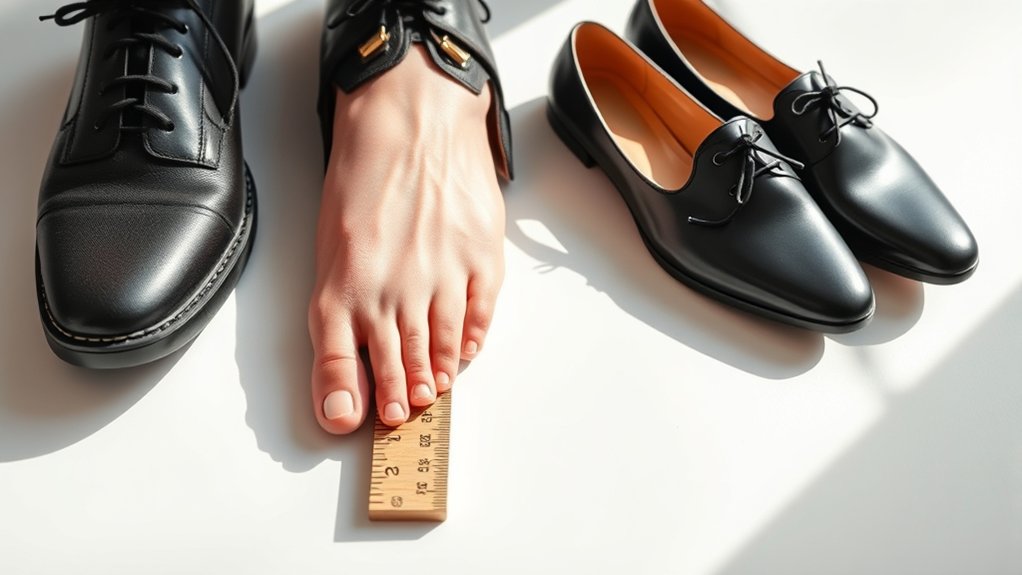
How do you convert a 10-inch foot length into US shoe sizes? For men, use the formula Size = (10 × 3) – 22, giving you a size 8.
For women, apply Size = (10 × 3) – 21.5, which equals size 8.5.
That said, typical conversions place men’s sizes between 8.5 and 9.5, and women’s between 10 and 10.5 depending on brand variations.
Keep in mind foot width substantially impacts shoe comfort. A correct length measurement alone doesn’t guarantee a perfect fit.
Different brands vary in sizing, so evaluating foot width alongside length ensures better shoe comfort.
For ideal results, consider both foot length and width when converting to US sizes to avoid discomfort and improve fit accuracy.
Accurate Foot Length Measurement at Home
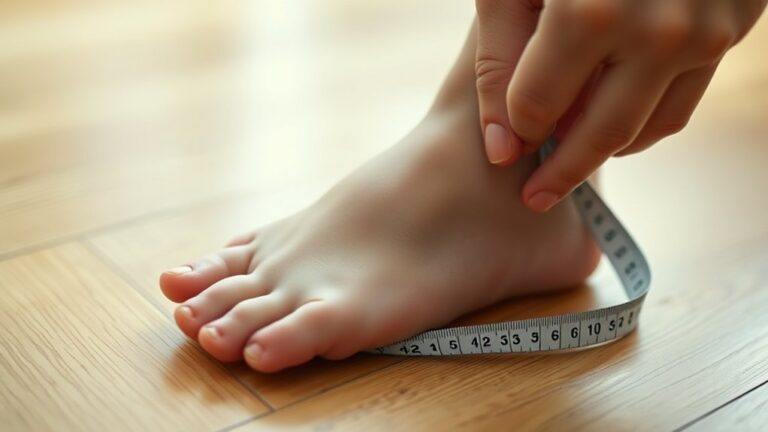
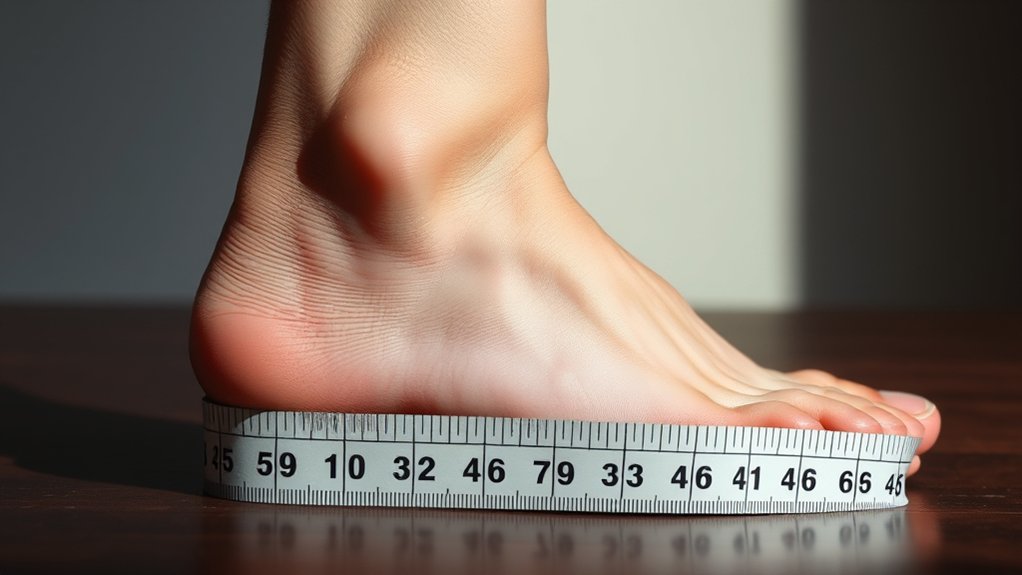
Although measuring your foot length at home may seem straightforward, achieving accuracy requires careful technique. Stand barefoot on a piece of paper with your heel firmly against a wall or the paper’s edge. Mark the longest point of your foot, usually your big toe or second toe.
Measuring foot length at home demands precision: stand barefoot, heel against a wall, and mark your longest toe.
Use a ruler to measure from heel to toe in inches. Do this later in the day when your foot arch is slightly flattened due to natural swelling. Make sure the ruler is perfectly aligned with your foot’s longest axis for a precise measurement.
Remember, shoe material affects fit, so add extra padding or wiggle room based on the shoe type. Record this measurement carefully to select the correct size.
Also, keep in mind your foot arch height and the shoe’s construction for maximum comfort.
European, UK, and Mondopoint Size Equivalents for a 10-Inch Foot
For a 10-inch foot, European sizes usually fall between 40 and 41. This range reflects the foot length of about 25.4 cm.
When it comes to UK sizes, you’re typically looking at around 7.5 to 8.5. Of course, this can vary a bit depending on the shoe style and width.
As for Mondopoint, it’s pretty straightforward—this length corresponds directly to size 254, since it’s measured in millimeters for a precise fit.
European Size Conversion
Where do you find your European, UK, and Mondopoint shoe sizes if your foot measures 10 inches? A 10-inch foot, about 25.4 cm, typically corresponds to a European size 41-42.
European sizing calculates by doubling your foot length in centimeters and adding 1 or 2 Paris points, a system rooted in historical sizing practices.
UK sizes for a 10-inch foot generally range from 8.5 to 9, slightly varying by brand due to differing measurement methods.
Mondopoint, a metric-based system, directly reflects foot length in millimeters, so 254 mm equals size 254, aligning with European 41-42.
Keep in mind, evolving fashion trends influence sizing consistency. So, always consider foot width and try shoes on for an accurate fit across these systems.
UK And Mondopoint Comparison
How do UK and Mondopoint sizes compare for a 10-inch foot? A foot length of 10 inches (254 mm) corresponds to a UK shoe size between 8.5 and 9, but this can vary depending on the brand and fit.
This precise measurement lines up closely with UK sizes 8.5–9 and European sizes 41–42.
When you’re picking out shoes, keep in mind that the material of the shoe affects how it fits and how flexible it feels. Also, insoles can add comfort and support, especially if the size conversion isn’t exact.
Mondopoint sizing directly measures the foot length in millimeters, so a 10-inch foot translates to 254 mm in Mondopoint terms.
Mondopoint’s accuracy really helps when choosing the right size. But it’s a good idea to also think about the shoe material and insole quality to get the best comfort and fit for your 10-inch foot length.
How Foot Width Affects Shoe Size for a 10-Inch Foot
Although a 10-inch foot length corresponds to a standard shoe size, your foot’s width plays a crucial role in achieving a proper fit.
Foot width varies considerably, impacting shoe comfort even when length is accurate.
Wider feet, classified as E or 2E, need shoes with broader width measurements to accommodate foot volume and reduce pressure points.
Conversely, narrower widths like AAA or B require slimmer shoes to prevent slipping and excessive tightness.
Shoe width is typically indicated by letters or inches, and selecting the correct width ensures ideal support and comfort.
Ignoring foot width can cause blisters, bunions, or discomfort despite correct length sizing.
For a 10-inch foot, prioritizing width alongside length is essential to achieve a balanced, comfortable fit.
Why Shoe Sizes Vary Across Brands
Understanding your foot’s length and width is only part of finding the right shoe size, as sizing can differ considerably between brands. Brand consistency is often lacking due to manufacturing variations, including the use of different lasts, materials, and production techniques. These factors lead to discrepancies where a size 9 in one brand may fit like an 8.5 or a 9.5 in another.
Additionally, brands may calibrate their sizing charts differently and emphasize width or shape variations, affecting fit beyond mere length. Regional sizing standards like US, EU, UK, and Mondopoint further complicate comparisons.
Design elements such as toe box shape and arch support also influence how shoes labeled the same size fit across brands.
Tips for Choosing the Right Shoe Size for a 10-Inch Foot
To choose the right shoe size for a 10-inch foot, start by measuring both the length and width accurately. Make sure to focus on the widest part of your foot.
Once you have these measurements, use them to compare against sizing charts that include width options.
Measuring Foot Accurately
When measuring your foot accurately, aim to do it at the end of the day when your foot naturally swells. This way, the 10-inch length you record reflects its true size. Use a ruler or measuring tape to measure from heel to the tip of your longest toe while your foot lies flat. Make sure the tape rests snugly without compressing your foot.
For greater precision, trace your foot on paper and measure the longest length again. Keep in mind your foot arch affects how the shoe fits. So, consider shoe cushioning that supports your arch properly.
Always add about 1/4 to 1/2 inch of extra space to accommodate natural foot expansion. This helps make sure you’re comfortable during prolonged wear or physical activities.
Also, verify measurements against the specific brand’s sizing chart before buying.
Considering Shoe Width
Measuring your foot length accurately sets the foundation, but width plays an equally important role in achieving a comfortable fit for a 10-inch foot. Start by measuring your foot’s widest part and compare it with manufacturer width charts. These are typically labeled B (narrow), D (medium), and E (wide) in North America.
If you have wider feet (E or 2E), select shoes with broader toe boxes and wider lasts to avoid discomfort. Also, consider material durability. Flexible, high-quality materials accommodate width variations better and last longer.
Finally, explore color options that suit your style without compromising fit. Trying on shoes in your correct width ensures the best comfort. Shoes fitting lengthwise but not widthwise can cause pain and reduce wearability.
Adjusting Size for Different Shoe Types: Fit Tips for a 10-Inch Foot
Although a 10-inch foot typically corresponds to a US men’s shoe size between 8.5 and 9, you’ll need to adjust this depending on the shoe type and how you plan to use them.
A 10-inch foot usually fits US men’s size 8.5 to 9, but sizing varies by shoe type and use.
For athletic shoes, it’s a good idea to go at least half a size larger. This helps accommodate foot swelling and the extra movement during activity.
Dress shoes usually need a bit more space, about a quarter to half an inch extra for comfort, especially if you’ll be wearing them for a long time.
Heel height can also affect how your foot sits inside the shoe.
Think about the shoe material too. Rigid materials might require more room, while flexible fabrics tend to mold better to your foot shape.
Also, higher heels push your foot forward, so make sure there’s enough toe space to avoid discomfort.
If your foot is wider, don’t forget to adjust the width size as well. Getting the right width is key for support and overall fit.
Frequently Asked Questions
How Often Should I Measure My Feet for Accurate Sizing?
You should measure your feet every 3 to 6 months to keep your footwear fitting just right and ensure sizing accuracy.
Make sure to measure both feet in the late afternoon when they’re usually a bit larger. Use the same method each time to get consistent results.
Always pick your shoe size based on the larger foot for the best fit. That way, your shoes will be comfortable all day long!
Can Foot Size Change With Age or Weight Fluctuations?
Yes, your foot size can change with age and weight fluctuation. Studies show that foot growth continues subtly in adults due to ligament stretching and arch flattening. This happens especially after significant weight gain or as you get older.
These changes can impact how your shoes fit and how comfortable they feel. So, it’s totally normal if you notice your shoe size shifting a bit over time. Just something to keep in mind when shopping for new footwear!
Are Insoles Necessary for a 10-Inch Foot Shoe Fit?
You don’t always need insoles for a 10-inch foot, but insole comfort is vital if your shoe arch lacks support. Insoles guarantee precise fit, enhance shoe arch alignment, and reduce discomfort or pressure points effectively.
If your shoes already feel comfortable and supportive, you might not need them. But if you notice any soreness or slipping, adding insoles could make a big difference. It’s all about what feels best for your feet!
How Do Socks Affect Shoe Size Choice for a 10-Inch Foot?
You’ll need to size up about half an inch for sock thickness and sock material variations. Thicker wool socks require more space, so choosing a slightly larger shoe ensures comfort and prevents tightness for your 10-inch foot.
It’s all about giving your feet room to breathe and move comfortably. If you’re wearing thin socks, you might get away with your usual size. But once you switch to thicker socks, that extra half-inch can make a big difference.
What Materials Accommodate Foot Swelling During Long Wear?
You’ll want materials with high flexibility, like elastic fabrics or stretch leather, to reduce foot compression during swelling. These materials adapt to volume changes, making them great for long wear.
Plus, gel insoles and adjustable straps really boost comfort. They help accommodate foot expansion effectively throughout the day.
Conclusion
Just like Goldilocks sought the perfect fit, finding your ideal shoe size for a 10-inch foot requires precision and care. By accurately measuring your foot and understanding size variations across US, UK, European, and Mondopoint systems, you’ll avoid common pitfalls.
Remember, width and shoe type influence fit considerably. Armed with these insights, you’ll confidently select shoes that offer both comfort and performance. Never too tight, never too loose, but just right.