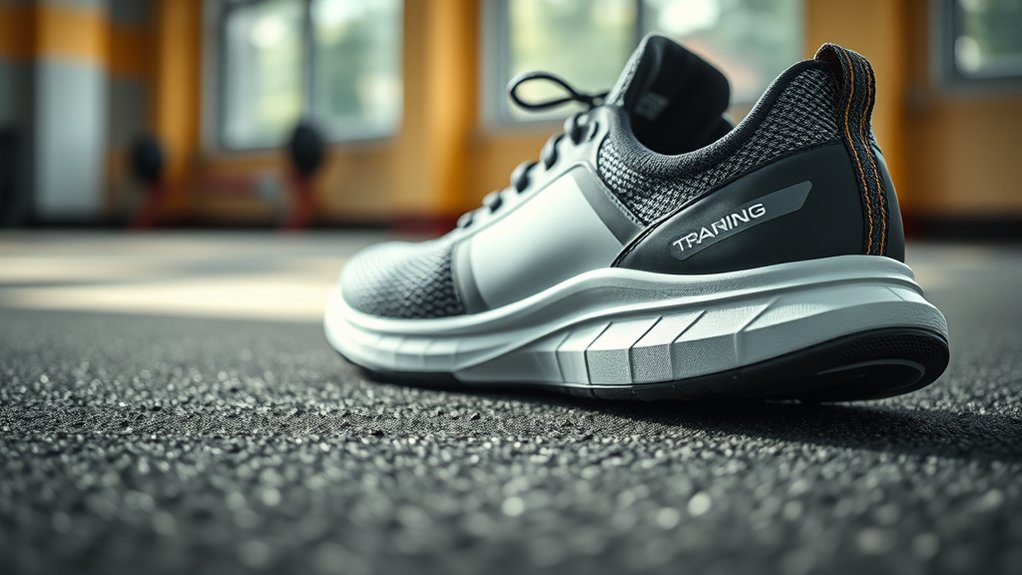
What Is A Training Shoe – Features And Benefits Explained
A training shoe supports a wide range of movements with a flatter sole, lower heel drop, and enhanced lateral support, unlike running shoes built mainly for forward motion. You’ll get stability, shock absorption, and cushioning designed to protect your joints during dynamic workouts like HIIT and lifting.
Their durable, flexible soles improve balance and reduce injury risks, ensuring better performance and endurance. Keep exploring to uncover how these features optimize safety and movement precision during your training sessions.
Key Takeaways
- Training shoes support multidirectional movements with flatter soles and lower heel drops, unlike running shoes designed for forward motion.
- They provide enhanced lateral support and shock absorption to prevent injuries during dynamic exercises like HIIT and weightlifting.
- Wide, flat soles and reinforced heels ensure stability, balance, and traction for quick directional changes and heavy lifting.
- Proper fit with snug heel and midfoot support, breathable materials, and textured outsoles improve performance and safety.
- Regular maintenance and timely replacement preserve cushioning, support, and traction, reducing injury risks during training.
What Are Training Shoes and How Are They Different From Running Shoes?
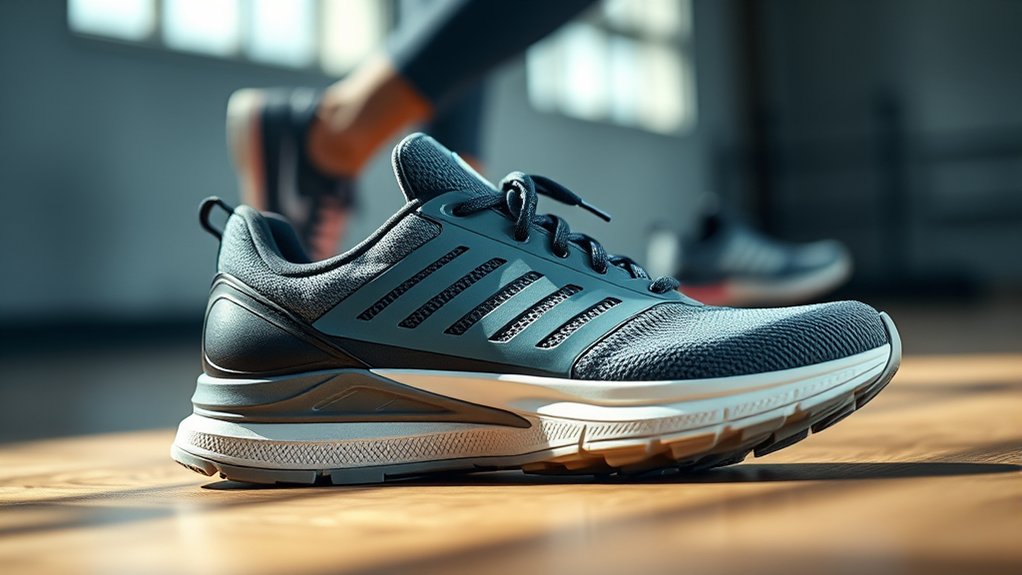
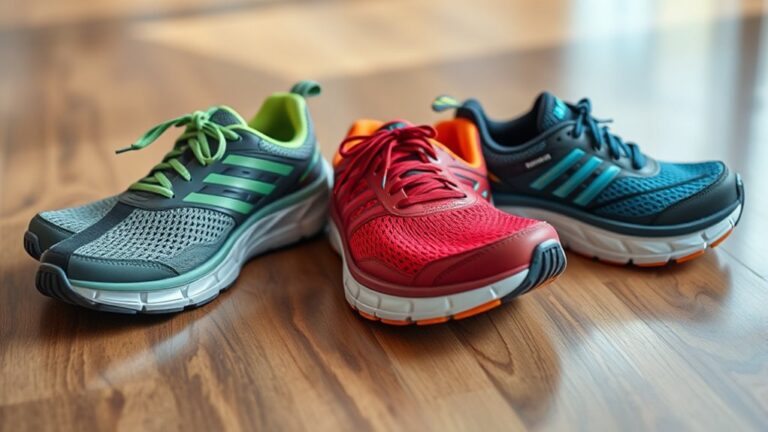
While running shoes are engineered primarily for forward motion and cushioning over long distances, training shoes are built to support a wide range of movements, including lateral shifts, jumps, and lifts.
You’ll find training shoes feature a flatter sole and lower heel drop, optimizing stability and balanced weight distribution for multi-directional exercises.
Their flexible, durable uppers accommodate dynamic routines like HIIT and weightlifting, reducing injury risk.
When comparing brands, pay attention to how each model prioritizes these functional demands alongside style, as color options often reflect the versatility you need for both performance and personal taste.
Selecting training shoes tailored to your workout’s multidimensional nature enhances both comfort and effectiveness, setting them apart from running shoes designed mainly for linear motion and cushioning.
It really comes down to choosing the right shoe for the type of movement you do most.
Key Features of Training Shoes You Should Know
Because training shoes must accommodate a variety of movements, their design includes specific features that boost stability, support, and comfort. When you’re picking out your training shoes, it’s good to focus on these key points:
Training shoes need features that enhance stability, support, and comfort for all your movement needs.
- Wide, flat sole ensures lateral stability during multidirectional exercises. This is super important for balance and control.
- Flexible, breathable uppers are usually mesh-based. They help with ventilation and move naturally with your foot.
- Supportive midsole is designed to absorb shock and handle dynamic moves like jumping and quick pivots.
- Reinforced sides and durable outsole improve traction and lateral stability for all kinds of training activities.
Also, many training shoes come with a low to moderate heel drop, which helps keep your foot aligned properly.
Plus, staying on top of current fashion trends and picking from a variety of colors means you can train in style without giving up performance.
Why Cushioning and Stability Matter in Training Shoes
The stability and cushioning features highlighted in training shoes work hand in hand to enhance your performance and protect your body during workouts. Cushioning technology absorbs impact forces, reducing stress on your joints and lowering injury risk during high-impact activities. This shock absorption also boosts comfort, letting you train longer without fatigue or soreness.
Stability mechanisms, including firm midsoles and reinforced sides, maintain proper foot alignment and prevent ankle rolling during lateral motions. They provide a secure base for heavy lifts, improving your balance and reducing slips or misalignments.
Together, cushioning technology and stability mechanisms ensure your training shoes support diverse movements safely and efficiently. This means you can push harder while minimizing injury risk.
Prioritizing these features is essential for maximizing both performance and protection. So, when choosing your training shoes, make sure they’ve the right balance of cushioning and stability to keep you moving strong.
How Training Shoes Support Multidirectional Movements
If you want to stay balanced during sharp cuts and pivots, you’ll need training shoes that offer lateral stability. Look for features like a flat, wide sole and reinforced sides. These help keep you steady when you’re making quick moves.
Plus, the flexible outsole is designed to move with your foot. It provides smooth support for all those fast, multidirectional shifts.
Together, these features reduce the chance of rolling your ankle and help you stay firmly grounded through every dynamic motion.
Lateral Stability Features
How do training shoes keep you stable during rapid side-to-side movements? They integrate lateral stability and side reinforcement technologies designed to support multidirectional motions without compromising balance.
Here’s how they do it:
- Reinforced sides and lateral stability panels prevent ankle rolling by securing your foot during dynamic shifts.
- A wider midsole base distributes forces evenly, enhancing your balance during quick lateral moves.
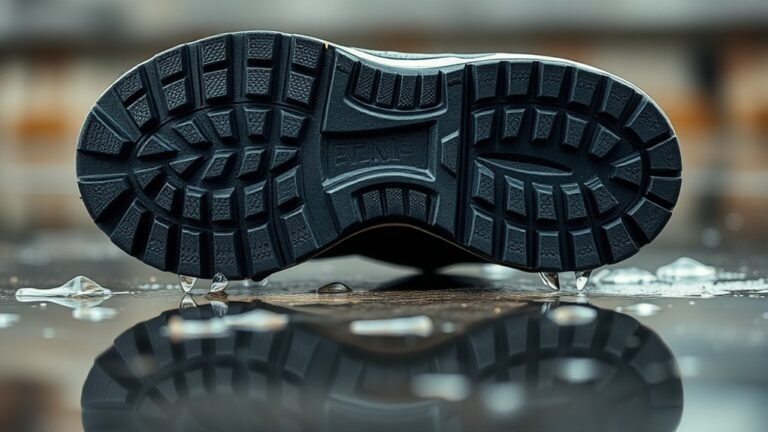
- Textured, grippy outsoles provide traction, allowing sharp pivots and cuts without slipping.
- Structural supports like side overlays and firm midfoot cages stabilize your foot, minimizing excessive movement.
These features work together to maintain your alignment, improve control, and reduce injury risk.
Flexible Sole Design
Why does sole flexibility matter so much in training shoes? A flexible sole made from rubber or foam supports natural foot movement during multidirectional exercises like quick pivots and jumps. This design evenly distributes pressure, reducing strain while enhancing proprioception for better balance and stability.
When comparing brands, look for models offering superior sole flexibility paired with diverse color options to suit your style without compromising performance.
| Brand | Sole Flexibility | Color Options |
|---|---|---|
| FlexRun Pro | High | 8 vibrant hues |
| MultiMove X | Medium | 5 standard tones |
| AgileFit Max | Very High | 10+ bold colors |
Choose training shoes with flexible soles that bend naturally. This way, you get ideal support for every dynamic move you make.
Choosing the Right Training Shoes for Your Workout
When selecting training shoes, matching them to your specific workout activities is essential for optimizing both support and performance. Consider these factors to choose wisely:
Analyze your workout type. Weightlifting requires flat soles for stability, while HIIT benefits from flexible uppers for multidirectional movement.
Evaluate training shoe materials. Durable synthetics and breathable mesh enhance longevity and comfort.
Prioritize brand reputation to ensure quality craftsmanship and reliable performance features.
Assess cushioning and support tailored to your foot type and activity intensity to minimize injury risk.
Selecting shoes aligned with your routine ensures optimal biomechanics and injury prevention. Remember, regularly inspect wear and replace shoes at 300-500 miles to maintain effectiveness and safety during your workouts.
How to Ensure a Proper Fit for Training Shoes
Although finding the right training shoes might seem straightforward, guaranteeing a proper fit requires careful attention to specific details that directly impact your performance and injury prevention.
Start by securing a snug fit around your heel and midfoot. This prevents slipping during movement.
Ensure a secure fit around your heel and midfoot to keep your feet stable and slip-free during activity.
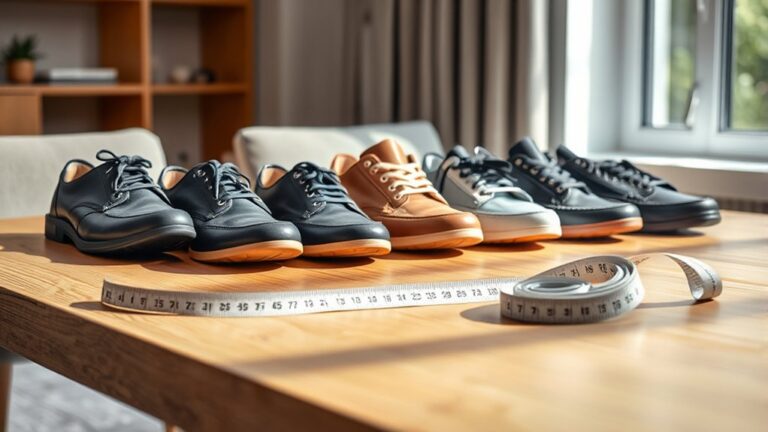
Your toe box should allow about a thumb’s width of space to avoid pinching or blisters.
Always try shoes on with the socks you plan to wear during workouts for an accurate fit assessment.
Test by walking, jogging, or mimicking your exercises to identify any discomfort or pressure points.
Don’t overlook brand reputation. Trusted brands often deliver consistent quality and reliable sizing.
Finally, consider color options that suit your style, but prioritize fit and function above all to ensure every training session is comfortable and effective.
How Training Shoes Improve Performance and Prevent Injuries
How exactly do training shoes elevate your workout while safeguarding your body? They play a vital role in both injury prevention and performance enhancement by providing targeted support and stability. Here’s how they work:
First, enhanced lateral support helps reduce ankle sprains and joint injuries during dynamic movements. Plus, flat soles and reinforced sides improve your balance and control, which can prevent falls and misalignment.
On top of that, shock absorption and even impact distribution lower the risk of stress fractures and overuse injuries.
And the supportive construction minimizes foot fatigue, boosting your endurance and cutting down on strain-related injuries.
The Role of Sole Design and Heel Drop in Training Shoes
You want training shoes with sole designs that really boost stability and traction, especially when you’re making quick directional changes or lifting heavy weights. It’s all about having that solid support underfoot.
Plus, a low heel drop helps encourage a natural foot strike. This can make a big difference for your balance and agility when you’re doing more complex movements.
And don’t forget flexibility in the sole—it lets your foot move naturally while still giving you the support you need throughout your workout. It’s the perfect balance between freedom and stability.
Sole Stability and Traction
Why does sole design matter so much in training shoes? Because it directly impacts your arch support, sole durability, and overall stability during intense workouts. A well-engineered sole guarantees you maintain balance and prevents injuries.
Think about it: arch support works with the sole design to keep your foot aligned and reduce strain. Plus, soles made from tough rubber compounds last longer and provide traction on all kinds of surfaces.
Wider and thicker soles help spread your weight evenly, which boosts balance and comfort when you’re moving around a lot. And those multidirectional grip patterns? They stop you from slipping, especially when you’re making quick pivots or doing lateral moves.
This smart combo of sole stability and traction lets you train confidently, cutting down the chances of ankle rolls or slips. Getting your sole design right is key to making the most of your workouts while staying safe.
Heel Drop Importance
Where exactly should your foot land during training? The heel drop, which is the height difference between the heel and the forefoot, directly affects this. A lower heel drop (0-4mm) encourages a midfoot or forefoot strike, enhancing heel stability and promoting natural motion.
This is ideal for weightlifting and functional training.
On the other hand, a higher heel drop (8-12mm) offers extra cushioning. It benefits running and jumping by absorbing impact and supporting heel landing.
Choosing the right heel drop aligns with your training goals, optimizing performance while reducing injury risk.
Also, the sole’s design integrates arch support to maintain foot alignment. This complements the heel drop for balanced stability.
Flexibility and Support
Understanding heel drop sets the foundation for evaluating how sole design and flexibility influence your training shoe’s performance. The balance between arch support and arch flexibility is crucial for natural foot movement and injury prevention. Here’s what you should focus on:
A flexible midsole enhances arch flexibility, allowing your foot to move naturally during dynamic exercises.
Lower heel drop improves stability and biomechanics, especially during weightlifting and lateral movements.
Thick, supportive soles offer a grounded base, reducing strain and aiding balance throughout your workout.
Reinforced heel structures prevent ankle rolling, boosting overall support during jumps and side-to-side actions.
When you combine these features, your shoes can really help you move better and feel safer during all kinds of workouts.
How to Maintain and When to Replace Your Training Shoes
Although you mightn’t notice immediate changes, regularly inspecting your training shoes is essential to maintaining peak performance and preventing injury. Check for compressed midsoles, worn treads, or flattened soles. These indicate diminished support and cushioning.
Regularly inspect your training shoes for wear to maintain support, cushioning, and prevent injuries.
Replace your shoes every 300-500 miles to avoid risks like stress fractures or joint pain. Clean them frequently and store them in a cool, dry place to extend their lifespan.
While fashion trends and brand comparisons influence your choice, prioritize functionality over aesthetics. Don’t let style sway you into using worn-out shoes. Technical integrity matters most.
A well-maintained shoe preserves stability, ensuring your training remains effective and safe. Recognize visible damage, like torn uppers or compromised soles, as signs it’s time for a new pair.
Frequently Asked Questions
Can Training Shoes Be Used for Casual Everyday Wear?
You can wear training shoes casually, but their fashion versatility is limited. Style considerations often favor casual sneakers for breathability and aesthetic appeal. So, using training shoes daily may compromise comfort and reduce their functional lifespan.
That said, if you like the look and feel of training shoes, go for it! Just keep in mind they might not be the best choice for everyday wear in terms of style and durability.
Are Training Shoes Suitable for Outdoor Sports Like Hiking?
You shouldn’t use training shoes for hiking. They lack the stability and aggressive tread needed on trails.
Instead, choose trail running shoes designed for rugged terrain. They provide better grip, support, and durability, which are essential for outdoor sports.
Trust me, your feet will thank you when you switch to the right shoes!
How Do Training Shoes Differ for Men Versus Women?
You’ll notice training shoes differ by gender-specific fit, ensuring ideal support and comfort. Men’s versions focus on durability and wider soles. Women’s prioritize flexibility, cushioning, and often feature distinct color and design preferences tailored to biomechanics.
It’s all about matching the shoe to how each foot moves and supports the body during training. That way, you get the best performance and comfort possible.
What Materials Are Most Eco-Friendly in Training Shoe Manufacturing?
You should choose training shoes made with sustainable materials like recycled polyester and bio-based foams. Plus, look for biodegradable components such as cork, natural rubber, and organic cotton. These materials ensure durability while minimizing environmental impact.
Eco-conscious manufacturing also plays a big role here. It helps reduce waste and energy use during production. So, picking shoes made this way supports both your training and the planet.
Can Training Shoes Help With Foot Conditions Like Plantar Fasciitis?
You’ll find heel support and arch stability essential when managing plantar fasciitis. Training shoes with firm heel counters, cushioned midsoles, and lateral stability reduce strain, improve alignment, and alleviate pain effectively.
This combination really helps enhance your foot’s healing process. So, choosing the right pair makes a big difference in comfort and recovery.
Conclusion
You might think any shoe will do for your workout, but training shoes aren’t just “fancy sneakers.” Their precise cushioning, stability, and multidirectional support are engineered to boost your performance and fend off injuries. That’s something your old running shoes just can’t promise.
So, if you’re serious about training, don’t settle for less. Choosing the right training shoe isn’t optional. It’s the smart move your body’s been silently begging for.