What Size Shoe Does A 7 Year Old Girl Wear – Size Guide And Chart
A typical 7-year-old girl usually wears shoe sizes ranging from US 13.5 to 1, fitting foot lengths between 6.5 and 7.5 inches. To get the right size, measure her feet at the end of the day, standing with full weight, and always use the longer foot.
Since kids’ feet grow fast, check sizes regularly and consider a bit of extra room for comfort. Keep going to discover smart tips on fit, growth, and shopping options.
Key Takeaways
- A 7-year-old girl typically wears US shoe sizes between 13.5 and 1, corresponding to foot lengths of 6.5 to 7.5 inches.
- Measure feet at the end of the day with full weight on both feet, using the longer foot for accurate sizing.
- Children’s feet grow about half a size every 2-4 months, so regular measurement every two months is important.
- Choose flexible, breathable shoes with about a thumb’s width of space at the toe for comfort and growth.
- Grade school sizes range from 3.5 to 7, suitable for ages 6 to 12, including typical sizes for 7-year-old girls.
What Shoe Size Does a Typical 7 Year Old Girl Wear?
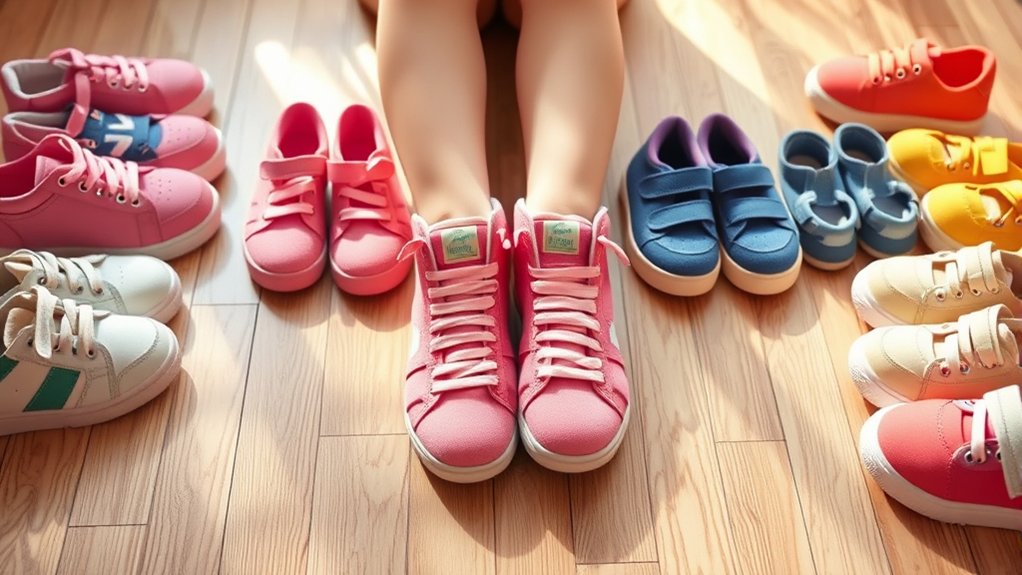
Although every child grows at her own pace, you’ll typically find that a 7-year-old girl wears a shoe size between US 13.5 and 1. This range corresponds to a foot length of about 6.5 to 7.5 inches, or 16.5 to 19 cm.
When choosing the right shoe style, consider her foot arch, as it affects comfort and support. Some girls have higher arches needing more cushioning, while others may require shoes with better stability.
Since growth varies, regularly checking her foot length helps guarantee the shoes fit well without being too tight or loose. Properly fitting shoes accommodate natural foot development and allow room for growth, preventing discomfort and supporting healthy walking patterns.
How Do You Measure Your 7 Year Old’s Feet Accurately?
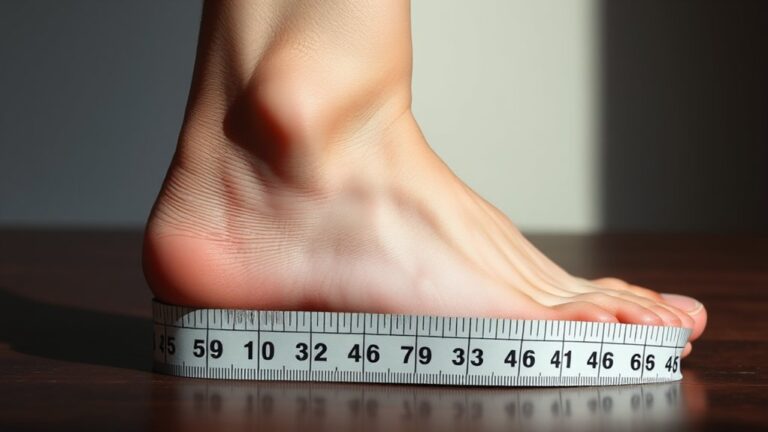
Since every child’s foot grows differently, regularly measuring your 7-year-old’s feet helps guarantee you pick shoes that fit comfortably and support healthy development. Measure at the end of the day when feet are naturally swollen, ensuring a more accurate fit.
Regularly measuring your 7-year-old’s feet ensures comfortable, supportive shoes for healthy growth.
Have her stand straight with full weight on her feet to capture true length and width.
Make sure to measure both feet since one may be larger. Use the longer foot’s measurement. Record the length in centimeters or inches, then compare it to a reliable size chart.
Remember, selecting shoes that follow current fashion trends is great, but prioritize proper sizing and shoe materials that provide support and breathability.
Accurate measurements help you avoid uncomfortable shoes and encourage healthy foot growth.
How Do Printable Size Guides and Foot Tracing Methods Work?
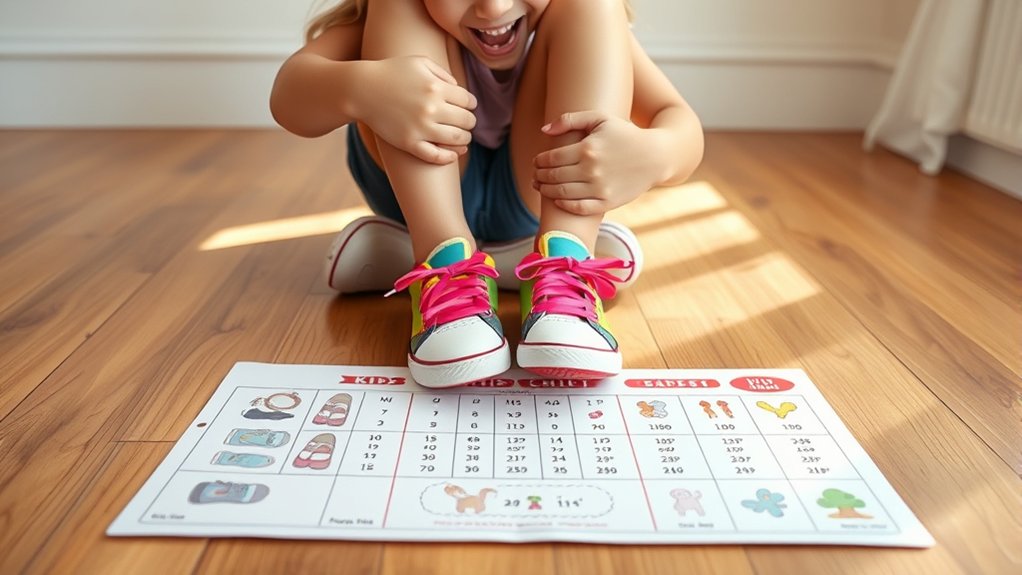
When you use printable size guides or foot tracing methods, you can get accurate measurements without needing specialized tools. Make sure to print the guide at 100% scale and verify it with a credit card to confirm accuracy.
Place your child’s foot on the guide, aligning the heel with the end, then mark the longest toe for length.
Alternatively, you can trace the foot on paper and measure from heel to toe.
Don’t forget to wrap a ribbon around the widest part of the foot to measure circumference, which is essential for accommodating the foot arch and ensuring comfort.
These precise measurements help you choose the right shoe material and design that best support your 7-year-old’s growing feet.
This approach prevents discomfort and improves shoe fit. It’s a simple way to make sure your child’s shoes feel just right!
What Are Kids’ Shoe Size Categories?
Understanding kids’ shoe size categories helps you find the right fit as your child grows. Kids’ sizes are divided into infant, toddler, preschool, and grade school, each covering specific size ranges. Recognizing these categories guarantees you pick shoes with the right shoe material and styles that match current fashion trends.
Here’s a quick look:
| Category | Size Range | Age Range |
|---|---|---|
| Infant | 1 – 3 | 0 – 4 yrs |
| Toddler | 4 – 10 | 2 – 10 yrs |
| Preschool | 10.5 – 3 | 3 – 5 yrs |
| Grade School | 3.5 – 7 | 6 – 12 yrs |
At around 9 to 12 years, kids may start shifting to adult sizes. So, regularly measuring little feet guarantees a comfortable fit every time.
How Often Should You Measure Your 7 Year Old’s Feet?
Keeping track of your 7-year-old’s shoe size is important because her feet can grow quickly during this stage. You should measure her feet every two months to guarantee her shoes fit well and support healthy foot development.
Children’s feet can grow about half a size every 2-4 months, so frequent checks help you spot when shoes become too tight or loose. This prevents discomfort and keeps her feet happy.
Using accurate methods, like a printable size guide or foot tracing, makes finding the right fit easier. Properly fitting footwear not only looks good but also protects her feet.
It’s also good to consider shoe material that offers breathability and flexibility. Regular measurements keep her comfortable and safe as she grows.
What Should You Do When Your 7 Year Old’s Feet Are Between Sizes?
If your 7-year-old’s feet fall between sizes, it’s best to choose the larger size to guarantee comfort and room for growth. Measure both feet and pick the size that fits the longer one, ensuring proper fit. Shoes that are too tight can cause discomfort and slow foot development.
Remember, regular measurement every two months helps track growth accurately.
Regularly measuring your child’s feet every two months ensures their shoes fit perfectly as they grow.
When selecting footwear fashion, keep these tips in mind:
Choose shoes with adjustable straps for a secure fit. Opt for breathable materials to reduce odor and simplify shoe cleaning. Prioritize shoes with flexible soles for healthy foot movement.
Also, select styles that accommodate slightly wider feet without sacrificing style.
Choosing the right larger size protects your child’s foot health and supports their active lifestyle comfortably.
How Can You Choose the Right Shoe Fit for Comfort and Growth?
You’ll want to measure your child’s feet regularly to keep up with their growth. Using a printable size guide or even tracing their foot can help you get an accurate measurement.
If you find that your child’s feet fall between sizes, it’s usually best to go with the next larger size. This way, you’re making sure there’s enough room for comfort and growth.
Choosing the right fit like this helps prevent any tightness and supports healthy foot development, especially since kids are always on the move!
Measuring Feet Accurately
Although measuring your child’s feet might seem straightforward, doing it accurately at the right time is essential for choosing shoes that fit comfortably and accommodate growth. Proper measurement guarantees that footwear materials and shoe lace types work together to provide support without causing discomfort.
To measure feet accurately:
- Measure in the late afternoon when feet naturally swell.
- Have your child stand with full weight on both feet.
- Use a printable guide or trace feet for precise length and width.
- Measure both feet and select the larger size for comfort.
Make sure to re-measure every two months to keep up with rapid growth. This way, you can pick shoes that offer enough room for movement and growth.
Plus, it helps accommodate the specific fit needs related to materials and shoe lace flexibility.
Opting For Larger Sizes
A growing child’s feet demand thoughtful consideration when selecting shoes, especially for a 7-year-old girl. When opting for larger sizes, choose the bigger size within her recommended range to allow room for growth and comfort.
Measure her feet regularly and aim for about half a size larger than her current length.
Make sure the shoe material is flexible yet supportive, allowing toe movement with roughly a thumb’s width of extra space at the toe box. Trying shoes with socks on, later in the day, helps find a fit that’s not too tight.
Also, consider shoe color options that appeal to her, making the shoes both practical and enjoyable to wear.
Picking the next size up reduces replacement frequency while keeping her feet comfortable. It’s a simple step that can save a lot of hassle and keep her happy in her shoes.
Just keep checking her feet every now and then to make sure the fit stays just right.
Where Can You Shop for 7 Year Old Girls’ Shoes?
When searching for shoes for your 7-year-old girl, you can explore a variety of options both in-store and online. Major retailers like Target and Macy’s offer a broad selection, while specialty stores such as Stride Rite provide expert fitting.
Online platforms like Zappos and Amazon make shopping convenient with extensive size options.
Remember, proper shoe cleaning and shoe storage are essential to maintain shoe quality and comfort.
Consider these shopping spots:
- Big-box retailers with kids’ shoe sections
- Specialty stores with fitting experts
- Local shoe stores offering personalized service
- Online shops with wide size ranges and styles
This variety makes sure you find the perfect fit and style, supporting your child’s foot health and everyday comfort.
What Are Common Shoe Fit Problems and How Do You Handle Exchanges?
You might notice the shoes feeling too tight or too loose, which can cause discomfort or even blisters for your child. When that happens, it’s important to handle exchanges smoothly.
Just make sure the shoes are unworn, still have the original tags, and that you return them within the store’s specified timeframe.
Also, regularly measuring her feet and trying on new sizes with socks on can really help. This way, you’re more likely to get a better fit and avoid any hassle when it comes time for an exchange.
Typical Fit Issues
Although finding the perfect shoe size for your 7-year-old girl can be tricky, recognizing common fit issues like tightness, looseness, or discomfort around the toes and heel will help you address problems early.
Shoes made of stiff material or designed to match fashion trends mightn’t always prioritize comfort, so watch for these signs:
- Cramping or marks on the skin indicate the shoe is too tight.
- Excess space causing the foot to slide signals looseness.
- Discomfort near the heel often means the shoe doesn’t fit well.
Frequent foot measurements can prevent unnoticed growth and fit issues. It’s a simple way to keep her feet comfortable and healthy.
Exchange Process Overview
Since common shoe fit problems often include shoes being too tight, too loose, or causing discomfort, knowing how to handle exchanges efficiently can save you time and frustration. When exchanging, confirm the shoes are unused with original tags, and check the store’s policy, which is usually within 45 days.
Seasonal footwear and shoe material can affect the fit, so consider these factors before purchasing. It’s a good idea to regularly measure your child’s feet and compare with sizing charts to avoid frequent exchanges.
| Issue | Exchange Tip |
|---|---|
| Too tight | Choose a larger size, consider shoe material flexibility |
| Too loose | Opt for a smaller size or adjustable styles |
| Discomfort | Check width fit and seasonal footwear padding |
This approach helps you handle exchanges smoothly and find the perfect fit.
Tips For Smooth Exchanges
Handling exchanges becomes much easier when you understand common shoe fit problems and how to address them. Shoes that are too tight can cause cramping, while those too loose may lead to blisters and poor support, especially around the foot arch.
To manage exchanges smoothly, follow these tips:
- Measure your child’s feet accurately and check the store’s size chart before selecting a new size.
- Choose shoes with flexible shoe material that accommodates growing feet and different foot arch shapes.
- Consider insoles or lacing adjustments to improve fit without needing a full exchange.
- Regularly measure feet every two months to avoid frequent returns and ensure the right fit.
Always check the store’s exchange policy, usually valid within 45 days, to avoid surprises during the process.
Frequently Asked Questions
Can Foot Width Affect the Shoe Size Choice for a 7-Year-Old?
Yes, foot width can affect shoe size choice for a 7-year-old. You’ll want to take into account wider options to guarantee shoe comfort.
This helps avoid tightness that could cause discomfort or foot problems as her feet grow. It’s really important to make sure the shoes fit well, not just in length but also in width.
That way, her feet can develop properly without any issues. So, don’t just focus on the size number—think about how wide the shoe is too!
Are There Specific Brands Recommended for 7-Year-Old Girls?
You’ll find Stride Rite and Pediped great for supportive shoe material. Nike and Adidas offer trendy colors that match her preferences. These brands balance comfort, durability, and style.
They’re definitely some of the best choices for 7-year-old girls. You get shoes that look good and feel good too. It’s all about keeping her feet happy while she plays and learns.
How Do Seasonal Changes Affect Shoe Size Needs?
You won’t believe it, but your 7-year-old’s shoe size actually changes with the seasons! Seasonal footwear needs shift as temperature considerations cause feet to swell or shrink. So, you’ll want to adjust shoe sizes accordingly for comfort.
It’s kind of surprising, right? But it makes sense when you think about how our bodies react to heat and cold. Warmer months can make feet expand a bit, while colder weather might make them contract.
Can Orthotic Inserts Change the Shoe Size Required?
Yes, orthotic inserts can change the shoe size you need, especially depending on shoe material flexibility.
Also, consider color preferences since some colors show wear differently when orthotics affect fit and comfort. Always measure carefully.
It’s a good idea to try shoes on with your inserts to see how they feel before buying. That way, you can find the right size and style that works best for you.
Is There a Difference Between US and UK Shoe Sizes for Kids?
Yes, you’ll notice shoe size variations between US and UK kids’ sizes, with UK sizes about one size smaller. To guarantee sizing accuracy, always check conversion charts before buying, especially when shopping internationally.
It’s a simple step that can save you a lot of hassle later. Plus, kids’ feet grow fast, so getting the right fit is super important!
Conclusion
Remember, the average 7-year-old girl typically wears between a US size 12 and 2, but feet can grow up to half a size every three months. That’s why measuring her feet regularly is key to ensuring comfort and proper growth.
By checking sizes often and choosing shoes that fit well, you’ll help avoid common problems like blisters or discomfort. Keep her feet happy, and she’ll be ready to take on every adventure with confidence.