How Much Does It Cost To Shoe A Horse – Pricing Guide And Factors
You’ll typically pay $75 to $150 for a full set of horse shoes, with prices varying by shoe type, material, and location. Steel shoes are cheaper but heavier, while aluminum and specialty shoes cost more.
Corrective or custom shoeing can boost costs to $200-$600 per session. Regional factors and farrier expertise also affect pricing. Understanding these elements helps you budget effectively and optimize your horse’s hoof care without overspending.
More insights explain how to balance cost with quality.
Key Takeaways
- Typical horse shoeing costs range from $75 to $150 per full set, varying by location and shoe type.
- Steel shoes cost $30–$50, aluminum $50–$80, and specialty or custom shoes can exceed $150.
- Corrective shoeing sessions may cost between $200 and $600 due to specialized treatments.
- Trimming alone usually costs $30–$70, while shoe repairs start around $50 and can exceed $200.
- Regional factors like urban or rural settings significantly influence pricing, with an average nationwide cost near $120.
Typical Price Ranges for Shoeing a Horse
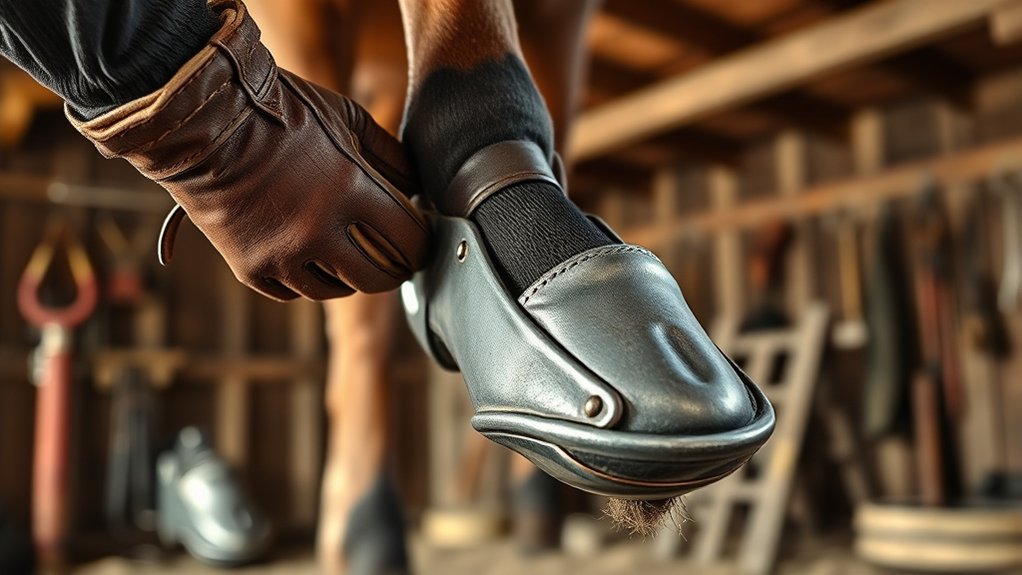
When you’re budgeting for shoeing your horse, expect to pay between $75 and $150 for a full set of shoes. Prices can vary depending on your location and the type of shoe used.
Budget $75 to $150 for a full set of horse shoes, with prices varying by location and shoe type.
Trimming alone generally costs $30 to $70. If your horse requires corrective shoeing, fees can climb as high as $250. Keep in mind, basic front shoeing usually costs less than a full set, which includes all four hooves.
The farrier’s experience considerably impacts cost. A highly skilled farrier ensures proper shoeing that supports your horse’s health and prevents lameness or injury.
You should prioritize farrier expertise over price to maintain your horse’s well-being.
Nationwide, the average shoeing session runs about $120, so it’s essential to plan accordingly for ongoing hoof care.
How Different Shoe Types and Materials Influence Costs
The type of shoe and material you choose play a big role in your overall shoeing expenses. Steel shoes are affordable and durable but heavier. They usually cost between $30 and $50 per pair.
Aluminum shoes weigh less and are priced between $50 and $80. They offer better performance but don’t last as long as steel. Specialty shoes, like those made from ceramic or composite materials, cost $80 to $150 or more, providing some advanced benefits.
Customizing your shoes, including custom-fit options, can add $20 to $50. This is because specialized forging or casting is involved.
| Shoe Type | Typical Cost Range |
|---|---|
| Steel | $30 – $50 |
| Aluminum | $50 – $80 |
| Specialty (Ceramic/Composite) | $80 – $150+ |
Choosing the right material means balancing the initial cost, shoe customization, and durability. This helps you get the best long-term value.
Additional Costs for Specialized and Corrective Shoeing
Because specialized and corrective shoeing involves more complex procedures, you can expect to pay between $200 and $600 per session. This higher cost reflects the additional time, expertise, and materials required to address specific hoof issues.
Horses with hoof deformities often need custom shoes designed to correct or accommodate their unique needs. These tailored solutions can involve custom shoes molded for precise fit and support, advanced materials like copper-embedded pads for therapeutic benefits, specialized adhesives and fastenings to secure corrective devices, and more frequent farrier visits to monitor and adjust treatment.
All these factors combine to make corrective shoeing more expensive, but it’s essential for maintaining your horse’s soundness and comfort when dealing with complex hoof conditions. It may cost more, but it’s worth it to keep your horse happy and healthy.
Cost Comparison: Trims, Front Shoes, Full Sets, and Repairs
Although costs can vary by location and specific needs, understanding the price differences between trims, front shoes, full sets, and repairs helps you budget effectively for your horse’s hoof care. Remember, horse shoeing myths often overlook the importance of farrier qualifications, which directly impact pricing and quality.
Here’s a clear comparison:
| Service | Average Cost ($) |
|---|---|
| Trims | 40 – 75 |
| Front Shoes | 75 – 125 |
| Full Sets | 150 – 300 |
Repair costs start around $50 but can exceed $200 depending on damage severity. Choosing a qualified farrier ensures proper care and avoids costly mistakes. It’s a myth that cheaper services always work fine.
Regional Differences in Shoeing Costs and Farrier Pricing
When you’re budgeting for horse shoeing, keep in mind that costs can vary widely depending on your region. Regional economic conditions and provider competition considerably shape farrier pricing.
Urban areas often have higher rates due to increased living and operational expenses, while rural regions might charge more because of travel distances and limited providers.
Factors influencing regional shoeing costs include travel time and route logistics impacting farrier availability, density of farriers affecting provider competition, local economic strength influencing service pricing, and accessibility challenges in remote areas raising operational costs.
On average, shoeing costs around $120.19 nationwide, but expect fluctuations of 20% or more depending on where you live. Understanding these regional differences helps you plan your horse care budget more accurately.
How Shoeing Frequency Affects Your Budget
If you adjust how often your horse gets shod, you directly influence your annual hoof care expenses. Shoeing every 4-5 weeks raises costs but supports horses with intense work or specific hoof health needs.
Conversely, extending intervals to 8-10 weeks cuts expenses but risks hoof overgrowth and potential damage. Effective maintenance scheduling balances cost with ideal hoof condition to avoid costly repairs.
| Shoeing Interval | Approximate Annual Cost* |
|---|---|
| 4 weeks | $975 – $1,200 |
| 5 weeks | $780 – $960 |
| 6 weeks | $650 – $780 |
| 8 weeks | $490 – $585 |
| 10 weeks | $390 – $465 |
*Costs vary by shoe type and service. Choose intervals that best maintain hoof health while managing your budget.
How Routine Hoof Care Can Lower Expenses
Since regular hoof trims every 6 to 8 weeks prevent overgrowth, you can avoid costly corrective shoeing and maintain healthier hooves. Routine hoof care plays a vital role in preserving hoof health and delivering long-term cost savings.
By staying consistent with maintenance, you’ll catch minor issues early, which reduces the risk of expensive infections or injuries.
Here’s how routine care helps lower expenses:
- Prevents serious hoof problems through proper trimming frequency
- Supports balanced hoof biomechanics, minimizing wear and tear
- Enables early detection of abnormalities, allowing less invasive treatments
- Reduces the likelihood of costly corrective shoeing and repairs
Investing in regular hoof care not only protects your horse’s well-being but also keeps your budget in check by avoiding preventable emergencies. It’s a smart way to save money while caring for your horse.
Choosing a Farrier: Balancing Cost, Quality, and Service
Although you might be tempted to choose the cheapest farrier, balancing cost, quality, and service is essential to guarantee your horse’s hoof health.
Look closely at farrier credentials to assure proper training and experience. Skilled farriers justify higher fees with meticulous, 30-45 minute sessions per horse.
Customer reviews can reveal service reliability and expertise, helping you avoid potential pitfalls.
Keep in mind regional pricing differences; urban farriers often charge more.
Prioritizing quality over price reduces the risk of costly hoof problems later.
While the average shoeing cost ranges from $75 to $150, investing in a reputable farrier pays off long-term by maintaining your horse’s comfort and performance.
Don’t compromise hoof care by focusing solely on affordability. It really makes a difference in the end.
Frequently Asked Questions
How Long Does It Take to Shoe a Horse?
It takes you about 2 to 3 hours to shoe a horse, including hoof trimming and shaping. Proper horse grooming and equipment maintenance help speed up the process and guarantee your horse’s hooves stay healthy and strong.
When you keep everything in good shape, the whole job goes smoother. Plus, your horse feels more comfortable and stays in better shape overall. So, taking the time to do these things really pays off in the long run.
What Materials Are Best for Horses With Sensitive Hooves?
You should choose lightweight materials like aluminum or composites for sensitive hooves. Combining proper shoeing techniques with rubber pads or antibacterial shoes supports hoof health.
This helps reduce pressure and prevent irritation or infection effectively. It’s all about giving your horse the best comfort and care possible.
How Do Seasonal Changes Affect Shoeing Needs?
Seasonal hoof expansion acts like nature’s rhythm, forcing you to adjust shoeing as temperature impacts shoeing needs.
Winter demands extra traction and pads, while summer’s heat wears hooves faster. This means you’ll need more frequent care and protection during the warmer months.
It’s all about staying ahead of what the season throws at your horse’s hooves.
Can Horses Go Barefoot Instead of Being Shod?
Yes, you can keep a horse barefoot if its hoof health is strong and stable. Proper shoeing techniques aren’t needed then. But you must manage trims carefully and monitor terrain to support natural hoof function and prevent issues.
It’s all about making sure the hooves stay healthy on their own. So, pay attention to the horse’s environment and how the hooves respond. That way, you can avoid problems before they start.
What Qualifications Should a Professional Farrier Have?
Think of farrier certifications as the compass guiding hoof health excellence. You’ll want a professional trained through recognized programs, holding credentials like AFA or FIA.
Hands-on experience and ongoing education are key to guaranteeing top-quality care for your horse.
Finding someone who stays updated means your horse’s hooves get the best treatment possible. It’s all about combining knowledge with practical skills.
Conclusion
Now that you know the factors shaping shoeing costs, you might wonder how to balance quality and budget. Will you opt for basic trims or invest in specialized shoes that protect your horse long-term? Remember, your farrier choice and routine care play vital roles in controlling expenses.
The real question is, are you ready to make informed decisions that keep your horse comfortable and your wallet intact? The next step is yours to take.