What Is A Stability Running Shoe – Features And Benefits Explained
A stability running shoe helps control overpronation by using medial posts, firmer foam, and guidance systems to keep your foot aligned and reduce inward rolling. These shoes provide targeted support through features like rigid heel counters and wider soles, helping prevent injuries such as shin splints and knee pain.
They’re ideal if you have flat arches or a history of overpronation-related injuries. Understanding how these technologies work will help you choose the best shoe for lasting support and injury prevention. It’s all about finding the right fit to keep you comfortable and safe while you run.
Key Takeaways
- Stability running shoes provide medial support to control overpronation and improve foot alignment during running.
- They use technologies like medial posts, guide rails, and firm heel counters to resist inward foot collapse.
- These shoes help prevent injuries such as shin splints, plantar fasciitis, and knee pain by promoting proper biomechanics.
- Ideal for runners with flat arches or moderate to severe overpronation, as well as neutral runners during recovery.
- Proper fit, regular gait assessment, and shoe rotation maximize their injury prevention and performance benefits.
What Are Stability Running Shoes: And Who Should Wear Them?
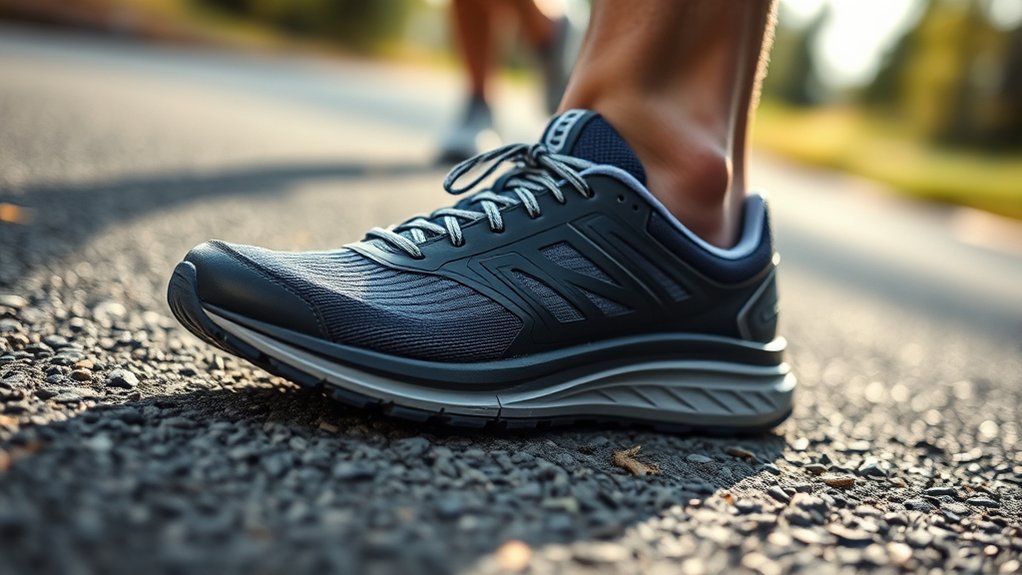
While many runners focus on cushioning and flexibility, stability running shoes specifically address overpronation by incorporating features like medial posts or firmer foam on the inner midsole to control excessive inward foot roll.
Stability shoes target overpronation with medial posts and firmer inner midsoles to control inward foot roll.
If you experience inward ankle rolling, shin splints, or knee pain, stability shoes can offer targeted support. These shoes are ideal for flat arches or moderate to severe overpronation.
That said, neutral runners with biomechanical issues may also benefit from stability shoes during training or recovery.
When considering fashion trends, several brands now blend functional stability with modern aesthetics, making style as important as performance. It’s pretty cool that you don’t have to sacrifice looks for support anymore.
Brand comparisons reveal variations in medial post firmness and guide rail technology.
So, you should evaluate models based on your specific biomechanical needs and preferences rather than just looks or popularity.
Taking the time to find the right fit can make a big difference in comfort and injury prevention.
How Stability Running Shoes Help Control Overpronation
You rely on medial support mechanisms like posts and guide rails in stability running shoes to counteract overpronation effectively. These pronation control features reinforce the inner midsole, providing enhanced midfoot stability that limits excessive inward foot motion.
Medial Support Mechanisms
Because overpronation can lead to injury and discomfort, stability running shoes incorporate specialized medial support mechanisms designed to control excessive inward foot roll. These features include firmer, dual-density foam on the medial midsole, which resists inward collapse, and reinforced heel counters that provide additional medial rigidity.
A wider midsole base and sidewall structures guide your foot along a neutral path, optimizing footwear ergonomics. Some models use external guide rails or J-Frame technology, acting as physical barriers to limit overpronation during running gait.
Running gait analysis confirms that these combined elements improve foot alignment, reduce stress on the ankle and knee joints, and enhance overall stability.
Pronation Control Features
How exactly do stability running shoes control overpronation to protect your feet? They combine targeted arch support with advanced cushioning technology to resist excessive inward foot roll. Medial posts or dual-density foam reinforce the inner side, while guide rails steer your foot towards a neutral gait.
Rigid heel counters and supportive sidewalls limit unwanted medial motion. This helps maintain proper alignment and reduces injury risks like shin splints.
| Feature | Function |
|---|---|
| Medial Post/Dual-density Foam | Resists excessive inward roll |
| Guide Rails/J-Frame Design | Guides foot to neutral position |
| Rigid Heel Counter | Limits medial motion |
| Arch Support & Cushioning Technology | Enhances stability, absorbs impact |
Together, these elements optimize control over pronation for safer, more efficient running.
Enhanced Midfoot Stability
Building on the pronation control features, stability running shoes enhance midfoot stability by incorporating firmer midsoles on the inner side that counteract excessive inward foot motion. This design includes medial posts or guide rails that support the midfoot arch, helping you maintain a neutral foot position during gait.
The targeted shoe cushioning balances comfort with structural support, reducing abnormal stress caused by overpronation. By distributing pressure evenly across your foot, these shoes optimize biomechanics and minimize injury risks such as shin splints, plantar fasciitis, and knee pain.
Plus, enhanced midfoot stability helps you sustain proper alignment throughout your run, especially when you start feeling tired or during long-distance efforts. This way, you can keep your performance consistent and avoid injuries.
When Should You Choose Stability Running Shoes Over Neutral?
If your gait analysis shows excessive overpronation, like flat arches or your foot rolling inward, you should think about stability running shoes instead of neutral ones. Stability shoes help lower the risk of injuries that come from overpronation, such as shin splints or plantar fasciitis.
Also, if you notice wear on the inner edge of your current shoes or see a flat footprint from the wet foot test, that’s a sign you might need extra support. When you look at different brands, stability models usually come in various color options but still keep the important structural features.
It’s a good idea to talk to a specialist to make sure these shoes are right for you instead of just going by your foot type alone.
| Indicator | Recommendation |
|---|---|
| Flat arches | Stability shoes advised |
| Inward foot roll | Choose stability over neutral |
| Inner shoe wear (inner edge) | Switch to stability shoes |
| Injury history (e.g., plantar fasciitis) | Stability preferred |
| Long, slow runs with overpronation | Stability aids control |
Key Features That Provide Support And Stability In Running Shoes
You’ll find that stability running shoes include design elements like medial posts and guide rails. These help control overpronation and keep your foot properly aligned.
Plus, supportive midsole technologies—like dual-density foam and wider bases—boost stability by resisting too much inward rolling. All of these features work together to give you a secure platform that helps optimize your running mechanics.
Stability Design Elements
Although stability running shoes come in various designs, certain key elements consistently provide support and control during your runs. These elements work together to manage overpronation while maintaining comfort and traction.
- Medial posts: Dual-density foam resists excessive inward roll, enhancing stability on the shoe’s inner side.
- Guide rails/J-Frames: These guide your foot to prevent overpronation without restricting natural motion.
- Rigid heel counters and reinforced sidewalls: They maintain proper foot alignment and improve heel cushioning for shock absorption.
- Wider midfoot bases and sole flare: These increase lateral stability and outsole traction, helping you stay balanced on varied surfaces.
Each part plays a role in keeping your feet comfortable and supported.
Supportive Midsole Technologies
When seeking enhanced support and stability in your running shoes, the midsole plays an essential role by integrating specialized technologies designed to control overpronation and maintain proper alignment.
Key features include dual-density foam or a medial post, which is a denser foam section beneath the arch that resists inward foot roll. This is especially important for runners identified through running gait analysis.
Geometric design elements like a wider base and sole flare increase surface contact and help reduce excessive foot movement.
Stiffening components such as plates or rods enhance torsional rigidity, stabilizing your foot throughout the stance phase.
Advanced lightweight materials like PEBA foam combine cushioning with firm support. This preserves stability without adding extra weight.
Supportive midsoles often work well with orthotic inserts to ensure tailored correction and the best biomechanical function during your runs.
How Stability Technologies Work To Support Your Feet
Because excessive inward foot roll can lead to inefficient biomechanics and injury, stability running shoes use specialized technologies to support your feet effectively. These designs come from detailed gait analysis and work to optimize foot biomechanics by controlling motion and keeping alignment in check.
Key components include:
- Medial posts made of dual-density foam resist overpronation by reinforcing the shoe’s inner side.
- GuideRails or similar systems guide your foot along a neutral path, limiting unwanted motion.
- Embedded plates or rods add torsional rigidity, which helps stabilize foot propulsion.
- Geometric features like wider bases, sole flare, and internal sole contours work together to enhance balance and stability.
All these elements combine to reduce excessive pronation, keep your biomechanics efficient, and provide steady support throughout your run. It’s like giving your feet a little extra help to keep moving smoothly.
How Stability Running Shoes Can Prevent Common Injuries
Stability running shoes reduce the risk of common injuries by managing excessive inward foot motion that stresses muscles, tendons, and joints. Through advanced shoe manufacturing techniques, features like medial posts and guide rails provide targeted support, optimizing running biomechanics to maintain proper foot alignment.
This correction lessens strain on the plantar fascia, shin, and knee structures, reducing injuries such as plantar fasciitis, shin splints, and knee pain. By promoting a more efficient gait, these shoes help distribute load evenly, lowering the likelihood of stress fractures linked to abnormal motion.
Consistent use during training reinforces foot stability, preventing injury recurrence associated with overpronation. Essentially, stability shoes integrate biomechanical principles and manufacturing innovations to safeguard your musculoskeletal health during running.
It’s all about keeping you comfortable and injury-free on your runs.
How To Test And Assess Your Stability Needs At Home
Although professional gait analysis offers the most accurate assessment, you can effectively evaluate your stability needs at home using simple methods. Understanding your foot mechanics is essential, especially when selecting footwear fashion that complements your athletic apparel for the best performance.
Try these four steps:
- Perform the wet foot test: step on paper with wet feet. A full, flat print suggests overpronation.
- Inspect wear patterns on your running shoes. Inner edge wear often indicates overpronation.
- Record or observe your gait in a mirror, noting any excessive inward or outward foot rolling.
- Assess your shoes’ rigidity. Overly flexible shoes may lack needed stability features.
These evidence-based techniques help you identify if stability running shoes could benefit your stride. Give them a try and see what you discover!
What To Look For When Buying Stability Running Shoes
When choosing running shoes to address overpronation, focus on features that provide targeted support and control. Look for a medial post or dual-density foam on the shoe’s inner side to stabilize excessive inward foot roll effectively.
Confirm the heel counter is firm and the sole features a wider base or flare to enhance stability during your gait cycle.
Ensure a firm heel counter and a wider sole base for improved stability with each step.
Guidance systems like guide rails or J-Frames also help in controlling motion.
Select cushioning and midsole firmness that match your arch type and pronation severity to balance comfort and support.
Prioritize fit to avoid rigidity that impairs natural movement.
Sure, fashion trends and color options are appealing, but don’t compromise on these technical attributes. They’re essential for peak performance and injury prevention.
How To Get The Best From Your Stability Running Shoes
To maximize the benefits of your stability running shoes, you should regularly evaluate your gait and foot mechanics to guarantee the shoe’s support matches your current pronation pattern. This ensures the shoe effectively controls overpronation without restricting natural movement.
Follow these steps:
- Rotate your stability shoes with neutral running shoes to maintain natural foot dynamics and prevent overreliance on support.
- Incorporate strength training targeting foot and leg muscles to complement the shoe’s biomechanical assistance.
- Replace your shoes every 300-500 miles or when cushioning degrades to sustain optimal shock absorption and stability.
- Maintain proper running form and transition gradually between shoe types to minimize injury risk.
While staying updated on fashion trends and selecting appropriate running accessories is great, always prioritize biomechanical function over aesthetics for the best performance.
Frequently Asked Questions
Can Stability Running Shoes Be Used for Walking or Casual Wear?
Yes, you can wear stability running shoes for walking and casual wear. They offer great comfort with supportive cushioning that helps keep your feet happy during long walks. Plus, they provide technical benefits like better foot alignment.
What’s cool is that these shoes aren’t just functional—they also look good. Their design fits right in with everyday activities and casual outings. So, you get the best of both worlds: support and style.
How Often Should Stability Running Shoes Be Replaced?
You should replace stability running shoes every 300 to 500 miles, considering shoe material degradation and your usage. Check warranty policies for coverage, and watch for midsole compression or outsole wear indicating diminished support and cushioning.
It’s a good idea to keep an eye on how your shoes feel during runs. When they start feeling less supportive or cushioned, it’s probably time for a new pair. Your feet will thank you!
Are Stability Running Shoes Heavier Than Neutral Running Shoes?
Think of stability shoes like a backpack with extra gear—you’ll definitely feel the weight. Stability shoes are generally 5-15% heavier than neutral ones because they have denser foam and medial posts built into their construction.
This added support is great for some runners, but it does affect the overall weight. So, when you’re comparing, keep in mind that stability shoes might feel a bit bulkier on your feet. It’s all about what works best for your running style!
Can Stability Shoes Help With High Arches or Supination?
Yes, stability shoes offer arch support and help correct your gait if you have high arches or supination. They feature firm midsoles and cushioning that work together to spread out pressure evenly.
This not only makes your feet more comfortable but also lowers the risk of injury. Plus, it encourages a more neutral running gait, which is great for overall foot health.
Do Stability Running Shoes Require Special Socks or Insoles?
You don’t need special socks or insoles to run smoothly in stability shoes. Their shoe material supports your foot well. Plus, with color options, you can customize your style.
Just make sure to use moisture-wicking socks to keep your feet dry. And if your doctor or podiatrist prescribes orthotics, go ahead and use them. Otherwise, regular socks and insoles work just fine.
Conclusion
Choosing stability running shoes is like giving your feet a tailored blueprint. They correct overpronation, enhance support, and reduce injury risks.
By understanding your unique gait and evaluating your stability needs, you guarantee ideal shoe performance. Focus on key features and proven technologies that provide structured control without sacrificing comfort.
With the right pair, you’ll run more efficiently and safely. Every step becomes a scientifically supported stride toward better performance and injury prevention.