How To Wash Shoe Laces – Cleaning Tips And Methods
To wash your shoelaces, first remove them and shake off any loose dirt. Use a mesh bag if you’re machine washing, and choose a gentle cycle with mild detergent. Just remember, bleach is only for white cotton laces.
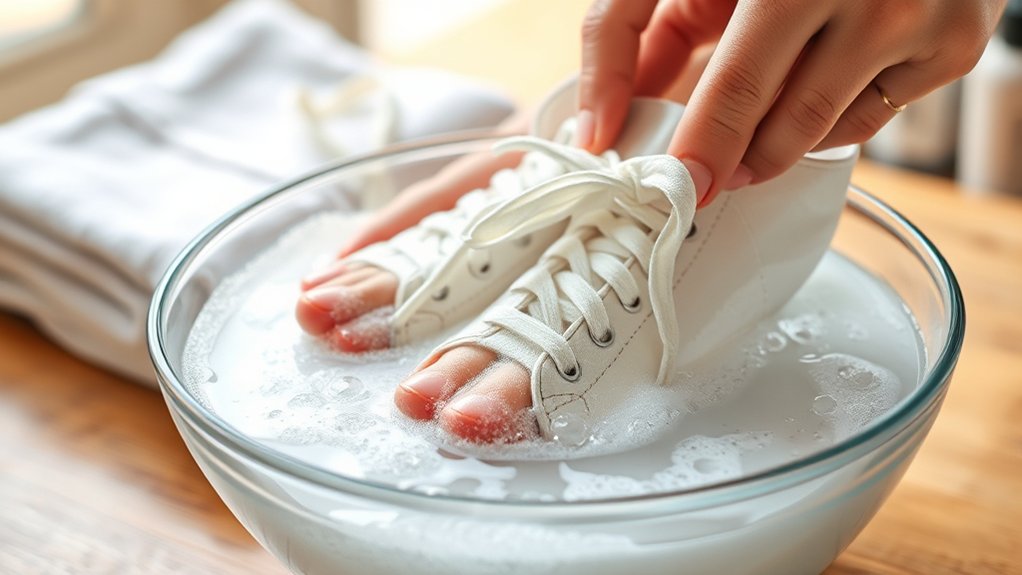
If you prefer hand washing, soak the laces in warm soapy water. Gently scrub any stubborn stains with a soft brush, then rinse them well.
Air dry your laces away from direct heat to protect the aglets. Different materials need a bit of tailored care, so keep that in mind. Knowing when to clean or replace your laces will help keep them fresh for longer.
Following these steps will guide you through the process easily. You’ll have your shoelaces looking good as new in no time!
Key Takeaways
- Remove laces from shoes and brush off loose dirt before washing to ensure effective cleaning.
- Use a mesh laundry bag and wash laces on a gentle cycle with warm water and mild detergent.
- Soak white cotton laces briefly in a bleach solution for whitening, then rinse thoroughly to prevent damage.
- Hand wash delicate or mixed-material laces using mild detergent and a soft brush to carefully remove stains.
- Air dry laces flat or hanging, avoiding direct sunlight and tumble drying to protect fibers and aglets.
Prepare Shoelaces for Washing
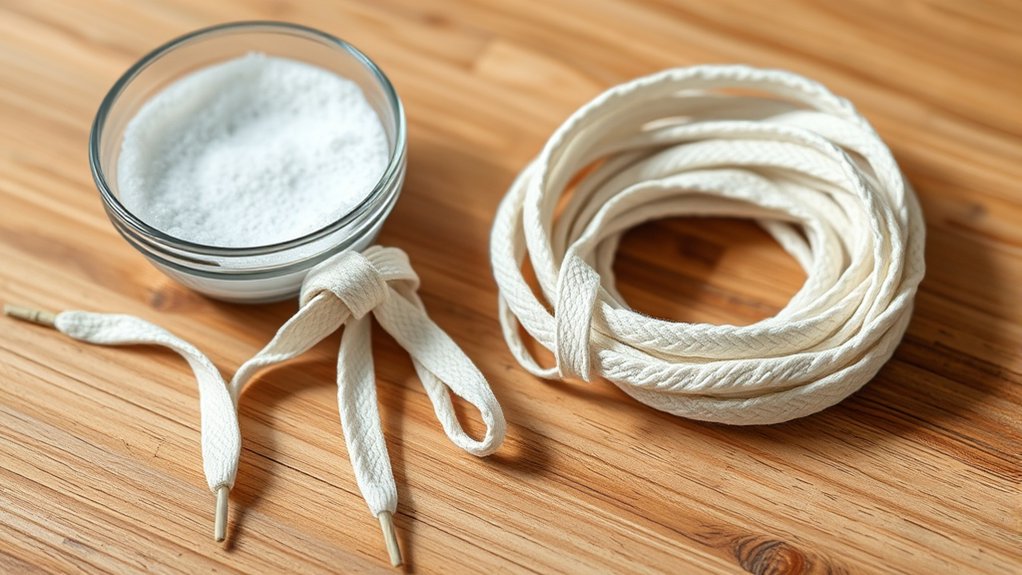
Before you wash your shoelaces, place them in a lingerie or mesh bag to keep them from tangling or getting damaged during the wash cycle. This step preserves the integrity of the lace knotting, which has evolved throughout shoelace history from simple ties to intricate patterns.
Once secured, fully submerge the bag in a bleach solution, using ¼ cup of Clorox™ Disinfecting Bleach per gallon of water.
Fully immerse the secured bag in a bleach solution with ¼ cup Clorox™ per gallon of water.
Weigh the bag down with a dishwasher-safe plate to prevent it from floating.
Soak cotton shoelaces for about five minutes to loosen dirt and stains effectively.
After soaking, rinse thoroughly to remove any leftover bleach, making sure no damage occurs during washing or drying.
This methodical preparation respects the shoelace’s craftsmanship and guarantees a cleaner, longer-lasting result.
It’s a simple step that really makes a difference. Plus, your shoelaces will come out looking fresh and ready to wear again.
Care for Different Lace Materials
Once your shoelaces are properly prepped and soaked, it’s important to tailor your cleaning approach to the specific material of each lace.
For cotton laces, use hot water and bleach for whitening, but make sure the material can handle it so you don’t cause any damage.
Polyester and synthetic laces should be cleaned with warm or cool water. Avoid using high heat because it can mess with their stain resistance.
If you have mixed-material laces with decorative elements, gentle hand cleaning is the way to go. This helps protect any embellishments they might have.
Natural fibers like hemp or jute need to be washed in cold water and air-dried carefully. This prevents them from shrinking.
Delicate satin or silk laces only tolerate spot cleaning with mild detergent. Avoid soaking or machine washing these to keep them in good shape.
And if you’re thinking about dyeing your laces, be sure to consider the material’s compatibility. This helps preserve both the texture and color throughout the process.
Machine Wash Shoelaces
Before you toss your shoelaces into the washing machine, it’s a good idea to take them out and give them a quick brush to get rid of any loose dirt. This helps prevent any residue from building up during the wash.
Next, pop the laces into a mesh laundry bag or even a pillowcase. This little trick keeps them from tangling or getting damaged while they spin around in the machine.
When you’re ready to wash, choose a gentle cycle with the right water temperature and use a mild detergent. This way, you’ll protect the fabric and keep the colors looking fresh.
Preparing Laces Properly
Although washing shoelaces in a machine might seem straightforward, preparing them properly guarantees the best cleaning results and prevents damage. First, separate shoelaces made from colorfast fabrics and delicate textures to avoid bleeding or fraying.
Place the laces in a lingerie or mesh laundry bag to keep them contained and prevent tangling. For cotton laces needing whitening, fully submerge them inside the bag in a bleach solution. Use about ¼ cup of Clorox™ Disinfecting Bleach per gallon of water.
Weigh down the bag with a dishwasher-safe plate to keep it submerged and soak the laces for five minutes. This loosens dirt and stains, ensuring a thorough clean once machine washed. Proper preparation extends your laces’ lifespan and maintains their appearance.
Machine Washing Tips
After properly preparing your shoelaces, you’ll want to focus on machine washing them correctly to maintain their quality. Start by removing laces from shoes and placing them in a mesh laundry bag to prevent tangling and preserve shoelace threading. Use warm water and a gentle cycle to clean effectively while minimizing fraying or shrinkage.
Add a small amount of detergent or stain remover. For white laces, a splash of bleach can enhance whitening, but avoid it on dyed laces to protect the dye. After washing, air dry the laces flat or hanging. Never tumble dry to avoid damaging aglets.
| Step | Detail | Tip |
|---|---|---|
| Remove Laces | From shoes | Keeps shoelace threading intact |
| Use Mesh Bag | Prevents tangling | Essential for delicate laces |
| Wash Settings | Warm water, gentle cycle | Protects lace dyeing |
| Detergent | Small amount | Stain remover for tough spots |
| Drying | Air dry only | Avoid dryer to protect aglets |
Hand Wash Shoelaces to Remove Stains
When you want to remove stains from your shoelaces, start by soaking them in warm water mixed with a small amount of dish soap or a homemade cleaning solution for 15 to 20 minutes. This loosens dirt without harming colorfast fabrics or synthetic materials.
After soaking, gently scrub the laces with a soft-bristled toothbrush to target stubborn stains.
For organic stains like grass or food, soak shoelaces in a vinegar-water solution before scrubbing to improve stain removal.
Rinse the laces thoroughly under cool running water to remove all soap and loosened grime.
Finally, hang them to air dry in a well-ventilated area, avoiding direct sunlight or heat, which can degrade synthetic fibers or cause colors to fade.
This method guarantees effective stain removal while preserving lace integrity. It’s a simple way to keep your shoelaces looking fresh without any hassle.
Remove Common Shoelace Stains and Whiten Laces
Before soaking your shoelaces, use a small brush or toothbrush to gently scrub off surface dirt and light stains. This step helps keep the color intact and stops the laces from fraying by loosening debris without harsh scrubbing.
Gently brushing shoelaces removes surface dirt and prevents fraying, keeping colors vibrant without harsh scrubbing.
If you run into stubborn stains, just apply a stain remover or a baking soda paste directly on those spots.
When it comes to whitening white laces, soak them in a mild bleach solution for about five minutes.
Here’s how you can do it step-by-step:
- Brush off loose dirt carefully.
- Spot-treat stains with your chosen cleaner.
- Soak white laces briefly in bleach solution.
- Rinse thoroughly with clean water to remove residue.
Make sure to rinse really well to avoid any discoloration or damage to the fabric.
Taking care of your laces regularly keeps them bright and extends their lifespan, while also preserving their color and stopping fraying.
When to Clean, Maintain, or Replace Shoelaces
You should clean your shoelaces whenever you spot surface stains, mild yellowing, or notice any unpleasant odors. It’s a good idea to check them regularly for signs of fraying, thinning, or damage that can’t be fixed—when you see those, it’s definitely time to replace them.
Plus, if washing them over and over causes shrinking, weakening, or color fading, it’s usually better to just get new laces instead of trying to keep cleaning the old ones.
Signs To Clean
Although shoelaces are small, they play a crucial role in your footwear’s overall look and function. So, you should clean them whenever you notice visible dirt, stains, or yellowing. Keeping the original lace color and preserving the material’s durability are key reasons to clean your laces regularly.
To know when to clean, focus on these signs:
- Noticeable dirt or mud accumulating on the laces, dulling their appearance.
- Stains that alter the lace color, especially on lighter or white laces.
- Yellowing caused by sweat, oils, or prolonged exposure to dirt.
- Mild odor buildup that cleaning can eliminate without damaging material durability.
Indicators For Replacement
When shoelaces show fraying, significant damage, or persistent odors, it’s time to replace them instead of trying to clean them again. Keep an eye on the material of your laces because washing them too often can weaken or shorten them, which means they need replacing.
If your laces are just discolored but not damaged, a deep clean usually does the trick. However, stubborn stains or mold are a different story — those require new laces. It’s a good idea to check your laces regularly so you can tell when cleaning is enough and when replacement is necessary.
| Condition | Cleaning Solution | Replacement Indicator |
|---|---|---|
| Fraying edges | Not effective | Replace immediately |
| Persistent odors | Often ineffective | Replace for hygiene |
| Mold/fungal growth | Usually resistant | Replace to avoid health risks |
| Shortened/weakened lace | Not restorable | Replace for durability |
| Stains (deep, resistant) | Deep clean advised | Replace if stains persist |
Tips for Long-Lasting Clean Shoelaces
Since shoelaces encounter constant friction and exposure to dirt, maintaining their cleanliness requires regular inspection and gentle care. To guarantee your laces last longer and stay clean, follow these tips:
- Check your laces frequently for dirt buildup and stains. Address them promptly to prevent discoloration.
- Clean laces gently by hand washing with baking soda or vinegar. This helps preserve the fibers and avoids fraying.
- After washing, air dry laces away from direct sunlight or heat sources. This protects the material and color.
- Use proper storage solutions by keeping laces in a dry, clean space.
Also, carefully remove them during lace threading to avoid unnecessary tension or damage.
Frequently Asked Questions
Can I Use Alternative Bleach Brands for Whitening Shoelaces?
You can use alternative bleach brands if you check the bleach concentration and verify that the shoe material is compatible. Always test a small hidden area first.
Make sure to use diluted bleach and confirm the product is safe for fabric. This way, you can avoid damage or discoloration.
It’s better to be cautious when working with bleach, especially on shoes you care about. Trying out a new brand can work just fine as long as you follow these steps!
How Do I Safely Dispose of Bleach Solution After Soaking Laces?
You should practice bleach safety by diluting the solution with plenty of water before disposal. Pour it into a well-ventilated outdoor drain. Avoid sinks or storm drains, as they can cause environmental harm.
Always check your local disposal methods and regulations. They can vary depending on where you live. This way, you’ll make sure you’re doing it safely and responsibly.
Are There Eco-Friendly Substitutes for Bleach in Shoelace Cleaning?
Want natural cleaning that cares? You can use white vinegar, baking soda, or hydrogen peroxide. They brighten laces gently, preserve dye, and avoid harsh chemicals.
These eco-friendly options keep your shoelaces fresh without environmental harm. Plus, they’re easy to find and super affordable. Give them a try next time your laces need a refresh!
Can Colored Shoelaces Be Safely Bleached Without Fading?
You can bleach colored shoelaces safely by testing dye compatibility on a hidden section first. Use diluted, mild bleach to guarantee color preservation, especially on natural fibers. Avoid prolonged exposure to prevent fading and maintain vibrancy.
It’s a good idea to take it slow and check the color often. This way, you keep your shoelaces looking fresh without any unwanted surprises. Just remember, patience is key when working with bleach on colors.
How Long Can Soaked Shoelaces Be Left in Bleach Solution?
You should limit the soaker duration to about 5 minutes with a moderate bleach concentration. Exceeding this risks fiber damage and discoloration. So, keep a close eye on them while they soak.
Remove the laces promptly to preserve their quality. It’s better to be safe than sorry when working with bleach. Just a few extra minutes can make a big difference!
Conclusion
Think of your shoelaces as the threads weaving the story of your shoes. Just like tending a garden, cleaning them regularly keeps them vibrant and strong. Ignoring wear leads to inevitable decay.
By preparing, choosing the right method, and addressing stains promptly, you guarantee your laces remain reliable and fresh. With consistent care, you won’t just clean shoelaces. You’ll preserve the foundation that holds your steps steady every day.