What Is A Hot Shoe On A Camera – Functions And Uses Explained
A hot shoe on your camera is a metal bracket with electrical contacts that lets you securely mount and control accessories like flashes, microphones, and external monitors. It enables two-way communication for features such as TTL flash control and remote triggering, expanding your camera’s creative and functional capabilities.
Different brands use varied pin configurations, so compatibility matters. Proper handling and voltage safety are vital to protect your gear. Keep exploring to understand how to optimize and maintain this essential tool effectively.
Key Takeaways
- A hot shoe is a metal bracket on a camera that mounts and electrically connects accessories like flashes and microphones.
- It enables two-way communication for functions such as TTL flash control and remote triggering.
- Hot shoes vary by brand, with different pin configurations affecting accessory compatibility.
- Proper attachment and maintenance, including cleaning contacts and turning off the camera, ensure reliable performance.
- Cold shoes lack electrical contacts and serve only as mechanical mounts, unlike hot shoes with electronic connectivity.
What Is a Hot Shoe and Why Use One?
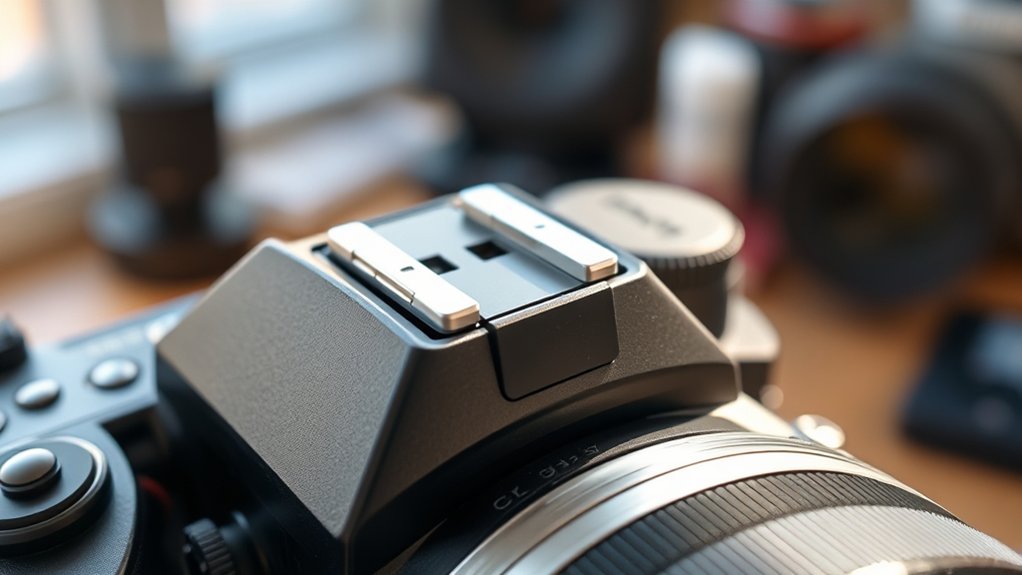
Although it may look like a simple metal bracket on top of your camera, a hot shoe plays an essential role by providing both a secure mount and electrical contacts to connect and control accessories such as flashes and microphones. This standardized interface enables two-way communication between your camera and compatible devices, which is indispensable for advanced photography techniques.
When you integrate external flashes via the hot shoe, it allows for TTL flash control and remote triggering. This ensures precise synchronization with your camera’s shutter, which is key for sophisticated lighting setups.
It also allows automatic exposure adjustments and creative control. By expanding your camera’s functionality beyond built-in features, the hot shoe becomes indispensable for achieving professional results in varied environments and lighting conditions.
How to Attach and Use Accessories With a Hot Shoe
When attaching accessories to your camera’s hot shoe, you need to make sure the contact pins on the accessory line up perfectly with the electrical contacts on the hot shoe. Start by sliding the accessory into the shoe, making sure it’s compatible with your hot shoe. This helps maintain electrical communication for functions like TTL metering or remote triggering.
Next, secure the accessory firmly by tightening any locking mechanism to keep it from accidentally coming loose while you’re shooting.
If the accessory uses a different mounting standard, don’t worry—you can use a hot shoe adapter to get the right fit and connection.
Proper alignment and a secure attachment are really important. They ensure two-way communication between your camera and the accessory, which means everything works smoothly and reliably throughout your shoot.
Other Accessories You Can Use With Hot Shoes
You can use hot shoes to mount all kinds of accessories. Some of these are non-electrical, like spirit levels or cold shoe adapters, which are pretty straightforward.
But hot shoes aren’t just for those—they also work with electronic devices that actually communicate with your camera. This includes things like external microphones, GPS units, and remote triggers for off-camera flashes.
These electronic accessories really expand what your camera can do. They help improve your audio, add geotagging to your photos, and give you better control over lighting. It’s a simple way to boost your photography game!
Non-Electrical Accessory Options
How can you expand your camera’s functionality without relying on electrical connections? The hot shoe’s mechanical attachment capability lets you mount various non-electrical accessories that enhance your shooting setup. These mechanical attachments are perfect for creative lighting and other practical enhancements where electronic communication isn’t needed.
You can use a cold shoe or the hot shoe’s physical mount point for these purposes. Consider these options:
- Flash diffusers and color filters for creative lighting effects
- External microphones that don’t require power from the camera
- Articulating mounts and external viewfinders for flexible framing
- GPS units and monitors that attach mechanically without electrical contacts
Using non-electrical accessories on your hot shoe boosts versatility, especially for video work and studio setups where electrical integration isn’t essential. It’s a simple way to get more out of your camera without the hassle of extra wiring.
Electronic Communication Devices
Although hot shoes originally served primarily to trigger flashes, they now accommodate a broad range of electronic communication devices that considerably enhance camera functionality. You can mount wireless triggers and remote receiver units directly onto the hot shoe, enabling seamless off-camera flash control via wireless connectivity.
Additionally, GPS units attach to provide precise geotagging data for your images. Audio devices like external microphones and recorders benefit from hot shoe mounting, improving sound capture during video shoots. External monitors and electronic viewfinders also connect through the hot shoe, assisting with framing and exposure accuracy.
Battery management is critical for these accessories, so many integrate power-saving features or draw minimal current from the camera. To maintain reliable electrical contact and protect these devices, using protective hot shoe covers is recommended to prevent dust and moisture ingress. It’s a simple step that can save you a lot of hassle down the line.
Hot Shoe Electrical Contacts and Trigger Voltages Explained
Because hot shoe electrical contacts serve as the essential link between your camera and external flashes or accessories, understanding their design and trigger voltage limits is critical. These contacts enable communication and synchronization through multiple pins, ensuring hot shoe compatibility with various devices.
However, improper handling can lead to electrical contact corrosion or damage. So, it’s important to be careful.
Keep in mind:
- Trigger voltages vary; modern standards allow up to 24 volts, but older flashes may exceed 100 volts.
- Many cameras protect contacts up to 5 volts; exceeding this risks damage.
- Using high-voltage flashes without adapters can harm your camera’s internal electronics.
- Radio triggers offer electrical isolation, preventing high voltages from reaching your camera.
Proper knowledge safeguards your camera’s hot shoe from electrical failures and corrosion. This helps keep your gear working reliably.
Hot Shoe Safety Tips: Protect Your Camera and Flash
You need to manage trigger voltages carefully to avoid damaging your camera’s hot shoe contacts. So, if you’re working with high-voltage or vintage flashes, using voltage protection adapters is really essential.
Also, always handle the contacts with care—keep them clean and make sure your accessories are compatible.
Trigger Voltage Precautions
When connecting a flash to your camera’s hot shoe, you need to make sure the trigger voltage stays within your camera’s specified limits. This is usually around 6V to 12V. Going over this range can cause permanent damage to your camera’s hot shoe circuitry.
Older flashes often output trigger voltages that are much higher, sometimes even hundreds of volts. So, to keep your equipment safe, always check the trigger voltage with a multimeter before you attach the flash.
Here are some precautions to keep in mind:
- Verify that the flash trigger voltage is compatible with your camera’s specifications.
- Avoid using high-voltage flashes unless you have proper voltage protection in place.
- Use reliable testing tools to inspect the trigger voltage before connecting the flash.
- Remember, voltage protection devices help reduce risk but don’t completely eliminate it.
Using Voltage Protection Adapters
Although many modern cameras tolerate only low trigger voltages, voltage protection adapters effectively guard your camera’s hot shoe circuitry from potentially damaging high voltages produced by some external flashes. These adapters incorporate voltage protection components, such as TRIACs or resistors, that regulate and limit the voltage transferred to your camera, ensuring safe trigger compatibility.
Before connecting any external flash or trigger, verify your camera’s maximum trigger voltage, commonly 6V or 24V, to avoid exceeding its tolerance. Voltage protection adapters are essential when using high-voltage studio flashes, which can output hundreds of volts and risk permanent damage.
Safe Handling of Contacts
Since the hot shoe serves as the electrical interface between your camera and external accessories, proper handling of its contacts is essential to prevent damage and guarantee reliable performance. Neglecting hot shoe maintenance can lead to contact corrosion, which might cause unreliable connections or even hardware failure.
To keep things running smoothly, here are some hot shoe safety tips you should follow:
Always turn off your camera before attaching or detaching accessories to avoid electrical sparks or damage.
Avoid touching contacts with metal objects or your fingers to prevent static discharge and short circuits.
Use protective covers when the hot shoe isn’t in use to shield contacts from dust, moisture, and debris.
Also, make it a habit to regularly inspect for contact corrosion. When needed, gently clean the contacts with a soft, dry cloth to maintain ideal electrical connectivity.
Brand Differences and Proprietary Hot Shoe Designs
Because each camera brand develops its own hot shoe designs, you’ll encounter varying pin configurations and electrical contacts that affect compatibility. These proprietary designs often include extra pins for advanced features like wireless control, which complicates brand compatibility.
For example, Canon’s 13+1 pin system is quite different from Nikon’s ISO standard hot shoe. Sony’s Multi Interface Shoe uses 21+3 pins and adapts to older standards but still keeps unique functions in place. Here’s a quick comparison:
| Brand | Pin Configuration |
|---|---|
| Canon | 13+1 pins (proprietary) |
| Nikon | ISO standard (5 pins) |
| Sony | 21+3 pins (Multi Interface) |
| Minolta | 4 or 7 pins (Auto-lock) |
Knowing these differences will help you pick the right accessories and avoid any connection problems down the line.
Troubleshooting Hot Shoe Compatibility and Sync Issues
When you encounter hot shoe compatibility and sync issues, the root cause often lies in mismatched pin configurations or incompatible trigger voltages from third-party accessories and older flash units. Understanding compatibility standards and proper voltage regulation is essential to resolve these problems.
To troubleshoot effectively, make sure to verify your accessory’s pin layout matches your camera’s hot shoe configuration. Check for proper voltage regulation to prevent damage from high trigger voltages.
Also, clean hot shoe contacts regularly to eliminate dust or corrosion that disrupt sync signals.
Don’t forget to configure multi-contact or switchable hot shoe modes correctly to ensure reliable flash firing.
Using voltage protection adapters or compatible radio triggers also helps maintain synchronization integrity and protects your camera system from electrical inconsistencies.
Cold Shoes vs. Hot Shoes: What’s the Difference?
Although cold shoes and hot shoes may look similar at first glance, they actually serve different functions in camera setups. Cold shoes are simple mounting brackets without electrical contacts. They provide only a mechanical attachment point for accessories like lights or monitors that don’t need power or data transmission.
Hot shoes, on the other hand, include metal contacts that enable electronic communication between the camera and attached devices. This means hot shoes can support advanced features such as TTL flash control, audio input, and remote triggers.
Wireless connections for remote triggering also rely on hot shoe contacts to synchronize accessories smoothly. So, when choosing between cold and hot shoes, think about whether your accessory needs electronic control or just a physical mount.
Many cameras offer both options to handle a wider range of accessories easily.
Frequently Asked Questions
Can I Use a Hot Shoe Adapter for Non-Camera Devices?
You can use third party adapters to mount non-camera devices, but most lack electrical contacts and wireless connectivity.
Make sure the adapter supports necessary power or data transfer to avoid damage or malfunction with your accessories.
It’s always a good idea to double-check compatibility before you buy. That way, you won’t run into any surprises when setting up your gear.
How Does a Hot Shoe Affect Battery Life?
Using a hot shoe can cause battery drain because it powers external devices and enables electronic communication. This means your camera has to work a bit harder than usual.
So, it’s a good idea to manage your power wisely. Try turning off any accessories when you’re not using them.
Doing this helps minimize unnecessary battery consumption and lets you shoot for longer without worrying about running out of power.
Are Hot Shoes Compatible With Mirrorless and DSLR Cameras?
Think of hot shoe standards as universal keys that enable accessory compatibility. You’ll find most mirrorless and DSLR cameras embrace these keys, letting you attach flashes and triggers seamlessly.
Just make sure to double-check that your model supports the specific electrical contacts needed. It’s a quick step that can save you from any surprises down the line.
Can a Hot Shoe Be Used Underwater With Special Housing?
Yes, you can use a hot shoe underwater with special housing. But you’ll need a waterproof hot shoe or sealed mount to protect the electrical contacts.
This setup guarantees reliable underwater lighting without risking shorts or damage to your gear. So, it’s definitely doable if you have the right equipment. Just make sure everything is properly sealed before you dive in!
What Are the Historical Origins of the Hot Shoe Design?
You know what they say, “necessity is the mother of invention.” In camera history, the hot shoe originated in the early 20th century. It evolved alongside flash development to include electrical contacts.
These contacts made the connection for electronic accessories more synchronized and reliable. It was a simple but game-changing design. Cameras became much more versatile because of it.
Conclusion
Now that you know a hot shoe is essential for attaching flashes or triggers, imagine shooting a wedding where your off-camera flash fires perfectly every time, thanks to a reliable hot shoe connection.
By understanding its functions, electrical contacts, and safety tips, you can confidently expand your gear’s capabilities. Keep in mind brand differences and compatibility to avoid sync issues. This way, your camera and accessories work seamlessly together for flawless results.