How To Determine Shoe Size – Simple Sizing Methods
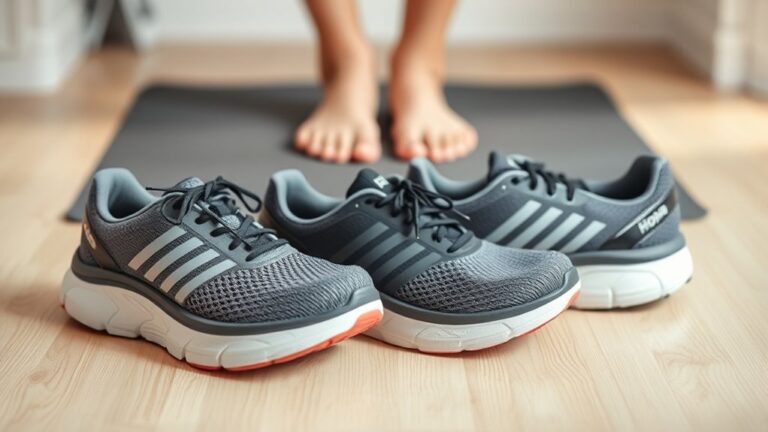
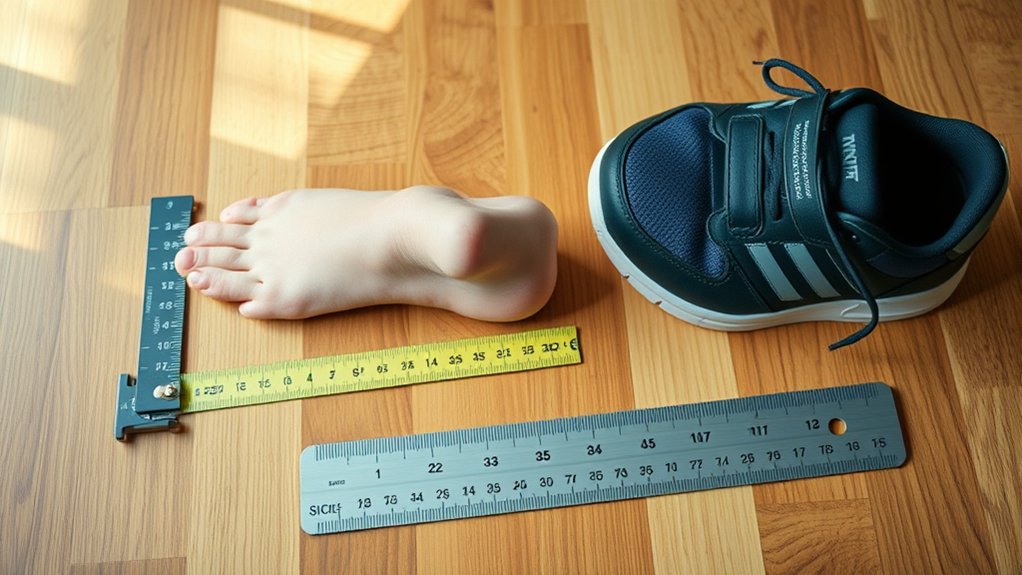
To determine your shoe size accurately, measure your foot length and width at the end of the day while wearing typical socks. Trace your foot on a flat surface, mark the longest toe and heel, then measure the distance between them.
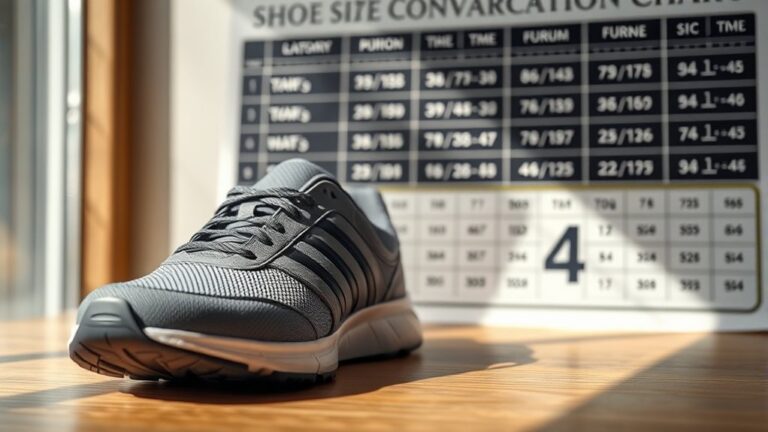
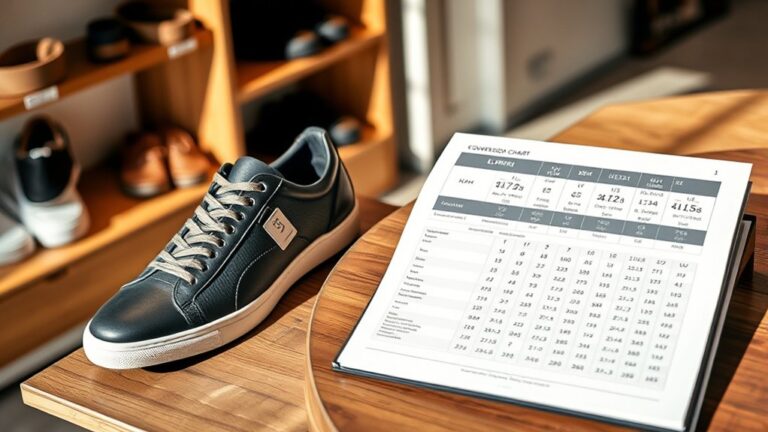
Use these measurements to compare with brand-specific size charts, considering differences between men’s, women’s, and kids’ sizes. Don’t forget to account for foot shape and width for comfort.
Understanding these basics will help you achieve the best fit and learn how to fine-tune sizing further. It’s really about finding what works best for you!
Key Takeaways
- Measure your feet at the end of the day while standing on a hard surface for accurate length and width.
- Trace your foot outline on paper, mark the longest toe and heel, then measure the distance with a ruler.
- Use the larger foot measurement when feet differ in size, and compare with brand-specific size charts.
- Account for width by measuring the widest part of the foot and checking manufacturer width guides.
- Prioritize fit and comfort over size numbers, considering growth allowances for kids and differences between brands.
How to Measure Your Foot for the Perfect Shoe Size
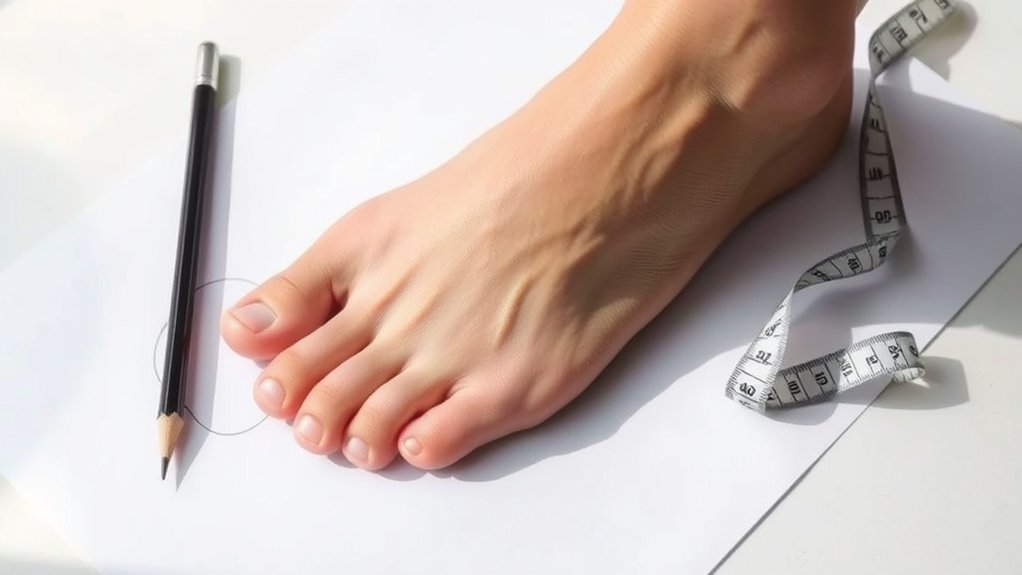
To measure your foot accurately for the perfect shoe size, start by doing so at the end of the day when your foot is most likely to be swollen. Wear the socks you intend to pair with your shoes to factor in additional bulk.
Stand on a hard, flat surface and have someone trace your foot’s outline with a pencil, guaranteeing precision around the foot arch and toes. Mark the longest toe and heel, then measure the distance between these points with a ruler.
Use this measurement to consult brand-specific size charts, focusing primarily on foot length. Remember, shoe material affects fit; flexible materials may accommodate variations in foot arch better than rigid ones. This can impact overall comfort and sizing accuracy.
This method ensures a precise fit tailored to your foot’s unique dimensions. So, take your time and get it right—it makes all the difference to how your shoes feel!
Men’s vs. Women’s Shoe Sizes: What You Need to Know
You’ll notice that men’s and women’s shoe sizes usually differ by about 1.5 sizes. Women’s sizes tend to start smaller and are generally narrower.
So, if you want to convert a women’s size to a men’s size, just subtract 1.5 from the women’s number.
That said, it’s always a good idea to double-check with the brand’s size chart because sizing can vary.
Also, keep in mind that unisex shoes might follow different sizing standards altogether, so it’s important to look at the specific measurements before making a choice.
Size Differences Explained
Although men’s and women’s shoe sizes may seem similar, the U.S. sizing system typically differs by 1.5 sizes, with women’s shoes running smaller than men’s. This size gap reflects differences in last dimensions and width, affecting fit and comfort.
When comparing sizes, consider these key points:
A women’s size 8 usually equals a men’s size 6.5. Women’s shoes are narrower, which impacts arch support and foot stability. Material flexibility varies too; women’s models often use softer materials for a snug fit.
Some brands provide unisex sizing, but it’s always best to verify with the specific size chart. Adjust by 1.5 sizes when estimating equivalent menswear or womenswear sizes.
Understanding these distinctions helps you select properly fitting shoes that optimize comfort and performance. It’s worth taking the time to get it right!
Conversion Between Genders
When converting between men’s and women’s shoe sizes, understanding the standard 1.5 size difference is vital for an accurate fit. Gender-specific sizing means women’s sizes are generally 1.5 sizes larger than men’s.
To convert a women’s size to men’s, subtract 1.5; for example, a women’s size 8 equals a men’s 6.5.
Conversely, add 1.5 to convert men’s sizes to women’s, such as a men’s 9.5 corresponding to a women’s 11.
Size conversion accuracy is essential because variations exist across brands, so always consult specific brand size charts before purchasing.
This guarantees you account for brand-specific measurements, preventing fit issues.
Unisex Size Considerations
Since unisex shoes aim to accommodate both men’s and women’s feet, understanding how sizing translates between genders is essential for an accurate fit. Unisex sizing provides a gender neutral fit but requires careful attention to conversion details.
Men’s and women’s sizes differ by about 1.5 sizes; for example, a women’s 8 equals a men’s 6.5. Add or subtract 1.5 sizes when converting between men’s and women’s sizes.
Always consult the specific brand’s sizing chart, as unisex fit and width can vary. Shoe size charts often provide separate measurements for men and women to guide selection.
Rely on foot length and width measurements rather than size labels alone to guarantee proper unisex sizing. This approach helps you confidently select unisex shoes with a precise, gender neutral fit.
Choosing the Right Shoe Width for Comfort and Fit
To guarantee your shoes fit comfortably, start by measuring the widest part of your foot, usually at the ball area. This measurement is really important for picking the right shoe width, which plays a big role in foot comfort. Use standardized width labels like B, D, E, or EE. These correspond to specific measurements in inches or millimeters.
For the most accurate results, measure your feet in the afternoon when natural swelling happens. This way, you make sure the widest part of your foot is properly taken into account.
Keep in mind that shoe width standards can vary by brand, so always check the manufacturer’s width chart before buying.
It’s also a good idea to choose shoes with adjustable features like laces or straps. These help you fine-tune the fit across different widths and make your shoes more comfortable all day long.
Common Signs Your Shoes Don’t Fit Properly
How can you tell if your shoes aren’t fitting properly? Improper shoe fit affects comfort, foot health, and gait. Pay attention to these common signs:
Pinching, blisters, or redness on toes, heels, or sides, often caused by tight shoe material. Heels slipping out during walking could mean your shoes are too loose or narrow. Discomfort or pain might come from a misaligned foot arch due to inadequate arch support.
Pinching, blisters, or slipping heels often indicate shoes that are too tight, loose, or lack proper arch support.
Irritation around the ankle or high collar usually signals tightness or incorrect heel sizing. Frequent fidgeting or an unusual gait shows the shoes may be too small or just not fitting right.
Recognizing these signs helps guarantee your shoes accommodate your foot’s natural shape and arch. That way, you get the ideal support and comfort you deserve.
Adjusting Shoe Size for Brand and Style Differences
You’ll notice that shoe sizes can vary quite a bit between brands because of different lasts and how they’re made.
Plus, styles like performance shoes or formal shoes often need size adjustments to fit just right.
It’s always a good idea to check brand-specific size charts and think about width measurements to get the best fit possible.
Brand Size Variations
Why do shoe sizes vary between brands and styles? Brand consistency isn’t guaranteed because different lasts and manufacturing standards affect sizing accuracy. So, when you switch brands, a size 9 might fit differently even though the number matches.
To navigate brand size variations, consider these factors:
- Each brand uses unique lasts that impact length and width.
- Popular brands like Nike or Adidas may run narrower or wider.
- Size charts and conversion guides differ by brand.
- Accurate foot measurements improve cross-brand fit.
- Style differences within a brand can influence size needs.
Keep these in mind next time you’re shopping, and you’ll have a better chance of finding the right fit!
Style Fit Differences
Beyond brand differences, the style of a shoe substantially influences its fit. You’ll notice heel height affects foot positioning, often requiring you to size up or down to maintain comfort and balance. Toe box shape, whether pointed, rounded, or square, changes how space is distributed, so you’ll want to adjust sizing accordingly.
Athletic shoes vary a lot; some run narrower or wider, which might mean you need to change size or width. Material stretch plays a big role too, especially with leather or knit uppers. These materials tend to conform to your foot over time, so a snug fit at first can actually become just right later on.
When you switch between casual, performance, or dress shoes, keep these factors in mind. To make sure you get the perfect fit, try shoes on in person or look up specific brand and style sizing guides. Fit differences can be subtle but really matter in how comfortable your shoes feel.
Shoe Sizing Tips for Kids: How It Differs From Adults
Although kids’ shoe sizes are based on foot length like adults’, they also factor in growth allowances to guarantee comfort over time. This ensures a proper fit despite ongoing foot growth and helps the shoes last longer since children wear them through different development stages.
Kids’ shoe sizes include growth allowances to ensure comfort and durability as their feet develop.
When choosing kids’ shoes, keep a few technical points in mind:
Sizes often include an additional 8% plus 6 mm beyond actual foot length for growth allowance. Also, age-based labeling may not match foot length precisely, so measuring is really important.
Wider toe boxes are common to accommodate varying foot shapes and growth. Adjustable fastenings add flexibility for changing foot dimensions too.
Make sure to measure both foot length and width to get a precise fit, especially since kids have diverse foot shapes.
Understanding these differences helps you pick shoes that support healthy foot development and maximize how long the shoes can be worn.
How to Use Your Foot Measurement to Find the Right Size
When you measure your foot accurately, you can pinpoint the shoe size that offers the best fit by comparing your measurement to the brand’s specific size chart. Begin by taking your foot measurement at the end of the day, wearing the socks you plan to use with the shoes.
Trace your foot on paper, mark the longest toe and heel, then measure the distance between these points precisely.
Use this length to reference the shoe fitting size chart provided by the brand. If your feet differ in size, always select the size based on the larger foot. Additionally, consider foot width, as some shoes accommodate narrow or wide feet differently.
Remember, shoe sizes vary between brands and models, so consult each sizing guide for the most accurate fit. It might seem like extra work, but it really helps you get shoes that feel comfortable from the start.
Don’t forget — a good fit makes all the difference!
Frequently Asked Questions
How Often Should I Remeasure My Shoe Size?
You should remeasure your shoe size every 6 to 12 months. This is especially important if you notice changes in your foot width or if your shoe material feels less flexible than before.
Doing this helps ensure your shoes fit properly and stay comfortable. Plus, it lets you accommodate any changes in your foot shape that might happen due to weight fluctuations or aging.
Can Foot Size Change With Age or Weight?
Just like a medieval armor might need resizing, your foot growth can change with age due to tissue elasticity loss. Weight fluctuations also cause foot width to vary, so you should regularly check your shoe fit for accuracy.
It’s pretty normal for feet to shift size and shape over time. So, don’t be surprised if your favorite shoes start feeling a bit snug or loose after a while. Keeping an eye on how your shoes fit now and then can save you from discomfort later.
Are Insoles or Inserts Included in Shoe Sizing?
Insole variations aren’t included in standard shoe sizing, so when you use inserts, you need to adjust your shoe fitting techniques accordingly.
Thicker insoles reduce internal space, which often means you might have to pick a larger size for the best comfort. It’s something to keep in mind when you’re trying on shoes with added insoles.
Basically, if you add inserts, your shoes might feel tighter than usual, so sizing up can help avoid that snug feeling.
How Do I Measure Shoe Size for Orthotic Shoes?
Like a Renaissance craftsman measuring a knight’s boot, you measure your toe length and arch height precisely, adding 3-5 mm for orthotics.
Always use the larger foot size and measure at day’s end for accuracy. This way, you get the best fit possible for your orthotic shoes. It’s all about comfort and support.
What if My Feet Are Different Sizes?
If your feet differ in size, always base your foot measurement on the larger foot.
Use shoe fitting tips like choosing shoes that accommodate the bigger foot. You can also add insoles or padding to the smaller foot for maximum comfort. It makes a big difference in how your shoes feel throughout the day.
Conclusion
By accurately measuring your foot and understanding sizing differences, you can find shoes that fit like a glove, providing comfort and support all day. Remember, shoe size isn’t just a number. It’s a combination of length, width, and brand variations.
Using these methods guarantees you avoid common fit issues and make informed choices, much like a skilled technician calibrates tools for precision. Your perfect fit is within reach with careful measurement and attention to detail.