Which Brooks Shoe Is Best For Me – Model Comparison Guide
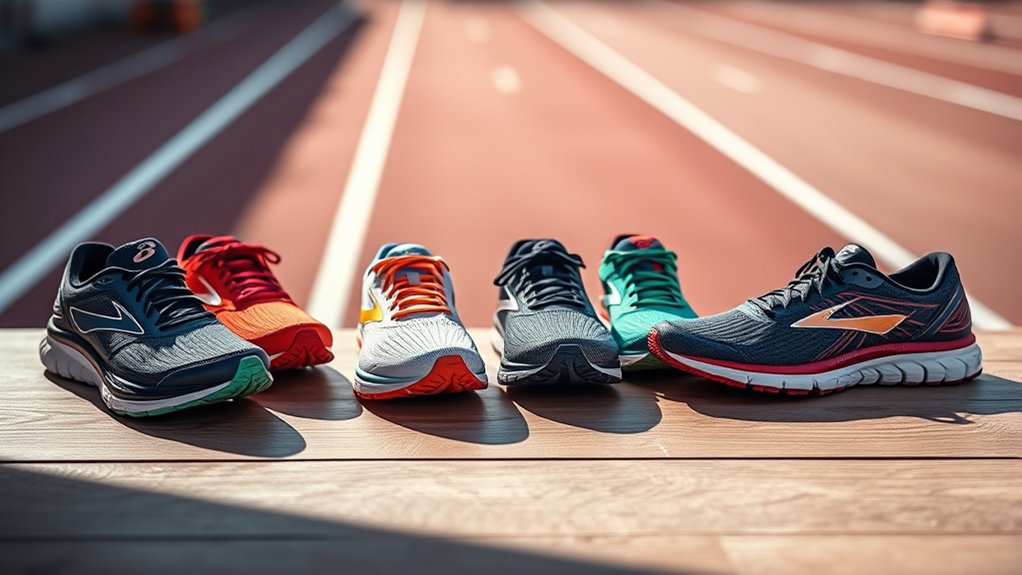
To find the best Brooks shoe for you, start by evaluating your running style, foot type, and typical terrain. Choose lightweight models like the Hyperion Elite for speed or cushioned options like Glycerin Max 2 for long runs and recovery.
Also, consider shoe drop, weight, and support features to match your biomechanics and goals precisely. Don’t prioritize brand over fit and comfort.
Explore how specific Brooks technologies optimize performance and injury prevention tailored uniquely to you. It’s all about finding what feels right for your feet and running needs.
Key Takeaways
- Choose shoes based on your running style, foot type, and biomechanics to ensure proper support and injury prevention.
- Prioritize comfort, fit, and personalized features over brand or aesthetics for the best running experience.
- Select cushioning levels: Ghost for balanced daily training, Glycerin for plush long runs, and Hyperion for speed and racing.
- Trail runners should pick shoes with aggressive lugs, rock plates, and water resistance matching their typical terrain.
- Consider shoe weight and heel-to-toe drop to optimize performance, comfort, and running biomechanics.
How to Find Your Running Style and Foot Type for Brooks Shoes
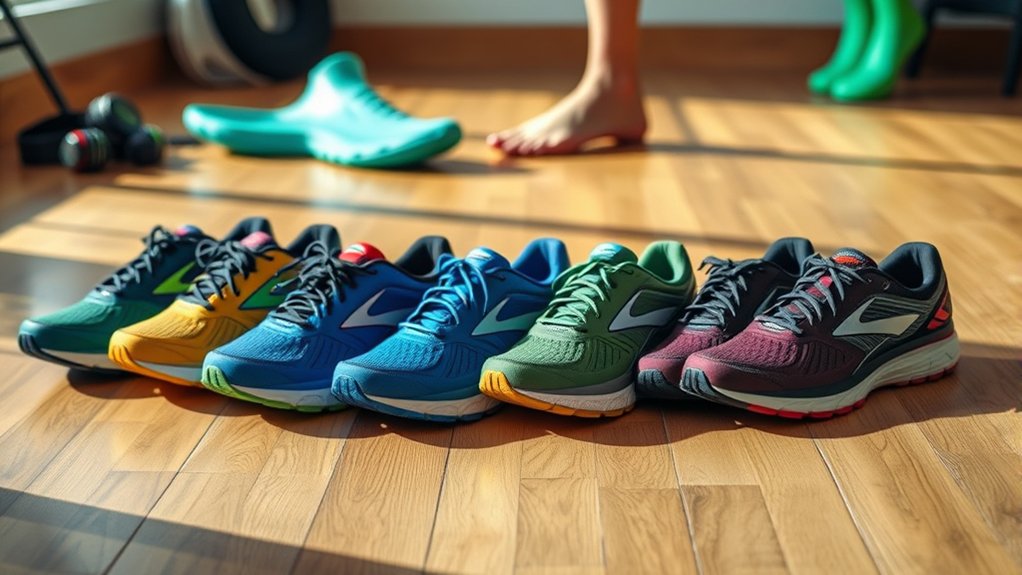
Before selecting a Brooks shoe, you need to determine your running style and foot type. These factors directly impact the shoe’s performance and injury prevention.
Start by analyzing your running biomechanics by observing whether you land on your heel, midfoot, or forefoot. This will influence the ideal cushioning and drop level in Brooks models.
Analyze your running form—heel, midfoot, or forefoot strike—to find the perfect cushioning and drop in Brooks shoes.
Next, assess your foot type by identifying if you have flat, neutral, or high arches. This helps guide you toward stability, neutral, or cushioned shoes, respectively.
Getting a professional gait analysis can be really helpful. It can reveal overpronation or supination, which allows for precise adjustments in footwear ergonomics to provide targeted support.
Also, consider your typical running distance and pace. For example, heel strikers might benefit from higher-drop shoes to better absorb impact.
Understanding these technical aspects ensures your chosen Brooks shoe matches your biomechanics and ergonomics needs perfectly.
Why Comfort and Fit Beat Brand Loyalty Every Time
Although brand loyalty might seem like a safe choice, prioritizing comfort and fit is vital for optimizing your running performance and minimizing injury risk.
Regardless of a brand’s history, your unique biomechanics demand that you evaluate shoe material and fit objectively. Research confirms runners focusing on personalized fit, rather than brand allegiance, experience fewer injuries and better satisfaction.
Even devoted users shift models when encountering superior support or comfort tailored to their foot shape.
Since shoe material impacts cushioning, flexibility, and breathability, assessing these factors during try-ons is essential. Instead of relying on brand history alone, you should measure how well a Brooks shoe conforms to your foot’s contours and running style.
This approach guarantees sustainable, injury-free performance far beyond the limits of brand loyalty.
Brooks Cushioning: Ghost vs. Glycerin Compared
When choosing between Brooks models, understanding the differences in cushioning technology can really enhance your running experience. The Ghost and Glycerin feature distinct midsoles designed for different needs.
Ghost uses DNA Loft foam, delivering a balanced, soft ride that’s ideal for daily training and overall comfort. Glycerin, on the other hand, employs DNA Loft v3, which has a higher stack height for plush cushioning.
Ghost offers balanced softness for daily runs, while Glycerin provides plush cushioning with higher stack height.
This makes it perfect for long runs and recovery days.
Glycerin’s slightly heavier weight reflects its enhanced cushioning, which can affect shoe durability and long-term performance.
The heel-to-toe drop also differs: Ghost has a 12 mm drop that suits runners who prefer a more traditional stride. Meanwhile, Glycerin’s 10 mm drop supports a smoother transition.
At the end of the day, choosing between these models comes down to your preference for cushioning technology and how durable you want your shoes to be, based on your running style.
Which Brooks Shoes Are Best for Speed and Racing?
If you’re aiming to shave seconds off your race times, Brooks offers specialized shoes engineered for speed and racing performance. The Hyperion Elite 5 weighs just 7.2 oz and integrates a carbon plate with DNA Gold foam, delivering explosive energy return that optimizes your running biomechanics. Its low 8 mm heel-to-toe drop enhances propulsion efficiency, which is essential for fast marathon efforts.
Meanwhile, the Hyperion Max 3 provides a sock-like fit with a 45.6/35.0 mm stack height, balancing responsiveness and cushioning for sustained speed. Brooks’ shoe material innovation focuses on lightweight, high-energy materials that reduce fatigue and maximize propulsion.
These race shoes prioritize minimal weight and dynamic responsiveness over daily trainer durability. So, they’re designed to help you achieve peak performance on race day.
Best Brooks Shoes for Long Runs and Recovery
When you’re hitting the pavement for long runs or focusing on recovery, you want shoes that offer top-notch cushioning and just the right support.
That’s where models like the Brooks Glycerin 23 and Glycerin Max 2 come into play. They use advanced DNA Loft v3 foam and have higher stack heights to help absorb impact and keep fatigue at bay.
It’s all about making sure your feet feel comfy and stable, especially during those long training sessions and recovery days.
With the right pair, you can protect your feet and keep going strong without missing a beat.
Cushioning And Comfort
Although many Brooks models deliver reliable performance, the Glycerin series really stands out when it comes to cushioning and comfort, especially during long runs and recovery.
Its DNA Loft v3 foam gives you a plush, marshmallow-like feel underfoot that absorbs impact well, helping to reduce fatigue.
The Glycerin Max 2 takes this up a notch with DNA Tuned foam and GlideRoll technology, which maximize softness and make your strides smoother.
So, here’s what you might want to think about for cushioning and comfort:
- Choose models with thick midsoles (36-40 mm stack height) for ideal impact protection.
- Pick shoes that allow custom insoles so you can tailor the fit and support just right.
- Check out breathability features to keep your feet cool during longer runs.
- Look for heel-to-toe drops (8-10 mm) that encourage a natural foot strike and overall comfort.
This way, you get a nice balance that keeps you comfortable on long runs without giving up performance.
Recovery And Support
When focusing on recovery and support, Brooks integrates advanced cushioning technologies and stability features to help you stay comfortable and reduce the risk of injury during long runs and recovery phases.
Models like the Glycerin Max 2 use DNA Tuned foam for maximum cushioning. This works well for various foot arch types while optimizing running biomechanics to minimize impact stress.
The Ghost 18 offers balanced support and plush comfort with a softer midsole and high stack height. It’s ideal for long-distance training and recovery.
If you tend to overpronate, the Adrenaline GTS 25 has GuideRails technology to stabilize your gait and protect your joints.
Shoes like the Glycerin 22 and Glycerin Flex focus on plush cushioning with an 8-10 mm heel-to-toe drop. This setup is important for absorbing shock and helping efficient biomechanics during recovery and extended runs.
Choosing Brooks Shoes for Support and Stability
Because maintaining proper foot alignment is essential for injury prevention, choosing Brooks shoes designed for support and stability can make a significant difference in your running experience. The Adrenaline GTS 25, featuring GuideRails technology, offers targeted stability by aligning your ankle, knee, and hip.
When selecting your shoe, consider these technical factors:
- Heel-to-toe drop: Support models usually have a 10 mm drop to control overpronation effectively.
- Widths: Multiple width options ensure the best fit for flat or low-arched feet.
- Shoe lacing: Secure lacing systems stabilize the midfoot, enhancing structural support.
- Color options: Brooks provides diverse colorways without compromising functional design.
Just a heads up, these stability shoes are typically heavier due to reinforced structures. But that extra weight actually helps support alignment and prevent injuries.
How to Pick Brooks Trail Shoes for Off-Road Runs
When you’re picking out Brooks trail shoes for off-road runs, it’s key to look for aggressive lug depth and durable protective features that suit the kind of terrain you’ll be tackling. You’ll want shoes with reinforced toes and rock plates to shield your feet, plus a snug fit to keep everything secure on those technical trails and help prevent injury.
A great option to consider is the Cascadia series. These shoes do a nice job balancing stability and cushioning, which is perfect for handling rugged, uneven surfaces.
Trail Shoe Features
Although off-road running demands specialized footwear, Brooks trail shoes deliver essential features tailored for rugged terrain. Drawing on the brand’s history of innovation, these shoes combine functionality with thoughtful design, including distinctive shoe color options for visibility and style.
When selecting your pair, consider these key features:
- Aggressive lug patterns (over 3.5 mm deep) for superior traction on soft, uneven ground.
- Integrated Rock Plates to shield your feet from sharp rocks and increase stability.
- Reinforced toe caps and durable overlays that resist abrasion on rough trails.
- Breathability options ranging from mesh uppers for ventilation to densely woven fabrics for warmth.
These elements guarantee a secure fit and robust protection, which are essential for conquering challenging off-road routes confidently.
Terrain Compatibility
How do you choose the right Brooks trail shoe for the terrain you’ll encounter? Start by evaluating the trail terrain: soft, rocky, muddy, or technical. Then match it with appropriate shoe durability and features.
Brooks trail shoes, like the Cascadia 19, offer aggressive lugs over 3.5 mm that deliver excellent traction on uneven surfaces. Their rock plates and reinforced toe caps shield your feet from sharp rocks and abrasions.
For slippery or wet trails, prioritize water-resistant uppers and a grip rating designed to prevent slips. The Trail Adapt System guarantees the best fit and stability across diverse trail conditions and foot shapes.
Selecting a model with these durability and traction features means you’ll navigate off-road runs confidently and efficiently. It’s all about finding the right shoe that suits where you run and how you run.
Match Brooks Shoe Features to Your Running Goals
Because your running goals dictate the demands on your footwear, selecting Brooks shoes with features aligned to those goals guarantees ideal performance and injury prevention. Brooks’ brand history emphasizes innovation with precision-engineered designs, ensuring each model meets specific athlete needs.
While shoe color might catch your eye, focus on these critical features:
- Cushioning: Opt for the Glycerin Max 2 if you prioritize long-distance comfort and injury prevention.
- Speed: Choose Hyperion Max 3 or Elite 5 for lightweight responsiveness and carbon plate propulsion.
- Stability: Adrenaline GTS 25’s GuideRails technology controls overpronation effectively.
- Trail Performance: Cascadia 19’s rugged outsole excels on uneven terrain.
Aligning these attributes with your goals optimizes your running experience beyond aesthetics or superficial choices.
What to Expect From Brooks Shoe Weight and Drop Differences
When selecting Brooks shoes, understanding the variations in weight and drop is essential to matching your running style and goals. Shoe weight implications play a critical role. Lighter models like the Hyperion Elite 5, which weighs around 6.9 oz, enhance speed and responsiveness.
On the other hand, heavier shoes such as the Glycerin Max 2, which weigh over 11 oz, prioritize long-distance comfort.
Drop height effects influence your foot strike pattern and injury risk. Higher drops, typically between 10 and 14 mm, like those in the Ghost 18, provide added heel cushioning for heel strikers.
Conversely, lower drops, usually 6 to 8 mm as seen in the Glycerin Max 2, encourage midfoot or forefoot striking. This promotes a more natural gait.
By selecting the appropriate weight and drop, you optimize performance, comfort, and injury prevention tailored to your biomechanics. It’s all about finding what works best for your running style.
Frequently Asked Questions
How Often Should I Replace My Brooks Running Shoes?
You should replace your Brooks running shoes every 300 to 500 miles, or roughly every 6 to 9 months. Keep an eye on the outsole wear and cushioning to know when it’s time for a new pair.
Can Brooks Shoes Help Prevent Common Running Injuries?
Yes, Brooks shoes enhance injury prevention by optimizing running biomechanics. Their GuideRails system stabilizes your gait, while advanced cushioning reduces impact forces. This helps you avoid common injuries like runner’s knee, IT band syndrome, and stress fractures.
Are Brooks Shoes Suitable for Walking or Casual Wear?
You’ll feel like you’re walking on clouds with Brooks’ plush cushioning and durable midsoles. Their breathable uppers combine athletic fashion with superior shoe durability.
They perfectly support your feet during casual wear and long, comfortable walks. So, whether you’re out running errands or taking a stroll, Brooks has got you covered.
Do Brooks Shoes Come in Wide or Narrow Widths?
Yes, Brooks shoes offer shoe sizing options including narrow, standard, wide, and extra-wide widths. This fit customization guarantees you get precise support, reducing discomfort and enhancing performance by matching your unique foot shape perfectly.
How Do I Properly Break in New Brooks Running Shoes?
Breaking in your Brooks shoes is like molding clay. Start with short wears, use thick socks, and flex the shoe gently. You can also add insoles if needed.
This shoe break in process guarantees a precise comfort adjustment for an ideal fit and support. Taking it slow helps your feet get used to the shoes without any discomfort. Trust me, it’s worth it!
Conclusion
Choosing the perfect Brooks shoe is like tailoring a suit. It has to fit your running style, foot type, and goals precisely.
Whether you prioritize cushioning, speed, stability, or trail performance, understanding the differences between models helps you run smarter.
Trust fit and function over brand loyalty. When you do, you’ll find your best stride with every step.
Your ideal Brooks shoe isn’t just a purchase. It’s an investment in both performance and comfort.