How Should A Shoe Fit – Proper Fitting Guide
You should choose shoes that provide about 3/8 to 1/2 inch of space from your longest toe to the shoe’s tip. This helps ensure proper length and avoids tightness that can cause blisters or misalignment.
Make sure to measure both feet at the end of the day. Then, check out brand-specific size charts and think about the width and how flexible the material is.
A snug heel fit is really important to stop your foot from slipping inside the shoe. Getting the right fit supports foot health and comfort, and it also lowers the risk of injury.
If you want, you can explore different shoe types and fit adjustments to make your choice even better.
Key Takeaways
- Leave about 3/8 to 1/2 inch of space from the longest toe to the shoe’s tip for proper toe room and comfort.
- Shoes should fit snugly around the heel with minimal slippage to ensure stability and prevent blisters.
- Select shoes matching your foot width (Narrow, Medium, Wide) to avoid pinching or excessive looseness.
- Measure both feet at the end of the day and use brand-specific sizing charts for accurate fit.
- Try shoes on with planned socks, walk around to test comfort, and focus on the larger foot’s fit.
Why Proper Shoe Fit Matters for Foot Health
Because your feet support your entire body, wearing properly fitted shoes is essential to maintaining foot health. Ill-fitting footwear can cause blisters, bunions, and arch problems, leading to discomfort and misalignment that affects your ankles, knees, and back.
While less than 10% of people have natural foot issues, improper shoe fit considerably raises the risk.
When selecting shoes, think about footwear fashion along with shoe material choices. Materials impact flexibility, breathability, and support. It’s best to pick materials that conform to your foot shape without causing pressure points.
Properly fitted shoes can prevent long-term conditions like hammertoes and plantar fasciitis. This helps enhance your comfort and mobility.
So, prioritizing fit over style makes sure you maintain foot health while still enjoying fashionable options.
Finding this balance improves your overall quality of life and reduces your risk of injury. It’s worth putting a little extra thought into how your shoes fit!
How to Measure Your Feet Accurately at Home
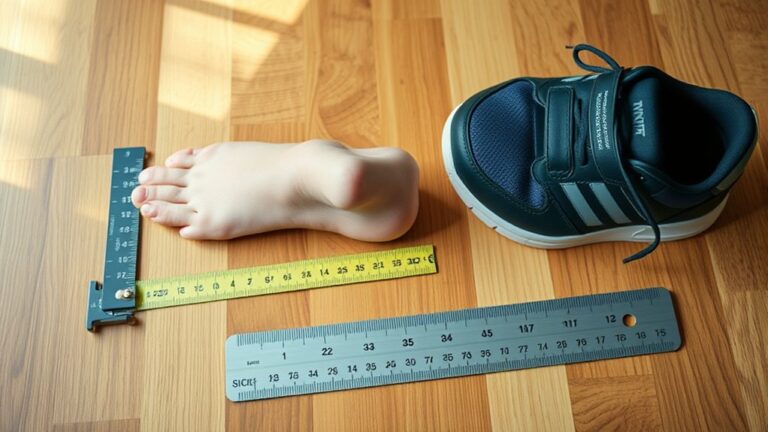
To measure your feet accurately at home, all you need are some basic tools like a ruler or tape measure and a piece of paper. It’s pretty simple once you get started.
First, place your foot on the paper and mark the length from your heel to your longest toe.
Then, don’t forget to mark the widest parts of your foot to get the width.
Once you have those measurements, write them down carefully. This way, you can easily compare them to different brand size charts and find the best fit for your shoes.
Measuring Tools Needed
When measuring your feet accurately at home, you’ll need reliable tools such as a ruler, tape measure, or a Brannock device to capture both length and width precisely. These tools allow you to record measurements in inches or centimeters. This is essential for evaluating your foot arch and making sure your shoes fit well with different materials.
Make sure to measure both feet while standing upright. This reflects natural weight distribution and any size variation. It’s best to measure at the end of the day when your feet are at their largest.
Note the larger foot’s measurements to select the correct size. Using these precise measurements with brand-specific sizing charts helps you find shoes that accommodate your foot arch. It also ensures the shoes match the flexibility or rigidity of the materials, giving you a proper fit.
Step-By-Step Process
Although measuring your feet might seem straightforward, following a precise step-by-step process guarantees accuracy and consistency. Begin by measuring your feet at the end of the day when they’re largest.
Place each foot on a piece of paper, mark the longest toe and heel points, then measure the length in centimeters or inches.
Next, mark and measure the widest part of your foot to determine the correct width. Use a tape measure or ruler for accuracy.
Repeat for both feet, selecting the larger measurements for shoe size.
Considering shoe material is essential, as some materials stretch more than others.
Stay mindful of fashion trends that may influence shoe shape and sizing to ensure comfort without compromising style.
Accurate measurement guarantees an ideal fit and foot health.
Understanding Shoe Fit: Sizing Systems and Widths
Since shoe sizing varies considerably across brands and regions, understanding the differences in systems such as US, UK, and EU is essential for selecting the correct size.
Regional differences mean a US size 9 might correspond to an EU 42, but fit can vary by brand.
Alongside length, width variety plays a critical role in achieving a proper fit. Width options typically include Narrow, Medium/Standard, Wide, and Extra Wide, accommodating diverse foot shapes.
Always measure both foot length and width before selecting shoes.
Refer to brand-specific sizing charts to ensure accuracy, as “true to size” claims differ.
It’s always better to double-check than to guess!
Ensuring Proper Toe Room for Comfortable Fit
Accurately measuring your foot length and width sets the foundation for selecting the right shoe size, but guaranteeing proper toe room completes the fit for comfort and foot health. Toe space is critical to accommodate foot expansion and natural movement.
To achieve the ideal fit, keep these points in mind:
- Leave about 3/8 to 1/2 inch of space from your longest toe to the shoe’s tip.
- Measure both your big toe and second toe, as the longest may vary.
- Use the finger test: comfortably fit a finger between your toe and shoe.
- Avoid shoes too tight at the toe to prevent blisters, calluses, or ingrown toenails.
- Ensure toe space isn’t excessive to prevent slipping and instability.
Proper toe room supports comfort and reduces injury risk during daily activities. So, it really pays off to check this part of the fit carefully!
Fitting Sneakers for Comfort and Performance
When fitting sneakers, you want a snug heel fit with minimal slippage while maintaining about a thumb’s width of space in front of your toes to guarantee comfort.
Confirm the shoe material is flexible enough to accommodate natural toe movement without causing pinching or excessive crowding. The width should align with the widest part of your foot to provide proper support and reduce pressure points.
The sole must offer adequate shock absorption, particularly in the heel and forefoot, to enhance performance and minimize impact during activity.
Test the fit by walking and jogging to confirm stability.
While color coordination is primarily aesthetic, selecting sneakers that match your wardrobe encourages consistent use. This way, you support both comfort and performance goals.
Fitting Boots for Support and Stability
Although boots require a snug fit around the instep and midfoot, you should avoid any pressure that could restrict circulation or cause discomfort. Proper fitting boots provide essential support and stability, which is really important for extended wear and different activities.
When you’re picking out boots, keep a few things in mind. First, make sure there’s about 3/8 to 1/2 inch of toe room so your feet can move naturally. Also, check for minimal heel slippage—your heel should stay secure while you walk.
It’s a good idea to choose boots made with sturdy material and a firm sole that won’t twist easily. Try wearing thicker socks when you’re fitting boots, as this will give you a better idea of how they’ll feel during actual use.
And hey, don’t forget to think about color coordination too, so your boots match your style.
Focus on these points to get the best comfort, support, and stability out of your boots.
Common Shoe Fit Problems and How to Fix Them
You’ll often run into common fit problems like pinching and pressure points that cause discomfort and skin issues. It’s pretty annoying when your shoes pinch your feet, right?
Heel slippage is another problem—it can mess with your stability and even increase the risk of injury.
Plus, if there’s not enough room for your toes, you might end up with nail damage or deformities.
The good news? If you tackle these issues early on, your shoes will support your foot health and keep you comfortable all day long.
Pinching And Pressure Points
Why do some shoes cause uncomfortable pinching or pressure points? This often happens because the shoe material is too rigid or the shoes don’t match your foot’s width and arch shape. When shoes are too narrow or shaped wrong, they put too much pressure on certain spots, like your little toes or bunion areas.
That can lead to blisters, corns, and calluses from constant rubbing. To deal with pinching and pressure points, here are some tips to keep in mind:
- Pick shoes that fit the width of your foot properly
- Go for materials that are flexible and breathable
- Make sure the shoe shape matches your foot arch
- Use cushioned insoles or padding where your foot feels sensitive
- Steer clear of narrow toe boxes that squeeze your toes
Getting the right fit really helps reduce pressure and makes your shoes much more comfortable.
Heel Slippage Issues
While addressing pinching and pressure points improves overall comfort, another common issue that affects fit is heel slippage. Heel slippage happens when the shoe’s heel counter is too loose or poorly fitted. This causes your heel to lift during walking.
To prevent this, make sure the shoe has a snug fit around the heel with minimal movement. You can use a heel cushion or heel grips to improve the fit in shoes that feel slightly loose. Adjusting shoe lacing or straps during fitting also helps secure your foot firmly in place.
Picking shoes with a well-designed heel cup and making sure the shoe size matches your heel’s measurement are key steps. These measures reduce slippage, which improves stability and keeps you comfortable.
Toe Room Adjustments
How much space should you leave between your longest toe and the shoe’s tip? Aim for about 3/8 to 1/2 inch to guarantee comfort and avoid injury. Remember, the longest toe mightn’t be your big toe; it could be the second toe, so measure carefully.
Proper toe room allows natural toe movement, reducing risks like blisters, bruising, and deformities. When adjusting toe space, consider the shoe material’s flexibility and how it interacts with your foot arch for an ideal fit.
Regular checks after walking or standing help confirm comfort.
Key points to manage toe room adjustments:
- Measure space accurately from the longest toe.
- Choose shoe material that accommodates foot arch shape.
- Avoid tight toe boxes to prevent pinching or numbness.
- Test fit after activity to detect changes.
- Address discomfort promptly to prevent long-term issues.
Tips for Trying Shoes On to Ensure the Best Fit
Because feet tend to swell throughout the day, you should always try on shoes in the afternoon when your feet are at their largest. This guarantees the shoe material adapts well to your foot size without causing discomfort later.
Try on shoes in the afternoon to ensure the best fit as your feet swell throughout the day.
Wear the socks or hosiery you plan to use to get an accurate fit. Walk around in the shoes to detect any slipping, pinching, or pressure points. Check both shoes carefully, prioritizing the larger foot since feet often differ in size.
Make sure there’s about a thumb’s width (3/8 to 1/2 inch) of space in front of your longest toe for comfort.
While fashion trends influence shoe design, it’s better to focus on fit and material quality over style. That way, you avoid long-term foot issues.
When to Replace Shoes and Adapt to Changing Feet
As your feet change size and shape over time because of things like aging, weight changes, or health conditions, it’s important to regularly check how your shoes fit.
Shoes lose cushioning and support after about 300-500 miles or 6-12 months, depending on how active you are.
Keeping the insoles in the right place and making sure the shoe material stays in good shape is key for comfort and foot health.
You should replace your shoes when you notice visible wear on the soles or uppers, less cushioning or support, or if your feet hurt more during or after wearing them.
Also, if your foot size or shape changes, or if the insoles aren’t aligned properly and affect the fit, it’s time for new shoes.
Measuring your feet regularly helps you keep up with any changes and avoid discomfort or foot problems.
Replacing your shoes on time protects your feet from injury and ensures you get the support you need.
It’s a simple step that makes a big difference in how your feet feel every day.
Frequently Asked Questions
Can Insoles Improve the Fit of My Shoes?
Yes, custom insoles can improve your shoe fit by conforming to your foot’s shape. They act like precise shoe molds. This means your shoes feel more comfortable and secure.
Insoles help reduce slippage and provide targeted support. So, you get a stable, well-aligned fit inside your shoes. It’s a simple way to make your shoes feel just right.
How Do Shoe Materials Affect Comfort and Fit?
Shoe material directly influences fit, flexibility, and comfort. Softer materials like leather adapt to your foot, enhancing comfort.
On the other hand, stiff or synthetic materials restrict movement, causing discomfort and pressure points. This can affect overall fit stability too. So, choosing the right material really matters for how your shoes feel.
Are There Differences in Fitting Shoes for Children Versus Adults?
Just like fitting a puzzle, child shoe sizing demands extra care compared to adult footwear differences. You’ll need to allow growth space while ensuring snug support to prevent developmental issues.
It’s important to regularly check measurements for the ideal fit and comfort. Kids’ feet grow quickly, so what fits today might not fit next month. Keeping an eye on their shoe size helps avoid discomfort or problems down the road.
How Does Foot Swelling During Exercise Impact Shoe Choice?
You should choose shoes that prevent foot compression by allowing extra space. Swelling management during exercise usually means going about a half size larger.
This helps reduce risks of discomfort, blisters, and circulation problems. It’s a simple step but makes a big difference in how your feet feel while you work out. Remember, a little extra room can keep your feet happy and healthy.
Can Orthotics Be Used With All Types of Shoes?
You can use orthotics with most shoes, but shoe compatibility depends on orthotic customization.
Choose shoes with enough volume, depth, and adjustable features to guarantee proper fit and comfort while accommodating your customized orthotic inserts.
It’s all about finding the right balance so your orthotics and shoes work well together.
Conclusion
Think of your shoes like a tailored suit. Just as ill-fitting clothes can restrict movement and cause discomfort, poorly fitting shoes can lead to foot pain and injuries.
Studies show that over 60% of people wear the wrong shoe size, which can really impact foot health. By measuring your feet accurately and making sure there’s enough room for your toes and proper support, you’ll protect your feet and feel more comfortable.
Remember, a well-fitted shoe is the foundation of healthy, pain-free steps.