What Size Shoe Does A 12 Month Old Wear – Size Guide And Chart
At 12 months, your child typically wears a US shoe size 4 to 5, with an average foot length near 4.5 inches. But growth varies, so regular measurements really matter.
Try to measure feet in the late afternoon, and make sure there’s about half an inch of toe room for comfort and development.
Keep an eye on fit signs and choose flexible, breathable shoes with wider toe boxes. If you want to understand sizing nuances and pick perfect shoes, there’s more helpful info ahead.
Key Takeaways
- A 12-month-old typically wears US shoe size 4 to 5, with an average foot length around 4.5 inches.
- Measure feet regularly, ideally every 2 to 3 months, to accommodate rapid growth and ensure proper fit.
- Allow about half an inch of extra toe room for comfort and foot development.
- Measure feet in the late afternoon with the child standing and weight on the foot for accuracy.
- Choose flexible, breathable shoes with a wider toe box and adjustable straps for secure, comfortable fit.
Typical Shoe Size for a 12-Month-Old
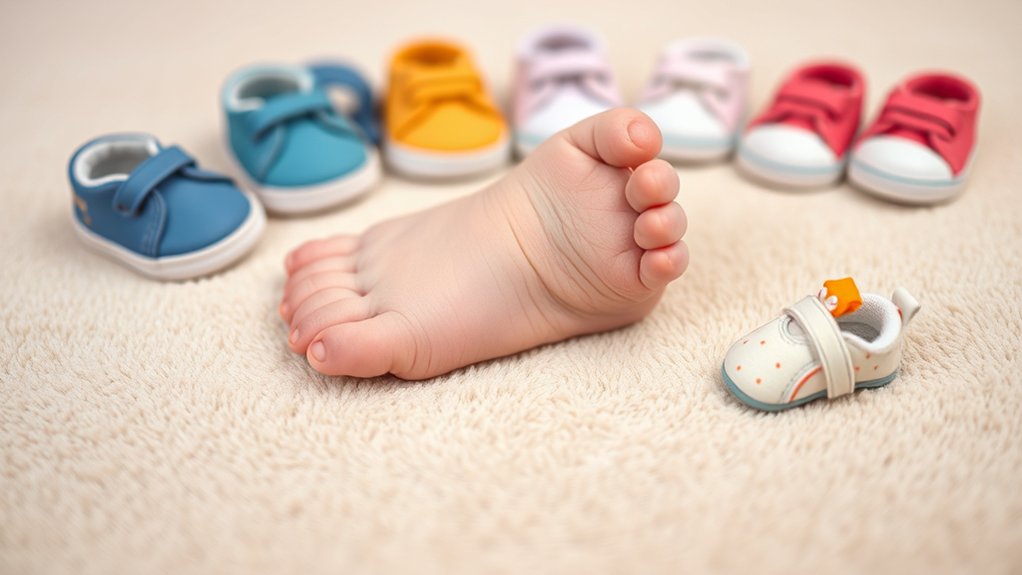
Although every child grows at their own pace, a 12-month-old typically wears shoes sized between US 4 and 5. The average foot length is around 4.5 inches, aligning with about a US size 4.5.
At 12 months, most toddlers wear US shoe sizes 4 to 5, with an average foot length of 4.5 inches.
When choosing footwear fashion for your toddler, focus on shoe materials that offer flexibility and breathability to support foot development.
Proper fit is essential. You want about half an inch of space in the toe area to allow for growth and comfort.
Since shoe size can vary, it’s wise to check your child’s feet frequently, roughly every two months, to make certain their shoes still fit well.
Selecting the right shoe materials combined with the correct size helps keep their feet healthy and happy as they explore the world.
Measuring Your 12-Month-Old’s Feet Accurately
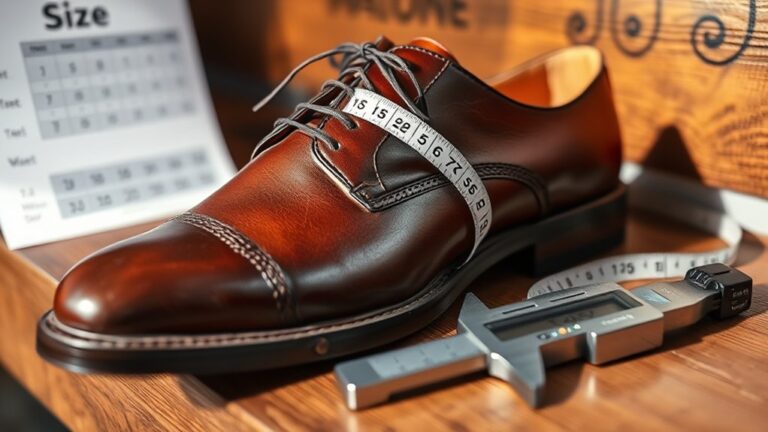
When measuring your 12-month-old’s feet, choose late afternoon for the task since swelling tends to peak then, giving you the most accurate size. Have your child stand straight, full weight on their feet, toes uncurled.
Measure from heel to longest toe using a ruler or printable guide at 100% scale. Wrap a ribbon around the widest part to check foot circumference.
Measure both feet and pick the size fitting the longer foot with half an inch extra space. This guarantees comfort, considering shoe material flexibility and shoe color preferences for style.
| Step | Tip |
|---|---|
| Time | Late afternoon |
| Measurement tool | Ruler or scaled printable |
| Foot circumference | Ribbon or lace around widest part |
How to Read Toddler Shoe Size Charts
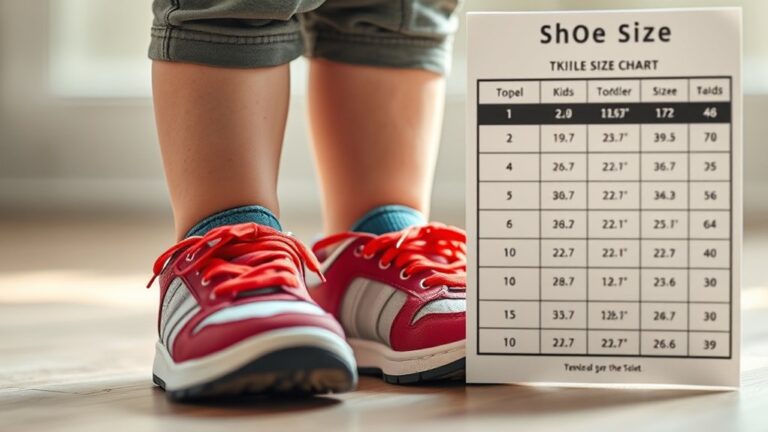
To read toddler shoe size charts effectively, you’ll need to measure your child’s foot length from heel to the longest toe and compare it to the chart’s measurements in inches or centimeters.
Most charts list these alongside US shoe sizes, typically showing a 12-month-old wearing sizes 4 to 5.
Most charts correlate toddler foot measurements with US sizes, often indicating a 12-month-old wears size 4 to 5 shoes.
Don’t forget to check width, as a proper fit depends on both length and width.
Since shoe sizes can vary by brand, always refer to the manufacturer’s specific chart.
When choosing shoes, consider not only size but also shoe materials.
Breathable and flexible options support healthy foot development.
Also, keep an eye on fashion trends to find shoes that blend comfort with style.
This way, your toddler’s footwear is both practical and appealing.
Signs Your Toddler’s Shoes Don’t Fit Properly
You’ll want to keep an eye out for common fit issues like tightness or looseness that can make your toddler’s shoes uncomfortable.
If you notice red marks on their feet, or if your child keeps taking their shoes off, that’s a pretty clear sign something’s not right.
Also, if they’re tripping more than usual, their shoes mightn’t be fitting properly.
Catching these problems early is really important—it helps support healthy foot development and keeps your little one comfortable as they explore and play.
Common Fit Issues
How can you tell if your toddler’s shoes don’t fit properly? Look for red marks, blisters, or indentations on their feet. These usually mean there are pressure points.
If your child often takes off their shoes or trips a lot, the shoes might be too loose or just plain uncomfortable. Dragging toes or trouble walking? That’s a sign the shoes are too tight or too small.
Shoes that cause swollen or red areas around the toes or heel are probably too narrow. Remember, a good fit should leave about half an inch of space in the toe area.
Sure, fashion trends can be tempting when picking shoes, but it’s way more important to focus on fit and comfort. Checking your toddler’s shoes regularly for wear and fit helps support healthy foot development and keeps discomfort away.
Signs Of Discomfort
Noticing your toddler’s behavior and foot condition can reveal a lot about whether their shoes fit properly. If your child frequently removes their shoes or seems reluctant to wear them, it’s a clear sign of discomfort.
Watch for red marks, blisters, or swollen areas around the toes and heels. These usually mean the shoes are too tight or poorly fitted. Tripping or dragging toes suggests the shoes might be too loose or lack support.
While fashion trends may tempt you to choose stylish options, prioritize shoe materials that offer breathability and flexibility to guarantee comfort.
Your toddler’s fussiness or crying during shoe wear also signals the need to reassess the fit.
Paying attention to these signs helps protect your child’s delicate feet and supports happier steps.
Impact On Development
When toddlers wear shoes that don’t fit properly, their foot development can be negatively affected in several ways. Poor shoe ergonomics, such as shoes that are too tight, create red marks, blisters, or indentations. This causes discomfort and restricts natural foot growth.
On the other hand, loose shoes may cause tripping, dragging toes, or a lack of support, which can hinder balance and coordination. If your toddler’s toes curl or press against the shoe front, it’s a clear sign the shoes are too small or narrow.
Also, watch for frequent slipping or signs of discomfort. These are red flags that indicate a poor fit and can impact foot development. Properly fitting shoes should have about half an inch of space in the toe area and fit snugly around the widest part of your child’s foot.
That way, you support healthy growth and movement.
When and Why to Size Up for Growing Feet
You should size up your toddler’s shoes if you notice tightness, red marks, or if their feet feel cramped.
It’s important to give about half an inch of extra space to help support healthy growth and prevent discomfort.
Plus, regularly measuring their feet makes sure you catch those growth spurts early and keep their shoes fitting just right.
Signs To Size Up
Although it can be tricky to know exactly when to size up your toddler’s shoes, paying close attention to their comfort and fit will guide you. Signs like toes touching the shoe front, red marks, or frequent shoe removal suggest it’s time to size up.
Since fashion trends and shoe materials affect fit, choose flexible, breathable options that accommodate growth.
| Sign | What It Means |
|---|---|
| Toes touch shoe front | Shoe too small |
| Less than ½ inch space | Not enough room for growth |
| Red marks/spots | Tightness causing discomfort |
| Frequent shoe removal | Child seeks relief from tightness |
Regular checks help guarantee shoes support healthy foot development without restricting movement. It’s worth checking often so your little one stays comfy and happy in their shoes.
Benefits Of Extra Space
Allowing extra space in your toddler’s shoes is essential for healthy foot growth and comfort. Sizing up by about half a size gives your 12-month-old’s feet room to grow, preventing tightness and discomfort. Proper shoe materials that are flexible and breathable enhance comfort while accommodating this extra space.
Shoes with about half an inch of extra length support natural toe movement. This reduces the risk of foot deformities caused by constriction. Choosing shoes slightly larger also helps prevent tripping and dragging toes, promoting safer walking.
While fashion trends may tempt you to pick snug, stylish shoes, prioritize fit and function over looks. Giving your toddler’s feet the right space guarantees healthy development. It lets them explore comfortably as they grow.
Choosing the Right Toddler Shoe Style at 12 Months
Since your toddler’s feet are growing rapidly at 12 months, choosing the right shoe style is vital for comfort and healthy development. Focus on shoes with flexible soles and breathable materials. These allow natural movement and help prevent overheating.
Adjustable straps or laces are great because they ensure a secure fit and can keep up with your child’s active lifestyle.
While fashion trends can be tempting, it’s best to prioritize functionality over style to support foot health.
Make sure there’s about half an inch of room in the toe area to avoid discomfort as their feet grow.
Picking shoes that balance current fashion trends with practical design helps your toddler stay comfortable and stylish without compromising foot development.
How Often to Measure Your Toddler’s Feet
Because toddlers’ feet grow quickly, you should measure them every 2 to 3 months to make certain their shoes fit properly. Regular measurements help you keep up with rapid growth, which can be as much as half a size every few months.
Measure toddlers’ feet every 2 to 3 months to ensure proper shoe fit and accommodate rapid growth.
If your toddler’s feet seem to be growing faster or fall between sizes, measuring monthly is even better. Use consistent methods like foot tracings or printable size guides for accuracy.
Proper fit guarantees comfort and supports healthy development, especially when considering footwear fashion and shoe material. Shoes made from flexible, breathable materials adapt better to growing feet.
Paying close attention to fit through regular measurement prevents discomfort and helps your toddler move confidently as they explore their world.
Stress-Free Shoe Shopping and Returns for Toddlers
When you shop for toddler shoes, measuring your child’s feet regularly, ideally every two months, helps you pick the right size and avoid discomfort. Try shoes on in the late afternoon when feet are at their fullest for the best fit.
Choose flexible, breathable shoes with a wider toe box to support growing feet comfortably.
Also, keep an eye on fashion trends to find styles that are both practical and stylish for your toddler. Many retailers offer hassle-free returns and exchanges within 45 days as long as the shoes are in new condition with tags attached.
Don’t forget to follow proper shoe cleaning routines to maintain their look and longevity.
This way, shoe shopping and returns stay stress-free for you and your little one. It really makes the whole process easier and more enjoyable!
Frequently Asked Questions
Can Shoe Size Vary Between Brands for 12-Month-Olds?
Yes, you’ll notice shoe size variability due to brand discrepancies. Each brand measures differently, so always measure your 12-month-old’s foot and check specific charts.
This way, you can guarantee a comfortable fit despite these sizing inconsistencies. It’s pretty common, so don’t be surprised if your kid’s size changes from one brand to another. Just keep an eye on those measurements!
Are There Differences in Shoe Sizes for Boys and Girls?
You won’t see major gender differences in shoe sizes for 12-month-olds since sizing consistency is standard.
However, widths or styles might vary slightly, so always check measurements rather than relying solely on gender-specific labels.
It’s a good idea to focus on the fit and comfort instead of just the label. That way, you make sure the shoes are just right for little feet.
What Materials Are Best for Toddler Shoe Comfort?
You’ll want toddler shoes made from breathable fabrics like leather or mesh, combined with cushioning materials such as memory foam or EVA. These choices keep little feet comfortable, supported, and protected as they explore their world every day.
It’s all about making sure their shoes feel good from the moment they put them on. When feet can breathe and get the right support, playtime becomes even more fun!
Can Socks Affect the Fit of Toddler Shoes?
You’ll find that sock materials gently influence shoe fit. Thicker socks add a cozy layer but might tighten shoes. On the other hand, thin, breathable socks help guarantee comfort and proper fit.
This supports your toddler’s healthy foot development. So, choosing the right socks really matters. It’s all about keeping those little feet happy and comfy!
How to Transition From Baby Shoes to Toddler Shoes?
You’ll want to shift by choosing toddler shoes with better shoe durability and flexible soles, balancing footwear fashion with comfort.
Gradually swap soft baby shoes to support growing feet and encourage natural walking development.
It’s all about making sure their feet are protected but still able to move freely.
This way, your little one can explore and walk comfortably as they grow.
Conclusion
It’s funny how your little one’s feet seem to grow overnight. Just when you think you’ve got the perfect fit, it’s time to size up again. By measuring regularly and watching for signs of discomfort, you’ll keep your toddler’s feet happy and supported.
Remember, the right shoe not only fits well but encourages healthy development. So, stay patient and proactive. Your care now makes every step they take safer and more comfortable.