How Do Kids Shoe Sizes Work – Complete Explanation
Kids’ shoe sizes start with infant (1-3), toddler (4-10), preschool, and grade school ranges before shifting to adult sizes around age 9-12. Sizes restart between stages, reflecting foot growth milestones and arch development.
Measure your child’s feet standing at day’s end, and always select the larger foot size with some space to grow. This helps make sure the shoes feel comfy.
Proper fit prevents foot problems and supports healthy development. So, understanding these changes and following measurement tips really helps you pick the right size as your child grows.
Key Takeaways
- Kids’ shoe sizes progress from infant (1-3 months) through toddler, preschool, to grade school, with size labels restarting between toddler and youth.
- Proper sizing involves measuring foot length and width at day’s end, using the larger foot to select shoes with thumb’s width space in front.
- Transition to adult sizes occurs around ages 9-12 when foot length exceeds 9.8 inches, weight is over 80 pounds, and the foot arch is fully developed.
- Shoe fit must balance flexibility and support to prevent foot problems like bunions, blisters, and ensure healthy foot development.
- Regular fit checks and monitoring shoe wear are essential to accommodate rapid foot growth and maintain foot health.
How Kids’ Shoe Sizes Are Categorized by Age and Stage
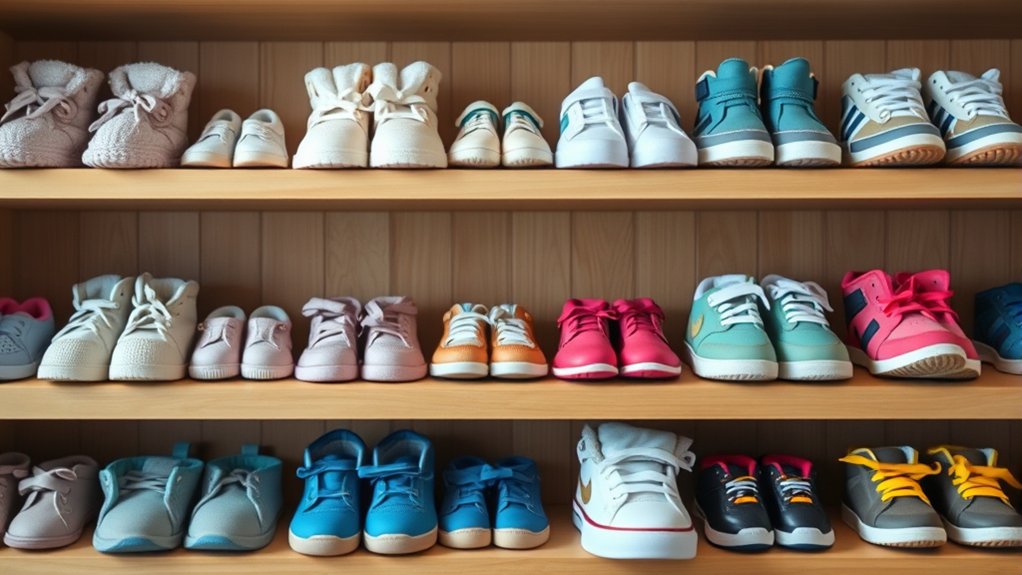
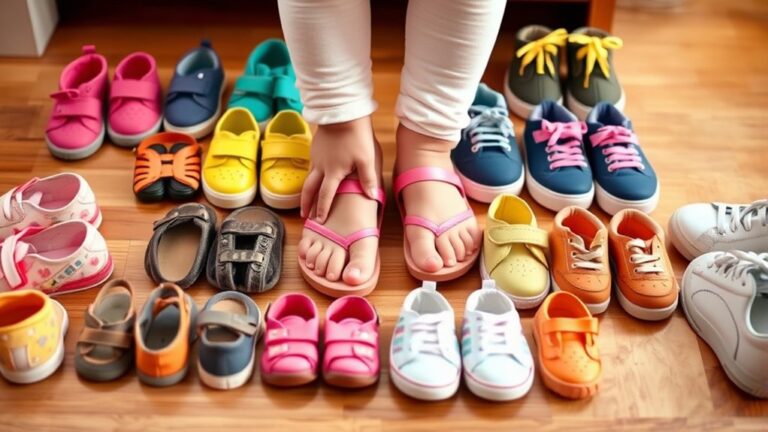
Although kids’ shoe sizes vary widely, they’re systematically categorized by age and developmental stage to help you find the right fit. Sizes start from infant (1-3), progress through toddler (4-10), preschool (10.5-3), and grade school (10.5-7), reflecting growth phases. The labels restart between toddler and youth sizes, which may cause confusion when selecting shoes.
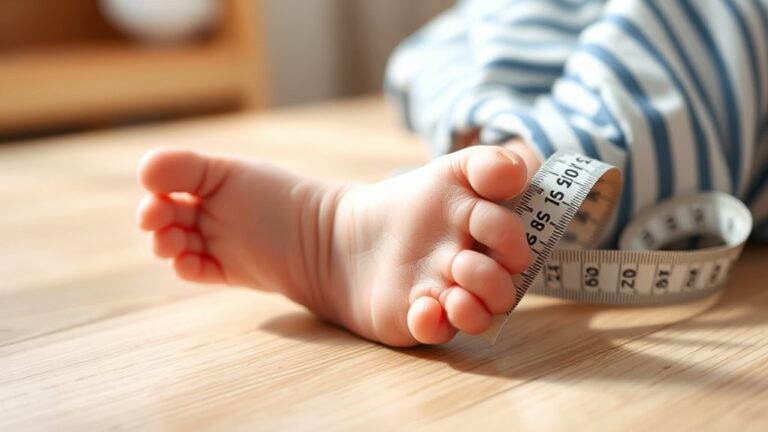
Shoe material and shoe branding can influence fit and comfort, so consider these factors alongside size. Infants’ sizing is typically in months, shifting to numeric sizes as children grow.
Generally, kids outgrow these sizes by ages 9-12, moving into adult sizing.
Understanding these categories streamlines your selection process, ensuring you choose appropriate shoes for each developmental stage. It really makes picking the right shoes a lot easier once you get the hang of it.
How Kids’ Shoe Sizes Transition From Infant to Adult Systems
As children grow, their shoe sizing moves from infant measurements, typically based on months, to numerical toddler and youth sizes. In shoe manufacturing, this progression reflects foot development stages, ensuring accurate fit and support.
Infant sizes (1-3) correspond to months, then shift to toddler sizes, restarting at size 1 for preschool and grade school children.
As foot growth continues, kids move into big kids’ sizes (10.5 to 3), which come before adult sizing. Around ages 9 to 12, when children outgrow these sizes, shoe manufacturing shifts to adult systems, starting at size 13.5 and up.
This development aligns with foot milestones, avoiding size gaps and ensuring appropriate support.
Understanding this progression helps you select shoes that fit growth phases effectively. This way, you can optimize foot health and comfort as your child grows. It’s all about making sure their shoes keep up with their feet.
What Kids’ Shoe Size Ranges Mean for Foot Length
When selecting shoes for your child, understanding how size ranges correspond to foot length is essential for achieving an accurate fit. Kids’ shoe sizes come from shoe size history and have been adapted to fit international sizing standards. They’re categorized by foot length measurements, which makes things easier.
You’ll find toddler sizes fit feet that are 4.5 to 6.5 inches long. Little kid sizes cover feet from 6.6 to 8.5 inches. Big kid sizes suit feet approximately 8.6 to 9.8 inches.
Size 7Y, which is around 9.8 inches, marks the transition to adult sizing. Matching your child’s foot length to size charts helps make sure you get the right fit. This method works well with international sizing conventions, making selection simpler even with regional differences.
Knowing these ranges helps avoid common fitting errors. Plus, it ensures your child stays comfortable and their feet stay healthy. So, keeping these size-to-length connections in mind really pays off.
How to Measure Your Child’s Feet for Accurate Sizing
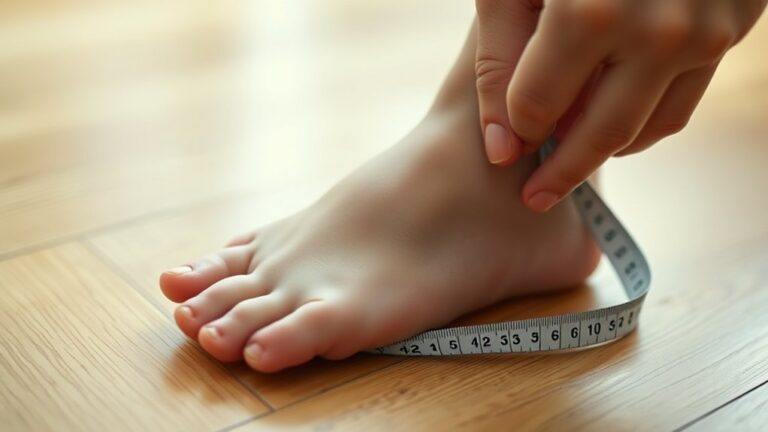
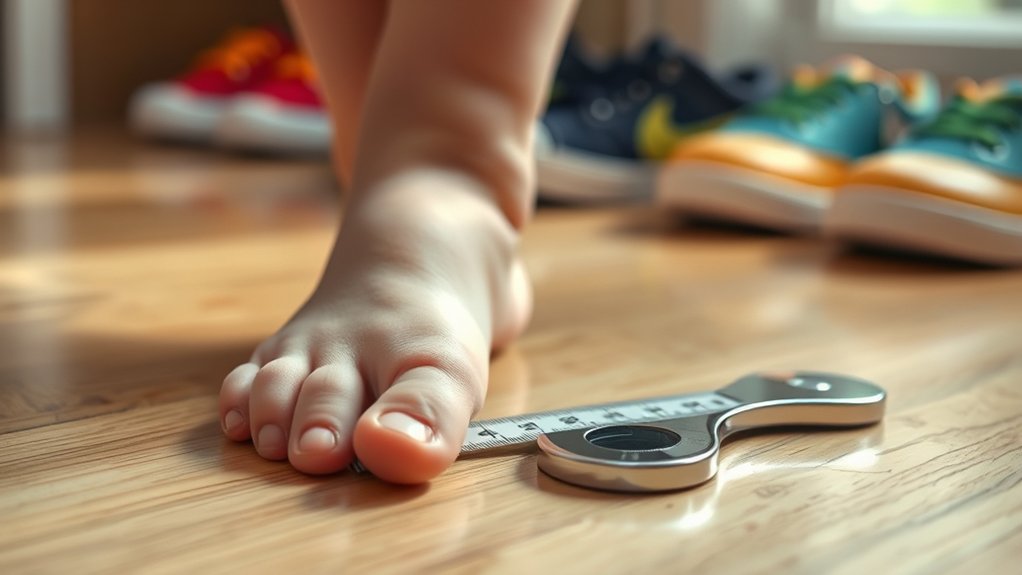
You’ll want to measure your child’s feet at home while they’re standing on a hard surface. It’s best to do this at the end of the day when their feet tend to be a little bigger.
Grab a printable size guide, and make sure it’s set to 100% scale. To double-check it’s accurate, use a credit card as a reference before you mark the heel and toe points to measure the length.
Also, don’t forget to measure the foot’s circumference using a ribbon—that way, you can be sure the shoes will fit comfortably.
And if one foot is bigger than the other, always go with the larger size to keep things comfy.
Measuring At Home
Although measuring your child’s feet might seem straightforward, accuracy requires careful attention to timing and technique. Proper measurement guarantees you select the right shoe material and shoe style that accommodate your child’s foot shape and growth.
Follow these steps to measure at home precisely:
Measure feet at day’s end when feet are most expanded. Have your child stand barefoot on a flat, hard surface. Mark heel and longest toe, then measure foot length with a ruler.
Use a string to measure foot circumference at the widest part, ensuring a snug fit. Measure both feet and use the larger size for shoe selection to allow growth room.
Accurate measurements guide you to choose shoes that fit well and last longer. Taking a little extra time to measure right now can save you from uncomfortable shoes later.
Using Printable Guides
Measuring your child’s feet accurately at home can be streamlined by using printable shoe size guides designed for precision. First, print the guide at 100% scale on an 8.5”x11” sheet and verify the scale with a credit card. Place your child’s heel against a wall and mark the longest toe using the printed ruler to get foot length in centimeters.
Next, wrap a ribbon snugly around the widest part to measure foot arch circumference. Always measure both feet and base sizing on the larger one, keeping in mind the shoe material flexibility and foot arch support.
| Step | Instruction |
|---|---|
| Print Guide | Verify 100% scale with credit card |
| Length Measurement | Heel to longest toe, mark and measure cm |
| Circumference | Wrap ribbon around widest part, snug not tight |
| Repeat & Compare | Measure both feet; size for larger foot |
Choosing Proper Fit
When should you measure your child’s feet to guarantee the most accurate sizing? Measure at the end of the day when feet are most swollen. This reflects their true size and helps accommodate changes in the foot arch.
Follow these steps precisely: Use a printable size guide at 100% scale and verify its accuracy with a credit card. Have your child stand barefoot on a hard surface. Then mark the heel and longest toe to measure foot length in centimeters or inches.
Next, wrap a ribbon around the widest part of each foot to measure circumference. This will help with choosing the right width. Compare both feet and if sizes differ or fall between two sizes, pick the larger measurement.
Also, consider how flexible the shoe material is. This helps accommodate your child’s natural foot arch and growth.
Getting accurate measurements like this ensures a proper fit, comfort, and support for your child’s developing feet.
How to Choose the Right Kids’ Shoe Size When Between Sizes
If you find your child’s feet fall between two sizes, always opt for the larger size to prevent discomfort and allow room for growth.
Measure both feet regularly since one foot may be slightly larger; size the shoes accordingly.
Make certain there’s about a thumb’s width of space in front of the toes to accommodate natural growth and movement.
Pay attention to the shoe material and its flexibility, as rigid materials may require more room.
Also, consider the foot arch support and shoe’s internal shape, which vary by brand and style, influencing fit.
When uncertain, have your child try on the larger size with typical socks and walk around to confirm comfort and proper fit before purchasing.
How Often Kids Need New Shoes Based on Growth Rates
Keeping track of your child’s shoe size is important, but understanding how often to replace their shoes based on growth patterns is equally important. Kids’ growth rates dictate shoe replacement frequency. It also depends on shoe material and sole thickness, which affect durability.
Here’s a technical breakdown:
Ages 1-3: Replace shoes 2-3 times yearly due to rapid foot growth.
Ages 3-6: Replace shoes 1-2 times annually as growth slows.
Older children: Replace shoes every 1-2 years.
Regular foot measurements guarantee timely replacement.
Also, keep an eye on shoe material wear and sole thickness reduction. This helps ensure safety and comfort for your child.
Why Proper Fit Matters for Kids’ Foot Health and Comfort
Since children’s feet grow rapidly and unpredictably, ensuring a proper shoe fit is critical for their foot health and comfort. Wearing shoes made from the right materials that offer both flexibility and support helps keep foot biomechanics on track. This reduces the risk of problems like bunions and hammertoes.
Shoes that are too tight can cause pain, blisters, and even restrict blood flow. On the other hand, loose shoes make tripping more likely and cause discomfort because of too much movement. It’s a good idea to measure your child’s feet regularly to make sure their shoes keep up with their growth.
While fashion trends might catch your eye, try to prioritize how the shoes function and fit. This helps promote proper foot development and overall mobility.
Plus, properly fitted shoes improve posture, keeping your child’s feet healthy and comfortable during all their daily activities.
When to Transition From Kids’ Sizes to Adult Shoe Sizes
As your child’s feet grow larger and their needs evolve, you’ll need to recognize when their shoe size no longer fits within the kids’ category. Transitioning to adult shoe sizes depends on several key indicators related to foot growth and anatomy.
You should consider adult sizing when:
- Your child’s foot length exceeds approximately 9.8 inches (big kids’ size 7).
- They weigh over 80 pounds, indicating mature foot structure.
- The foot arch develops fully, requiring supportive shoe material designed for adult biomechanics.
- Shoe sizing shifts from the kids’ system to adult charts, starting around men’s 7.5 or women’s 8.
- They outgrow shoes with restart sizing, moving to continuous adult size increments.
Recognizing these signs ensures proper fit and support as foot shape and function change. It’s all about making sure their shoes are comfortable and help their feet stay healthy as they grow.
Frequently Asked Questions
Do Kids’ Shoe Sizes Differ Between Brands or Manufacturers?
Yes, kids’ shoe sizes can differ between brands because of the materials used and seasonal changes that affect how they fit.
It’s a good idea to always check each brand’s size chart before you buy. Measuring your child’s feet precisely helps a lot too.
That way, you can be sure the shoes will fit well and be comfortable for them to wear.
How Do Width Measurements Affect Kids’ Shoe Sizing?
Width measurements affect kids’ shoe sizing like a tailored suit fits perfectly, ensuring ideal support.
You’ll find material types and color options vary by width, so choosing correctly prevents discomfort and promotes healthy foot development.
It’s all about making sure their shoes feel just right, not too tight or too loose. That way, little feet can grow strong and happy.
Are There Differences in Sizing for Sports Shoes Versus Casual Shoes?
Yes, sports shoes often fit differently than casual shoes because they are made with materials designed for support and durability.
Fashion trends tend to influence casual shoe sizing more, but sports models focus on a precise fit. They also prioritize cushioning and stability to boost performance and comfort.
Can Orthotic Inserts Change the Required Shoe Size for Kids?
Think of orthotic compatibility like fitting a puzzle piece. Yes, orthotic inserts often require shoe size adjustments. You’ll need to measure with inserts inside.
You might also want to choose shoes with wider or deeper toe boxes for extra comfort. It’s all about making sure your kid’s feet feel good in their shoes. That way, the orthotics can do their job properly.
How Do You Handle Sizing for Kids With Unusually Shaped Feet?
You handle sizing for kids with foot deformities by using custom sizing methods. Make sure to measure both length and width precisely. Choosing adjustable shoes can also make a big difference.
It’s a good idea to consult specialists to guarantee a proper fit. They can help accommodate unique foot shapes effectively. This way, you ensure the shoes are comfortable and supportive.
Conclusion
Figuring out kids’ shoe sizes is like steering a growing ship through shifting tides. Each measurement and stage guides you safely to the next harbor. By accurately measuring foot length, understanding size transitions, and recognizing growth spurts, you guarantee your child’s journey remains comfortable and supported.
Just as a captain adapts to changing seas, you’ll adapt shoe choices to promote healthy development. This helps your child take confident steps and experience smooth transitions from kids’ to adult sizes. It’s all about staying flexible and attentive as their feet grow.