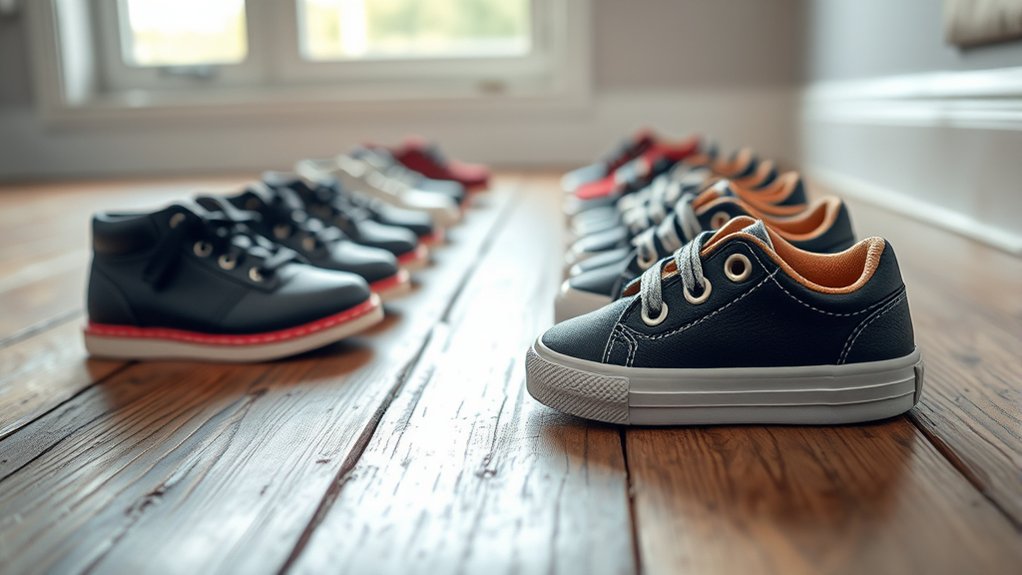
What Is 7C Shoe Size – Size Meaning And Guide
A 7C shoe size fits toddlers approximately 2 to 3.5 years old, with a foot length around 5⅜ inches (13.7 cm). The “C” signifies a narrow width, ideal for slimmer feet, offering both proper support and comfort.
This size accommodates early foot growth during critical development, ensuring a secure fit with space for toes. If you want to understand how to measure, compare widths, or shift to youth sizes, there’s more detailed guidance ahead.
Key Takeaways
- 7C is a toddler shoe size for ages 2 to 3.5 years with a foot length around 5⅜ inches (13.7 cm).
- The “C” width indicates a narrow fit, ideal for children with slim feet.
- Proper fit includes measuring feet in the late afternoon and ensuring thumb’s width space at the toe.
- 7C shoes accommodate foot growth during critical toddler development stages and usually fit slightly larger than 6C.
- Transition from toddler to youth sizes occurs after 13K; 7C roughly matches women’s size 4 or 4.5 in width.
What Does 7C Shoe Size Mean for Kids?
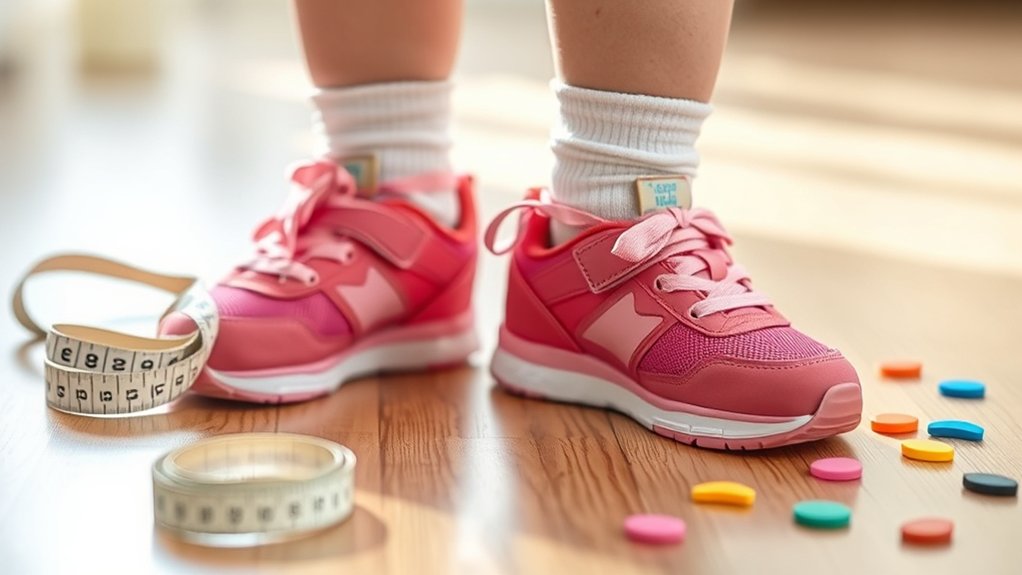
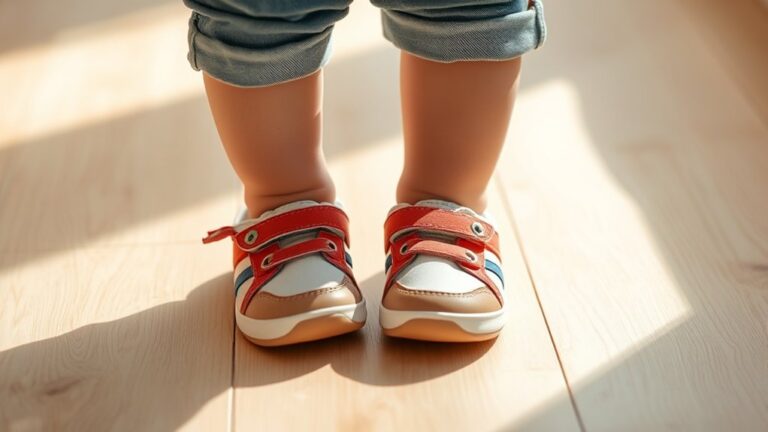
What exactly does a 7C shoe size mean for your child? It indicates a shoe designed for toddlers approximately 2 to 3.5 years old with a foot length near 5⅜ inches (13.7 cm).
The “C” denotes a narrow width, ensuring a snug fit for children with slimmer feet.
When choosing 7C shoes, you’ll find they come in various shoe materials, each offering different levels of breathability, flexibility, and durability to support healthy foot development.
Plus, manufacturers provide multiple color options, so you can pick styles that your child will love while still getting functional support.
Making sure there’s proper toe room and a secure fit in 7C shoes promotes comfort and helps prevent foot deformation.
This size is ideal for toddlers who need narrow, precisely fitted footwear.
Age and Foot Length for 7C Shoes
You’ll find that size 7C shoes typically fit toddlers between 2 and 3.5 years old.
They usually accommodate foot lengths around 5⅜ inches (13.7 cm).
Knowing this age and foot length connection can really help make sure you get the right fit for those growing little feet.
Typical Age Range
Although individual growth rates vary, toddlers typically wear 7C shoes between the ages of 2 and 3.5 years. This size accommodates foot growth during a critical developmental stage when foot length reaches around 4⅜ inches (11.1 cm).
As your child’s feet grow, selecting shoes with adequate shoe durability becomes essential to support natural development and frequent movement. The 7C size is specifically designed for toddlers whose feet are slightly larger than those fitting size 6C, ensuring a balance between fit and comfort.
Around age 3, many toddlers outgrow this size, so you’ll likely need to switch to larger footwear. Monitoring foot growth regularly helps you choose the correct size, preventing discomfort and ensuring optimal shoe durability throughout this rapid growth phase.
Corresponding Foot Length
How long should your toddler’s foot be to fit a 7C shoe? Typically, a 7C corresponds to a foot length of approximately 4⅝ inches (11.75 cm).
This measurement aligns with shoe manufacturing standards designed for toddlers around 2 to 3 years old, reflecting critical stages in foot development.
While slight variations exist between brands, the 4⅝-inch benchmark ensures a proper fit, supporting healthy growth and comfort.
Accurately measuring your child’s foot length is essential for selecting the right 7C shoe size, as shoe manufacturing prioritizes precise dimensions to accommodate early preschool-aged feet.
Understanding this correlation between age, foot length, and shoe size helps you make informed decisions.
It promotes optimal foot development and avoids issues caused by improper fit.
How to Measure Your Child’s Foot for 7C
When measuring your child’s foot for a 7C shoe size, do it in the late afternoon when foot swelling reaches its peak to guarantee accuracy.
Have your child stand flat on a piece of paper with their heel firmly against a wall to ensure proper alignment. Trace the foot’s outline with a pencil held perpendicular to the paper, capturing the widest points precisely.
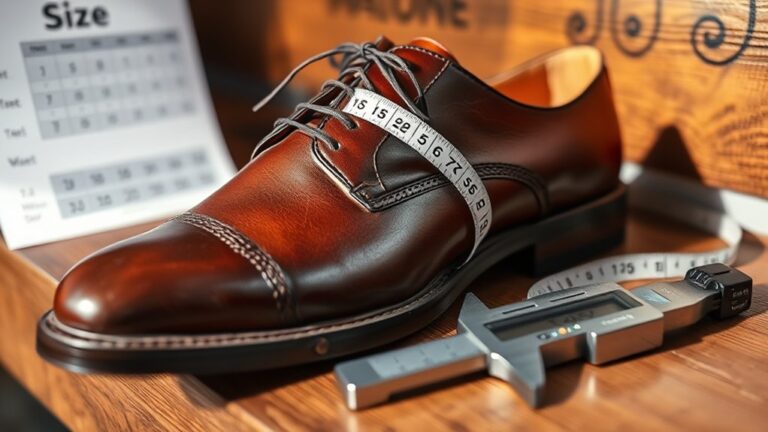
Next, use a ruler or measuring tape to measure the longest distance from heel to toe on the traced outline. Record this measurement in inches or centimeters and compare it against a reliable size chart.
Accurate foot measurement is essential, especially given evolving shoe fashion trends and advanced footwear materials designed for maximum comfort and fit in children’s shoes.
This method assures you select the correct 7C size confidently. It’s a simple process that makes a big difference in how your child’s shoes fit and feel.
What Does “C” Width Mean in 7C Kids’ Shoes?
Measuring your child’s foot length accurately sets the foundation for choosing the right 7C shoe size. But understanding the width designation is just as important. The “C” width in 7C kids’ shoes means a narrow fit, made for children with slim feet and narrower foot arches.
It usually corresponds to a smaller foot circumference than medium widths. This ensures proper comfort and support. Also, the shoe material’s flexibility helps accommodate the narrow foot shape without compromising fit.
| Size | Length (inches) | Width Type |
|---|---|---|
| 7C | 5⅜ (13.7 cm) | Narrow (C) |
| 7B | 5⅜ (13.7 cm) | Narrower (B) |
| 7D | 5⅜ (13.7 cm) | Wider (D) |
| 7M | 5⅜ (13.7 cm) | Medium (M) |
Choosing the correct width helps preserve foot arch health and overall comfort. So, taking both length and width into account makes all the difference.
Toddler vs Youth Shoe Sizes: What’s the Difference?
You’ll notice toddler shoe sizes range from 2C to 13C, and they typically fit children up to about 3.5 years old.
Then, youth sizes pick up starting at 1Y and go all the way up to 7Y, which is great for kids roughly between 4 and 12 years old.
The main difference is in the size scale and the age group they’re made for. Toddler sizes are designed for smaller, developing feet, while youth sizes accommodate larger, more mature feet.
Knowing these differences can really help when you’re choosing the right fit, especially as your child moves from toddler to youth sizing.
Size Range Comparison
Although toddler and youth shoe sizes both cater to children’s growing feet, they serve distinct age groups and sizing systems. Toddler sizes, such as 7C, range from 0K to 13K and fit younger children with smaller feet, typically ages 2 to 3.5 years.
Youth sizes start at 1 and extend to 7, accommodating older children around 4 to 12 years old.
You’ll notice toddler sizes often include width designations like C, which helps with fit precision. When comparing size ranges, shoe durability and material preferences differ.
Toddler shoes emphasize flexible, cushioned materials for developing feet, while youth shoes prioritize sturdier constructions to support increased activity and foot growth.
Understanding these distinctions helps you select the right size and shoe type for supreme comfort and support. It really makes a difference when you pick the perfect fit for your child’s needs.
Age Group Differences
Two key factors distinguish toddler shoe sizes like 7C from youth sizes: the target age group and the sizing system. Toddler sizes, such as 7C, fit children around 2 to 3.5 years with foot lengths near 5⅜ inches. These sizes use letter designations like C or K.
In contrast, youth sizes start at 1Y and go up to 7Y. They’re designed for kids aged about 4 years to early adolescence, reflecting larger, more developed feet.
Shoe manufacturing adapts to these differences by including features suited to rapid foot growth in toddlers. Meanwhile, youth shoes accommodate more stable foot structures.
Sizing charts clearly separate these categories. The progression happens around size 13, shifting from lettered toddler sizes to numbered youth sizes. This helps ensure an accurate fit across developmental stages.
When to Choose 7C or a Different Size
When your toddler’s foot measures around 5⅜ inches (12.7 cm), size 7C typically offers an appropriate fit. However, you should consider shoe material and seasonal footwear options before finalizing the size. These factors can affect comfort and fit, so keep them in mind.
If the foot length deviates markedly from 5⅜ inches, choosing a different size guarantees comfort and proper foot development. It’s a good idea to opt for a slightly larger size near the upper limit of 7C to accommodate growth and avoid tightness.
| Foot Length (inches) | Recommended Size |
|---|---|
| < 5.0 | Smaller than 7C |
| 5.0 – 5⅜ | Size 7C |
| 5⅜ – 5½ | 7C or slightly larger |
| > 5½ | Larger than 7C |
| Tight 7C fit | Try next size up |
Use precise measurements and fit tests to decide confidently. This way, you ensure your toddler’s shoes fit just right.
Tips for a Comfortable Fit in 7C Shoes
To achieve a comfortable fit in 7C shoes, you should guarantee there’s roughly a thumb’s width of space between your toddler’s toes and the shoe’s front edge. Make sure the shoe’s width accommodates your foot without tightness since C denotes a narrower fit.
It’s a good idea to measure feet regularly, especially during growth spurts, to keep the sizing just right. Try fitting shoes in the late afternoon when feet tend to be largest. Also, wear socks similar to those your child will wear with the shoes.
Pay attention to the shoe material; flexible, breathable fabrics really enhance comfort and adapt better to foot shape.
Plus, consider color options that your child likes because if they love the look, they’ll be more likely to wear them consistently. This helps support proper foot development.
Choosing 7C shoes with these factors in mind guarantees ideal comfort and durability. It’s all about making sure your little one’s feet feel good and stay healthy!
How 7C Kids’ Size Compares to Adult Shoe Sizes
Understanding how a 7C kids’ shoe size compares to adult sizes can help you find the right fit as children grow. A 7C kids’ shoe corresponds to a foot length of about 5⅜ inches (13.7 cm) and fits toddlers aged 2 to 3.5 years. This reflects typical foot growth patterns.
In adult sizing, 7C denotes a narrow width, roughly equivalent to a women’s size 4 or 4.5 in standard width. Keeping shoe sizing consistent across age groups helps you transition from kids’ to adult shoes smoothly. That way, comfort and proper support are easier to maintain.
Consider these points when comparing sizes: Narrow “C” width suits children with slim feet. Getting ahead on shoe sizing consistency can prevent fitting issues later on. Plus, tracking foot growth patterns helps you know when it’s time for a new size.
Frequently Asked Questions
Can 7C Shoes Be Used for Indoor Activities Only?
Yes, you can use 7C shoes for indoor activities only. Their design focuses on lightweight materials, which makes them really comfortable to wear.
They match well with fashion trends that favor comfort and minimal support. This makes them perfect for smooth, controlled environments indoors.
Are 7C Shoes Suitable for Kids With Wide Feet?
Think of 7C shoes as a narrow riverbed. If your child’s foot is wide, it just won’t flow comfortably.
You really shouldn’t use 7C shoes for wide feet because the wrong shoe width can hold back healthy foot growth.
It’s important to find shoes that fit well and support your child’s feet as they grow.
What Materials Are Best for 7C Toddler Shoes?
You’ll want breathable mesh or lightweight leather for toddler shoe comfort, plus soft suede or synthetic leather. Compare shoe materials focusing on flexibility and durability, while avoiding stiff options that restrict movement and reduce overall comfort.
Choosing the right materials makes a big difference. Think about how much your toddler moves and plays. Shoes that bend easily and last through all that activity are the way to go.
How Often Should 7C Shoes Be Replaced?
You should replace 7C shoes every 3 to 4 months, considering shoe durability and comfort comparison. Regularly check for wear or fit issues to guarantee ideal support. Toddlers’ feet grow rapidly and affect shoe performance.
Do 7C Shoes Come in Waterproof Options?
Like a shield against rain, some 7C shoes do come waterproof, enhancing shoe durability and comfort level. They use treated materials and sealed seams, which is ideal for outdoor use.
Just make sure to check the specs carefully for true water resistance. It’s always good to know exactly what you’re getting!
Conclusion
So, you’ve mastered the mystery of 7C shoes, tiny sizes with big importance. It’s kind of funny how something so small needs such precise measuring. Kids’ feet grow faster than you can say “7C,” seriously.
You’ll want to keep a close eye on those measurements. A perfect fit now saves future foot woes. Remember, 7C isn’t just a number. It’s the foundation for your child’s comfort and healthy growth.