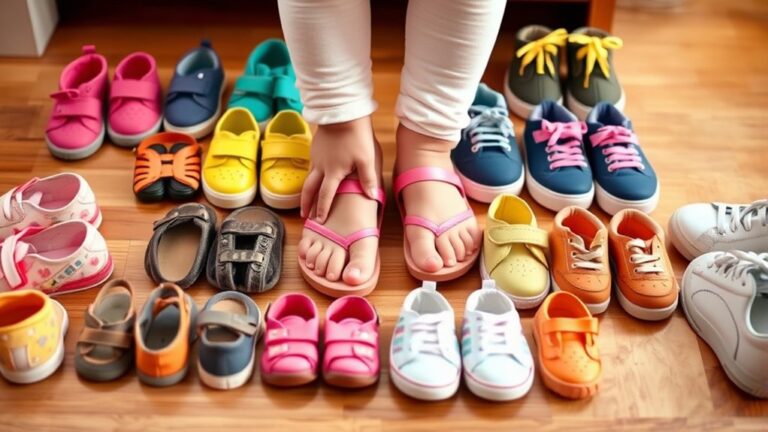
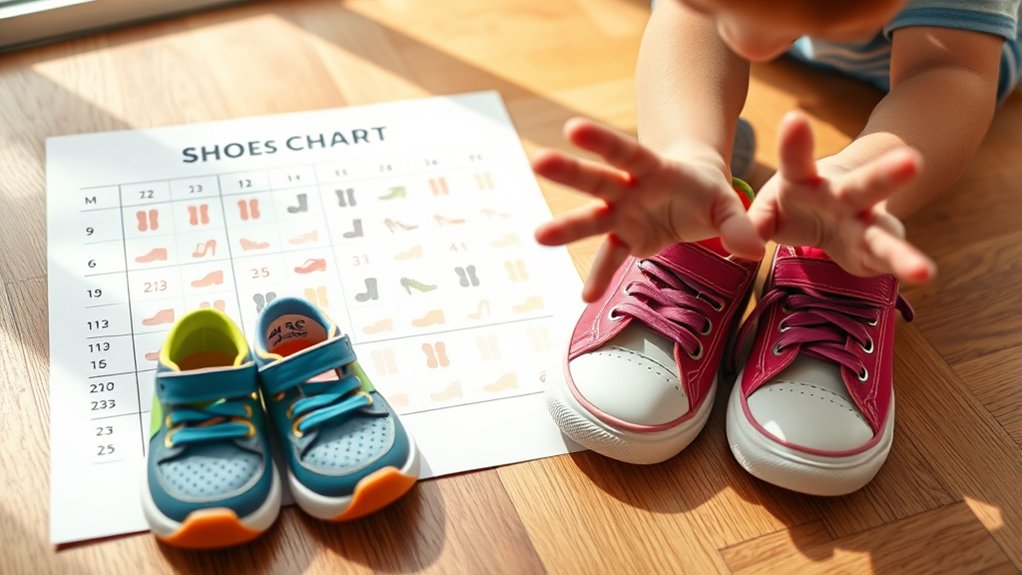
What Size Shoe Does A 6 Year Old Boy Wear – Shoe Size Chart Guide
A typical 6-year-old boy usually wears US shoe sizes 12 to 13, with feet measuring about 6.5 inches. Since kids’ feet grow quickly, around 1mm per month, you should measure their feet every few months and leave some extra space for comfort.
Use printable guides or professional fittings to guarantee the best fit. Choosing breathable, flexible shoes supports healthy growth and comfort. Keep checking sizes and fit to help your child’s feet stay happy and healthy as they grow.
Key Takeaways
- A 6-year-old boy typically wears US shoe sizes 12 to 13, with foot lengths around 6.5 to 7 inches.
- Shoe sizes shift from preschool (10.5–13) to grade school (1–3) around age 6, requiring careful size selection.
- Measure feet in the late afternoon using printable guides and choose the size matching the longer foot.
- Leave about a thumb’s width of space at the toe to allow for ongoing foot growth and comfort.
- Opt for breathable, flexible shoes and size up if shoes feel tight or the child outgrows them quickly.
What Shoe Size Does a Typical 6 Year Old Boy Wear?
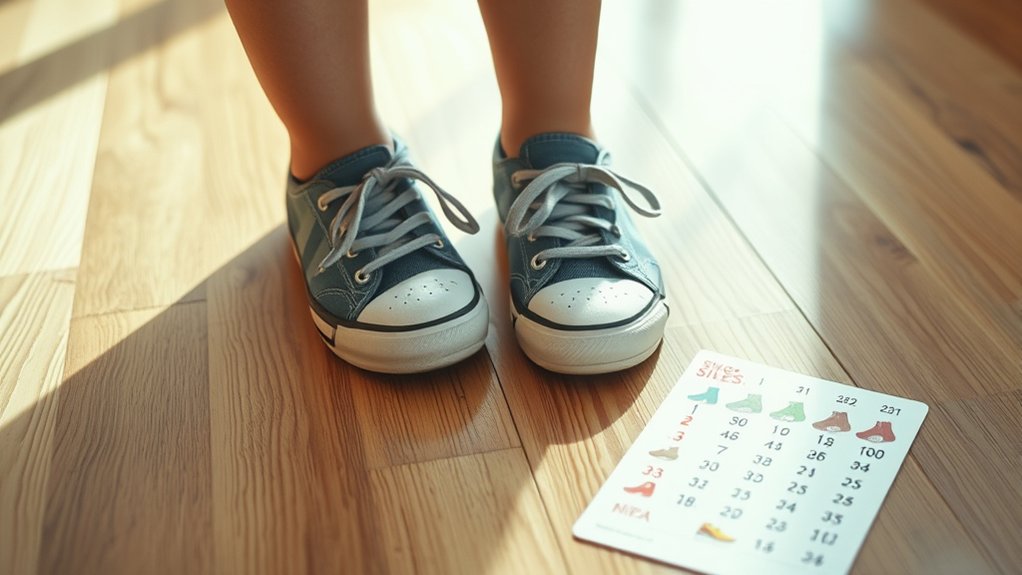
While every child grows at their own pace, a typical 6-year-old boy usually wears shoe sizes between US 12 and 13. At this stage, his feet measure about 6.47 inches (16.6 cm), shifting from toddler to big kid sizes.
You’ll want to guarantee shoes offer room for growth, around a thumb’s width at the toes, to keep him comfortable. When selecting shoes, consider shoe durability since active kids need footwear that withstands daily play.
Also, staying aware of current fashion trends can help you find styles he’ll enjoy wearing, boosting his confidence.
Regularly measuring his feet ensures the fit remains perfect as his feet continue to develop.
Choosing shoes that balance durability and style will keep him supported and looking great.
How Kids Shoe Sizes Change Around Age 6
As your 6-year-old boy’s feet continue to grow, you’ll notice his shoe sizes shift from the smaller preschool range, typically around 10.5 to 13, into bigger grade school sizes, usually between 1 and 3.
At this stage, his feet generally measure about 6.5 to 7 inches, reflecting this shift to more adult-like sizing.
Growth slows to about 1mm per month, so shoe changes become less frequent but still vital.
Choosing shoes with breathable, flexible shoe material supports foot health during this period of steady growth.
Proper fit and quality materials help prevent discomfort or developmental issues.
Staying attentive to these changes guarantees his feet stay comfortable and healthy as he moves from toddler shoes to more structured grade school options.
It’s all about keeping his feet happy while he keeps growing!
Measuring Your 6 Year Old’s Foot at Home
You can start by using a printable measurement guide—it makes tracing your child’s foot super easy and accurate.
Just have him stand flat on a piece of paper with his heel against a wall.
Then, mark the longest toe to capture the full length.
Make sure to measure both feet, because one might be a little bigger than the other.
When you’re picking out shoes, go with the longer measurement to get the best fit.
Printable Measurement Guide
How can you assure your 6-year-old’s shoe size is just right without guessing? Start by printing the measurement guide at 100% scale on an 8.5”x11” sheet. Confirm the size using a credit or ID card for accuracy.
Have your child stand with full weight, heel against a wall, and trace their foot on the paper. Measure the longest point in centimeters or inches, then use this to find the perfect size. Remember, shoe material and fashion trends matter. Comfort and style should go hand in hand.
| Step | Action | Tip |
|---|---|---|
| 1 | Print guide at 100% scale | Use 8.5”x11” paper |
| 2 | Verify with credit card | Ensures accurate sizing |
| 3 | Trace foot with heel on wall | Child stands straight |
| 4 | Measure longest point | Choose larger size if unsure |
Tracing Foot Technique
Ensuring your 6-year-old’s shoe fits perfectly starts with an accurate foot measurement at home. To do this, place a blank sheet of paper on a flat surface and have your child stand with full weight, heel against a wall. This ensures the most precise measurement from the back of the foot.
Use a pen to carefully trace around the foot, staying close to the edges. Next, measure from the heel to the tip of the longest toe with a ruler. Record this length in inches or centimeters, then compare it to a shoe size chart.
Choosing shoes with the right shoe material and size supports proper foot health, preventing discomfort and promoting natural growth. This simple tracing technique makes selecting the perfect fit easier and safer. It really takes just a few minutes and can make a big difference!
Measuring Both Feet
Although it might seem like measuring one foot is enough, taking measurements of both feet is vital since they often differ in size. Have your child stand flat on a piece of paper with heels against the wall to guarantee accuracy. Measure from the heel to the longest toe on each foot using a ruler or measuring tape.
It’s best to do this at the end of the day when foot swelling peaks for the most precise sizing. Compare both measurements to a size chart and choose the shoe size based on the longer foot.
This careful approach aligns with current footwear trends focusing on fit and comfort, which ultimately supports shoe durability by preventing premature wear caused by ill-fitting shoes.
Your child’s comfort and shoe longevity depend on this simple but essential step. Taking the time to measure both feet really pays off in the long run. So, don’t skip it!
Reading Kids Shoe Size Charts and Conversions
When you’re looking at kids’ shoe size charts, it’s important to pay attention to foot length measurements and how they convert between US, Euro, and centimeter sizes. You’ll find that a 6-year-old boy usually fits somewhere between US sizes 12 and 13.
But keep in mind, measuring both feet is a smart move since feet can be different sizes.
Knowing how age relates to shoe size really helps, too. It makes sure you pick shoes that not only fit well but also support those growing feet comfortably.
Understanding Size Measurements
Because kids’ shoe sizes vary across different systems, understanding how to read size charts and conversions is essential for finding the right fit. Start by measuring your child’s foot length in centimeters or inches, then match it to the size chart to pinpoint the correct size.
For a 6-year-old boy, US sizes typically range from 12 to 13, corresponding to about 19.3 to 20.3 centimeters.
Remember, shoe material affects fit and comfort, so consider flexible, breathable fabrics when shopping.
Regularly measuring feet and consulting size charts helps accommodate growth and prevent discomfort.
Use these shopping tips to ensure the shoes fit well, avoid tightness, and support healthy foot development, making your purchase both practical and comfortable for your child.
Converting Between Size Systems
Since kids’ shoe sizes vary widely across US, European, and centimeter systems, knowing how to convert between them helps you find the perfect fit.
To convert a US size to EU, simply add about 16; for instance, US size 1.5Y equals EU 17. Always measure your child’s foot length in centimeters and refer to official size charts, as conversions can differ by brand.
This precision guarantees the shoe material isn’t stretched or squeezed, which affects comfort and durability.
Also, choosing the right shoe color can motivate your child to wear them happily, but fit matters most.
Age And Size Correlation
Understanding the correlation between your 6-year-old boy’s age and shoe size helps you navigate size charts confidently. Typically, kids this age wear US sizes 11 to 13, with size 11 measuring about 6.5 inches (16.6 cm).
Since foot growth varies, always measure both feet and choose the larger size to guarantee comfort. When reading shoe size charts, remember that accurate conversions between US, European, and centimeter measurements are crucial, especially if you shop internationally.
Selecting shoes made from breathable shoe material that offers flexibility supports healthy foot development. Additionally, good ankle support in shoes prevents injuries as your child stays active.
When and Why to Size Up for Growing Feet
Although your child’s feet may seem to fit perfectly now, they can grow approximately 1mm each month between ages 3 and 6. So, it’s important to size up regularly. Proper shoe fit is vital to accommodate this foot growth and avoid discomfort or long-term issues.
When toes feel cramped or shoes feel tight, it’s time to size up.
| Sign to Size Up | Reason |
|---|---|
| Toes feel cramped | Prevents blisters and discomfort |
| Noticeable tightness | Ensures proper support |
| Frequent outgrowing | Allows room for growth |
| Measured foot growth | Matches natural development |
Sizing up ensures comfort, supports healthy foot development, and keeps your child’s shoes fitting well as they grow. It’s a simple step that makes a big difference.
How Often Should You Check Your 6 Year Old’s Shoe Size?
Because your child’s feet grow quickly at this age, you should check their shoe size every 2 to 3 months. Children’s feet can grow up to 1mm per month, so frequent measurements help guarantee their shoes aren’t too tight or uncomfortable.
Keeping tabs on their shoe size allows you to select footwear fashion that fits well and supports healthy development. Remember, shoe material also affects comfort and flexibility, so updating shoes regularly ensures the material adapts properly as feet grow.
Use a printable measurement guide or visit a store for professional fitting to track changes accurately. Regular checks prevent foot problems and keep your 6-year-old comfortable.
This way, you can choose stylish, well-fitting shoes that accommodate their rapid growth and active lifestyle. It’s all about making sure their feet stay happy and healthy!
Tips to Ensure Your 6 Year Old’s Shoes Fit Comfortably
To guarantee your 6-year-old’s shoes fit comfortably, measure their feet in the late afternoon when they’re at their largest. Always leave about a thumb’s width of space between the longest toe and the shoe’s front.
When selecting shoes, consider these tips: use a printable measurement guide or get a professional fitting for accuracy. Have your child wear their usual socks during try-ons to mimic real wear.
Choose shoe material that’s breathable and flexible for all-day comfort. Opt for a slightly larger size if one foot is bigger or your child is between sizes.
And don’t forget to respect your child’s color preferences to encourage them to wear the shoes happily.
These steps will help assure a perfect fit, comfort, and your child’s satisfaction with their new shoes. Easy, right?
What to Do When Your Child’s Shoes Don’t Fit
If your child’s shoes start feeling tight or cause discomfort, it’s important to address the fit promptly to avoid foot problems. Regularly measuring your child’s feet every two months helps guarantee shoes fit well as they grow.
Promptly addressing tight shoes and measuring feet every two months keeps your child’s feet healthy and comfortable.
You can use a printable guide or visit a store to get an accurate measurement with a Brannock Device.
When choosing between two sizes, go for the larger one to prevent cramping and allow room for growth.
If shoes show wear like scuffs or cause blisters, replace them immediately, even if they still seem to fit.
Following these parenting tips helps maintain your child’s foot health and keeps their shoe fashion comfortable and functional.
Staying proactive ensures your little one stays happy on every step. It really makes a difference when you keep an eye on those growing feet!
Frequently Asked Questions
Can Different Shoe Brands Fit Differently for the Same Size?
Yes, different shoe brands can fit differently even if the size is the same. This happens because of variations in the materials used and the design of the shoes.
Since your child’s feet are growing and changing, it’s a good idea to try on several brands. That way, you can make sure the shoes feel comfortable and fit just right.
Are There Specific Shoe Styles Better for Active 6-Year-Olds?
You’ll want shoes with breathable mesh and flexible soles to keep up with your active kid. Prioritize cushioned insoles and adjustable straps for design comfort considerations, ensuring durability and a secure fit during play.
These features help your child stay comfortable and supported while running around. Plus, adjustable straps make it easy to get the perfect fit every time. Durable materials mean the shoes can handle plenty of action without falling apart.
How Can I Tell if Shoes Are Causing Discomfort or Pain?
Like a knight sensing armor’s pinch, you’ll notice redness, blisters, or complaints of aching. Check if the shoe material irritates or restricts the foot arch. Proper fit lets toes move freely, ensuring comfort without pressure points.
Should I Consider Orthotic Inserts for My 6-Year-Old?
You should consider orthotic benefits if your child shows discomfort or flat feet, as they support proper foot development.
It’s important to consult a podiatrist to make sure the inserts suit your 6-year-old’s specific needs. This helps promote healthy walking and overall foot health.
Getting the right advice can make a big difference in how comfortable and confident your child feels on their feet.
Are There Seasonal Shoe Sizing Differences to Consider?
Think of your child’s feet like a garden. Seasonal sizing variations are like the changing weather.
Warmer months swell the soil, and thicker winter socks add layers. So, you’ll need to adjust shoe size for comfort and fit accordingly.
Conclusion
Choosing the right shoe size for your 6-year-old isn’t just about numbers. It’s about comfort, growth, and confidence. Their little feet sprint through play and learning, so you want shoes that keep up without pinching or slipping.
Remember, regular measuring and sizing up when needed are your best tools. After all, happy feet help your child take on the world with joy. So let’s make every step count, one perfect fit at a time.