How To Stretch A Shoe – Safe Methods That Work
You can safely stretch your shoes by using gentle techniques like wearing thick socks while applying medium heat with a blow dryer to soften the material, then walking in them. For leather shoes, it’s best to use leather-specific stretchers and conditioners. Just be careful to avoid excessive force or heat because that can damage your shoes.
Another effective method for fabric shoes is stuffing them with damp newspaper or sealed water bags and freezing them overnight. This helps gently stretch the material without causing harm.
Following these simple methods prevents damage and improves comfort. Give these tips a try to guarantee a lasting shoe fit and care.
Key Takeaways
- Use shoe stretchers or bunion plugs gradually, applying gentle pressure and leaving them overnight for effective widening.
- Wear thick socks and use a medium heat blow dryer on tight areas to soften material and stretch shoes safely.
- Stuff shoes with crumpled newspaper, socks, or sealed water bags and freeze overnight for natural expansion.
- Apply leather conditioners or stretching sprays before using tools to protect and gently loosen shoe materials.
- Avoid overstretching by limiting sessions to 24-48 hours and stopping if wrinkling, cracking, or deformation occurs.
How Do You Know When Your Shoes Need Stretching?
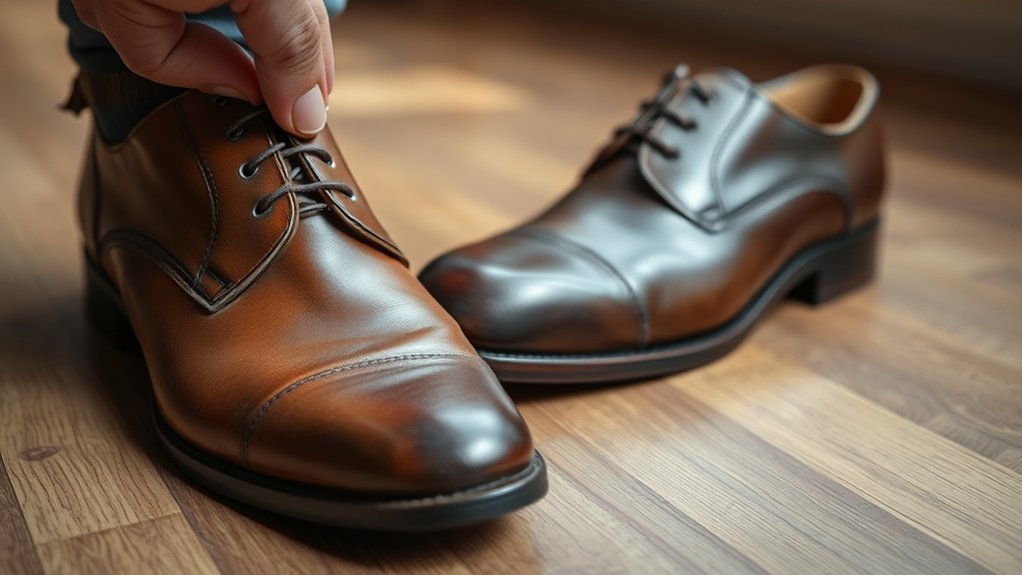
Although new shoes might feel comfortable at first, you’ll know they need stretching if they cause discomfort, such as pinched toes, cramping, or numbness after wearing them for a short time. Pay attention to signs like overlapping toes or heels slipping, which indicate tightness or narrowness.
Even if your shoes’ initial color and shine catch your eye, comfort should always take priority over appearance. Understanding your shoe history—how they’ve worn and fit over time—helps you recognize when stretching is necessary to prevent ongoing pain or damage.
Shoes that grow tight after extended wear also signal a need for adjustment. By evaluating these cues, you can ensure your shoes fit properly, preserving both comfort and their original look.
Which Shoe Materials Stretch Best and Why?
When choosing which shoes to stretch, understanding the material is essential because not all fabrics respond the same way to stretching techniques.
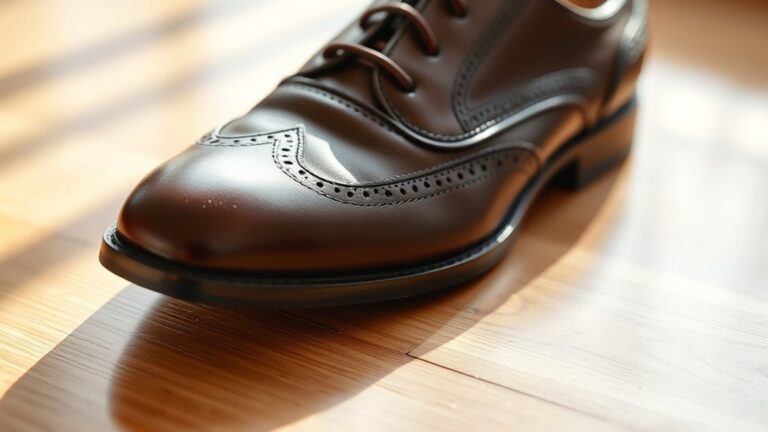
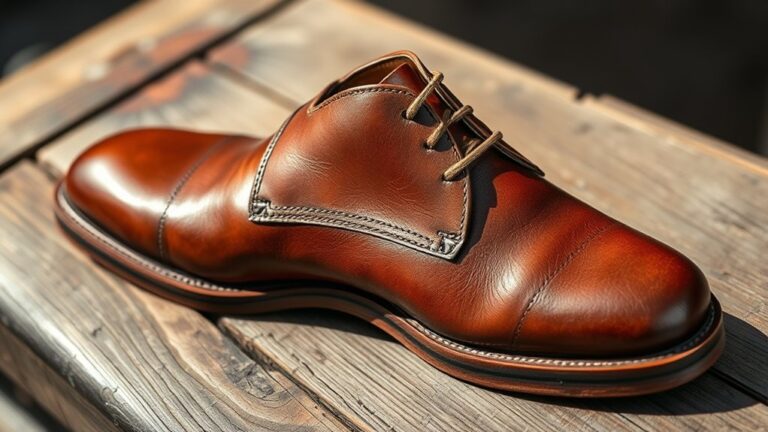
Leather shoes are the most pliable shoe material, allowing you to stretch up to half a size in width and a quarter in length without damage.
Leather shoes offer excellent flexibility, allowing safe stretching up to half a size in width and a quarter in length.
Suede also stretches but requires gentle handling due to its delicate surface.
Canvas and woven fabrics offer high flexibility and respond well to damp stretching techniques, making expansion easier.
However, patent leather resists stretching because of its polyurethane or acrylic coating and often needs professional help.
Synthetic materials generally don’t stretch easily and are best chosen for a proper fit from the start.
Knowing your shoe material guides you in selecting the safest, most effective stretching techniques.
What Are Simple At-Home Methods to Stretch Shoes?
If you find your shoes feeling tight, you can use several simple at-home methods to stretch them effectively. Start by stuffing your shoes with crumpled newspaper or socks to gradually increase their width and volume.
For non-leather materials, filling sealed plastic bags with water and freezing them inside your shoes overnight creates pressure that gently expands the fit.
You can also shape a peeled potato to fit the toe box and leave it inside overnight for targeted stretching.
Keep in mind that shoe color and heel height may affect how these methods work. Darker colors might show water spots, and high heels require careful stretching to maintain structure.
These practical approaches help you avoid discomfort without altering your shoes’ aesthetics or stability. Give them a try, and you might find your shoes feeling much more comfortable in no time!
How Can You Use Heat and Socks to Stretch Shoes?
You can stretch your shoes by putting on several pairs of thick socks. Then, use a blow dryer on medium heat and aim it at the tight spots on your shoes. This heat helps soften the material, making it easier to stretch.
Just make sure to keep the dryer moving so you don’t damage the shoes. Once they’re warm, slip them on while they’re still cooling down. This way, the shoes will mold perfectly to your feet.
After you’ve finished, it’s a good idea to moisturize the shoes. This keeps the material flexible and helps prevent any cracking down the line.
Thick Socks Technique
A simple and effective way to stretch shoes involves wearing thick socks combined with applying heat. Put on a pair of thick socks to fill the shoe more fully, then gently warm the shoe material with a hairdryer on medium heat.
This softens the leather or fabric, allowing it to expand comfortably as you walk around.
The heat and sock combination gradually molds the shoe to your foot’s shape over several sessions. This technique complements shoe dyeing or insoles replacement efforts, ensuring a better fit after modifications.
Just repeat the process over a few days for ideal stretching without damaging your shoes.
Using thick socks this way helps achieve a custom fit while preserving the shoe’s integrity and comfort. It’s a simple trick that really makes a difference when you want your shoes to feel just right.
Blow Dryer Application
Although stretching shoes with heat requires caution, using a blow dryer combined with thick socks offers an effective method to soften and expand tight areas.
Put on thick socks and heat the tight spots of your shoes on medium heat for 20-30 seconds, keeping the blow dryer moving constantly to avoid damaging the material.
Immediately wear the shoes as they cool to mold them to your feet. If needed, repeat the process, adjusting sock thickness or heating time for a better fit.
Note that shoe dyeing can affect the heat tolerance of materials, so test carefully before applying heat.
Also, consider replacing insoles to improve comfort after stretching.
This method works well, especially for leather shoes, enhancing fit without compromising shoe integrity.
Moisturize After Heating
After using heat and thick socks to stretch your shoes, applying a leather conditioner or moisturizer helps keep the material soft and prevents cracking. The heat from the blow dryer opens up the leather fibers, so the moisturizer can sink in deeply. This boosts moisture retention and flexibility.
Leather conditioning not only softens the material but also preserves its elasticity, which helps your shoes last longer. Just make sure to let your shoes cool down a bit after heating before you put on the moisturizer. This prevents trapping too much heat and moisture inside.
Adding this step means your leather stays supple and durable, supporting the gradual stretching you’ve done with heat and thick socks. Proper leather conditioning is key for safe and effective shoe stretching.
How Do You Use Shoe Stretchers and Tools Effectively?
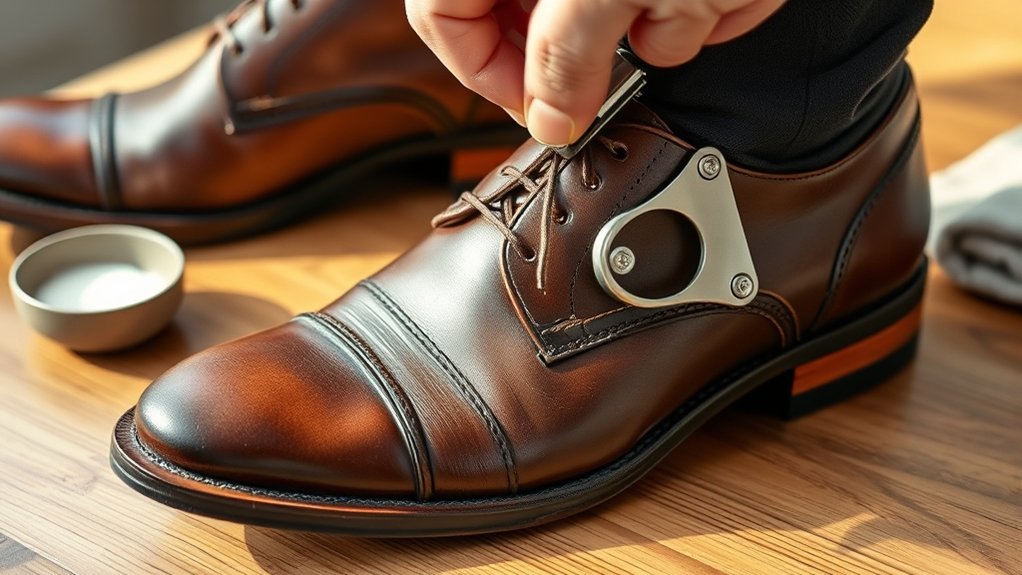
To use shoe stretchers effectively, first pick the right type that matches your shoe’s size and shape. It really makes a difference to start with the proper tool.
Before you insert the stretcher, try applying some heat or a stretching spray. This helps soften the material and makes stretching easier.
Then, go slow—adjust the stretcher little by little to avoid overstretching your shoes.
Keep in mind, timing matters too. Give your shoes some time with the stretcher inside, and check the fit regularly.
Doing this consistently will give you the best results without damaging your shoes.
Choosing The Right Stretcher
When you choose a shoe stretcher, consider one that allows both length and width adjustments, like a two-way stretcher. This way, you can customize the fit precisely. The right stretcher really depends on your shoe material and the areas that need expanding.
Proper stretching tools guarantee effective and safe results without damaging your shoes. So, it’s worth picking the right one for your needs.
Use a two-way stretcher for simultaneous length and width adjustments. Also, apply stretch spray or conditioner to soften the shoe material before stretching.
Start with gentle expansion, increasing it gradually every 8-12 hours. And remember to remove the stretcher after 6-8 hours to avoid overstretching.
You can use bunion plugs or targeted inserts to address specific tight spots.
Choosing the right stretcher helps maximize comfort and prolong your shoe’s life.
Proper Stretcher Usage
Although using a shoe stretcher might seem straightforward, applying it correctly guarantees the best results without damaging your shoes. Start by inserting a clean, dry shoe stretcher and gradually turning the handle to expand width or length evenly. This ensures proper shoe sizing adjustments.
For enhanced foot comfort, spray the shoe’s interior with a stretch or conditioning spray before inserting the stretcher. Choose a one-way stretcher for targeted width or a two-way for both length and width, depending on your shoe’s needs.
Leave the stretcher in place for 6-8 hours or overnight, adjusting gradually to avoid over-stretching. Once the desired fit is achieved, remove the stretcher carefully.
Then insert shoe trees or tissue paper to maintain the shoe’s shape during wear.
Combining Stretchers With Heat
Since heat softens shoe materials, combining it with a stretcher really boosts the stretching process. To get the best results, start by spraying a stretch solution inside the shoe to make it more flexible.
Then, apply medium heat with a blow dryer for about 20-30 seconds on tight spots before putting the stretcher in.
Once the stretcher is inside, slowly turn its handle every 8-12 hours to stretch the shoe evenly. Keep an eye on areas that need extra room, like the heel padding and arch support.
After you’ve reached the fit you want, take out the stretcher and let the shoe cool down so it keeps its new shape.
Use a stretcher for length and width adjustments. Spray stretch solution inside the shoe. Heat tight spots with a blow dryer. Turn the stretcher handle gradually. Cool shoes after removing the stretcher.
What Are Safe Ways to Stretch Leather Shoes?
If you want to stretch leather shoes safely, start by softening the material with a leather stretching spray or conditioner to increase flexibility. This step is vital for proper leather care and maintaining your shoe aesthetics.
Next, use a shoe stretcher designed specifically for leather, adjusting it gradually to prevent damage. Applying gentle heat with a blow dryer on a medium setting can also make the leather more pliable before stretching.
Use a leather-specific shoe stretcher and gentle heat to gradually soften and expand your shoes safely.
Insert a padded shoe tree or stretchers treated with moisture or spray to evenly expand the leather over time. Always avoid excessive force, and test any method on a small, hidden area first to prevent cracks or damage.
These steps guarantee effective stretching while preserving the leather’s integrity and appearance. Just take it slow and be gentle—that way, your shoes will stay looking great and fit better too!
How Can You Avoid Overstretching and Damaging Shoes?
To prevent overstretching and damaging your shoes, you need to stretch them gradually and with care. Preserving shoe fashion and your favorite brand’s reputation means avoiding excessive force and respecting material limits.
Remember these guidelines:
Use adjustable stretchers and apply gentle pressure to control expansion. Limit each stretching session to 24-48 hours to maintain shape and avoid weakening. Choose stretching methods suited to the shoe’s material, like leather or suede, to prevent cracking.
Stop immediately if you notice wrinkling, cracking, or deformation. Always follow manufacturer instructions and avoid overusing heat or chemical agents that can degrade materials.
Taking it slow and being gentle really pays off in the long run.
What Are Easy Tricks to Widen Shoes and Toe Boxes?
When you need to widen your shoes or toe boxes, several simple tricks can provide effective relief without messing up the shoe’s structure. One easy way is to wear thick socks and walk around in the shoes. Using a hairdryer to soften the material can also help gently stretch the toe box.
You can try inserting a shoe stretcher or bunion plug and slowly expanding it over a few hours. This increases the space and helps ease toe discomfort.
Another cool method is filling sealed plastic bags with water, placing them inside the shoes, and freezing them to stretch the material.
Stuffing shoes with crumpled newspaper or socks for a few days applies steady pressure to widen the fit.
Plus, using a potato mold overnight offers a natural way to reduce tightness.
These tricks can help you get a more comfortable shoe size without much hassle.
How Do You Maintain Shoes After Stretching?
Once you’ve successfully stretched your shoes to a more comfortable fit, keeping their new shape becomes a top priority. Proper shoe cleaning and storage are key to making sure your shoes last longer.
Here’s what you can do to keep them in great condition: use shoe trees or stuff your shoes with tissue paper to help them hold their stretched form. Applying leather conditioner or moisturizer regularly also helps prevent drying and cracking.
Make it a habit to clean your shoes gently after each wear. This removes dirt and keeps the material looking good. Just be careful not to overstretch them—reshape your shoes gradually to avoid any damage or looseness.
Finally, store your shoes in a cool, dry place. Using protective sprays can give them an extra layer of durability.
Taking these simple steps will help your stretched shoes stay comfortable and looking fresh!
Frequently Asked Questions
Can Stretching Shoes Affect Their Waterproof Properties?
Yes, stretching shoes can affect their waterproof integrity if the material compatibility isn’t considered. You should use methods suited to the shoe’s material to avoid damaging waterproof layers.
That way, you preserve protection and performance effectively. It’s all about being careful with what your shoes are made of.
How Long Does It Take for Stretched Shoes to Fully Adjust?
Like clay molding slowly, stretched shoes take 24 to 72 hours to adjust, depending on the shoe material and stretching techniques. Leather may require up to a week.
Patience guarantees a proper, safe fit without damage. Just give your shoes some time to settle in, and they’ll feel comfortable before you know it.
Are There Any Shoes That Should Never Be Stretched at Home?
You shouldn’t stretch shoes made from synthetic materials or patent leather at home, as these materials resist stretching and can damage your shoe size.
Delicate designs and glued parts also need professional stretching techniques to avoid ruining them.
Can Stretching Shoes Improve Foot Pain or Posture?
Think of your shoes as a fortress for your feet. Stretching them releases foot comfort and supports posture correction. By easing tightness, you reduce pain and promote natural alignment.
This helps you stand and move with greater ease and confidence. It’s all about making your feet feel better so your whole body benefits. When your shoes fit well, everything just feels right.
What Precautions Should Be Taken When Stretching Shoes With Adhesives?
You should test adhesives for material compatibility and avoid areas needing flexibility to maintain adhesive integrity. Always clean shoes beforehand, use footwear-specific adhesives, and follow instructions carefully to prevent damage or discoloration during stretching.
It’s also a good idea to take your time with the process. Rushing can lead to mistakes or uneven stretching. Just be patient and pay close attention to how the shoes react to the adhesive.
Conclusion
When you stretch your shoes safely, you improve comfort, preserve material integrity, and extend their lifespan. You can use simple at-home methods, heat and socks, or specialized tools effectively. Just be careful not to overstretch, as that can cause damage.
Focus on widening key areas like the toe boxes. It really makes a difference in how your shoes feel. And don’t forget to maintain your shoes properly after stretching.
By following these steps, you guarantee a perfect fit and protect your investment. Plus, you get to enjoy your footwear longer with confidence and ease.