
What Size Men’s Shoe Is A Women’s 9 – Conversion Guide Explained
If you wear a women’s size 9, your equivalent men’s size is typically 7.5 in US measurements, considering the standard 1.5 size difference. Keep in mind, men’s shoes often feature wider toe boxes and different fits, so foot width and shape matter.
Sizes can vary by brand. Nike follows standard differences, while Adidas or Puma may shift sizing slightly. To guarantee the best fit, you’ll want to check brand-specific charts and foot measurements more closely.
Key Takeaways
- A women’s US size 9 generally converts to a men’s US size 7.5 by subtracting 1.5 sizes.
- Women’s size 9 typically corresponds to European size 42 for both genders.
- Men’s shoes usually have a wider fit, so width and shape differences affect sizing accuracy.
- Brand variations exist; Nike follows the 1.5 size difference, while Adidas and Puma may require size adjustments.
- Always measure foot length and consult brand-specific charts to ensure the correct men’s shoe size from women’s 9.
Women’s Size 9 to Men’s Size Conversion Guide
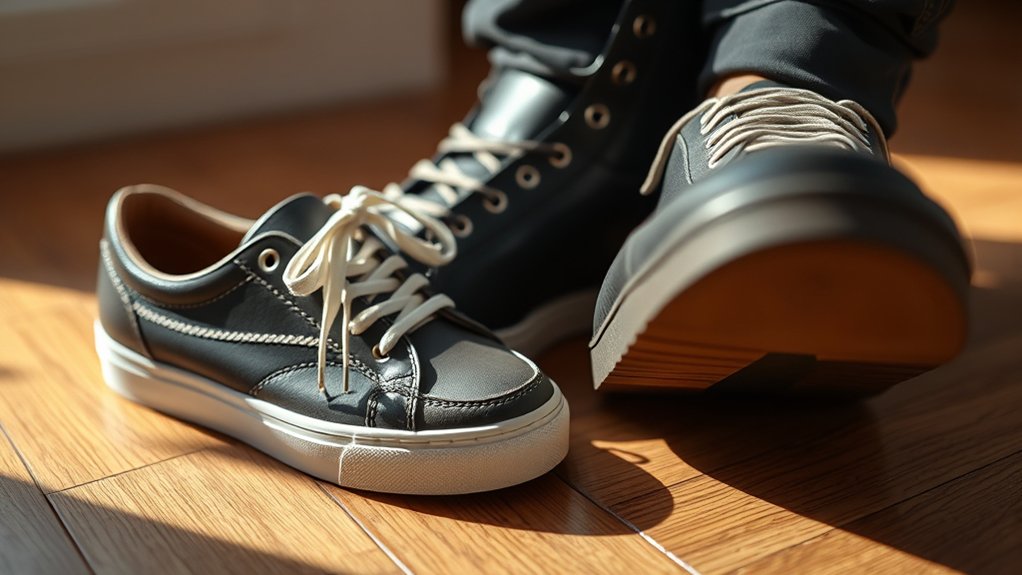
When converting a women’s size 9 shoe to men’s sizing, you need to subtract 1.5 sizes, resulting in a men’s size 7.5 in US measurements. This standard conversion guarantees precise fit alignment across gender-specific sizing charts.
In European sizing, a women’s US 9 typically corresponds to a men’s size 42, but always verify with the brand, as shoe materials and manufacturing standards affect sizing.
Staying current with fashion trends means you might encounter diverse styles and materials influencing shoe fit and comfort.
For example, leather versus synthetic uppers can alter flexibility and breathability, impacting your size choice. Understanding these technical details helps you select the correct men’s size efficiently when switching from women’s sizing, making shopping more accurate and hassle-free.
Men’s vs Women’s Shoe Size Differences Explained
Although men’s and women’s shoe sizes may look similar, they actually differ quite a bit in scale and fit. This can really affect how comfortable your shoes feel and how well you perform in them. So, getting the gender-specific sizing right is pretty important when picking out shoes.
Men’s and women’s shoe sizes may appear alike but differ significantly in fit and comfort.
Here’s what you should keep in mind:
- Women’s sizes are usually about 1.5 to 2 sizes bigger than men’s for the same foot length.
- For example, a women’s size 9 generally matches a men’s size 7.5 in U.S. sizing.
- Men’s shoes tend to be narrower because the width is designed to fit different foot shapes.
- The width fittings also vary between men’s and women’s shoes, which changes the overall fit even if the length seems to match.
Knowing these differences helps you find shoes that actually feel like they were made for your feet.
Using US, UK & Euro Size Charts for Conversion
When you’re converting men’s shoe sizes, you’ll notice that US sizes usually run about one size larger than their UK counterparts. So, for example, a US 8 is generally the same as a UK 7.
Now, when it comes to Euro sizes, they use a different system altogether. These numbers are based on the length of your foot in centimeters. That means a US 9 typically matches up with a Euro 42.
It’s always a good idea to check the specific brand’s size chart, though. There can be slight differences between manufacturers, and you want to make sure you get the perfect fit.
US To UK Conversion
Since shoe sizing varies between regions, converting US women’s sizes to UK men’s sizes requires understanding the standard size differences and referencing reliable size charts.
A Women’s US 9 typically converts to a UK men’s 7.5, reflecting a 1.5 size difference.
To convert accurately:
- Subtract 1.5 from the US women’s size to find the UK men’s equivalent.
- Confirm conversions using trusted size charts to account for brand-specific variations.
- Remember that shoe color and material quality can influence fit perception, so always try shoes on when possible.
- Use this conversion as a guideline; exact fit may vary due to manufacturing differences.
This method ensures you select the right UK men’s size when shopping from US women’s sizes without guesswork.
Euro Size Equivalents
How do Euro sizes correspond to US and UK shoe measurements? Euro sizes offer a direct equivalence between men’s and women’s shoes, which makes conversions simpler. For example, a women’s US 9 typically converts to Euro 40, and that matches a men’s US 7, which is also near Euro 40.
This alignment helps when you’re tracking fashion trends or picking out shoe materials. It ensures the fit stays consistent across different styles.
| Measurement Type | Women’s Size | Men’s Size |
|---|---|---|
| US | 9 | 7 |
| UK | 7.5 | 6.5 |
| Euro | 40-41 | 40 |
Keep in mind, Euro sizing can vary by brand. So, always check specific size charts to make sure your footwear choices are accurate.
Measuring Foot Length and Width for Best Fit
Although foot size can vary throughout the day, measuring your foot length and width accurately is vital for selecting the best shoe fit. This guarantees proper arch support and accommodates your arch length for comfort.
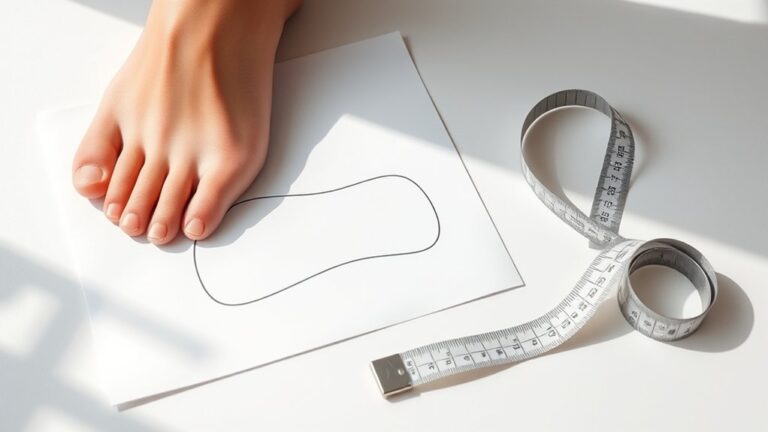
Follow these steps: Stand barefoot on paper, tracing your heel and longest toe; then measure the distance straight with a ruler. Measure both feet and use the larger size to account for slight differences. Take measurements at day’s end when feet naturally swell to their largest.
Also, record the width at the ball of your foot to identify narrow, standard, or wide fits. Accurate length and width measurements help you choose shoes that support your foot’s unique shape. This enhances comfort and prevents issues caused by improper fit.
How Brand Differences Affect Women’s 9 to Men’s Size
When you’re converting a women’s size 9 to men’s, it’s important to remember that brand differences can affect the sizing. Some brands have their own unique way of sizing, which can shift the equivalent men’s size by up to half a size.
For instance, Adidas tends to run a bit larger. So, a women’s 9 might be closer to a men’s 8.5 in their shoes.
On the other hand, Nike usually sticks to the standard 1.5 size difference, making the conversion more straightforward.
Because of these variations, it’s always a good idea to check each brand’s specific conversion rules and fit guidelines. That way, you can be sure you’re getting the most accurate match possible.
Brand Size Variations
Since shoe sizing can vary considerably across brands, converting a Women’s 9 to a Men’s size requires careful attention to each manufacturer’s standards. Brand size variations influence fit due to shoe durability and material differences. These factors affect how the shoe molds over time.
Consider these points: Nike typically equates Women’s 9 to Men’s 7 but may vary slightly by model. Adidas maintains a consistent size difference, aligning Women’s 9 with Men’s 7, though some styles shift by half a size. Puma’s narrower design means Women’s 9 might correspond to Men’s 7.5 or 8 based on shoe width.
Always review brand-specific sizing charts to guarantee precise conversion. Material flexibility and construction impact sizing stability and shoe longevity, so it’s always good to double-check before you buy.
Fit Differences By Brand
Because brands apply different sizing standards and design philosophies, converting a women’s size 9 to a men’s size requires careful consideration of these fit variations.
Most brands use a 1.5 size difference, aligning women’s 9 with men’s 7.5. However, Adidas runs slightly larger, so you might size down to a men’s 7 for *ideal* fit.
Nike maintains the standard difference but varies in width, impacting comfort.
Puma’s narrower design often necessitates sizing up to men’s 8 for a better fit.
Brands like HOKA adopt a 1-size difference, equating women’s 9 to men’s 8.
These variations reflect evolving fashion trends and sustainability practices, as brands tailor sizing to reduce waste and enhance comfort.
Conversion Rules Per Brand
Three primary sizing conventions dominate the conversion of a women’s size 9 to men’s sizes across popular brands. You’ll notice brand-specific rules impact the fit based on shoe material and color options, which sometimes influence model variations. Here’s what to expect:
- Most brands apply a 1.5 size difference, equating women’s 9 to men’s 7.5.
- Adidas and HOKA use a 1-size difference, converting women’s 9 to men’s 7.
- Nike follows the common 1.5 size gap, aligning with the first rule.
- Converse and Vans treat unisex shoes as women’s 9 equals men’s 7.5.
Always check the brand’s official size chart since slight variations exist. Differences in shoe material and color options can affect sizing accuracy. So, it’s a good idea to verify before you buy.
Tips to Find Men’s Shoes That Fit Like a Glove
When you want men’s shoes that fit like a glove, start by accurately measuring your foot length in centimeters and consulting brand-specific sizing charts. Since women’s size 9 usually converts to men’s 7.5, consider sizing down half a size if your feet are narrow or you want a snug fit.
Pay close attention to shoe material for flexibility and durability, and make sure there’s proper arch support to keep your feet comfortable throughout the day.
| Aspect | Recommendation | Notes |
|---|---|---|
| Foot Length | Measure in centimeters | Use brand charts |
| Shoe Material | Choose flexible, breathable | Enhances fit and comfort |
| Arch Support | Confirm adequate support | Prevents fatigue and pain |
Try brands like Nike or Adidas. They usually have consistent sizing and flexible return policies, which makes finding the right fit a lot easier.
Common Mistakes in Women’s to Men’s Shoe Conversion
Although converting women’s shoe sizes to men’s might seem straightforward, many people overlook critical factors that affect fit and comfort. Here are common mistakes you should avoid:
- Assuming a direct size equivalence without accounting for the 1.5 to 2 size difference between women’s and men’s shoes.
- Ignoring width variations; women’s shoes are typically narrower, so relying solely on size numbers without checking widths causes poor fit.
- Overlooking brand-specific sizing charts. Different brands apply unique standards, so always verify before purchasing.
- Neglecting foot length measurements in centimeters or inches, which can lead to inaccurate conversions.
Also, don’t let shoe color preferences or retail store policies distract you from focusing on proper sizing. These factors won’t affect fit but can impact your buying experience.
Just keep your eyes on the size and width to make sure you get the right fit every time!
Why Foot Width and Shape Matter When Switching to Men’s Shoes
Many factors influence how men’s shoes fit, but foot width and shape play a critical role when switching from women’s sizes. Your foot contour markedly impacts the fit since men’s shoes generally feature a broader toe box and a standardized shape.
Women typically have narrower heels and higher arches, so arch compatibility becomes essential to avoid discomfort. If you overlook these differences, you risk pinching or blisters.
To guarantee proper fit, you may need to size up or select a specific width in men’s shoes that matches your foot’s unique contour.
Understanding these elements helps you choose men’s footwear that accommodates your foot shape and arch, ensuring comfort and preventing fit issues during the conversion from women’s to men’s sizes.
Frequently Asked Questions
Can Women’s Socks Fit Well With Men’s Shoes?
You’ll find women’s socks generally offer good sock fit and shoe compatibility with men’s shoes, thanks to wider sizing. Just choose thinner socks for narrower shoes or size up with thicker socks for ideal comfort and fit.
It’s pretty straightforward once you get the hang of it. Just think about the thickness and how the socks will fill the shoe. That way, you avoid feeling too tight or too loose.
Are Men’s Shoes Generally Wider Than Women’s?
Ever noticed how men’s shoes feel roomier? That’s because men’s shoe width is generally broader, reflecting gender differences in foot shape.
So, you’ll find men’s shoes offer more space in the toe box and overall fit. It just makes them feel a bit more comfortable for wider feet.
Pretty handy to know if you’re shopping for shoes or comparing styles!
How Do Insoles Affect Shoe Size Conversion?
Insoles affect shoe size conversion by altering shoe width and internal volume. You’ll need to take into account the thickness of the insoles you’re using.
Thicker insoles may require sizing up to keep the proper width and overall comfort during conversion. It’s all about making sure your feet have enough room without feeling cramped. So, when converting shoe sizes, don’t forget to factor in the insoles!
Can Orthotics Change the Ideal Converted Shoe Size?
Don’t count your chickens before they hatch. Orthotic adjustments can definitely change your ideal converted shoe size.
They impact shoe fit by adding thickness, which often means you might need a slightly larger size or width for proper comfort and alignment.
It’s all about making sure your shoes feel just right once the orthotics are inside. So, don’t be surprised if your size changes a bit!
Do Men’s Shoe Styles Impact Comfort for Women?
Yes, men’s shoe styles impact comfort for women considerably. You’ll notice shoe material and fashion trends affect fit, support, and flexibility. So, choosing styles with suitable materials and design guarantees better comfort tailored to women’s foot shapes.
Conclusion
So, you’ve mastered the art of turning a women’s 9 into a men’s size without summoning a shoe sorcerer. Congratulations! Remember, it’s not rocket science, just a precise blend of size charts, foot measurements, and brand quirks.
Don’t get cocky. A half-size off or ignoring foot width can leave you hobbling like you’ve got two left feet. Stay sharp, measure well, and your feet will thank you. No magic wand required.