How To Measure Shoe Size – Easy Steps And Sizing Guide
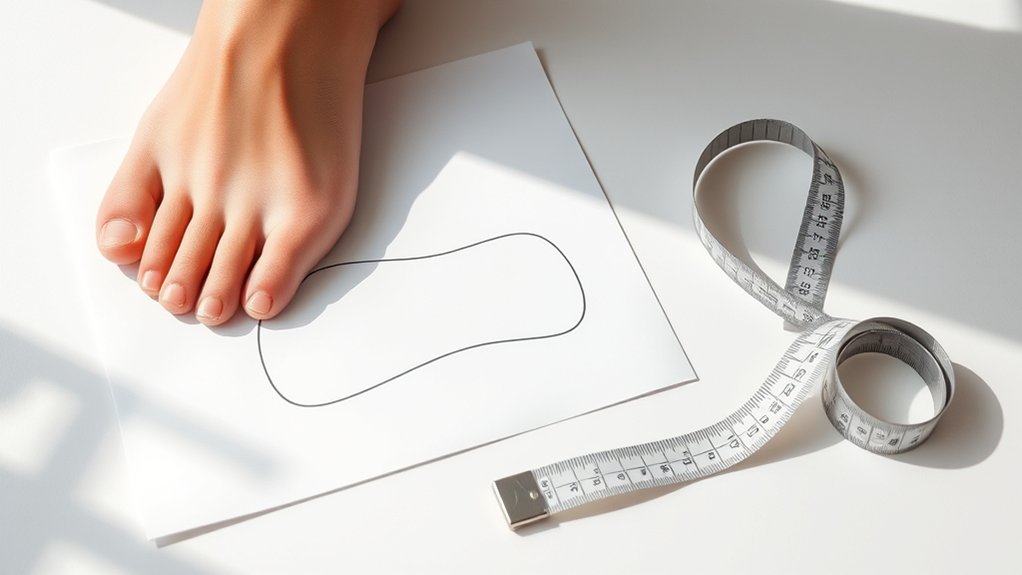
To measure your shoe size accurately, stand on a flat surface with full weight on your foot. Trace your foot’s outline with a straight pencil, then mark the longest toe and heel. Measure the length between these points and the widest part for width.
Use size charts to convert measurements into your correct size. Keep in mind your foot arch, sock thickness, and shoe style when choosing your size. It’s important to measure both feet and pick the larger size for the best fit.
Also, explore sizing nuances for men, women, kids, and different shoe types. This will help you optimize comfort and find the perfect pair every time.
Key Takeaways
- Stand on a hard surface with full weight, place foot on paper, and trace the outline with a straight pencil held vertically.
- Mark the longest toe and heel tip clearly, then measure the distance between these points for foot length.
- Measure both feet separately and use the larger measurement to determine shoe size for the best fit.
- Use size charts to convert foot length to US, EU, or UK sizes, considering brand and style-specific adjustments.
- Ensure proper fit by allowing thumb-width space in the toe box, checking width, and confirming the heel stays secure without slipping.
How To Trace And Measure Your Foot Accurately
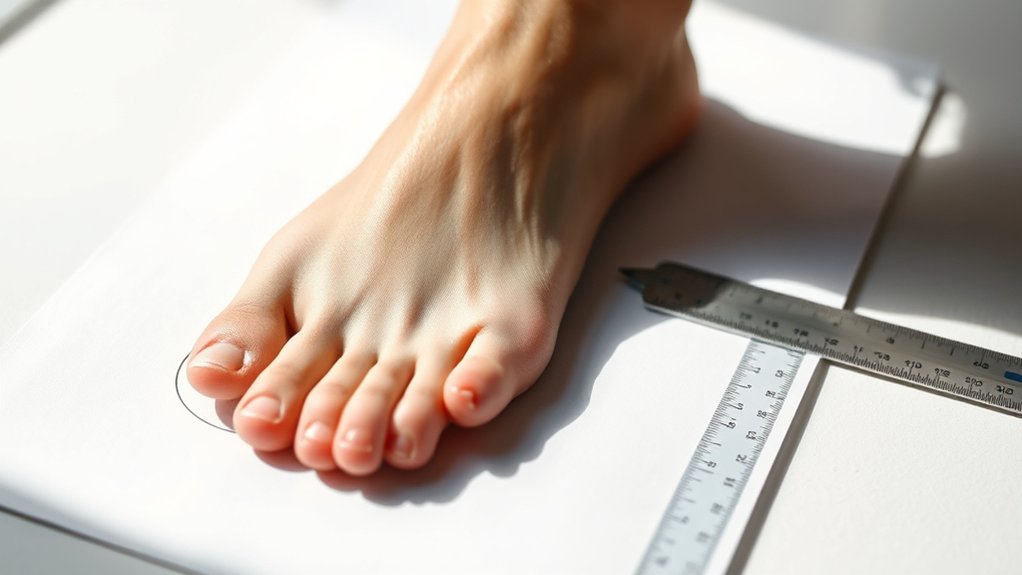
Before measuring your foot, place a piece of paper on a hard, flat surface and stand on it with your full weight evenly distributed. This makes sure your foot arch is fully engaged, giving you a more accurate outline.
Trace your foot carefully with a pencil held straight up and down, avoiding angled lines that can distort the size. Mark the tip of your longest toe and the back of your heel clearly.
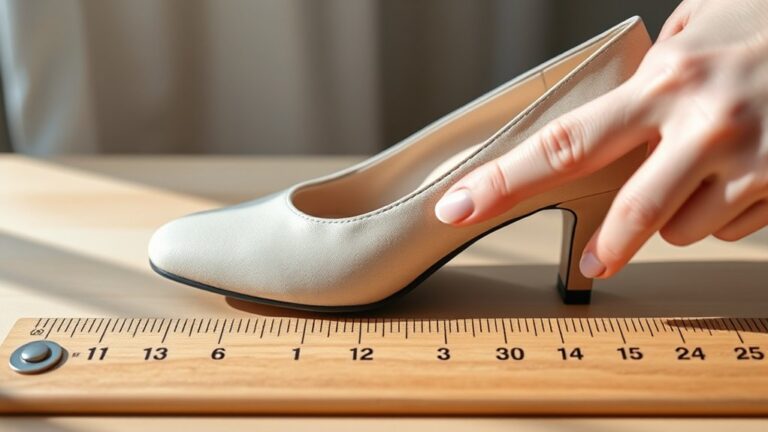
Next, use a ruler or tape measure to find the distance between these two points to determine your foot length. Don’t forget to leave some extra space for shoe padding when picking your size.
Also, measure both feet separately since one foot might be bigger than the other. Use the larger measurement for shoe sizing to make sure your foot arch is accommodated and you stay comfortable without losing support.
Why Foot Width Affects Shoe Size And Comfort
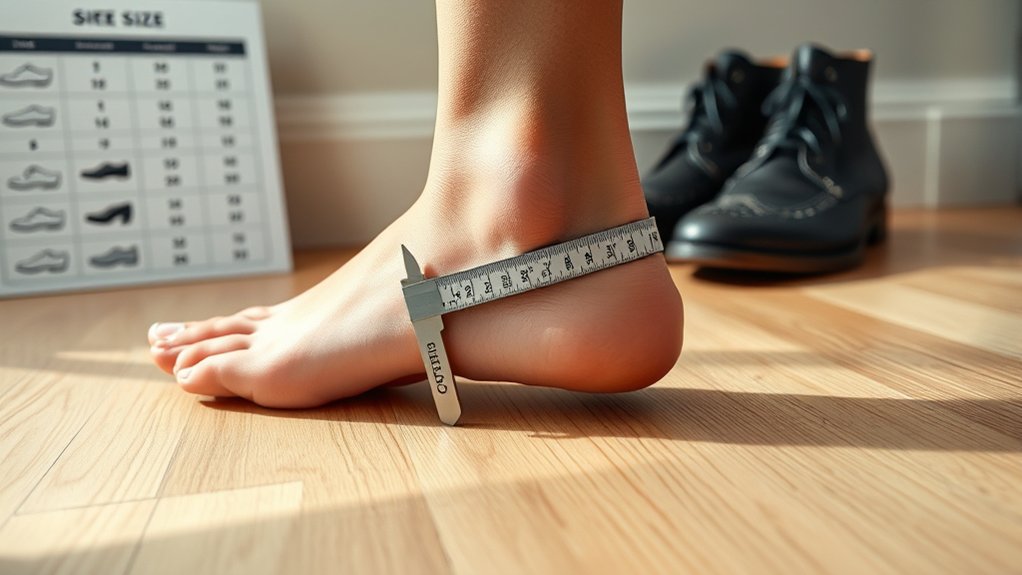
You need to measure your foot width at the widest part to make sure your shoes fit properly. Just knowing the length isn’t enough to guarantee comfort.
Picking shoes that match your width—whether that’s wide or extra-wide—helps prevent pinching and cuts down on pressure points.
If you overlook your foot width, you might end up with discomfort or even foot pain, even if the length feels right.
Impact Of Foot Width
How does foot width impact shoe size and overall comfort? Your foot’s width plays a critical role in shoe fit, affecting both comfort and footwear aesthetics. If your foot is wider than the shoe’s design, narrow footwear can create pressure points, restrict blood flow, and cause pain or bunions.
This discomfort usually comes from not having enough space in the toe box and midfoot areas, which are super important for stability. Shoe material also matters here; flexible materials may adapt better to your foot’s shape, while rigid ones need a more precise width match.
Shoes made for wider feet have broader soles and deeper toe boxes, making sure they fit properly. Ignoring foot width can lead to blisters, foot fatigue, and even long-term problems.
Choosing Proper Shoe Width
Foot width directly impacts the shoe size you should choose to guarantee ideal fit and comfort. When selecting shoes, you must consider foot arch height and shoe material flexibility to avoid discomfort and injury. Narrow shoes can pinch sensitive areas, causing pain and long-term foot issues.
So, to choose the proper shoe width, keep these points in mind:
- Make certain adequate toe box space to prevent blisters and restricted movement.
- Avoid heel slippage by selecting shoes that accommodate your foot’s width precisely.
- Opt for wide or extra-wide options if you have broader feet, such as Nike Pegasus or Monarch models.
Accurately measuring foot width helps align shoe size with your foot’s shape. This promotes comfort and reduces the risk of pain or damage over time.
Using Size Charts To Find Your Correct Shoe Size
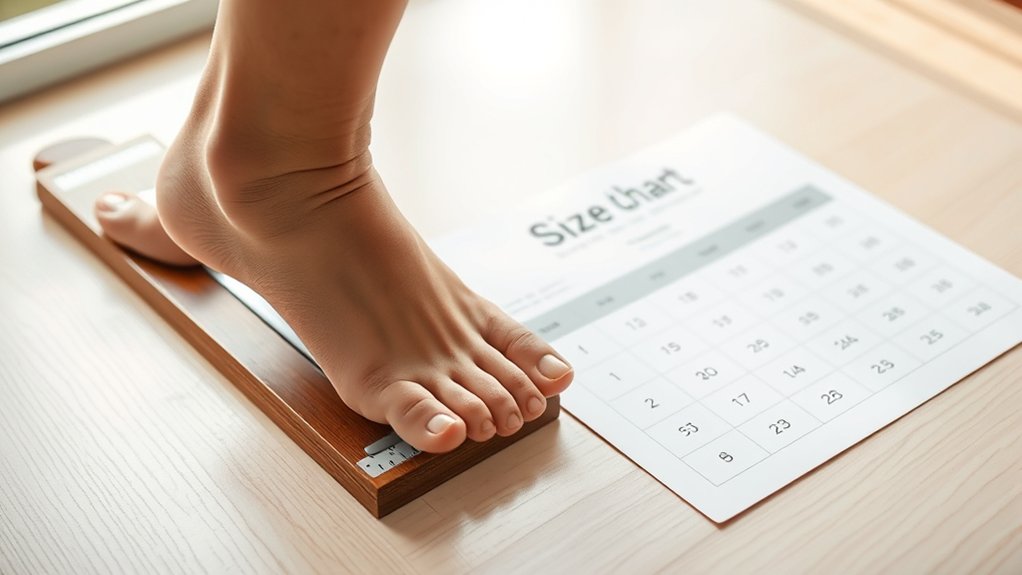
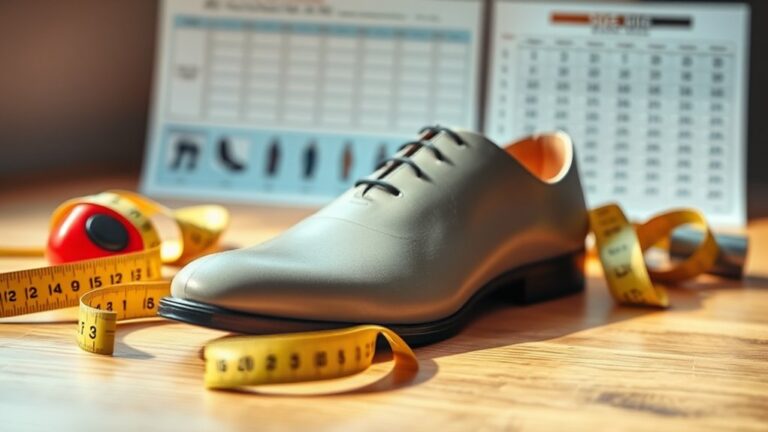
Although measuring your foot length is essential, using a size chart is critical to translate those measurements into the correct shoe size. Size charts provide standardized correlations between foot length, width, and shoe sizes across US, EU, UK, and other systems.
Always match your measured foot length to the size chart’s corresponding row, preferably the one specific to the brand or shoe style, since sizing can vary by manufacturer.
This guarantees a precise fit, which is important because shoe material and arch support requirements differ between models and affect comfort and stability.
Referencing an accurate size chart helps you avoid common issues like shoes that are too tight or loose, improving overall foot health and performance.
Use the chart as a technical tool to find your exact size confidently.
How To Check If Your Shoes Fit Properly And Comfortably
After determining your correct shoe size using a size chart, the next step is to verify that the shoes fit properly and feel comfortable during wear. Proper fit depends not only on length but also on how the shoe material conforms to your foot arch and overall foot shape.
Make sure the shoe fits snugly across the widest part of your foot without pinching or discomfort. Allow about a thumb’s width of space in the toe box for natural toe movement and to prevent crowding.
Also, check that your heel stays secure without slipping when you walk. This indicates good heel and arch stability.
After wearing the shoes, take a moment to inspect for any redness or blisters. These are signs of poor fit or excessive rubbing. Proper fit really helps optimize comfort and foot support.
Understanding Men’s, Women’s, And Kids’ Shoe Size Differences
You’ll notice that men’s shoe sizes are usually about 1.5 sizes larger than women’s for the same foot length. So, if you’re comparing sizes, doing a quick conversion is really helpful.
Kids’ sizes, on the other hand, change pretty quickly as they grow. They’re grouped by age categories like Baby, Toddler, and Big Kids, each with their own sizing charts.
Knowing these differences makes it easier to pick the right size, whether you’re shopping for men, women, or kids. It’s especially useful when converting between US sizes and international ones.
Gender Size Variations
Understanding the differences in shoe sizes across men, women, and kids is essential for accurate fitting. Gender-specific footwear considers size variation factors such as foot length, width, and shape.
Men’s sizes in the U.S. typically run 1.5 to 2 sizes larger than women’s, reflecting generally wider feet.
Kids’ sizes progress sequentially from infant to adult ranges, with distinct numbering. Keep in mind key size variation factors.
Women’s shoes are usually narrower, ranging from size 4 to 12 in the U.S.
Men’s sizes generally span from 6 to 13, accommodating broader feet.
European sizing uses a unified scale but varies in width and fit by gender. Recognizing these distinctions helps you select shoes that meet both size and anatomical requirements effectively.
Kids’ Rapid Growth
Kids’ feet can grow so quickly that you may need to update their shoe size every 2 to 3 months during peak growth phases.
Children’s shoe sizes differ markedly from men’s and women’s, categorized into Baby (0-2), Toddler (2-5), Little Kids (5-8), and Big Kids (8-12) to match developmental stages.
Since kids can outgrow a size rapidly, regular measurements guarantee a proper fit, preventing issues like blisters and gait abnormalities.
When selecting footwear, consider not only size but also shoe material and footwear fashion.
Kids need breathable, flexible materials to accommodate growth and activity.
Unlike adults, kids require shoes specifically designed for their foot structure, so relying on adult sizing charts won’t provide an accurate fit or comfort.
Conversion Between Sizes
Although shoe sizes may appear straightforward, converting between men’s, women’s, and kids’ sizes requires careful attention to distinct measurement systems and sizing conventions.
Men’s U.S. sizes are typically 1.5 sizes larger than women’s, while children’s sizes follow a separate scale starting from 0 to 13.5 for toddlers, then shifting to adult sizes.
European sizing often uses the same numbers for men and women but demands conversion charts for U.S. equivalency.
When converting, consider variations in shoe material affecting fit and flexibility.
Also, differences in foot arch support requirements can vary across age and gender.
Don’t forget brand-specific sizing charts—they’re key to ensuring accurate measurement.
Always verify sizing charts to accommodate these factors for proper fit and comfort.
How To Measure Kids’ Growing Feet For The Best Fit
Since children’s feet grow quickly, you should measure them every two months to guarantee a proper fit. Have your child stand flat on paper, trace their foot, and mark the longest toe and heel. Then, measure the length between these points with a ruler or tape.
Also, consider the foot arch and select shoe material that supports growth and flexibility. Make sure there’s about a fingertip’s width of extra space in the toe box for comfort and growth. Keep an eye out for signs like blisters or heel slipping, which can mean the fit isn’t right.
| Step | Action | Tip |
|---|---|---|
| 1 | Trace foot | Child stands flat |
| 2 | Mark longest toe & heel | Use clear markings |
| 3 | Measure length | Use ruler or tape |
| 4 | Assess shoe fit | Allow fingertip’s width space |
| 5 | Check foot arch & shoe material | Choose supportive, flexible shoes |
Adjusting Shoe Fit For Different Styles And Brands
When you adjust shoe fit for different styles and brands, you need to account for variations in design, purpose, and sizing standards. Shoe material and foot arch support affect comfort and sizing, so consider these factors carefully.
Athletic shoes usually fit snug to support dynamic movement, while dress shoes may require extra room.
Also, sizing varies between brands, with options like wide or extra-wide widths available. To optimize fit, focus on these key points:
- Select shoes based on intended use; running shoes differ from boots in fit and sizing.
- Use brand-specific sizing charts to adjust for unique standards.
- Consider shoe material flexibility and foot arch support requirements for proper comfort.
Adjust sizing accordingly, such as sizing up for boots to accommodate thicker socks or wider calves. It’s all about finding what feels best for your feet and your needs.
Common Measurement Mistakes And How To Avoid Them
Properly adjusting shoe fit for different styles and brands requires accurate foot measurements, but common mistakes can undermine this effort. Using a poor measuring technique, such as measuring while sitting, ignores foot expansion under weight, which often leads to undersized shoes.
Ignoring the foot arch shape and thickness of socks can also cause discomfort. Plus, measuring only one foot or rushing the process reduces accuracy.
| Mistake | How To Avoid It |
|---|---|
| Measuring while sitting | Measure standing to capture true size |
| Ignoring foot arch & socks | Account for arch height and sock thickness |
| Measuring one foot only | Measure both feet, use larger measurement |
Follow these tips to guarantee precise measurements and get the ideal shoe fit every time.
Frequently Asked Questions
How Often Should I Measure My Shoe Size?
Think of your feet as rivers that shift shape. You should measure foot width and arch length every 2-3 months for kids, and twice a year for adults. This helps guarantee an accurate shoe fit and prevents discomfort.
It’s a simple step that makes a big difference. After all, well-fitting shoes keep your feet happy and healthy!
Can Foot Size Change With Age or Weight?
Yes, your foot growth can change with age due to ligament weakening. Weight fluctuations also stretch foot tissues, which can alter your foot size.
These factors cause your feet to lengthen or widen, and that can impact how your shoes fit over time. It’s pretty common for people to notice these changes as they get older or experience weight changes.
What Materials Best Accommodate Foot Swelling?
You’ll want shoe materials like breathable mesh, perforated leather, and moisture-wicking linings to reduce foot swelling. Stretchable fabrics and adjustable features also help accommodate swelling by providing a flexible, comfortable fit throughout the day.
These materials let your feet breathe and move easily. Plus, adjustable parts like straps or laces make sure your shoes can adapt as your feet swell or shrink. It’s all about keeping things comfy, no matter what time of day it is.
Are There Tools to Measure Shoe Size at Home?
You can use rulers, measuring tapes, or printable charts at home to measure shoe width and arch height precisely. These simple tools make it easy to get a good sense of your foot’s dimensions without leaving the house.
If you want something a bit more high-tech, digital foot scanners and smartphone apps also provide accurate measurements. They help you choose shoes that fit both width and arch properly, which can make a big difference in comfort.
How Do Insoles Affect Shoe Size and Fit?
Insole cushioning adds thickness inside your shoe, which often reduces the internal space and affects the fit.
You might find that you need larger shoe width options or even to size up a bit to make room for thicker insoles.
That way, you can keep things comfortable and avoid any tightness or annoying pressure points.
It’s all about making sure your shoes feel just right with the extra cushioning inside!
Conclusion
Measuring your shoe size accurately is like laying a solid foundation for comfort and support. By tracing your foot carefully, considering width, and using size charts, you guarantee a perfect fit every time.
Remember to check fit across different styles and brands. Also, measure kids’ feet regularly for growth. Avoid common mistakes to keep your steps steady and pain-free.
With these precise steps, you’ll always put your best foot forward, literally.