What Size Shoe Does A 2 Year Old Girl Wear – Size Guide And Chart
You’ll typically find a 2-year-old girl wearing toddler shoe sizes 6 to 8, matching foot lengths between 4.5 to 5 inches. To guarantee comfort and healthy growth, measure her feet in the late afternoon while she stands. Always choose the larger foot size with about half an inch of extra room.
Regular checks every couple of months help catch rapid growth. If you want to master proper fit and spot signs of ill-fitting shoes, keep exploring for helpful tips.
Key Takeaways
- Most 2-year-old girls wear US toddler shoe sizes 6 to 8, corresponding to foot lengths between 4.5 and 5 inches.
- Choose sizes 6 or 7 to allow a half-inch of growth room for comfort and healthy foot development.
- Measure feet in the late afternoon with the child standing for accurate sizing and select the larger foot’s size.
- Regularly measure feet every 2 to 3 months due to rapid growth and adjust shoe size accordingly.
- Use flexible, breathable materials and adjust fit with insoles or straps to ensure comfort and support.
What Shoe Size Does a 2 Year Old Girl Typically Wear?
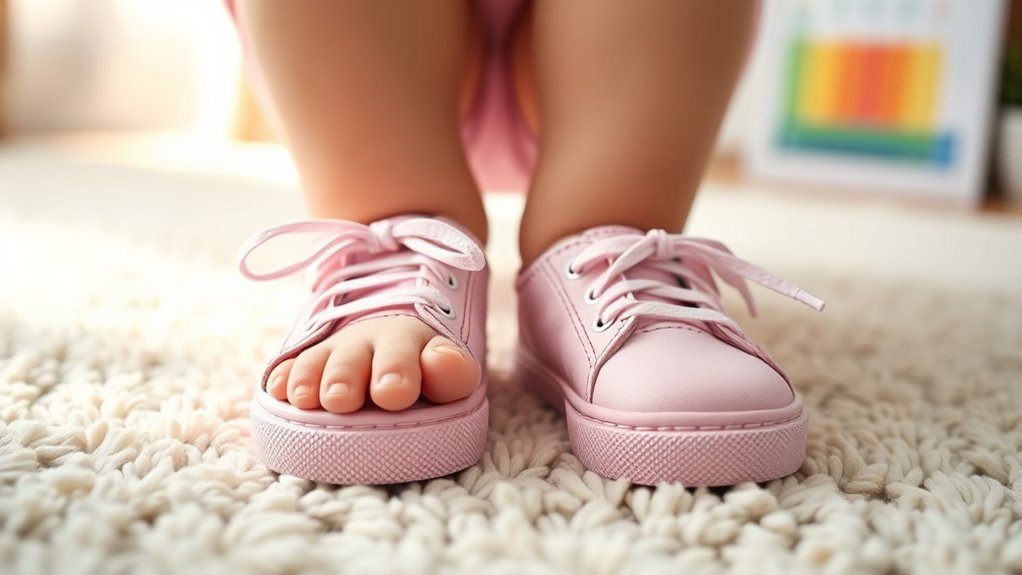
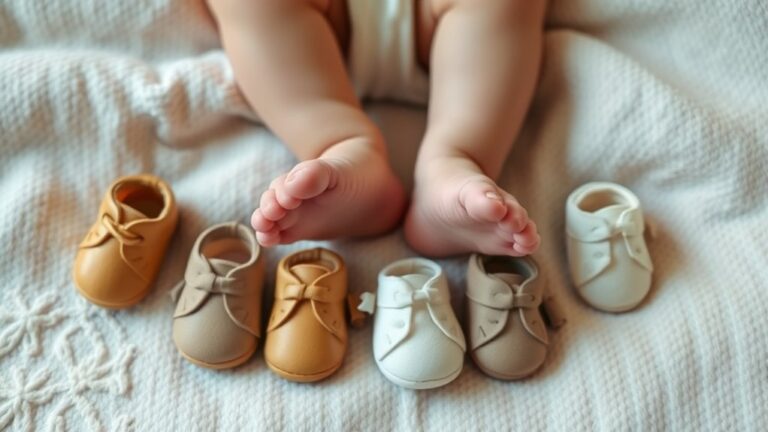
When choosing shoes for your 2-year-old girl, you’ll typically find her fitting into US toddler sizes 6 to 8. At this age, her feet usually measure between 4.5 and 5 inches, matching size 6 or 7.
Keep in mind, foot growth varies, so selecting shoes with about half an inch of extra room is essential for comfort and development.
You’ll notice that current fashion trends for toddlers emphasize both style and functionality, so pick shoes made from breathable, flexible shoe materials like soft leather or mesh. These materials support natural foot movement and help prevent irritation.
How to Measure Your 2 Year Old’s Feet Accurately
Although measuring your 2-year-old’s feet might seem straightforward, doing it accurately requires a few careful steps to guarantee the best fit.
Measure her feet in the late afternoon when they’re naturally more swollen.
Measure your child’s feet in the late afternoon when natural swelling gives a more accurate size.
Have her stand with full weight on her feet to get an exact length.
Trace from heel to the tip of the longest toe, including any curled toes.
Use a printable size guide at 100% scale and verify its accuracy with a credit card.
Don’t forget to measure the circumference by wrapping a ribbon around the widest part to comfortably accommodate the foot arch.
It’s also important to consider the shoe material.
Flexible materials allow better movement for her developing foot arch and help ensure shoes fit well without causing discomfort.
When Should You Measure Your 2 Year Old’s Feet?
Since toddlers’ feet grow rapidly, you should measure your 2-year-old girl’s feet every two to three months to guarantee her shoes fit properly.
For the most accurate size, measure her feet in the late afternoon when swelling peaks. Make sure she’s standing upright with full weight on her feet, as this affects the measurement.
Use a reliable foot measuring tool or printable size guide to maintain consistency.
Regularly checking her shoe fit is essential, especially if she’s active or seems uncomfortable.
Remember, the right fit matters not just for comfort but also for footwear fashion and performance.
Choosing appropriate shoe material types, like breathable fabrics and flexible soles, supports healthy foot development and keeps her comfortable as she grows.
It’s all about making sure her shoes help her feet stay happy and healthy!
What Kids’ Shoe Size Categories Mean for You
Understanding the four main kids’ shoe size categories: infant, toddler, preschool, and grade school can make selecting the right shoes much easier for your 2-year-old girl. Knowing these categories helps you choose footwear fashion that fits and supports her growing feet. Toddler sizes, usually 4-10, suit most 2-year-olds.
But keep in mind the importance of shoe material types for comfort and durability.
| Category | Age Range | Typical Size Range |
|---|---|---|
| Infant | 0-12 months | 0-4 |
| Toddler | 1-3 years | 4-10 |
| Preschool | 3-5 years | 10.5-13 |
| Grade School | 5+ years | 1-7 |
Understanding these helps you find shoes that fit well and support healthy foot development. It’s all about making sure her feet stay comfortable and grow strong.
How to Choose the Right Shoe Size When Feet Are Between Sizes
When your child’s feet are between sizes, it’s a good idea to measure both feet carefully to spot any differences.
You’ll want to pick the larger size to make sure there’s plenty of room for comfort and growth.
If the fit doesn’t feel quite right, no worries—you can always tweak it a bit with insoles or by adjusting the laces.
That way, you get the best fit without any hassle.
Measure Both Feet
Although your toddler’s feet might look similar, it’s important to measure both of them because one foot may be slightly larger than the other. You’ll want to base shoe size on the longer foot to guarantee comfort and proper fit.
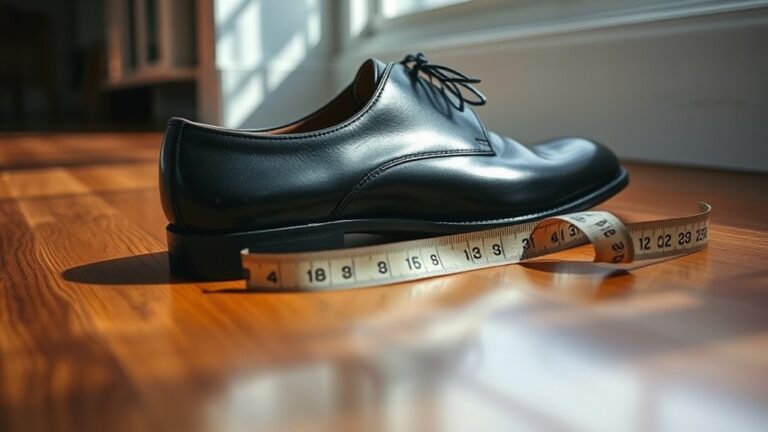
Use a ruler or measuring tape, measuring from heel to the longest toe while your child stands with full weight.
Remember, footwear materials can affect fit, so always check the shoe’s flexibility. Proper shoe storage also helps maintain shape and support.
Here are key tips to keep in mind:
- Measure both feet regularly, at least every two months
- Choose shoes that accommodate the larger foot comfortably
- Use insoles or padding if the smaller foot needs extra support
This way, you’ll keep your toddler’s feet happy and healthy.
Opt For Larger
If your toddler’s foot measurement falls between two sizes, you’ll want to choose the larger size to guarantee comfort and room for growth. Kids’ shoes need about half an inch of extra space in the toe area for natural movement and development.
When one foot is wider or longer, always opt for the larger size to prevent discomfort.
Also, consider footwear materials. Soft, breathable fabrics adapt better to growing feet than rigid ones.
Shoe styling matters too; some styles run small or narrow, so sizing up ensures a better fit.
Regularly measuring both feet helps you stay on top of your child’s changing needs. Picking the right size today means your toddler can explore safely and comfortably as she grows.
Adjust With Accessories
Choosing the right shoe size can feel tricky when your toddler’s feet fall between sizes, but using accessories like insoles, thicker socks, or adjustable straps can make a big difference.
When you select the larger size for comfort and growth, shoe accessory ideas help fine-tune the fit. Fitting adjustments such as laces or straps secure the shoe, preventing slipping or discomfort.
For wider feet or higher arches, these accessories also reduce cramping. Remember to measure your child’s feet regularly to verify the adjustments still provide a proper fit as they grow.
Here are some practical fitting adjustments to consider:
- Add cushioned insoles or thicker socks for a snug fit
- Use adjustable straps or laces to tighten loose shoes
- Opt for wider shoe widths combined with fitting accessories for comfort
Signs Your 2 Year Old’s Shoes Don’t Fit
You’ll probably notice some common fit problems when your toddler’s shoes aren’t quite right. Things like red marks, blisters, or cramped toes are good clues that the shoes might be causing discomfort.
If your little one is tripping a lot or their shoes keep slipping off, that’s another clear sign the fit isn’t quite right.
Keeping an eye out for these signs is really important because it helps make sure their shoes support healthy foot development.
Common Fit Problems
Although finding the right shoe size for your 2-year-old can be challenging, recognizing common fit problems helps guarantee their comfort and foot health. Shoes made from stiff shoe material or designed mainly for fashion trends might look cute but often compromise proper fit.
Watch for these signs to assure your child’s shoes fit well:
- Red marks, blisters, or bruising on toes or heels indicating pressure points
- Cramped toes that can’t move freely, or shoes that cause frequent tripping or toe dragging
- Loose shoes where the foot slips inside, risking discomfort and improper development
Signs Of Discomfort
Recognizing signs of discomfort in your 2-year-old’s shoes can help you catch fit issues early and prevent pain or injury. Look for red marks or blisters on their toes or heels. These often mean the shoe material is too stiff or tight.
If their toes feel cramped or can’t move freely, the shoes likely don’t fit well. Shoes that frequently slip off while walking or feel loose usually indicate they’re too large.
Notice if your child trips or drags their toes, which can be a sign the shoe material or size is causing discomfort.
Also, redness, swelling, or complaints of pain after wearing shoes—no matter the shoe color—are clear signals it’s time for a better fit.
You want to keep your toddler comfortable and safe, so paying attention to these signs really helps.
Tips for Shopping Infant and Toddler Shoes for a Comfortable Fit
Since toddlers’ feet grow quickly, measuring their feet every two months helps you keep up with their changing size and guarantees shoes fit comfortably.
Prioritizing shoe safety means choosing footwear that supports healthy foot development without causing discomfort or restricting growth.
To make sure a comfortable fit, consider these tips:
Measure feet in the late afternoon when they’re naturally swollen for accuracy.
Select shoes with about half an inch of toe space to allow natural movement and growth.
Opt for flexible, padded, and breathable materials that protect and support sensitive feet.
If your toddler’s shoe size falls between two options, always pick the larger size to avoid cramping and promote shoe safety.
These steps will help you find shoes that foster proper foot development while keeping your little one comfortable.
What to Do If Your Child’s Shoes Don’t Fit
When your child’s shoes don’t fit properly, it’s important to address the issue promptly to prevent discomfort and potential foot problems. Regularly measure your child’s feet every two months to track growth.
Promptly addressing ill-fitting shoes prevents discomfort and foot issues; measure your child’s feet every two months.
If shoes feel tight, cause red marks, or cramp toes, switch to a larger size.
Shoes that are too loose can lead to tripping or blisters, so find a better fit using a printable size chart or foot tracing method.
Always opt for the larger size when between sizes to allow room for growth.
While selecting new shoes, consider your child’s shoe color preferences to keep them excited about wearing them.
Don’t forget shoe cleaning tips to maintain hygiene and prolong shoe life, ensuring your toddler’s feet stay comfortable and healthy.
Frequently Asked Questions
How Do Different Brands’ Shoe Sizes Vary for Toddlers?
You’ll notice shoe design affects sizing, causing variations among brands. Size conversion between US and European sizes isn’t exact, so always measure your toddler’s foot and check each brand’s chart for the most accurate fit.
It really helps to get the right fit because every brand might run a little different. Just keep in mind that numbers aren’t one-size-fits-all! Measuring and comparing is the best way to go.
Can Shoe Size Affect a Toddler’s Walking Development?
Yes, shoe fitting directly impacts toddler comfort and walking development. If shoes don’t fit well, your toddler might struggle with balance or avoid walking.
Are There Specific Materials Best for Toddler Shoes?
You’ll want shoe material that’s breathable and soft to guarantee toddler comfort. Natural fabrics like leather or cotton help reduce irritation and moisture. Flexible soles support foot growth, which is super important for little feet.
Avoiding synthetic materials can keep your toddler happy and healthy. It’s all about choosing the right stuff that lets their feet breathe and move freely. That way, they stay comfy all day long!
How Often Do Toddlers Typically Outgrow Their Shoes?
You’ll feel like you’re buying new shoes every week! Toddlers outgrow shoes roughly every 4 to 12 months, depending on foot growth patterns.
Checking shoe comfort often guarantees their feet stay happy and healthy as they grow. It’s a good idea to keep an eye on how snug their shoes feel.
If they start to seem tight or uncomfortable, it’s probably time for a new pair. That way, your little one’s feet get the support they need as they grow.
Can Socks Impact the Shoe Size Needed for Toddlers?
Yes, sock thickness directly impacts shoe fit for toddlers. You’ll want to measure their barefoot foot first, then factor in sock thickness to avoid tightness or discomfort. This way, you ensure a comfortable, properly fitting shoe every time.
It’s all about making sure their little feet have enough room to move without feeling squished. So, don’t forget to consider the socks they’ll be wearing when picking out shoes!
Conclusion
Choosing the right shoe size for your 2-year-old girl can feel like steering a little maze, but with careful measurement and attention, you’ll find the perfect fit. Remember, tiny feet grow quickly, so keep an eye out for those subtle signs of outgrowing shoes.
Trust your instincts, and don’t hesitate to refresh her footwear to keep her steps comfy and confident. A well-fitted shoe is a small step with a big impact on her happy adventures.